24 Wedding Cake Flowers ideas That Elevate Your Wedding Cake Style
Wedding cakes are no longer just dessert. They sit at the center of the reception, photographed from every angle, remembered long after the plates are cleared. Flowers, whether real or crafted, shape how a cake feels—romantic, modern, wild, or restrained. When done right, wedding cake flowers bring balance between design and realism. When done poorly, they overwhelm the cake or fall flat.
This guide breaks down practical, beautiful ways to use wedding cake flowers without excess or trend-chasing. Each idea is rooted in what works in real weddings, real venues, and real budgets.
Wedding Cake Flowers, Fresh Rose Clusters
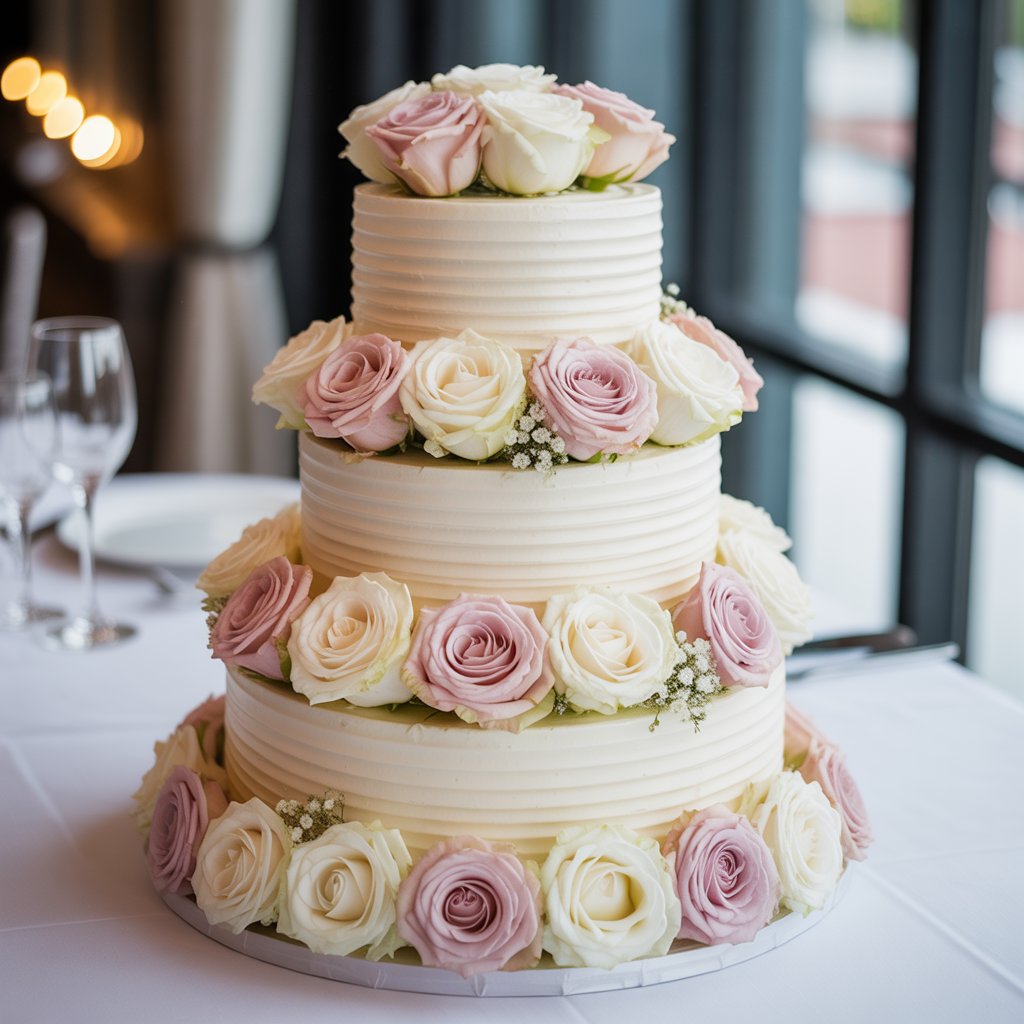
Roses remain a dependable choice for wedding cake flowers because they photograph cleanly and hold their shape for hours. Small clusters placed asymmetrically feel intentional without being heavy. Florists often recommend spray roses over standard roses since they weigh less and allow tighter spacing. White, blush, or muted peach roses work best for cakes that need softness without distraction. Proper floral tape and food-safe barriers are essential, especially for summer weddings where petals can wilt quickly.
Cascading Floral Trails
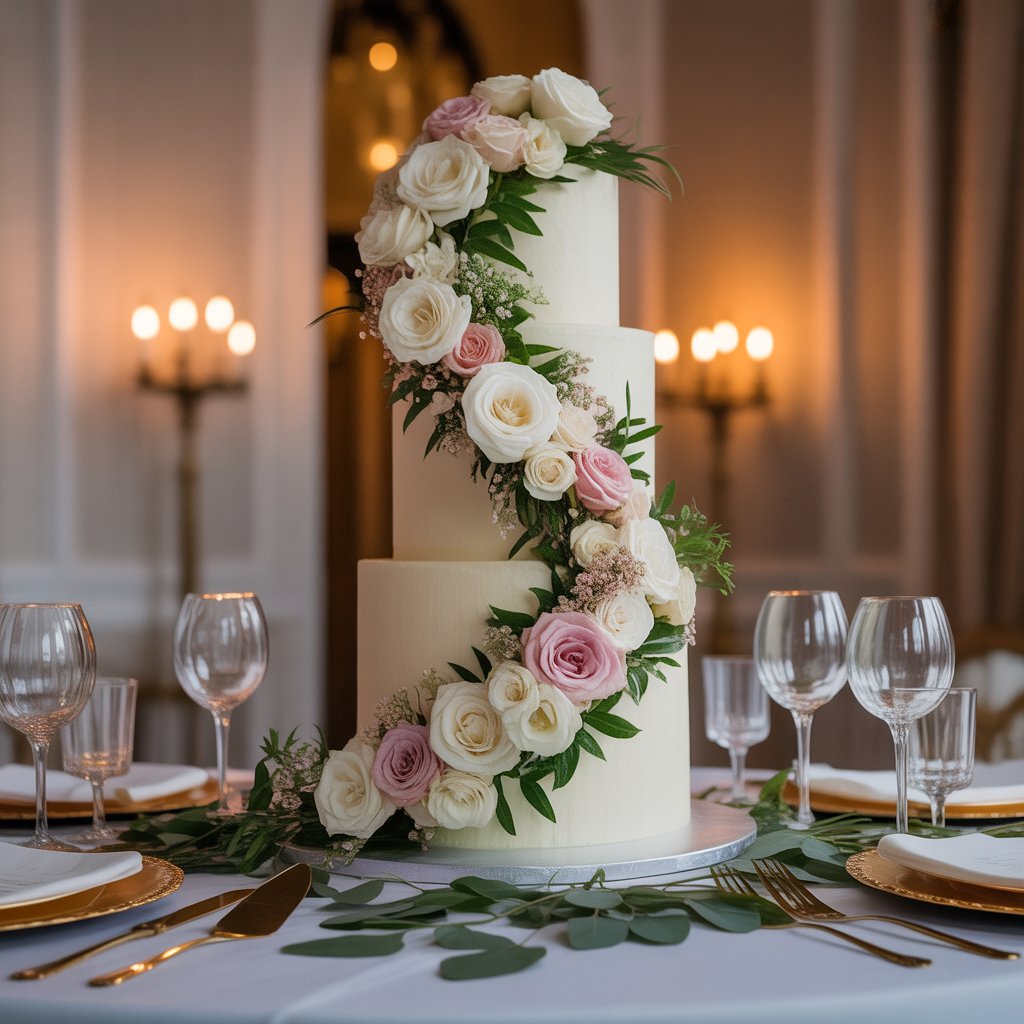
A cascading arrangement introduces movement. Wedding cake flowers arranged in a downward flow help tall cakes feel grounded and dramatic. This style works well with multi-tier cakes and open reception layouts. Florists usually anchor sturdier blooms at the top and let lighter stems trail naturally. The key is restraint. Overloading a cascade turns elegance into clutter, and gravity always wins by the end of the night.
Single Bloom Statement
Minimalist weddings often benefit from a single oversized flower. One bold bloom placed at the top tier turns wedding cake flowers into a focal point instead of decoration. Peonies, dahlias, or proteas are popular choices. This approach reduces cost, simplifies logistics, and still delivers impact. It also works well for intimate weddings where subtlety matters more than spectacle.
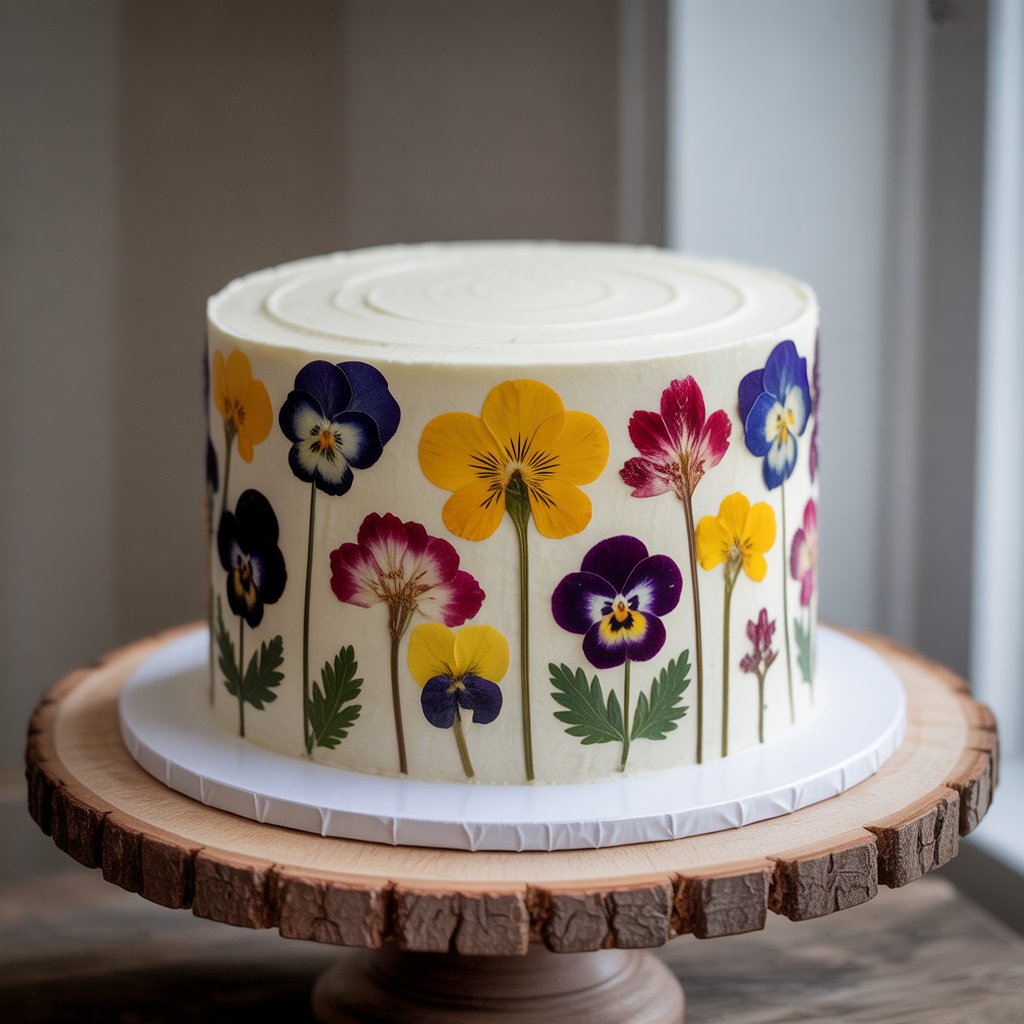
Pressed Edible Flowers
Pressed edible flowers offer a flat, refined look. Wedding cake flowers applied this way blend into the icing rather than sitting on top of it. They feel intentional and modern. Common options include pansies, violets, and calendula. Bakers prefer this method because it avoids structural risks. Couples prefer it because every part of the cake is safe to eat without removal.
Wildflower Garden Style
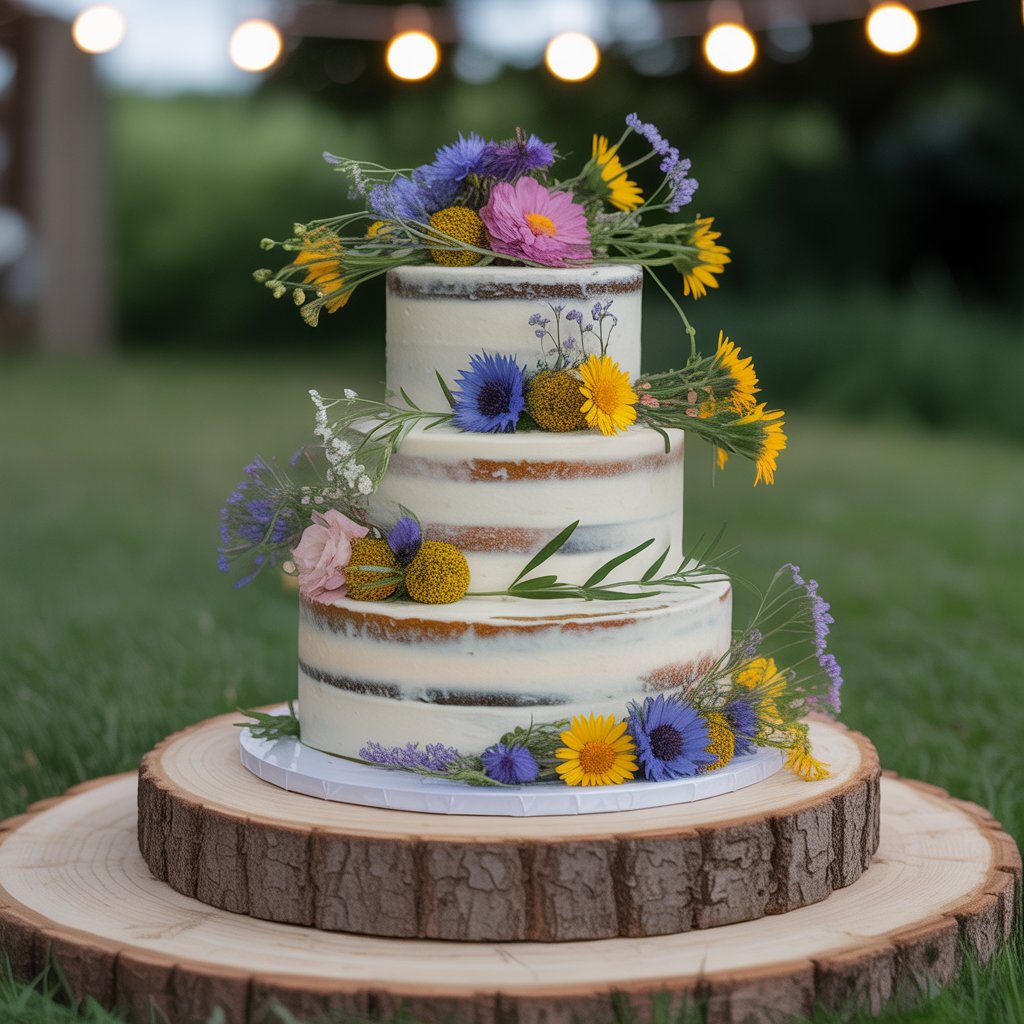
Wildflower designs feel loose and natural. Wedding cake flowers arranged in this style work best for outdoor, rustic, or countryside weddings. Florists mix varied stems, heights, and textures rather than matching blooms. The result looks organic rather than styled. This approach requires skill. Random placement without balance can quickly look accidental instead of effortless.
Sugar Flowers with Realistic Detail
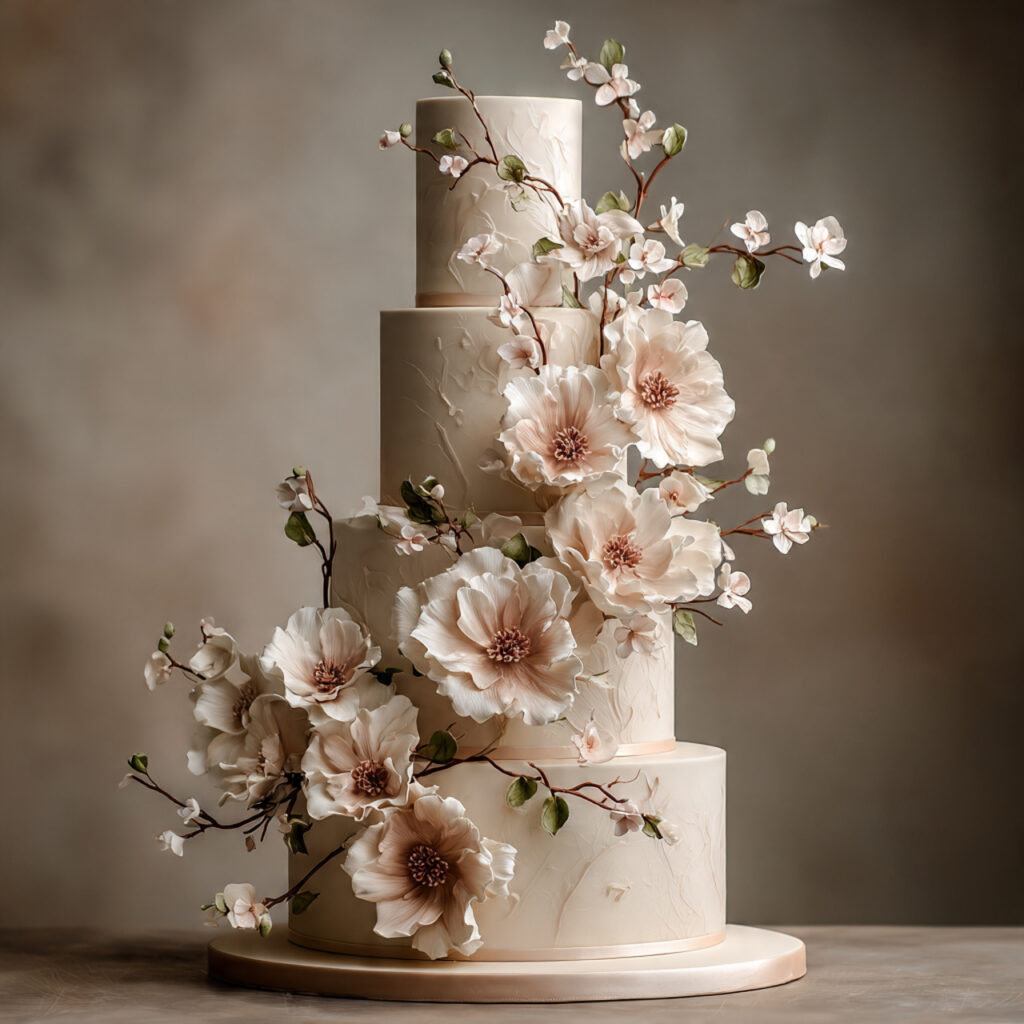
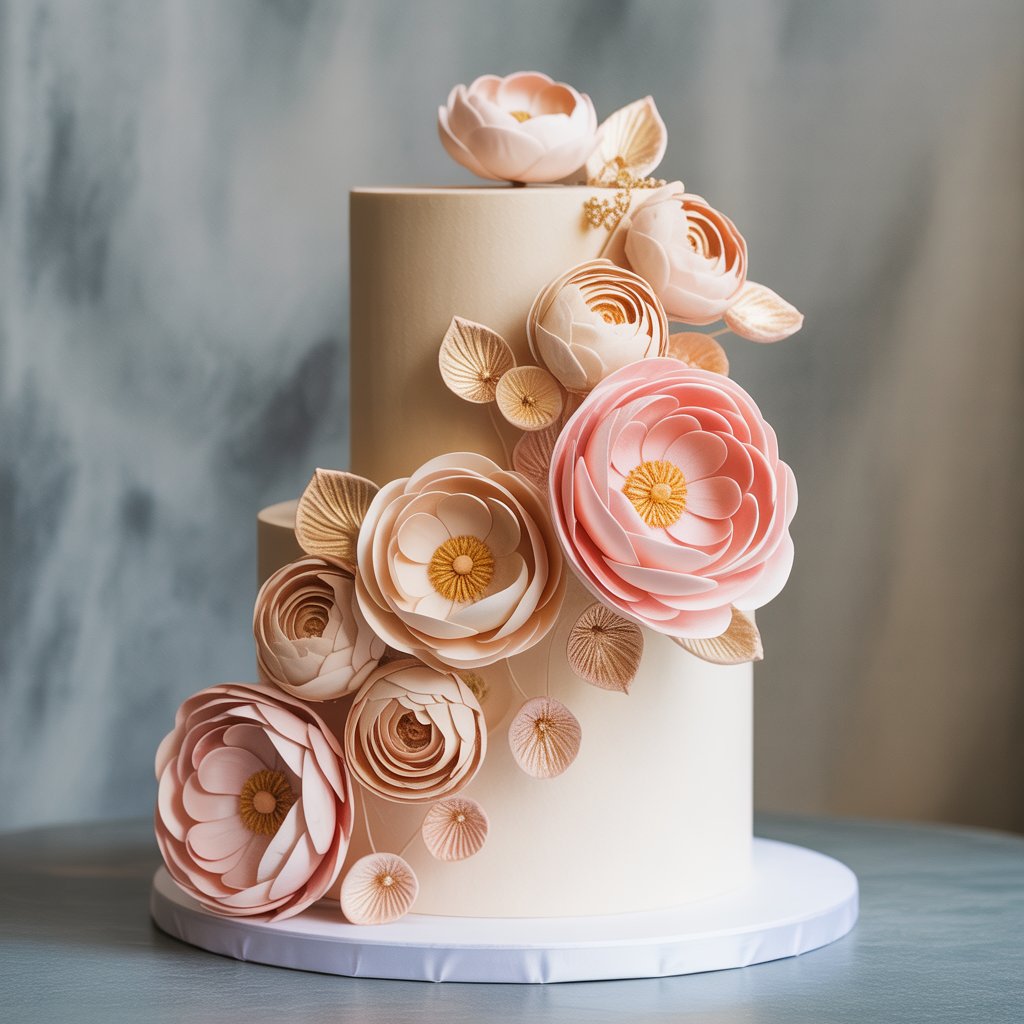
Sugar flowers remain popular for couples who want perfection without time pressure. These wedding cake flowers do not wilt, stain icing, or require last-minute placement. High-quality sugar flowers are hand-crafted and often indistinguishable from real blooms. They are labor-intensive, which affects cost, but they allow full design control regardless of season or climate.
Floral Hoop Cake Toppers
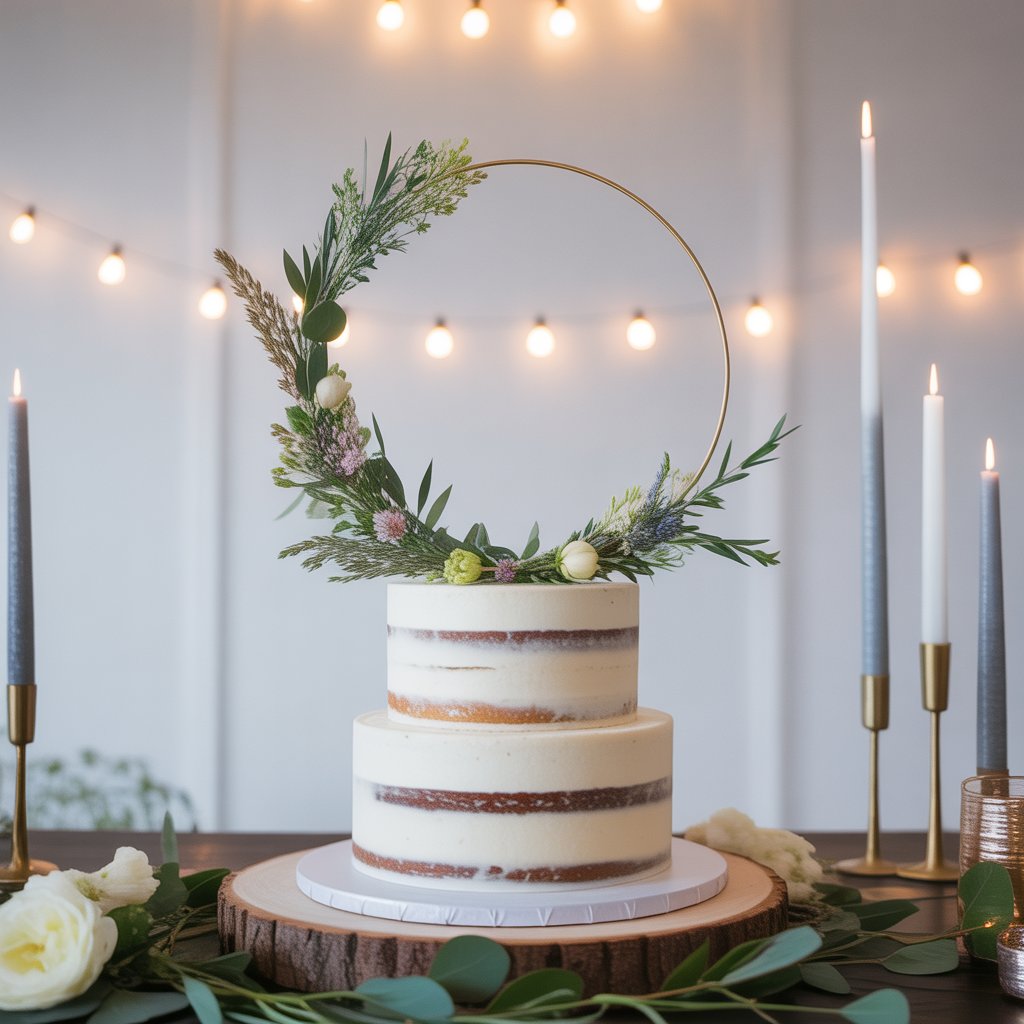
Floral hoops bring structure to wedding cake flowers. A thin metal ring adorned with greenery or small blooms frames the cake rather than sitting directly on it. This style works particularly well for modern weddings. The hoop adds height and dimension without crowding the tiers. After the event, the topper can be repurposed as home decor.
Fresh Greenery Accents
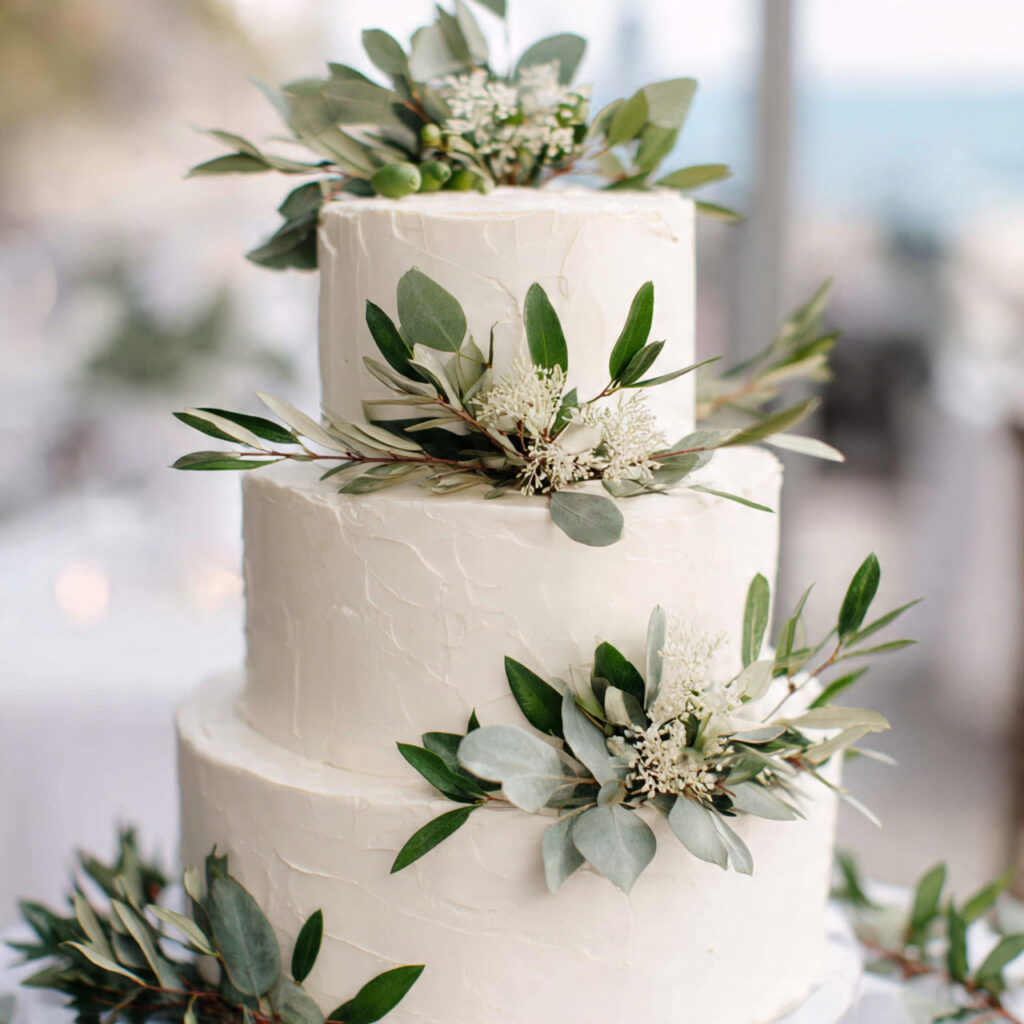
Greenery-focused wedding cake flowers suit couples who want restraint. Eucalyptus, olive branches, or ruscus add texture without color overload. This approach photographs cleanly and pairs well with white or semi-naked cakes. It is also more forgiving in warm weather, as greenery tends to last longer than delicate petals.
Seasonal Flower Pairings
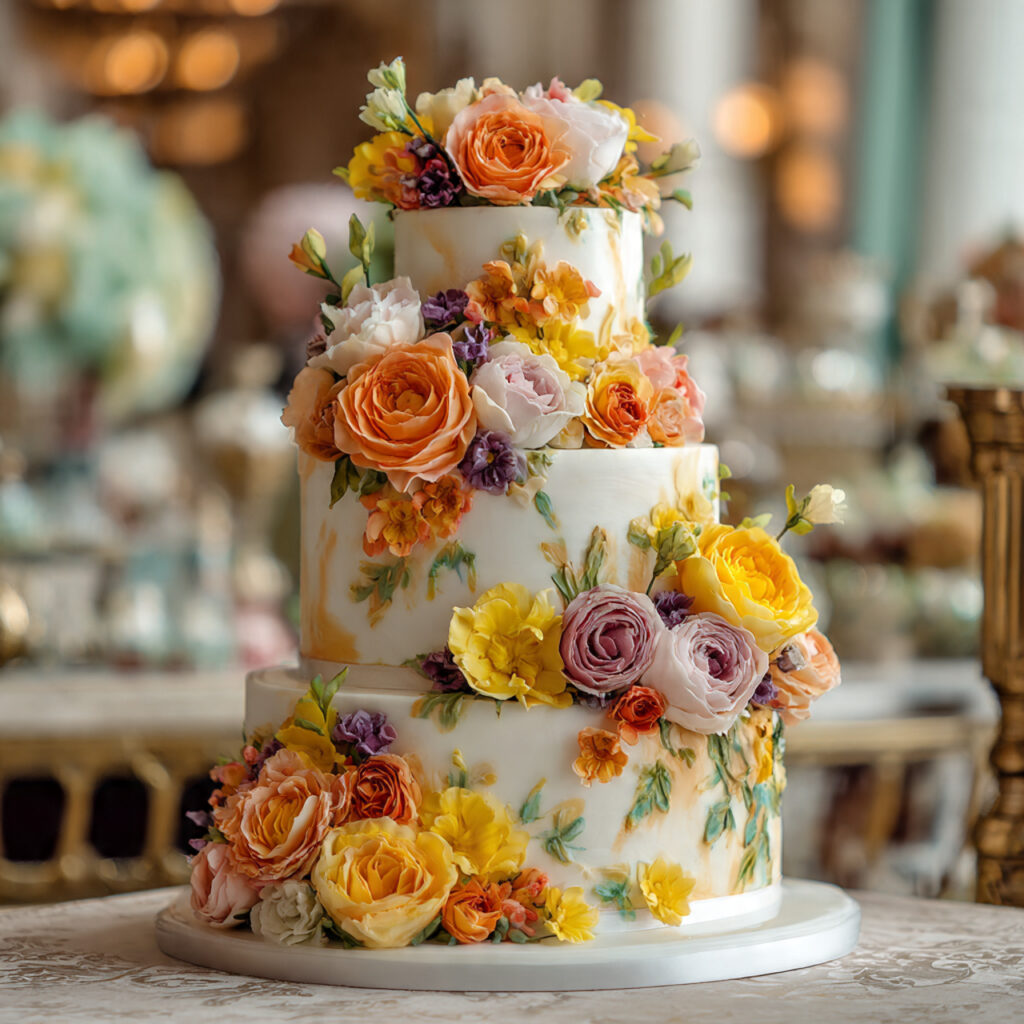
Seasonal blooms reduce cost and increase freshness. Wedding cake flowers chosen in-season hold up better and align naturally with the event atmosphere. Spring brings ranunculus and tulips. Summer favors garden roses and zinnias. Autumn supports dahlias and chrysanthemums. Winter works well with anemones and hellebore. Seasonality matters more than trend.
Floral Crown Top Tier
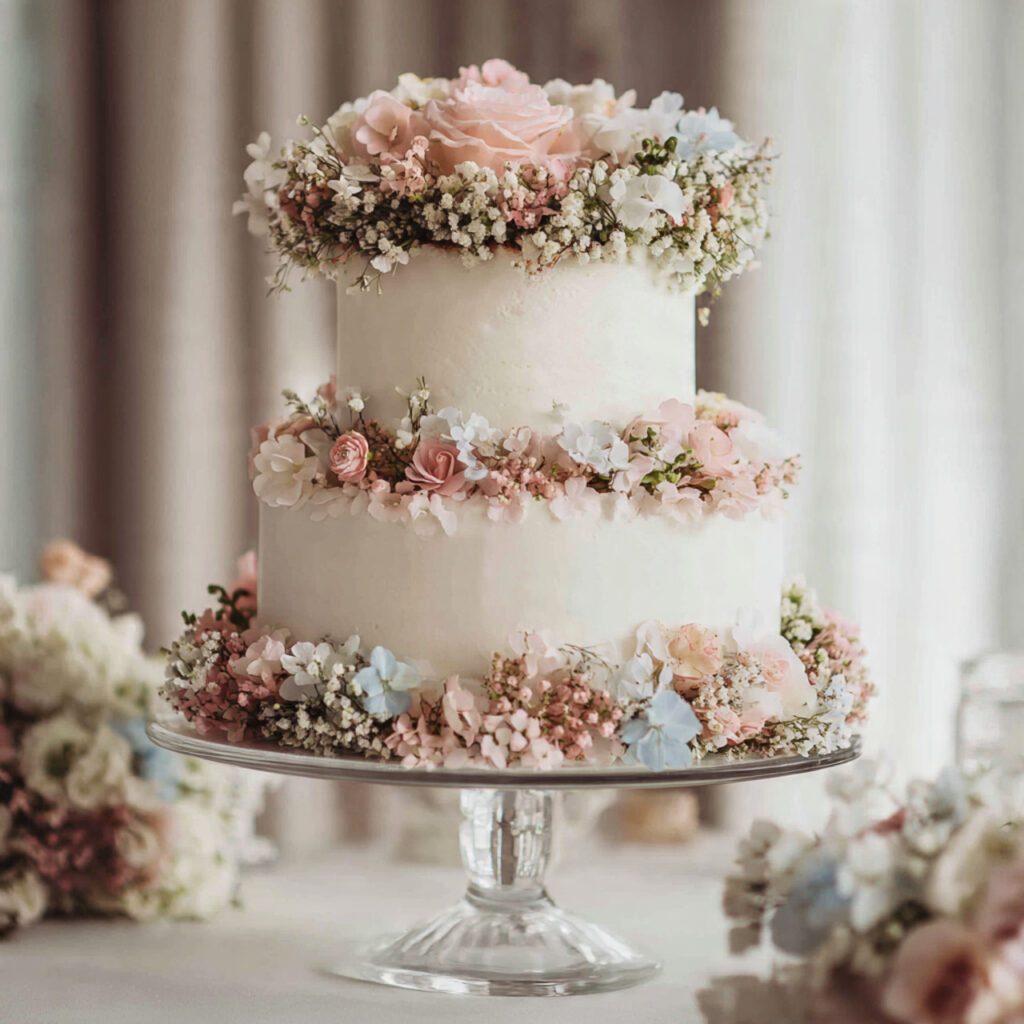
A floral crown placed around the top tier creates balance without vertical weight. Wedding cake flowers arranged this way frame the cake rather than dominate it. This design works best with uniform blooms and controlled spacing. Florists often use wax flowers or mini roses for this purpose. The result feels cohesive and intentional.
Monochrome Floral Design
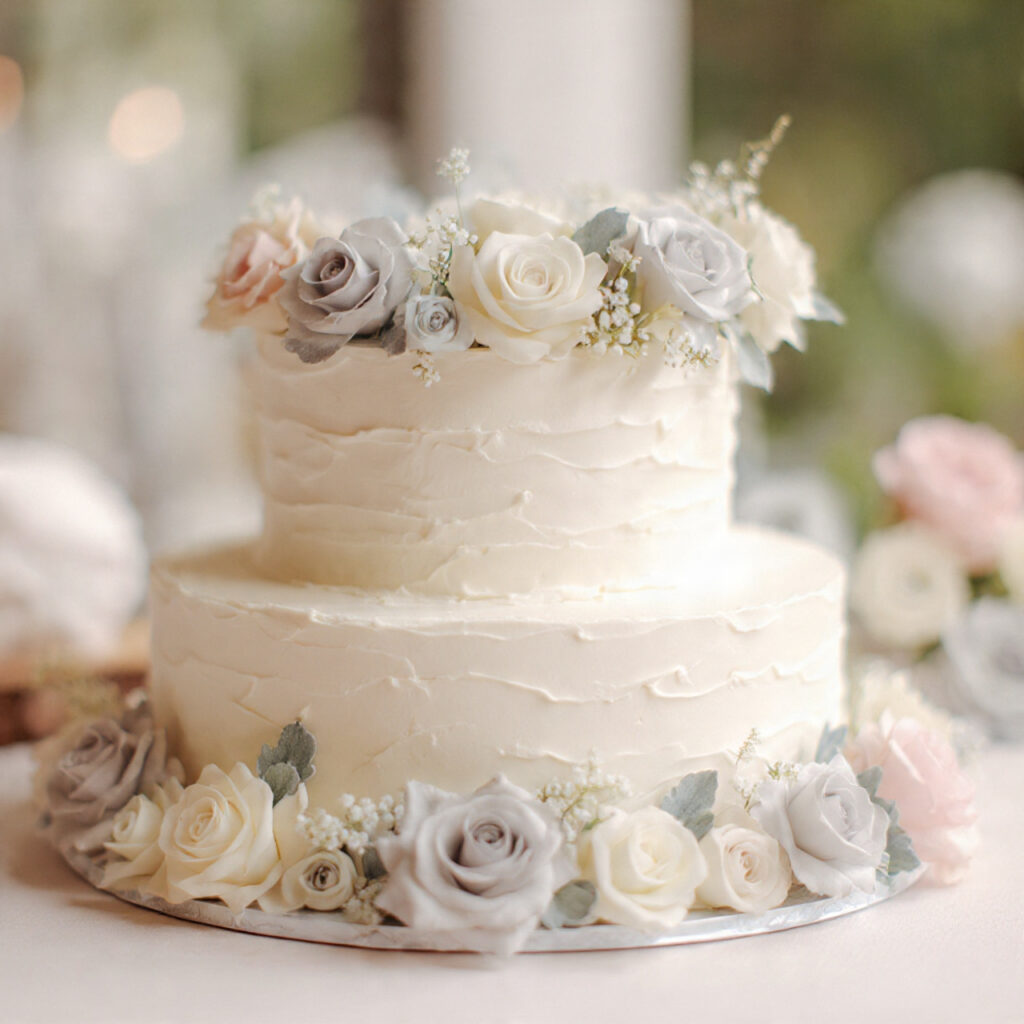
Using a single color palette simplifies decision-making. Wedding cake flowers in one hue create unity across the cake design. All-white arrangements feel formal. Soft pinks feel romantic. Deep burgundy or rust tones suit fall weddings. Monochrome does not mean boring when texture varies.
Floral Embellished Naked Cakes
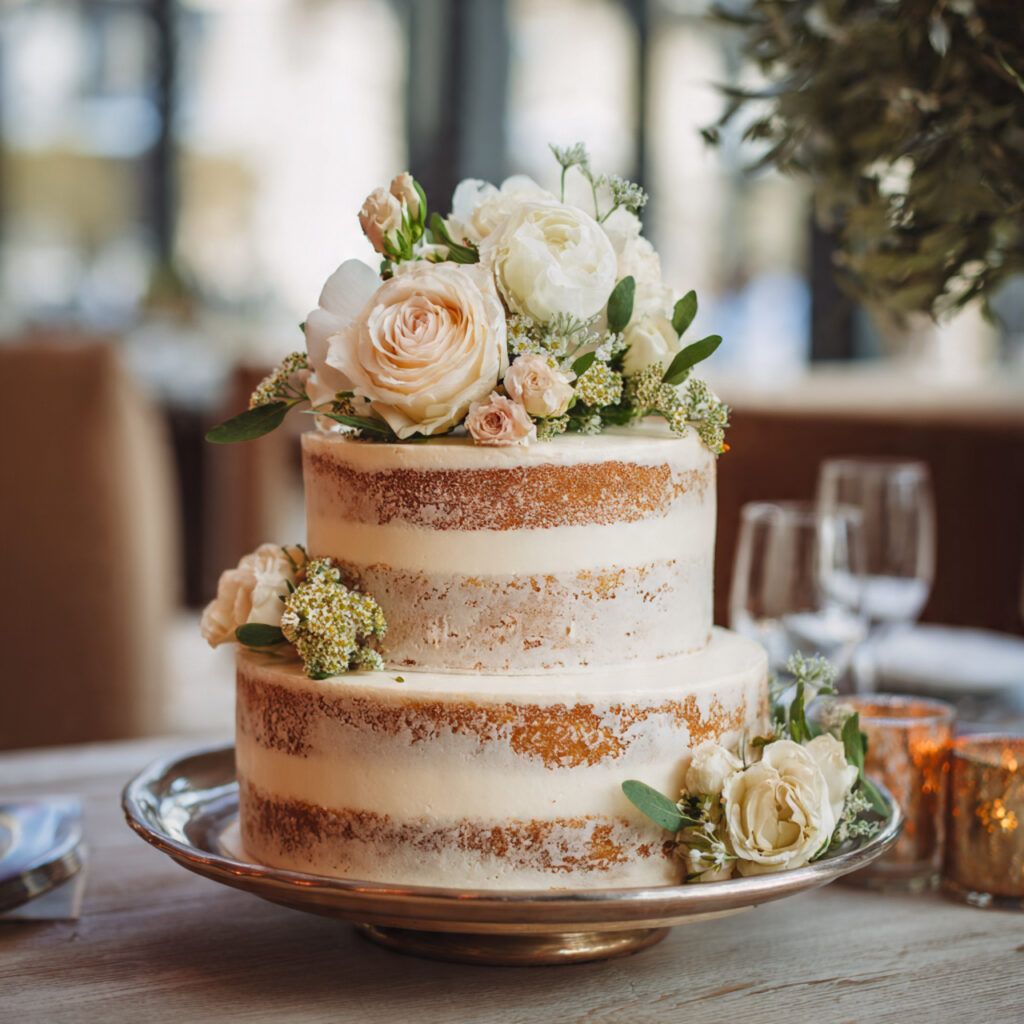
Naked cakes rely on restraint. Wedding cake flowers used here should be sparse and deliberate. A few blooms between layers or at the top tier are enough. Over-decoration defeats the purpose. This style suits couples who want a relaxed look without sacrificing polish.
Hand-Painted Floral Illusions
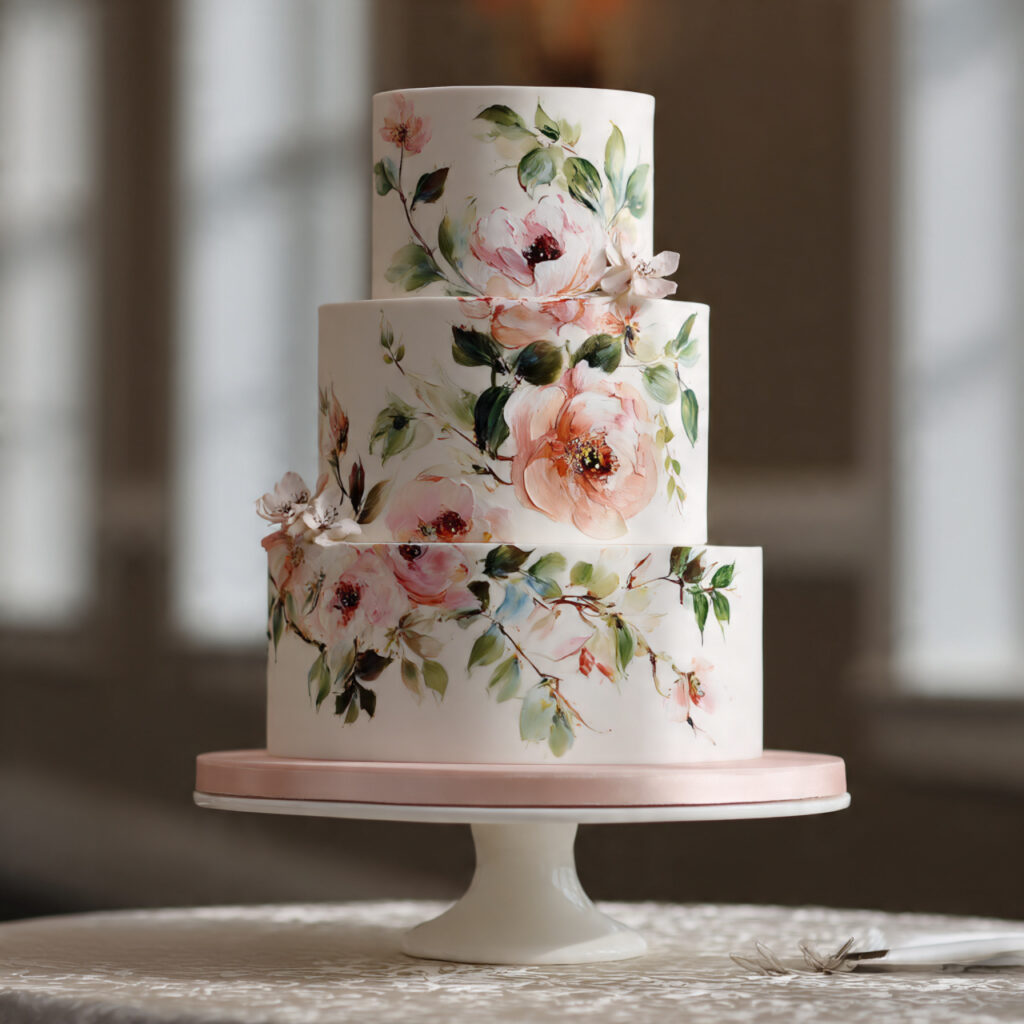
Not all wedding cake flowers are physical. Hand-painted florals offer visual softness without structural risk. Bakers paint directly onto fondant or buttercream. This approach avoids food safety concerns and allows intricate detail. It works especially well for cakes displayed for long periods.
Floral and Fruit Pairings
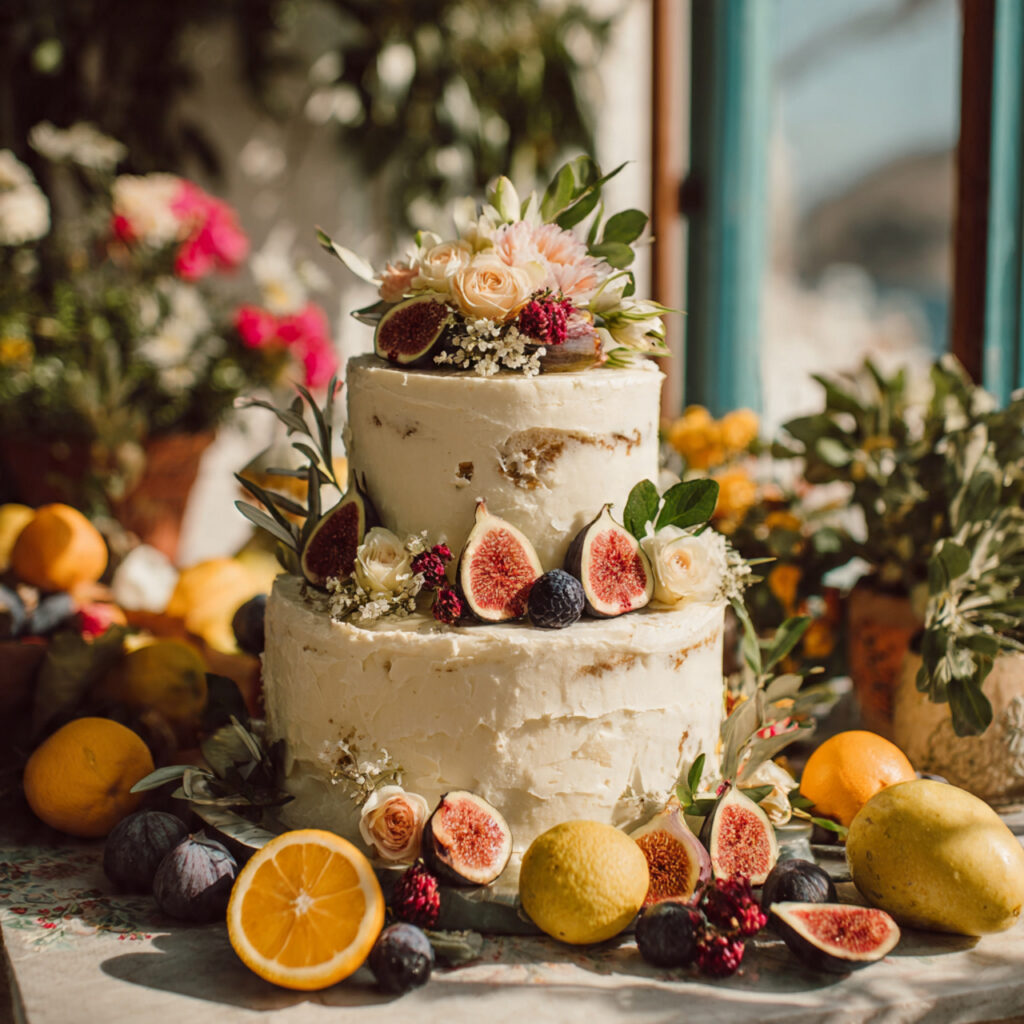
Flowers paired with fresh fruit add contrast. Wedding cake flowers combined with figs, berries, or citrus feel grounded and natural. This style suits Mediterranean, garden, or vineyard weddings. Balance matters. Fruit should support the flowers, not compete with them.
Dried Flower Arrangements
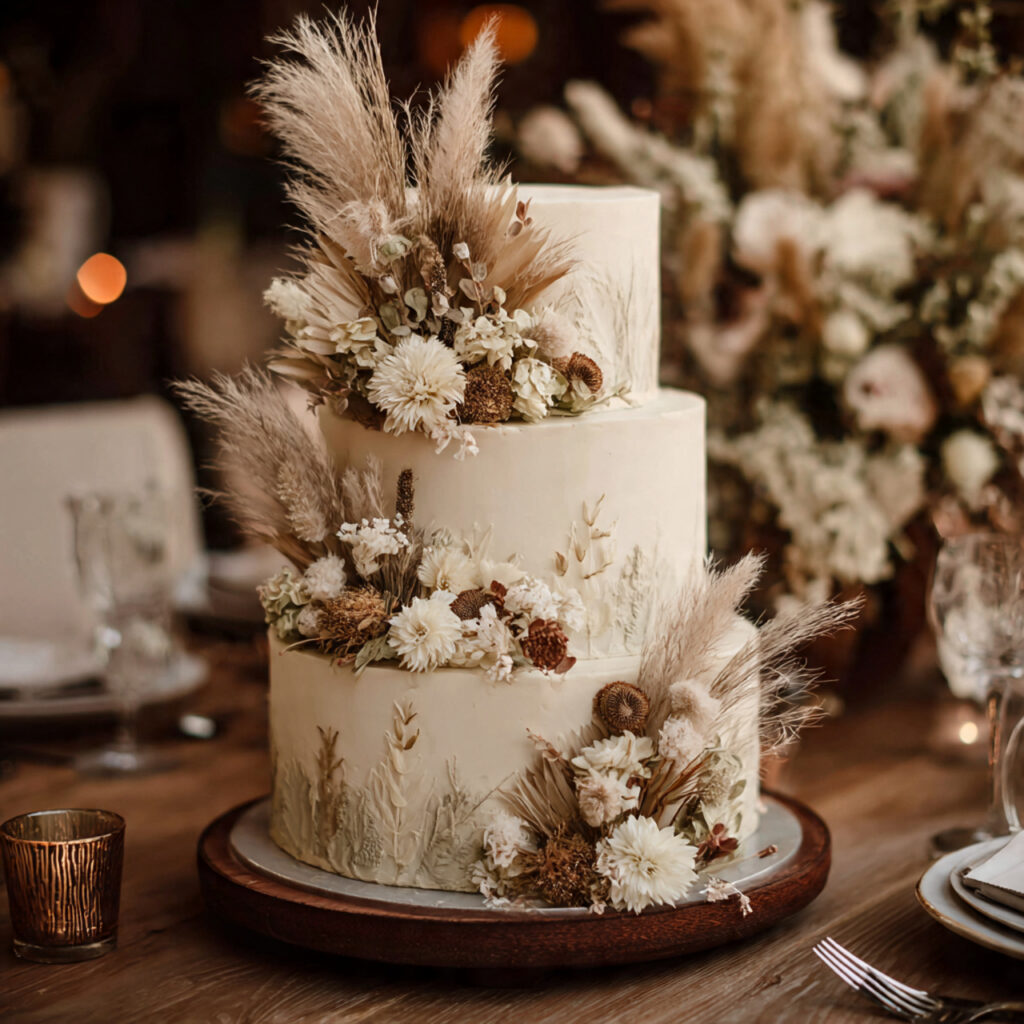
Dried elements are practical and trend-resistant. Wedding cake flowers made from pampas grass, bunny tails, or dried roses offer texture without fragility. These arrangements work well for bohemian or desert-inspired weddings. They also eliminate concerns about wilting, making them ideal for long outdoor receptions.
Floral Lace Patterns

Some cakes mimic lace using piped icing combined with flowers. Wedding cake flowers placed sparingly over lace textures add depth. This design suits formal weddings and traditional venues. Precision matters. Too many flowers disrupt the pattern and distract from craftsmanship.
Floating Flower Effect
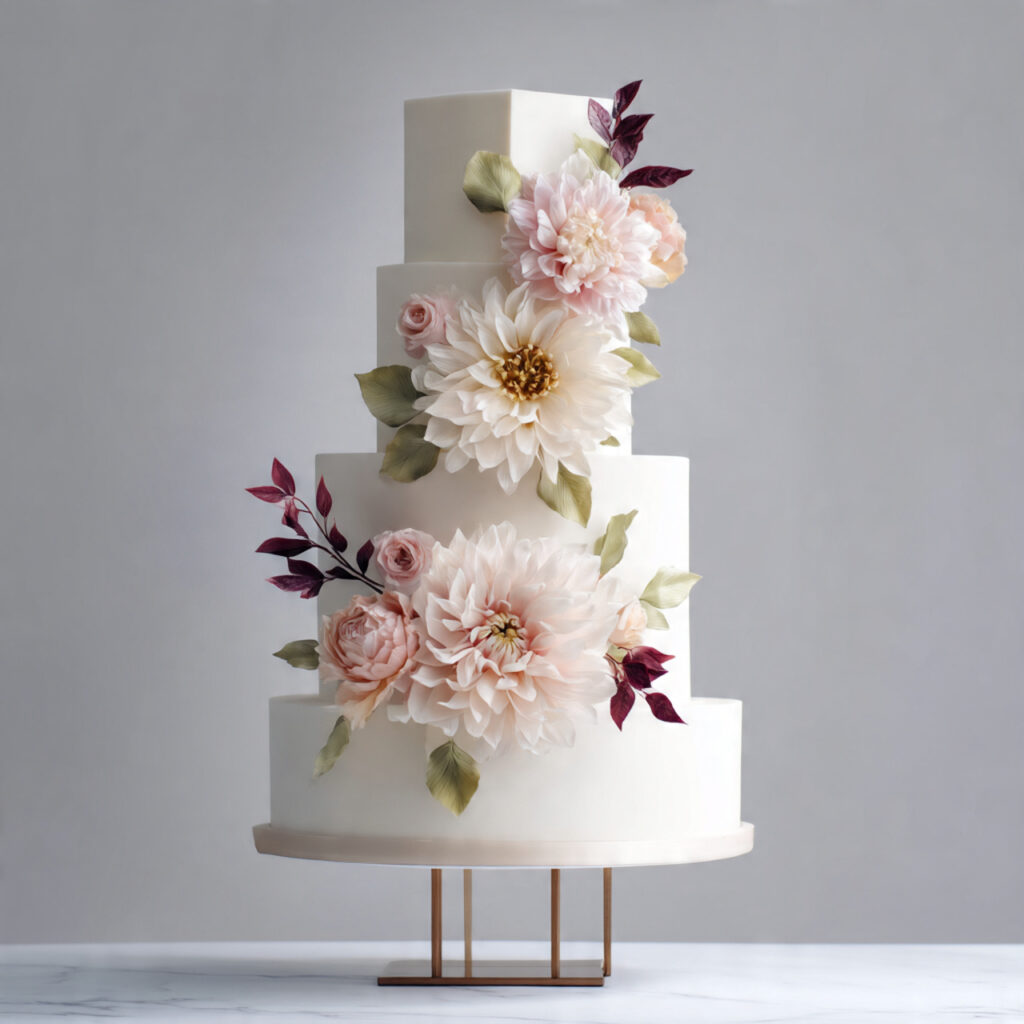
Floating designs create visual intrigue. Wedding cake flowers appear to hover between tiers using hidden supports. This technique requires an experienced baker and florist collaboration. When executed properly, it creates a light, architectural look that feels modern and intentional.
Floral Drip Accents
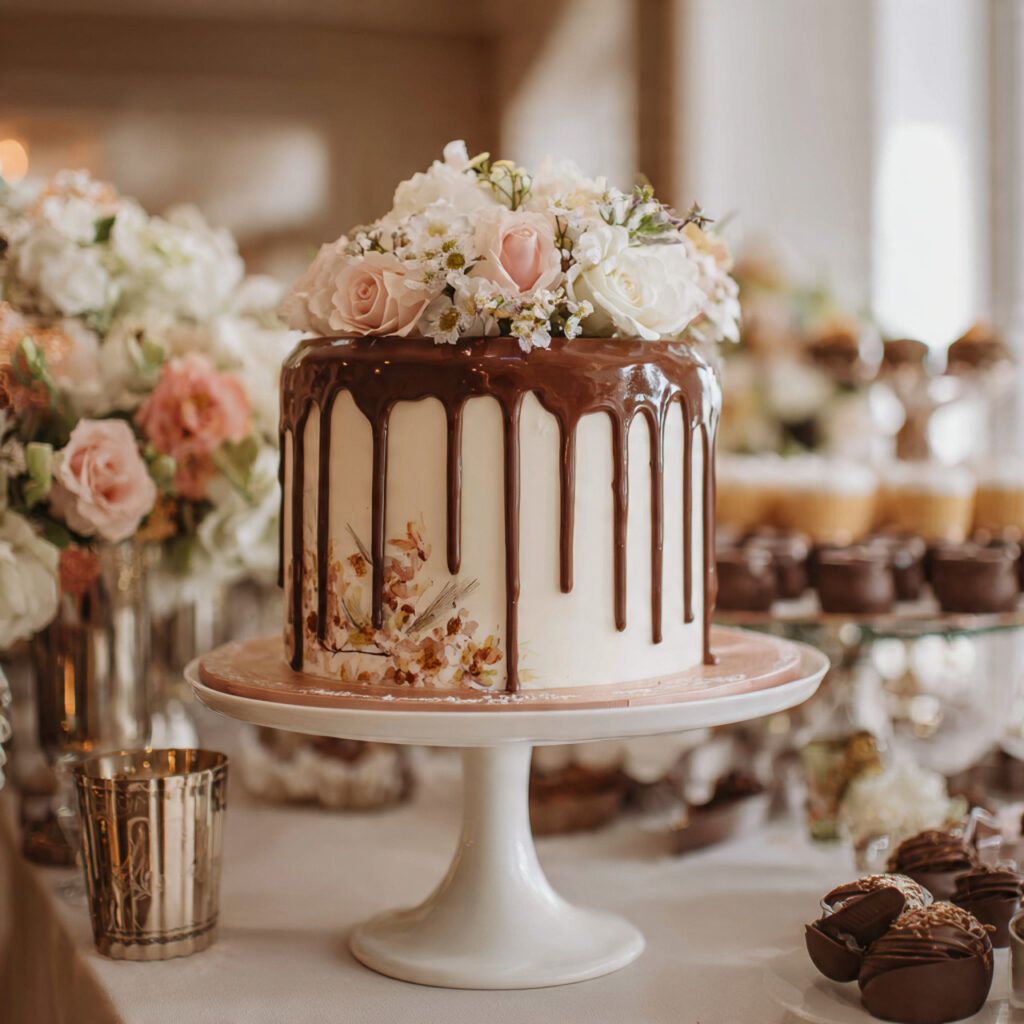
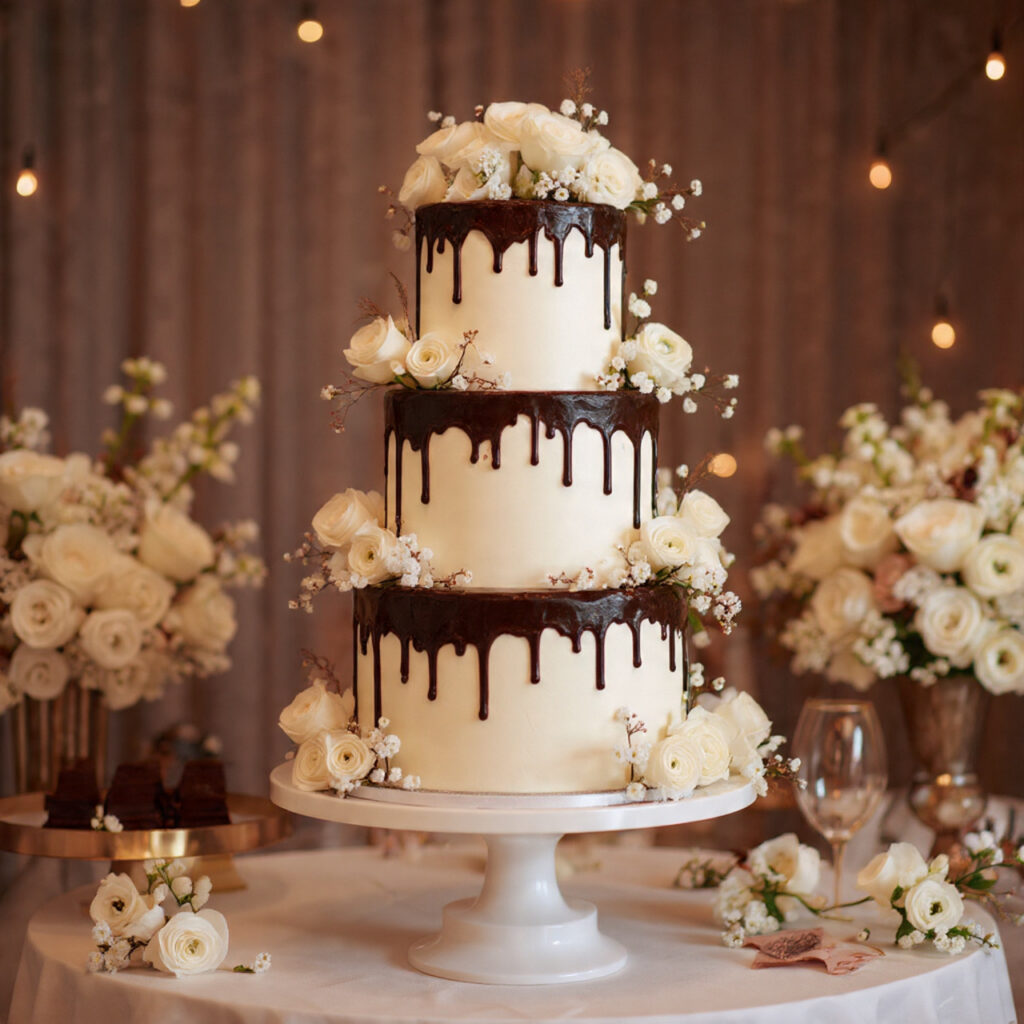
Drip cakes benefit from contrast. Wedding cake flowers placed near drip lines draw the eye downward and soften sharp edges. Florists typically choose sturdy blooms to avoid contact with glaze. Placement must be precise to avoid mess and maintain balance.
Garden-Inspired Full Coverage
Some couples prefer abundance. Wedding cake flowers covering large sections of the cake create a garden effect. This approach requires structural planning and higher floral costs. It works best for large weddings where the cake serves as a design anchor rather than a subtle detail.
Floral Initials and Monograms
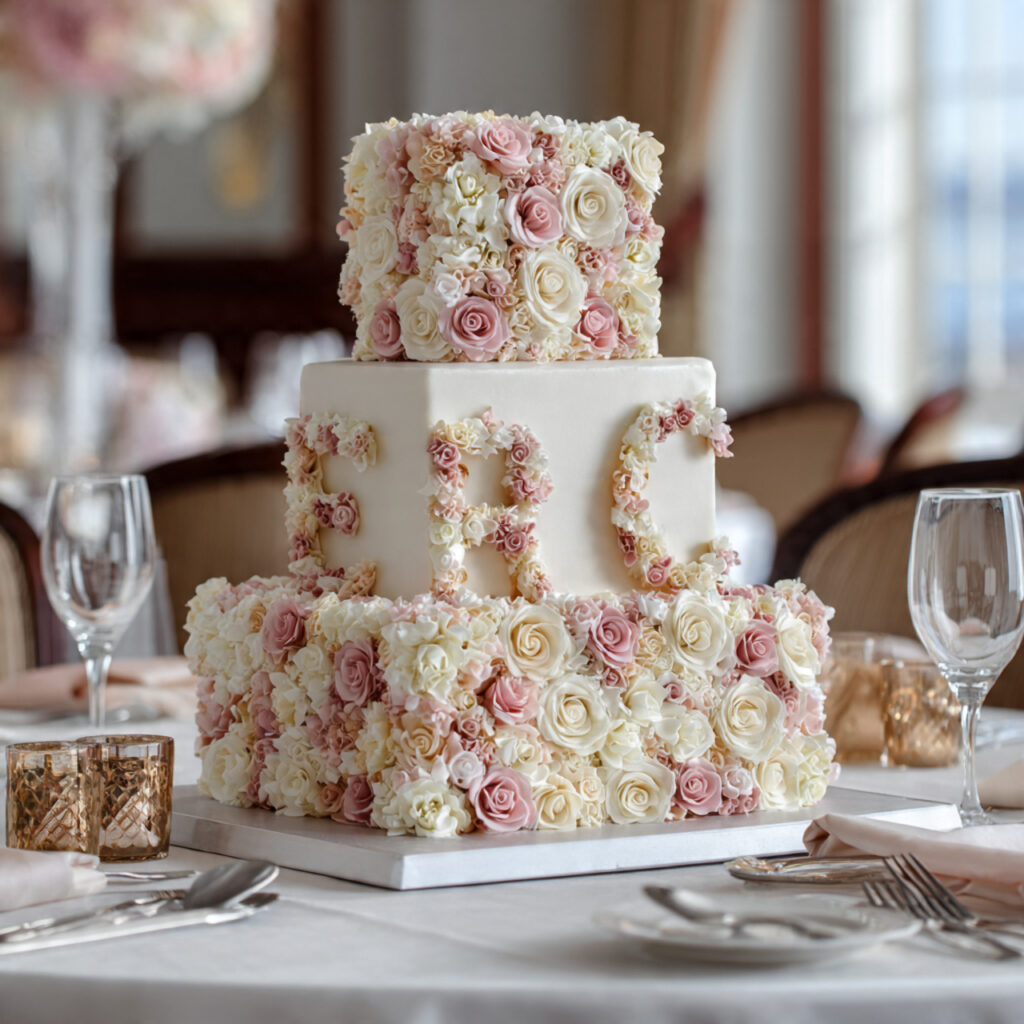
Personalization adds meaning. Wedding cake flowers shaped into initials or monograms create a custom focal point. This design requires careful planning and skilled placement. It suits couples who want symbolism without novelty.
Floral Accent on Modern Geometric Cakes
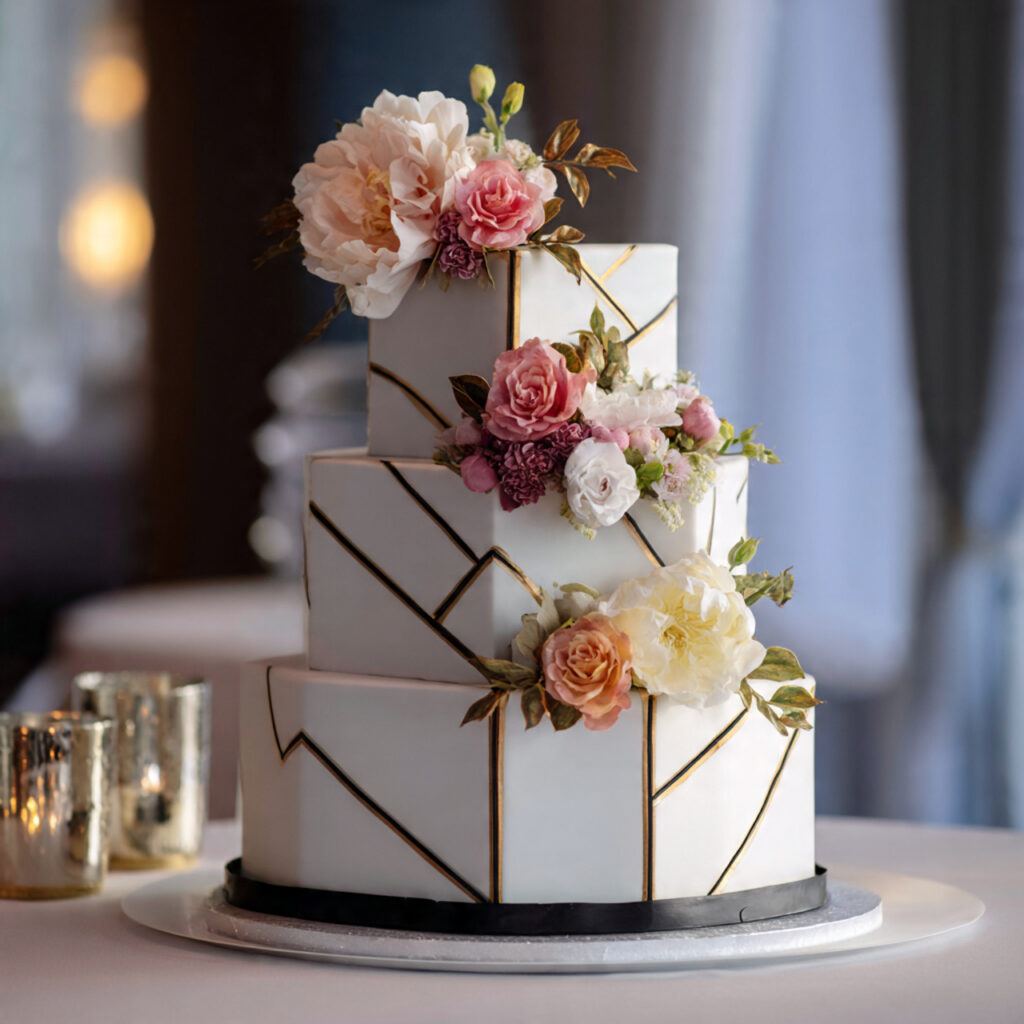
Geometric cakes benefit from softness. Wedding cake flowers offset sharp lines and metallic finishes. A small cluster placed strategically prevents the design from feeling cold. This balance works well for urban or contemporary weddings.
Floral Bands Between Tiers
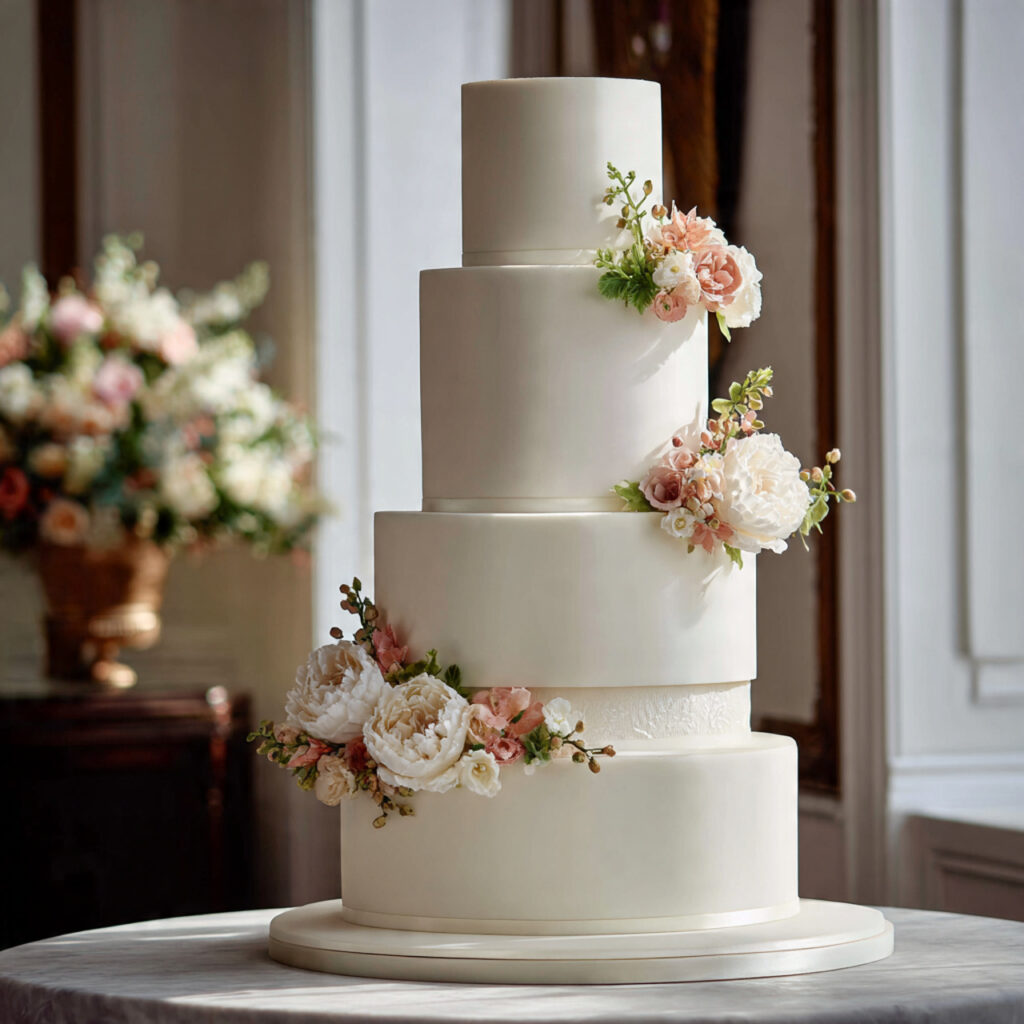
Bands of flowers between tiers create separation. Wedding cake flowers arranged this way emphasize structure. This style works best with uniform blooms and consistent spacing. It offers a clean, architectural look without overwhelming the cake.
Floral Topper with Minimal Base
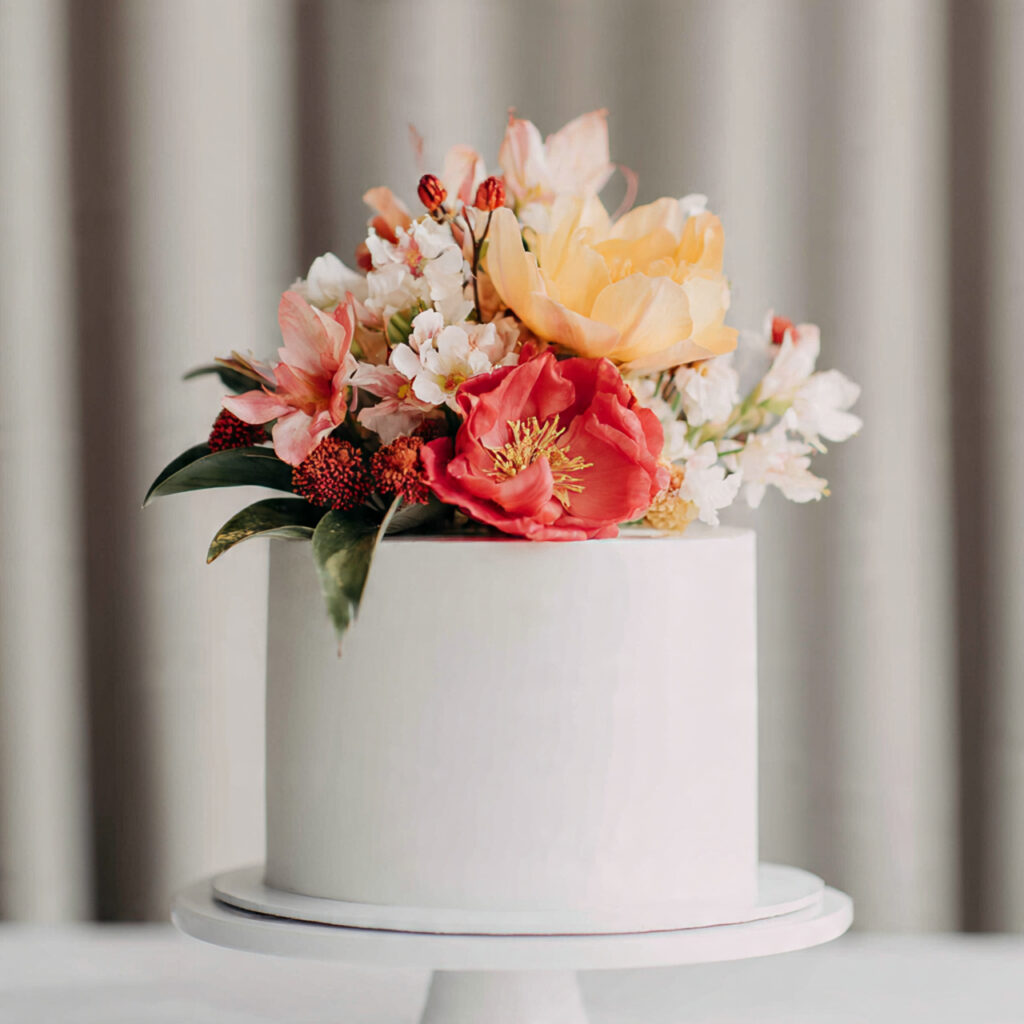
Keeping decoration focused at the top simplifies design. Wedding cake flowers concentrated on the top tier allow the rest of the cake to remain clean. This approach reduces cost and risk while maintaining visual interest. It suits couples who value clarity over excess.
Mixed Floral Textures
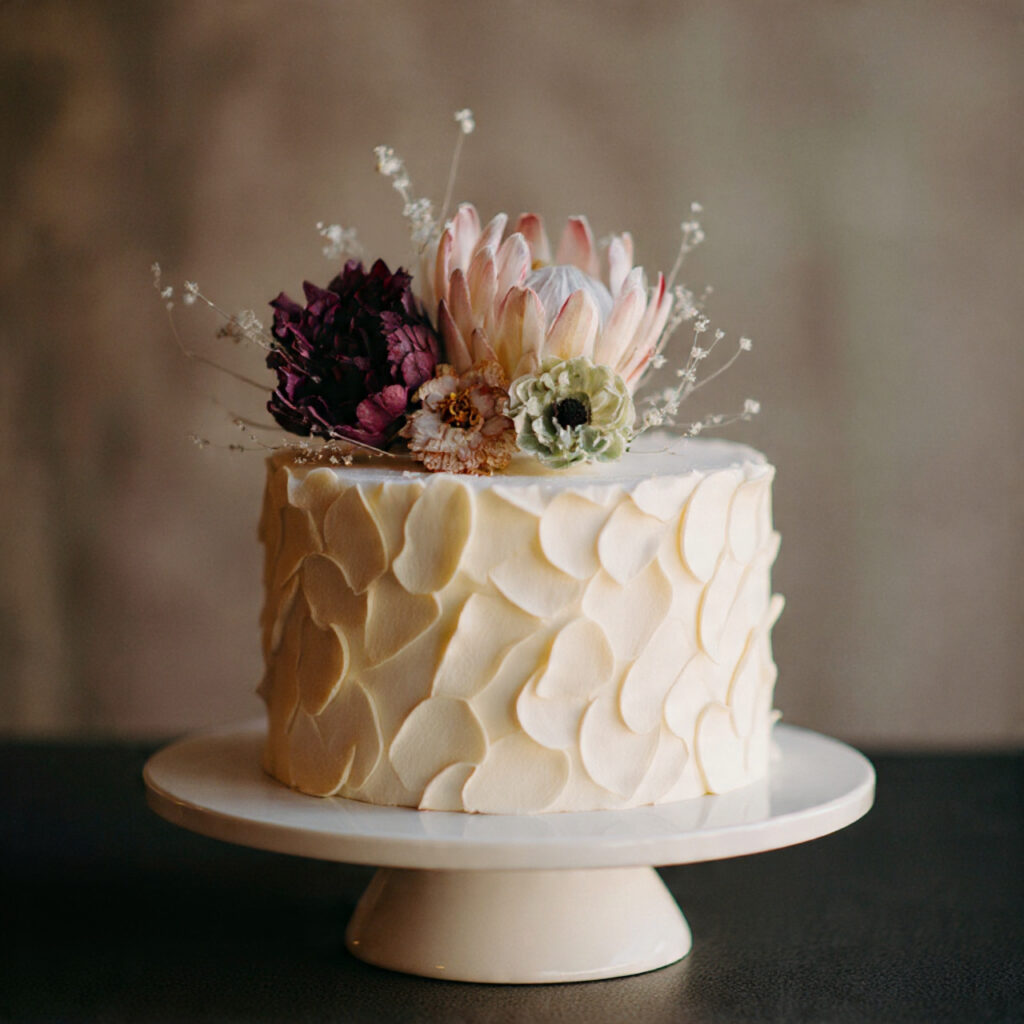
Texture matters more than quantity. Wedding cake flowers combining smooth petals with spiky or airy elements create depth. Florists often mix roses with astilbe or thistle. The contrast keeps the arrangement from feeling flat and improves photography.
FAQs About Wedding Cake Flowers
Are real flowers safe on wedding cakes?
Yes, when properly prepared. Florists use food-safe barriers and tape. Not all flowers are edible, but they can be safely displayed.
Do sugar flowers cost more than fresh flowers?
Often yes. Sugar flowers require hours of labor. However, they offer durability and precision that fresh blooms cannot guarantee.
How far in advance are cake flowers placed?
Fresh wedding cake flowers are typically placed the day of the event. Sugar or dried flowers can be applied earlier.
Can wedding cake flowers match bridal bouquets exactly?
They can match in color and style, but exact duplication is difficult due to scale and structural needs.
What happens to the flowers when the cake is cut?
Flowers are removed before serving. Staff should be informed in advance to avoid confusion during cutting.
Conclusion
Wedding cake flowers succeed when they respect balance, structure, and context. They are not meant to compete with the cake but to support it. The best designs consider season, venue, and practicality as much as aesthetics.
Trends will change, but restraint, planning, and intention remain constant. Whether you choose fresh blooms, sugar replicas, or painted illusions, wedding cake flowers should feel purposeful. When they do, the cake becomes more than dessert. It becomes part of the memory.