25 Beach Wedding Aesthetic Ideas for a Calm, Elegant Coastal Celebration
A wedding by the sea strips celebration down to its essentials. Light, horizon, movement, sound. There is no ceiling, no wall, no fixed boundary. The beach wedding aesthetic works because it does not compete with nature; it cooperates with it. Every choice, from fabric to furniture, must accept wind, salt, heat, and unpredictability. This guide explores twenty-five grounded ideas that translate the beach wedding aesthetic into real, workable design decisions rather than surface-level trends.
Natural Color Palettes Rooted in Sand and Sky for Beach Wedding Aesthetic
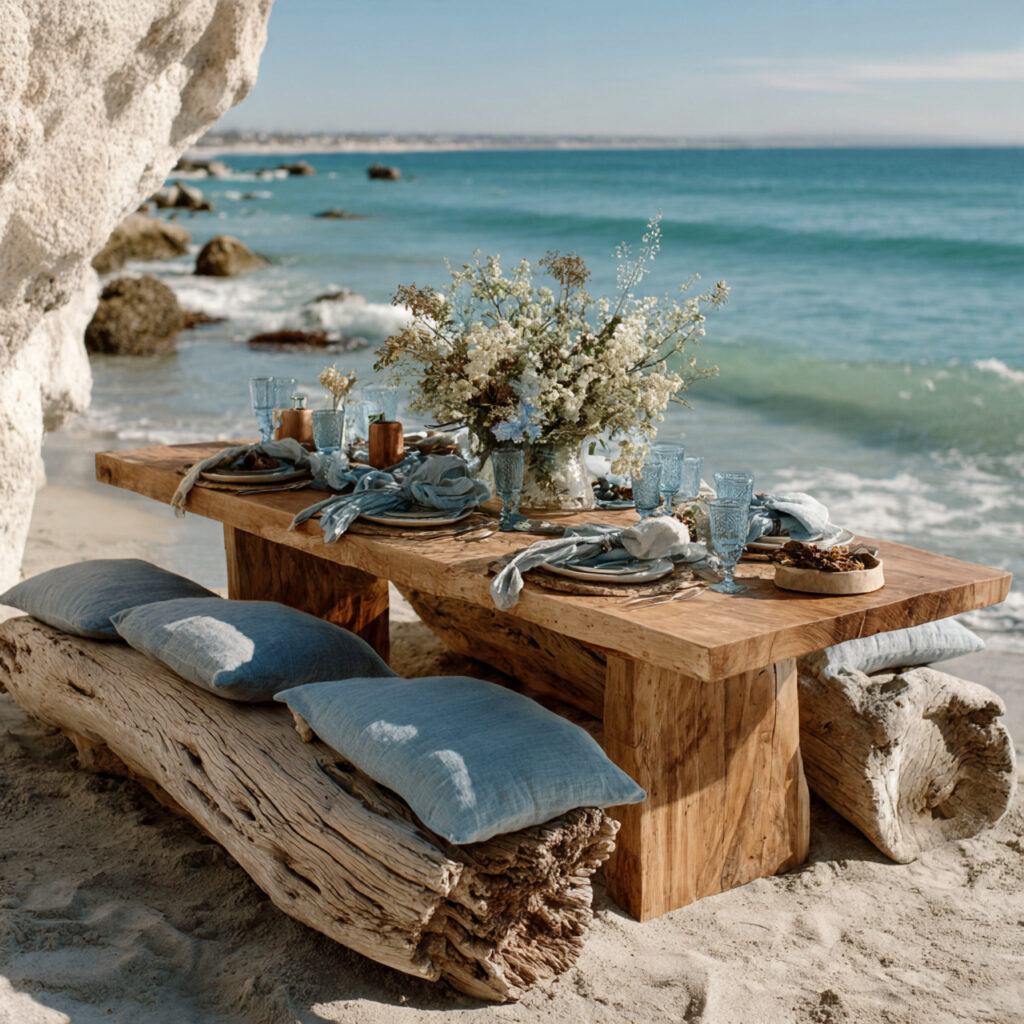
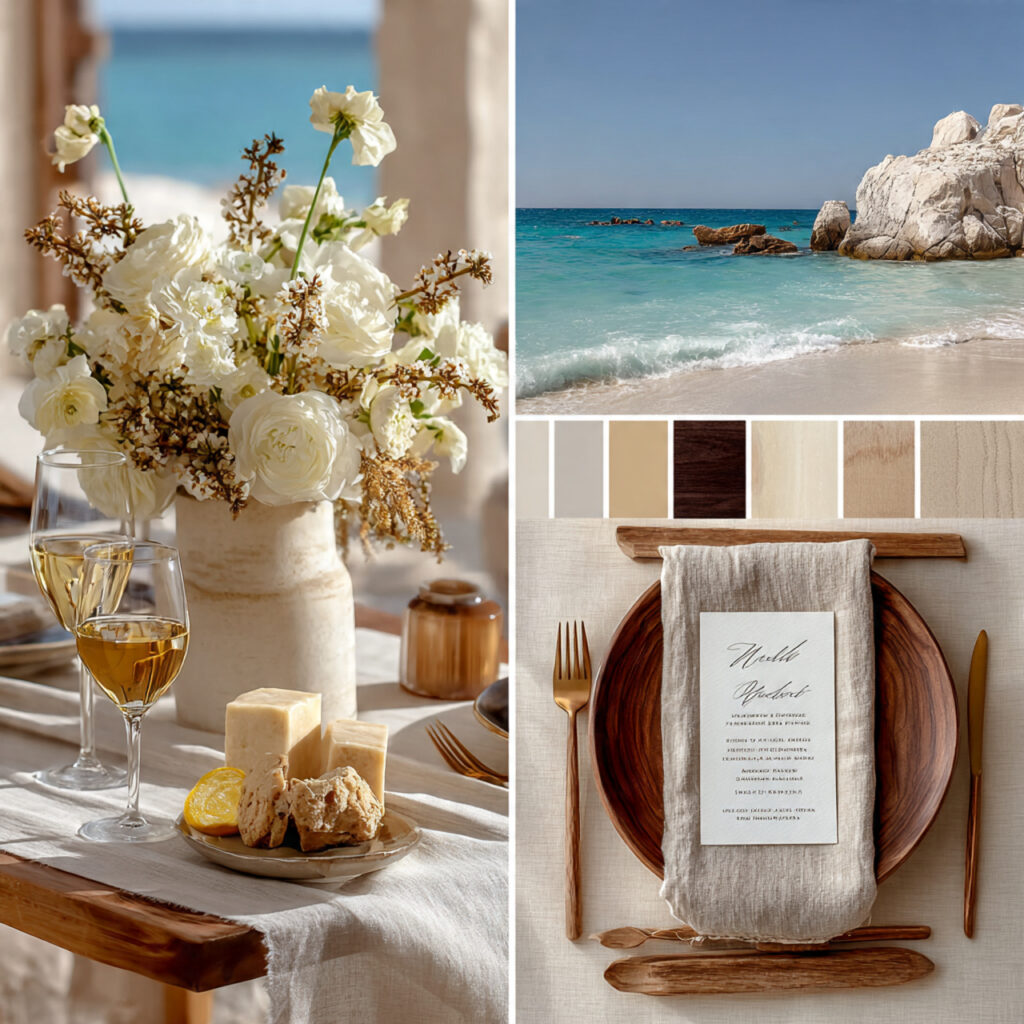
A beach wedding aesthetic begins with restraint. The most effective palettes already exist in the environment: warm sand, muted blues, weathered driftwood, and washed white shells. These colors do not demand attention. They support the setting instead of challenging it.
Avoid overly saturated hues that clash with the natural horizon. Soft taupe, fog gray, seafoam, pale terracotta, and sun-bleached ivory photograph well in strong daylight and remain calm under shifting weather. When color is introduced, it should appear intentional and limited, not decorative excess. Neutral palettes also simplify vendor coordination. Linens, florals, signage, and attire align more easily when the color language is narrow and controlled.
Ceremony Arches That Respect the Ocean View
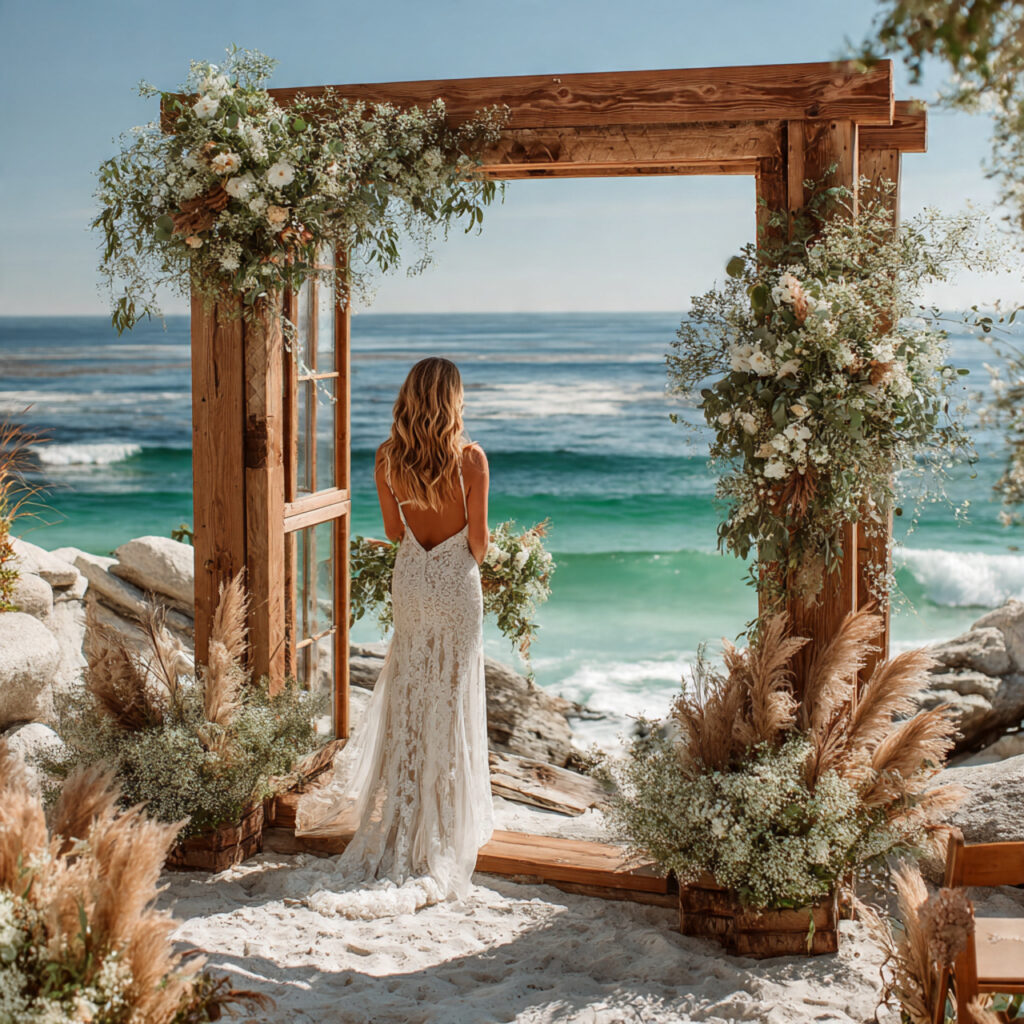
The beach wedding aesthetic fails when structures block what guests came to see. Ceremony arches should frame the ocean, not compete with it. Minimal construction using light wood, bamboo, or metal with open negative space allows the horizon to remain visible. Florals should be sparse and directional, placed asymmetrically so the eye still travels outward toward the sea. Avoid heavy installations that require deep anchoring or risk instability in wind. An arch on the beach should look temporary and intentional, as if it belongs to the moment and will disappear without trace afterward.
Wind-Ready Fabrics for Effortless Movement
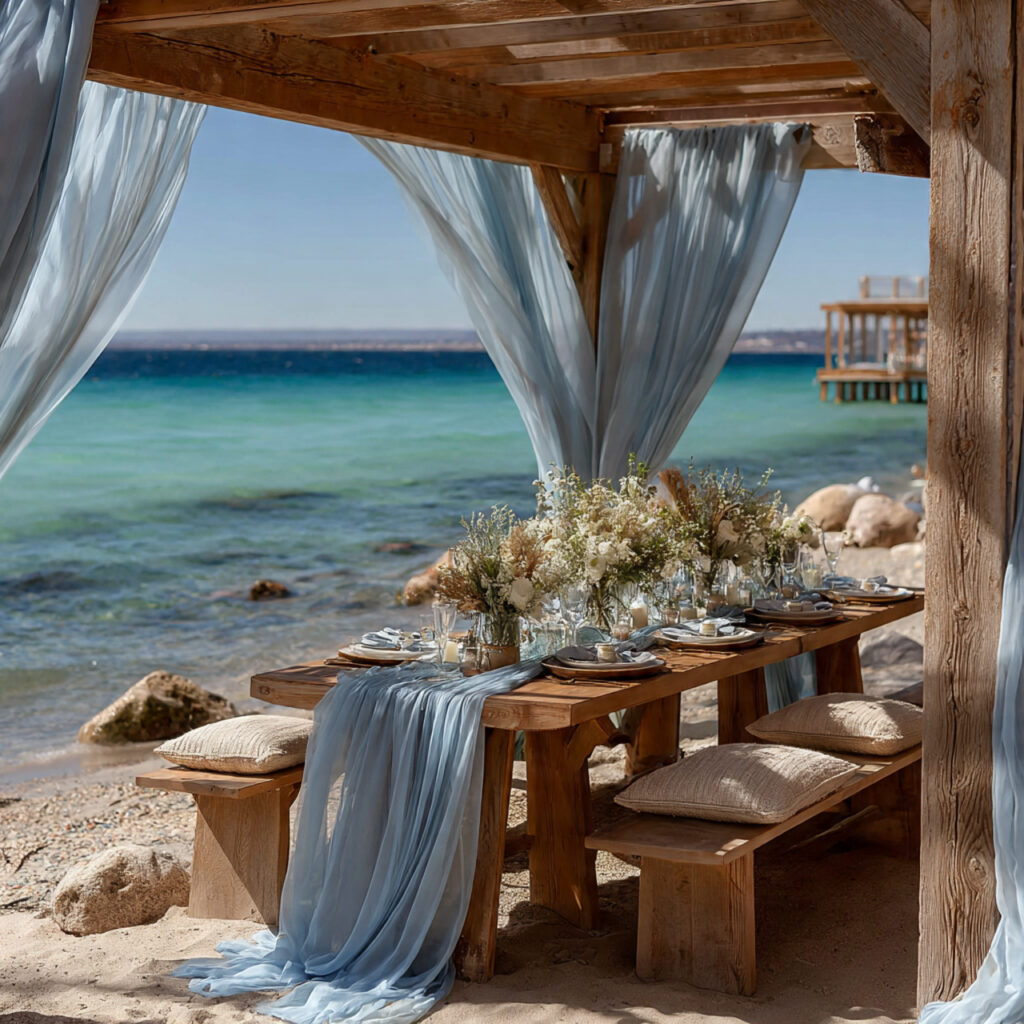
Wind is not a problem to eliminate. It is part of the beach wedding aesthetic. Fabric choices should work with movement rather than against it. Linen, chiffon, gauze, and lightweight cotton breathe, lift, and fall naturally. Heavy satin, thick polyester, and stiff tulle fight the environment and often look strained in photographs. Table linens should be clipped or weighted discreetly. Backdrops should flow rather than hang rigidly. Movement adds depth to still images and keeps the atmosphere alive. The key is choosing materials that behave well under pressure.
Barefoot-Friendly Ceremony Design
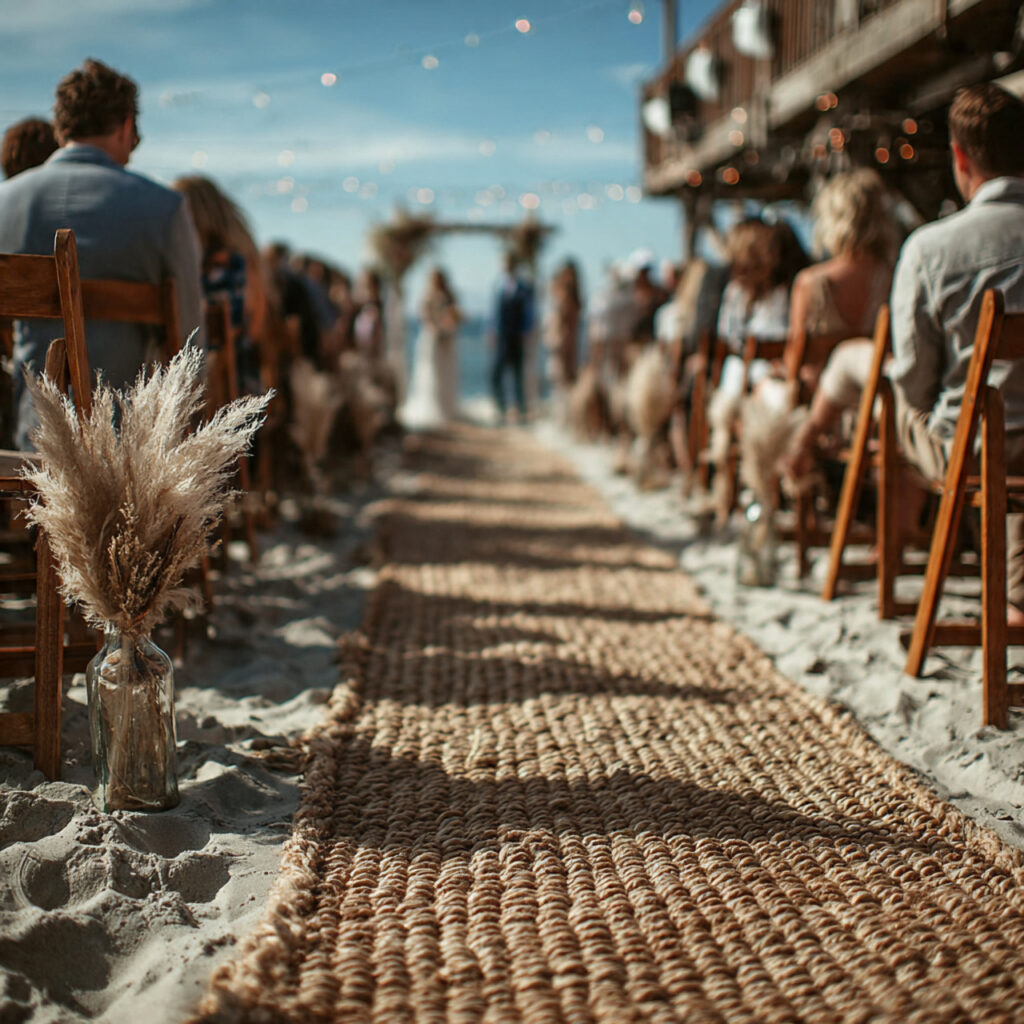
Footwear is often impractical on sand. A beach wedding aesthetic accepts this reality rather than forcing formality. Design pathways using woven mats, jute runners, or compacted sand to allow comfortable walking. Encourage barefoot participation through subtle cues rather than announcements. A shoe station with baskets and signage signals permission without instruction. Seating should be stable and low to prevent sinking. Comfort directly affects guest experience. When people are physically at ease, the celebration feels honest and unforced.
Coastal Florals That Tolerate Heat and Salt
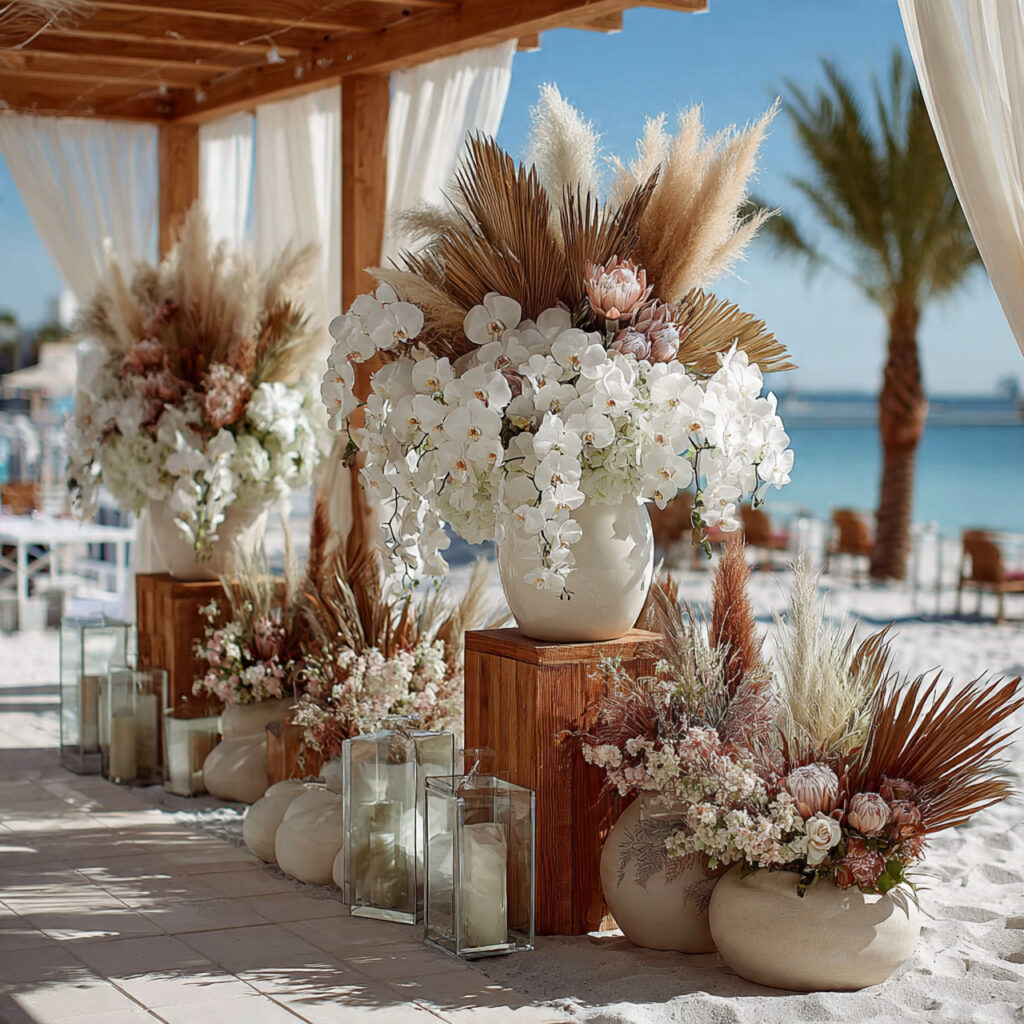
Not all flowers survive coastal conditions. The beach wedding aesthetic benefits from blooms that are structurally strong and drought tolerant. Orchids, protea, anthurium, dried palms, and native grasses perform better than delicate garden roses. Greenery should feel local rather than imported. Olive branches, eucalyptus, and palm fronds echo coastal vegetation without looking artificial. Florals should be designed to withstand sun exposure for hours without refrigeration. A restrained floral approach also reduces waste and logistical stress.
Ceremony Seating That Matches the Landscape
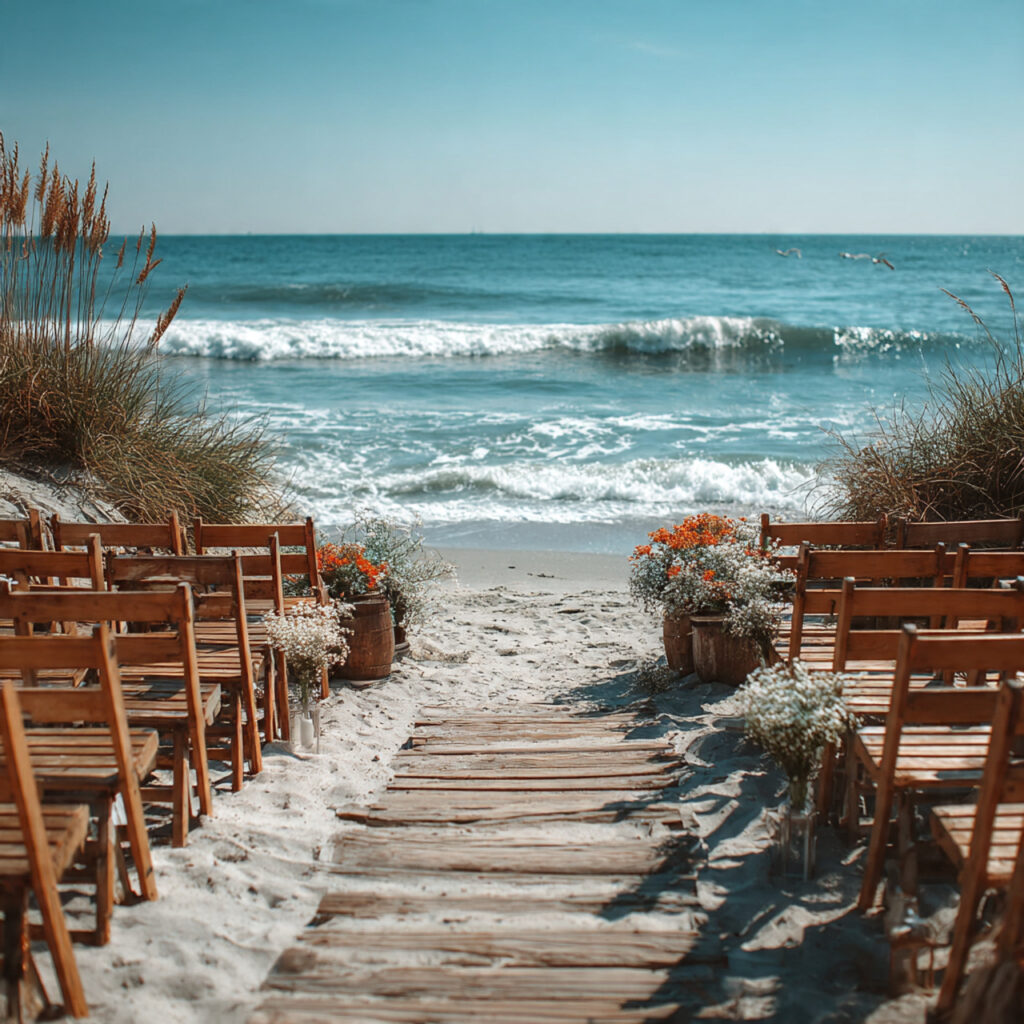
Traditional banquet chairs can feel out of place on open sand. The beach wedding aesthetic favors seating that blends visually and practically. Wooden folding chairs, bamboo seating, or even low benches keep the focus outward. Chair décor should be minimal or absent. Avoid heavy chair covers that trap heat and shift in wind. If accents are used, they should be light and functional, such as simple fabric ties that secure rather than decorate. Seating should feel temporary and purposeful, not staged.
Reception Tables Styled with Restraint
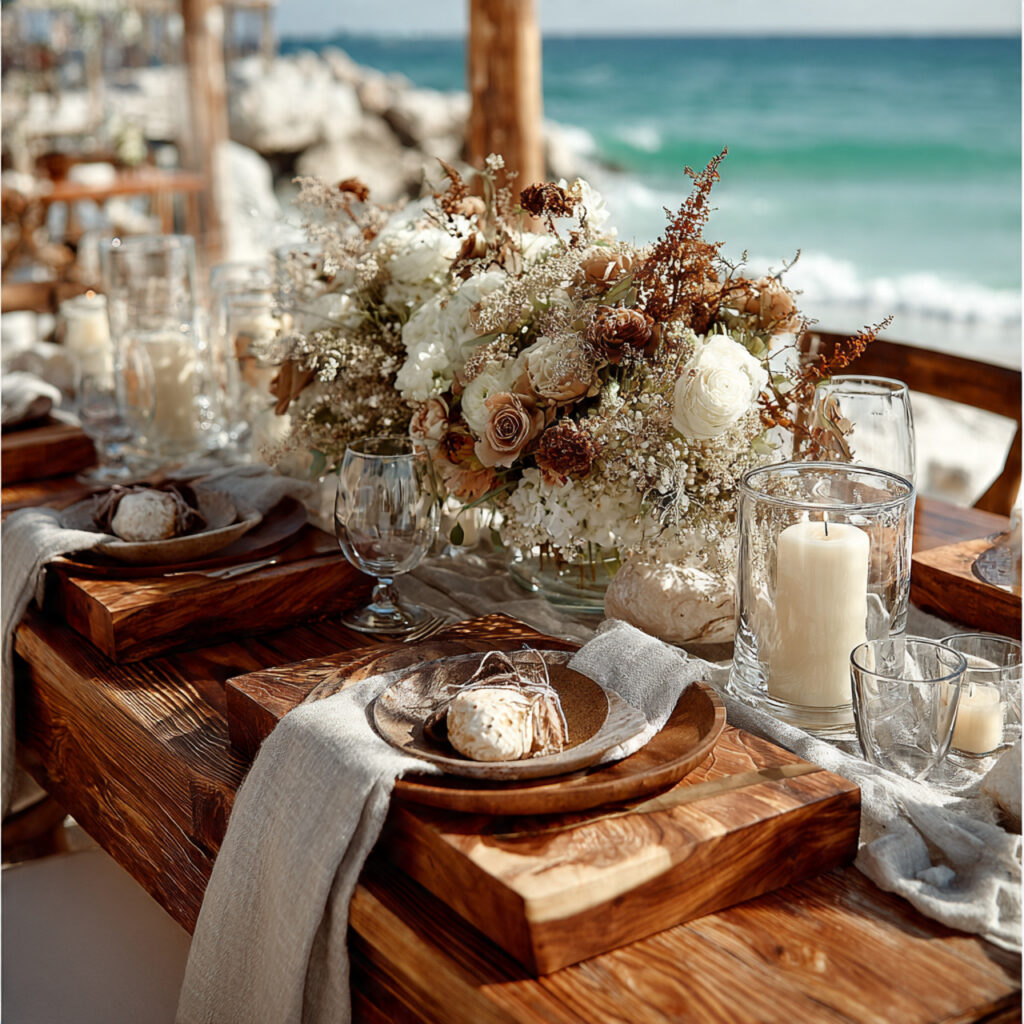
Overstyled tables undermine the beach wedding aesthetic. Sand, wind, and light already provide texture. Tables should be grounded, low, and clean. Wooden farm tables or neutral linens work best. Centerpieces should be compact and weighted. Candles must be wind-protected using glass cylinders or lanterns. Negative space matters. Allow tables to breathe visually instead of filling every inch with objects.
Lighting That Works After Sunset
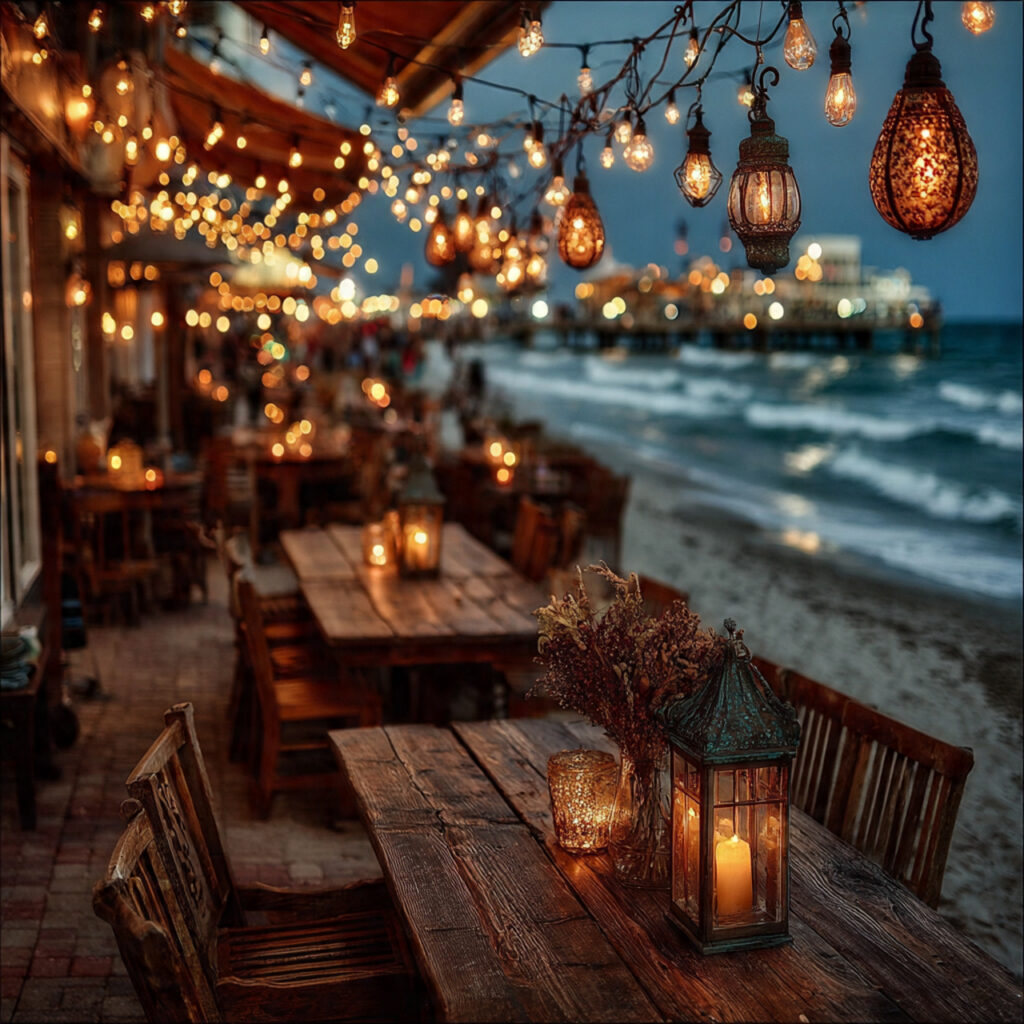
Once daylight fades, lighting defines the experience. The beach wedding aesthetic after dark relies on warmth rather than brightness. String lights, festoon bulbs, lanterns, and ground-level candles create intimacy without overpowering the night sky. Lighting should be layered. Overhead for visibility, ambient for atmosphere, and accent lighting for key areas like the bar or lounge. Avoid harsh uplighting that disrupts the natural darkness. Power sources must be planned carefully due to remote locations.
Bridal Attire That Prioritizes Movement
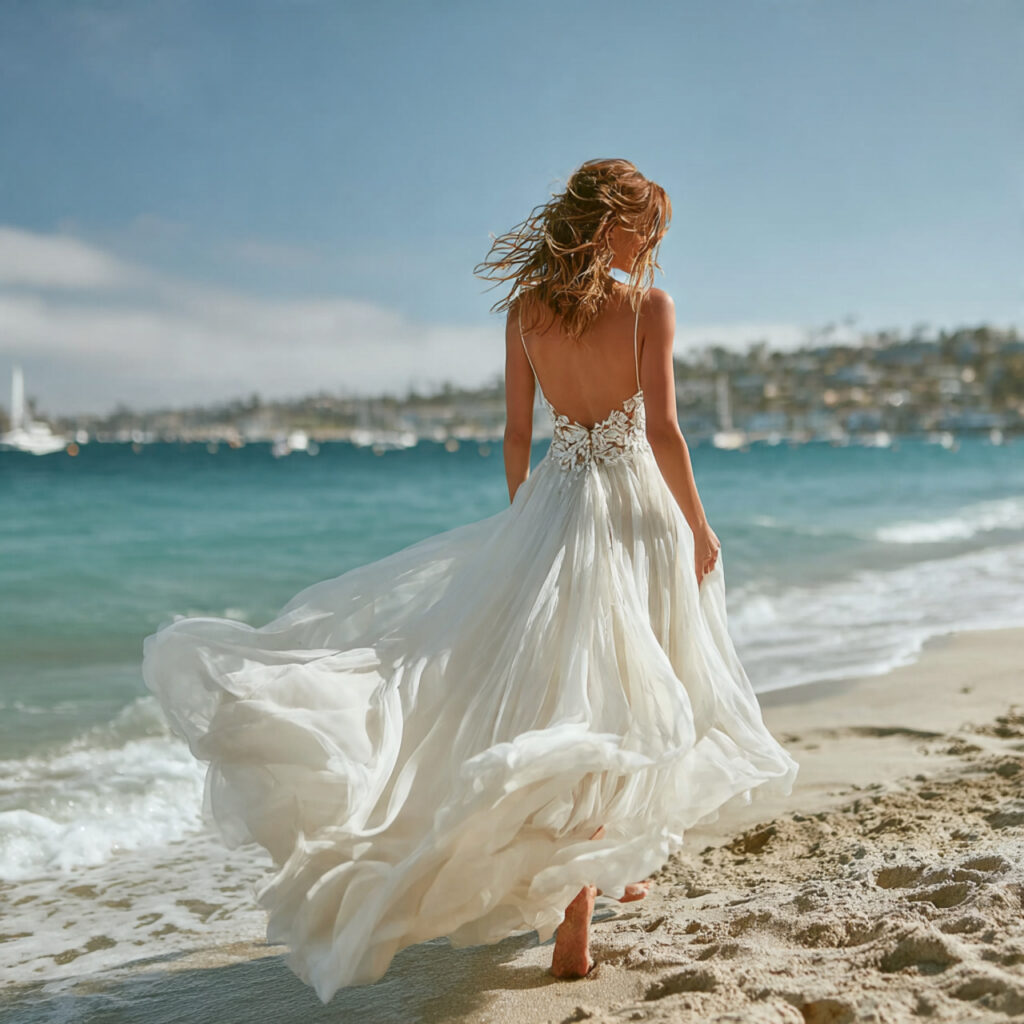
A beach wedding aesthetic calls for dresses that move easily and dry quickly. Lightweight silhouettes, simple cuts, and breathable fabrics outperform structured gowns. Long trains, heavy boning, and excessive embellishment collect sand and restrict movement. Simpler dresses photograph better in natural light and allow the bride to walk comfortably. This is not about casualness. It is about functional elegance.
Groom and Partner Attire Adapted for Heat

Formalwear must adapt to climate. Linen suits, lightweight wool blends, or tailored separates support the beach wedding aesthetic without appearing informal. Dark colors absorb heat and should be used sparingly. Open collars, loafers, or bare feet can still feel intentional when styled consistently. Comfort affects posture, confidence, and presence.
Hair and Makeup Designed for Humidity

Humidity reshapes beauty choices. The beach wedding aesthetic favors hair that embraces texture rather than fighting it. Loose waves, low buns, braids, and pinned styles hold better than rigid updos. Makeup should prioritize skin finish over heavy contouring. Matte products crack under heat. Dewy, long-wear formulas withstand environmental stress. Testing looks in similar weather conditions is essential.
Minimalist Signage with Natural Materials

Signage on the beach should be legible, stable, and unobtrusive. The beach wedding aesthetic benefits from wood, acrylic, or fabric signage that resists wind. Fonts should be clean and readable from a distance. Overly decorative signage competes with the environment and often fails functionally. Every sign should serve a purpose. Remove what is unnecessary.
Sound Design That Carries Over Waves
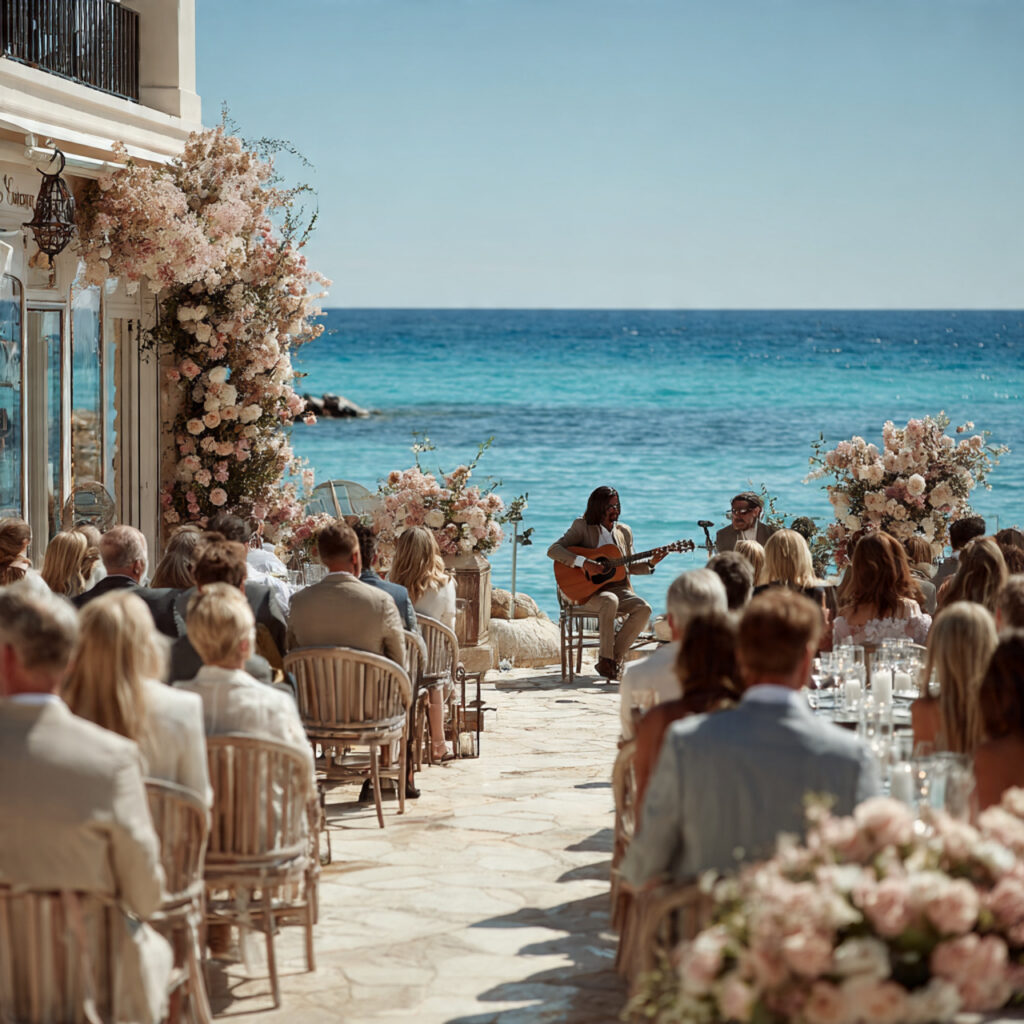
Ocean sound is constant. The beach wedding aesthetic requires sound amplification that respects the environment. Professional audio equipment ensures vows and music carry without distortion. Live acoustic music often works better than heavy bass tracks. Speakers should be positioned carefully to avoid echo and feedback. Sound planning is not optional at the beach.
Sustainable Choices That Reflect the Setting
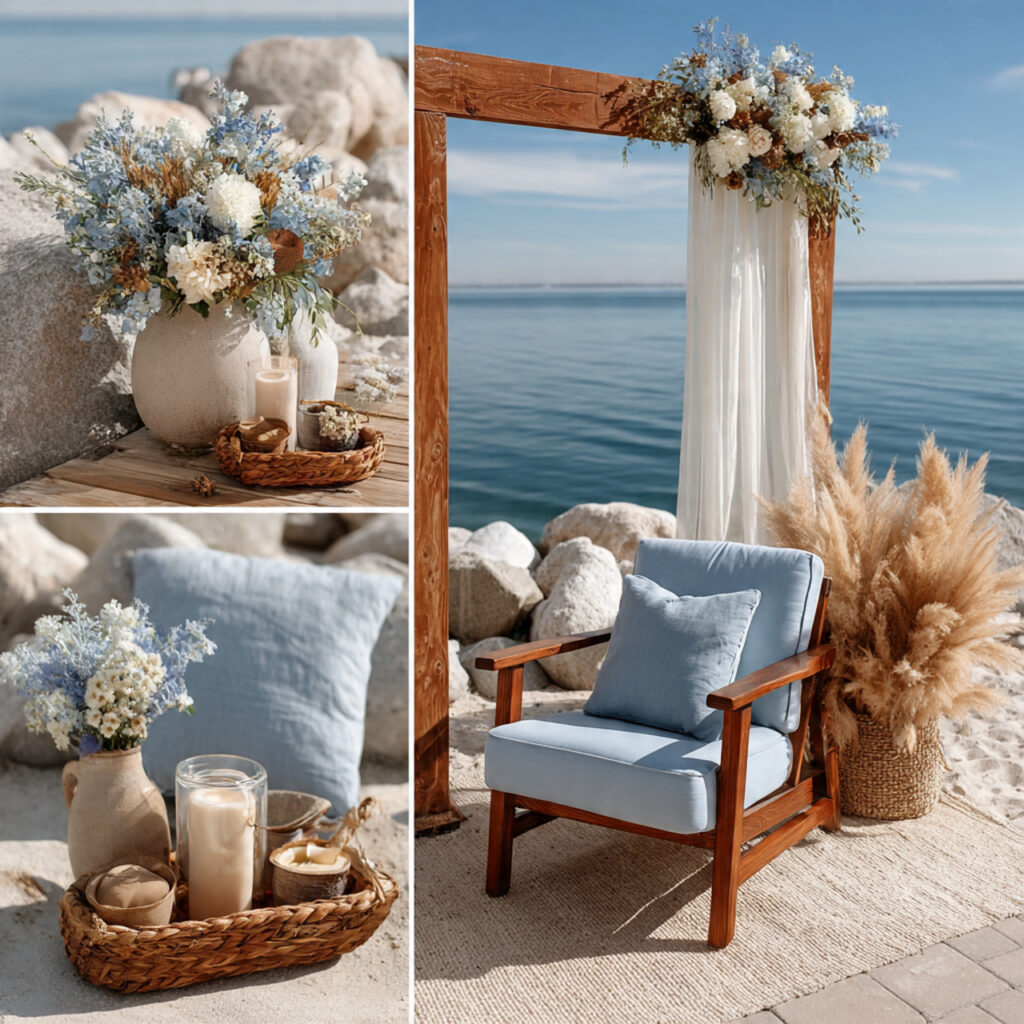
The beach wedding aesthetic naturally aligns with sustainability. Disposable décor, plastic favors, and synthetic materials feel out of place. Reusable items, local sourcing, and minimal waste strategies reflect respect for the location. Guests notice when choices feel intentional and responsible. Environmental permits and cleanup plans should be part of early planning.
Food and Beverage That Handle Outdoor Conditions
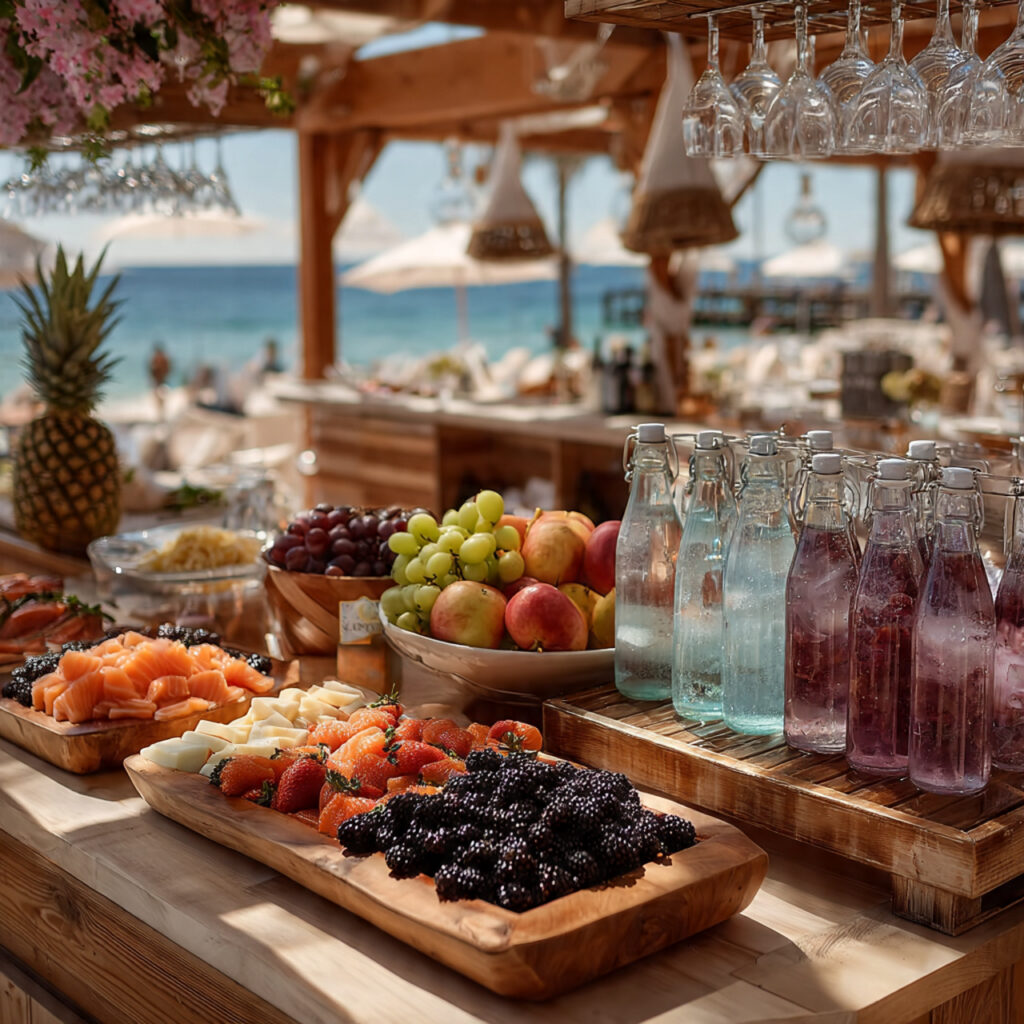
Menus must consider heat, wind, and time. The beach wedding aesthetic favors fresh, simple foods served efficiently. Heavy sauces, cream-based dishes, and melting desserts struggle outdoors. Seafood, grilled options, and seasonal produce align naturally with coastal settings. Beverages should be shaded and replenished frequently. Function outweighs novelty.
Lounge Areas That Encourage Relaxation
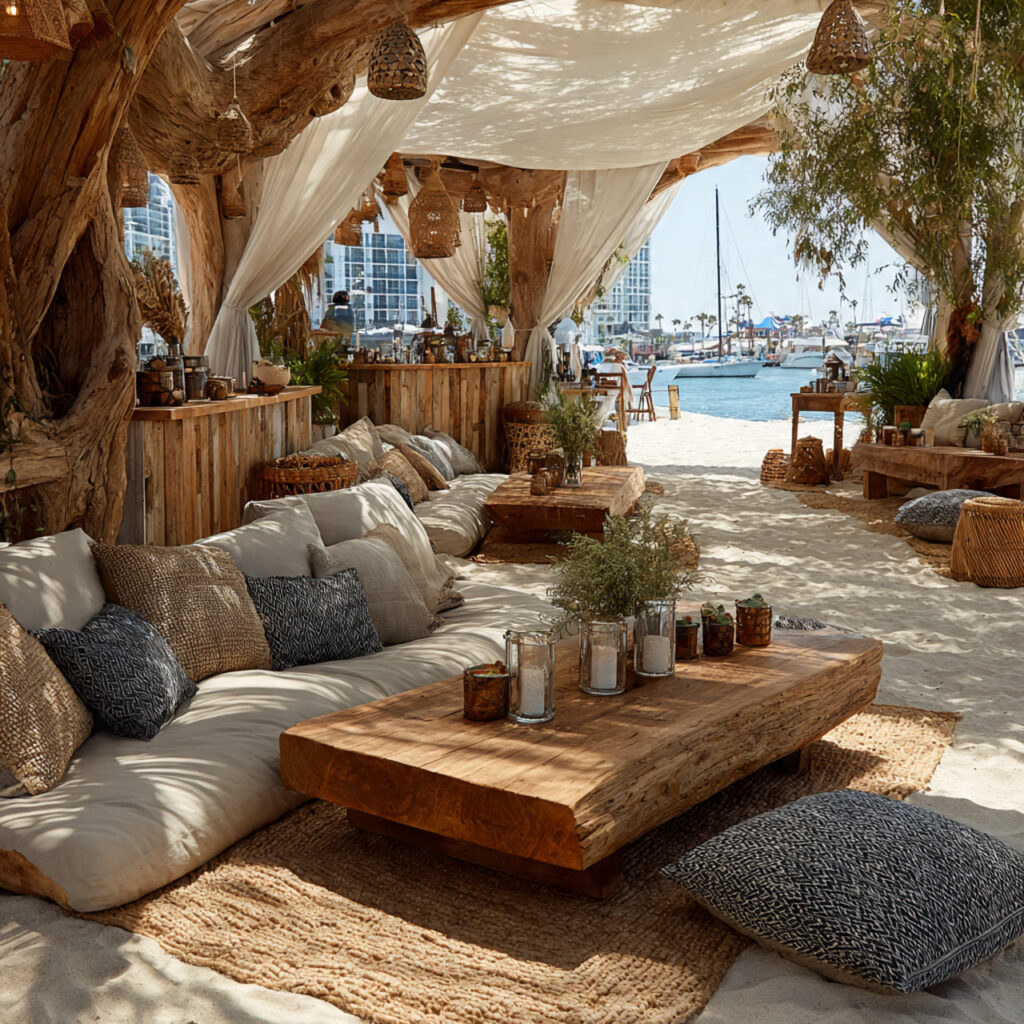
Lounge spaces support the beach wedding aesthetic by offering rest without formality. Low seating, cushions, and woven textures create comfort. Furniture must be stable on sand. Avoid thin legs or lightweight pieces that shift easily. Shade is critical during daytime events. Lounge design should feel casual but deliberate.
Ceremony Timing Based on Light and Tide
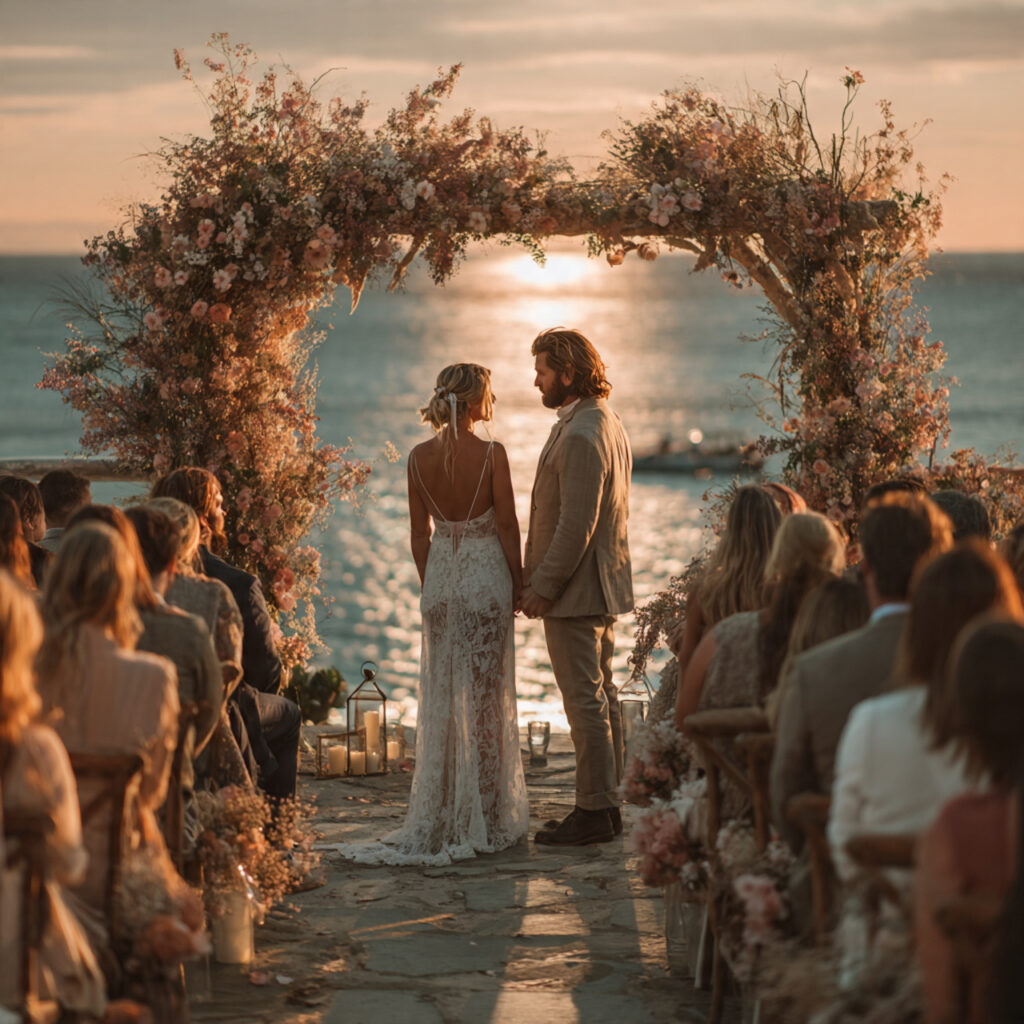
Timing shapes atmosphere. The beach wedding aesthetic is strongest during early morning or late afternoon when light softens and temperatures drop. Tide schedules affect available space and safety. Planning without tide awareness risks disruption. Golden hour offers natural drama without added décor.
Guest Experience Rooted in Practical Care
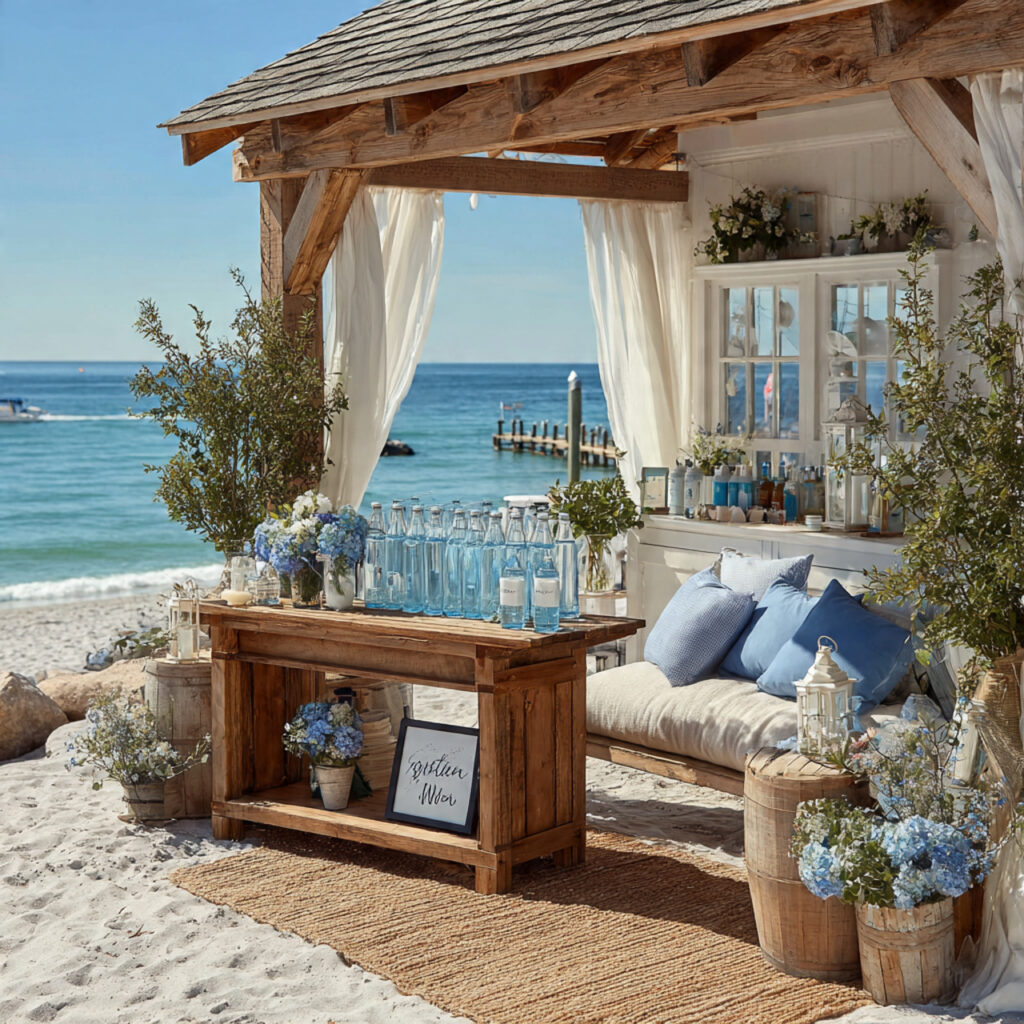
Comfort is the foundation of any beach wedding aesthetic. Shade, hydration, sunscreen stations, and clear signage improve guest experience. Ignoring practical needs creates discomfort that no décor can overcome. Thoughtful planning reads as generosity. Guests remember how they felt more than how things looked.
Intimate Guest Counts That Suit the Environment
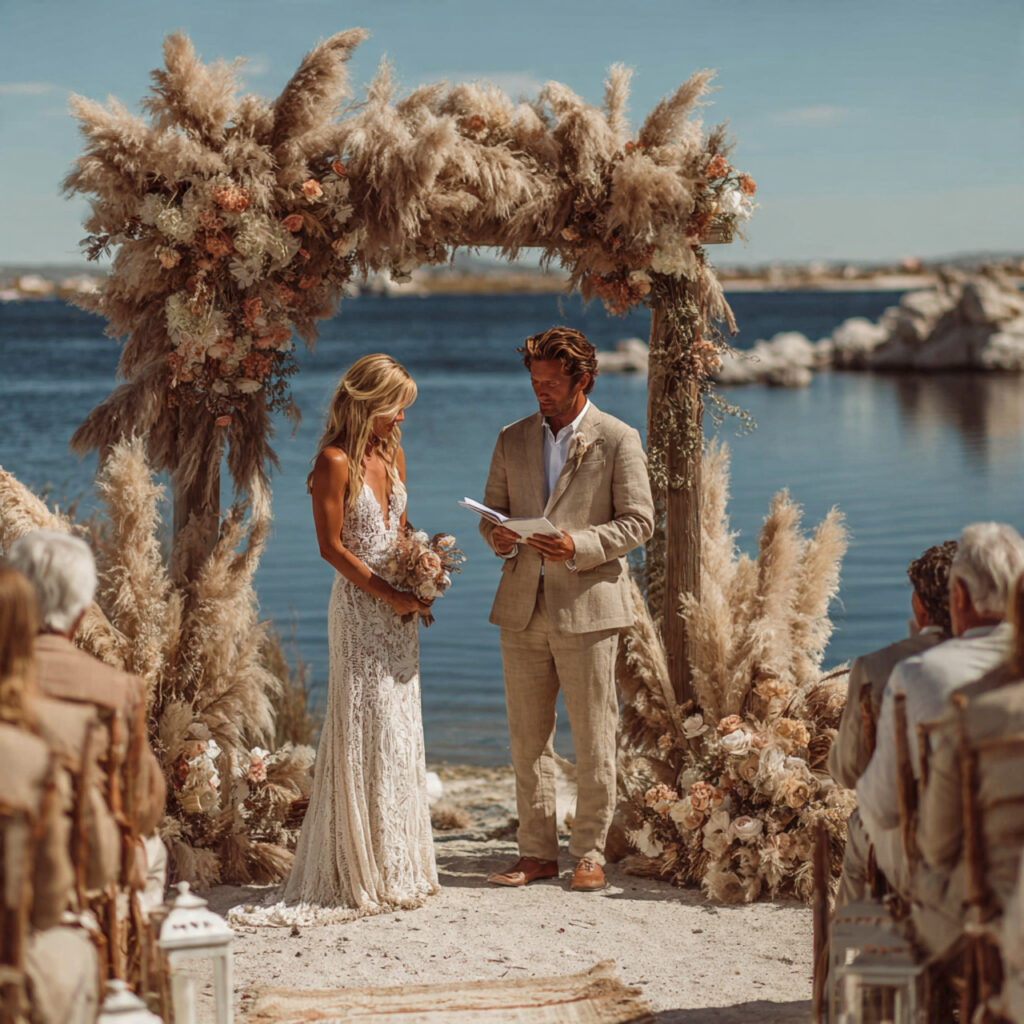
Large crowds overwhelm the beach. The beach wedding aesthetic thrives with smaller guest lists that allow movement and connection. Permits often limit numbers anyway. Embrace intimacy rather than fighting scale. Smaller events feel intentional and grounded.
Photography That Uses Natural Framing
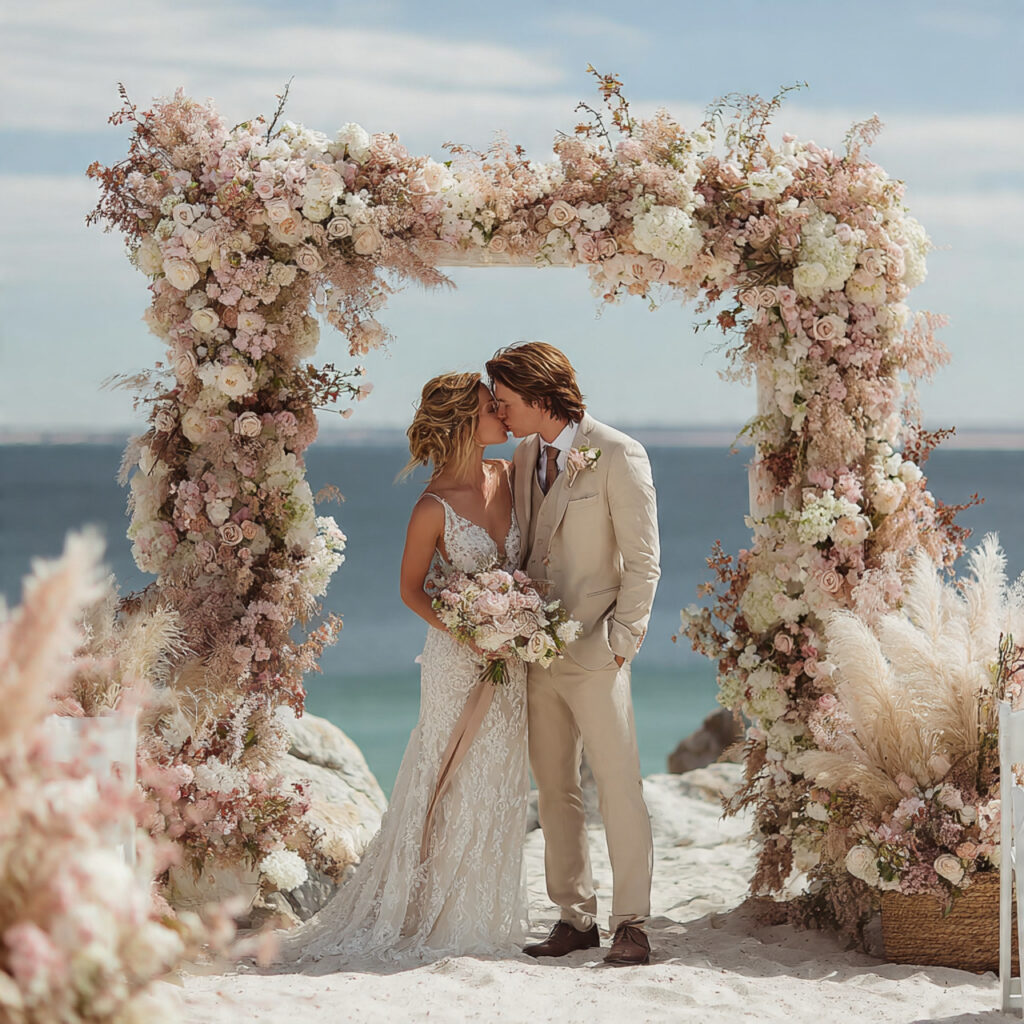
Photographers should work with horizon lines, reflections, and open space. The beach wedding aesthetic photographs best when compositions are wide and uncluttered. Avoid forcing poses that ignore wind or uneven ground. Natural movement produces more honest images. Discuss lighting conditions and backup plans in advance.
Weather Contingency Without Panic
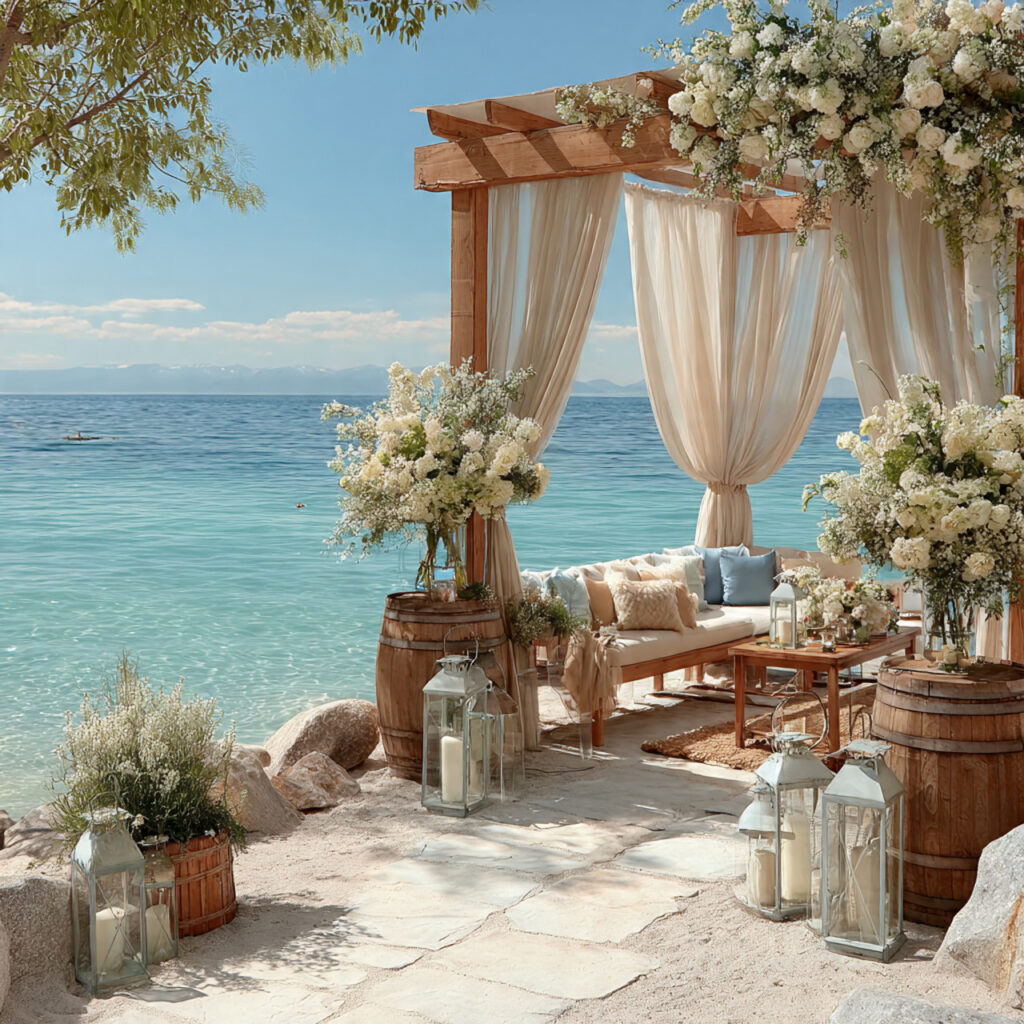
Weather changes quickly. The beach wedding aesthetic requires flexibility. Tents, umbrellas, and alternate layouts should be planned but not emphasized. Guests should feel protected without feeling enclosed. Clear communication reduces stress. Preparation prevents disappointment.
Ceremony Rituals That Reflect Place
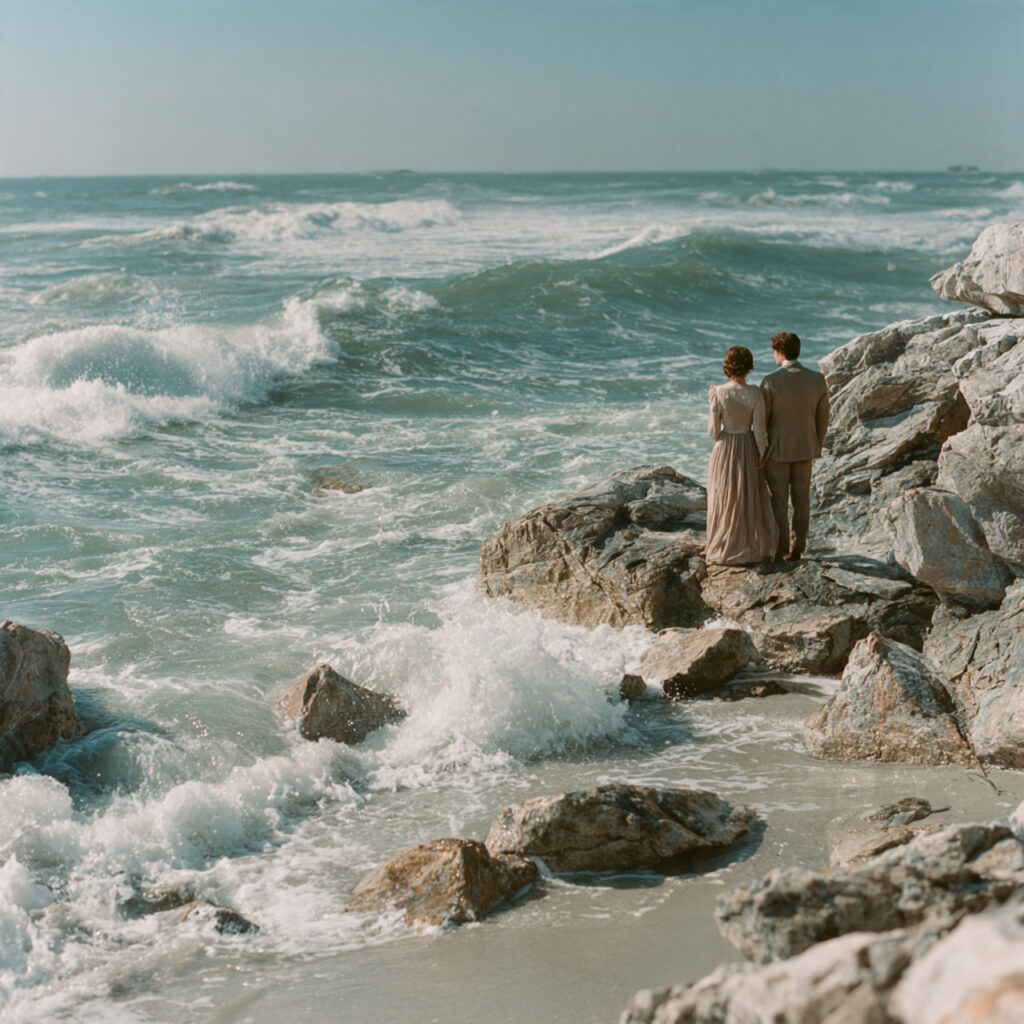
Symbolic elements should reference the environment subtly. The beach wedding aesthetic supports rituals involving water, shells, or shared movement. Avoid gimmicks. Meaning comes from intention, not novelty. Rituals should be simple and sincere.
Reception Flow That Avoids Rigid Structure
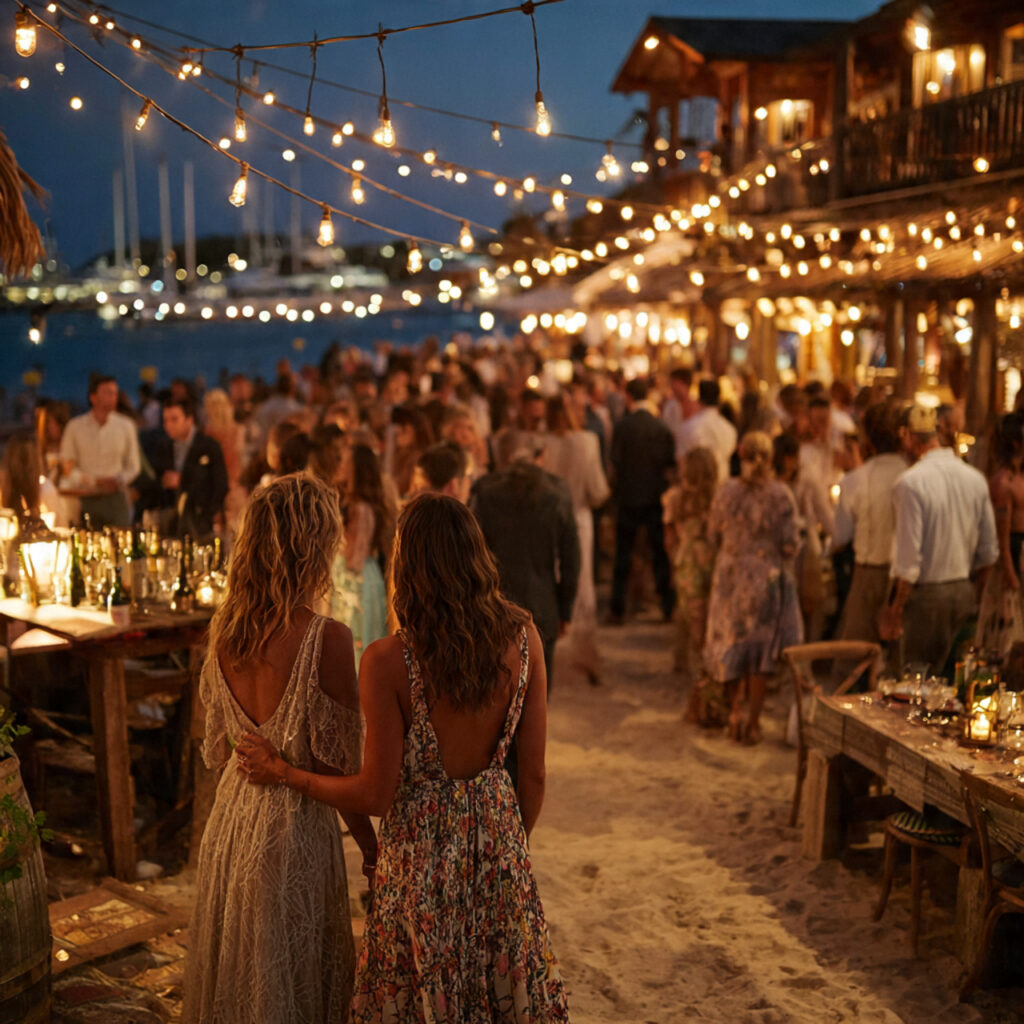
Rigid timelines struggle outdoors. The beach wedding aesthetic benefits from fluid transitions between ceremony, cocktails, and dinner. Allow guests to move naturally. Use lighting and music cues instead of strict announcements. Flow creates ease.
Décor That Leaves No Trace
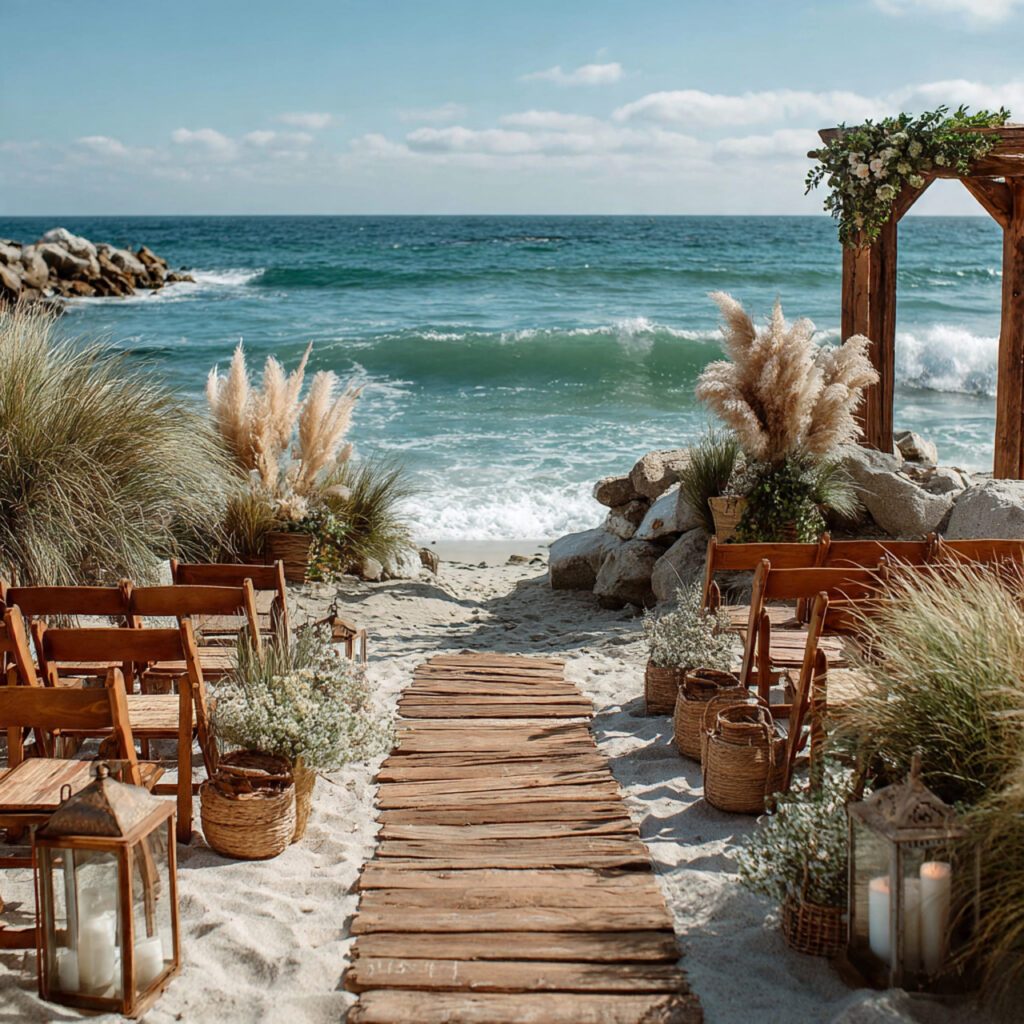
Responsible cleanup is non-negotiable. The beach wedding aesthetic respects the environment by leaving it unchanged. Avoid confetti, loose florals, or items that blow into the water. Secure everything. Stewardship matters.
Personal Style Integrated Without Excess
Personal expression should feel woven in, not layered on. The beach wedding aesthetic allows personality through music, wording, or small design choices. Avoid over-customization that overwhelms the setting. The beach already has character. Subtlety reads as confidence.
Cohesion Over Trend Adoption
Trends change quickly. The beach wedding aesthetic lasts when choices align with environment rather than social media. Consistency across attire, décor, and tone matters more than novelty. Timelessness is built through restraint.
FAQs
Is a beach wedding aesthetic more affordable than a traditional venue wedding?
Not always. Permits, rentals, transportation, and weather planning can increase costs. Savings come from reduced décor and smaller guest counts, not location alone.
How do you keep guests comfortable in hot beach conditions?
Shade structures, water stations, breathable seating, and timing the ceremony outside peak heat hours make a significant difference.
Are beach weddings risky because of weather?
They require contingency planning, not fear. Flexible layouts, tents, and clear communication mitigate most risks.
Can formal weddings work with a beach wedding aesthetic?
Yes, if formality adapts to environment. Structured elegance works when materials and silhouettes are climate-appropriate.
Do beach weddings require special permits?
Most public beaches do. Permit rules vary and should be researched early to avoid disruption.
Conclusion
A beach wedding aesthetic succeeds when it respects place, people, and reality. It is not about decoration but about alignment. Wind, light, sand, and sound are not obstacles; they are collaborators. The strongest beach weddings feel inevitable rather than constructed. When design choices accept the environment instead of resisting it, the result is calm, memorable, and honest.