25 Wedding Cake Ideas That Look Stunning and Taste Incredible
A wedding cake is not just dessert. It is a signal. It marks the shift from ceremony to celebration. It sits in photos that outlive flowers and favors. It is sliced, shared, judged, remembered. Choosing the right cake is not about trends alone. It is about balance—taste, structure, season, budget, and meaning. The following wedding cake ideas are built on real-world planning, baker limitations, guest expectations, and visual impact. Each idea focuses on practicality first, beauty second, and memory last.
Classic White Tiered Elegance for Wedding Cake Ideas
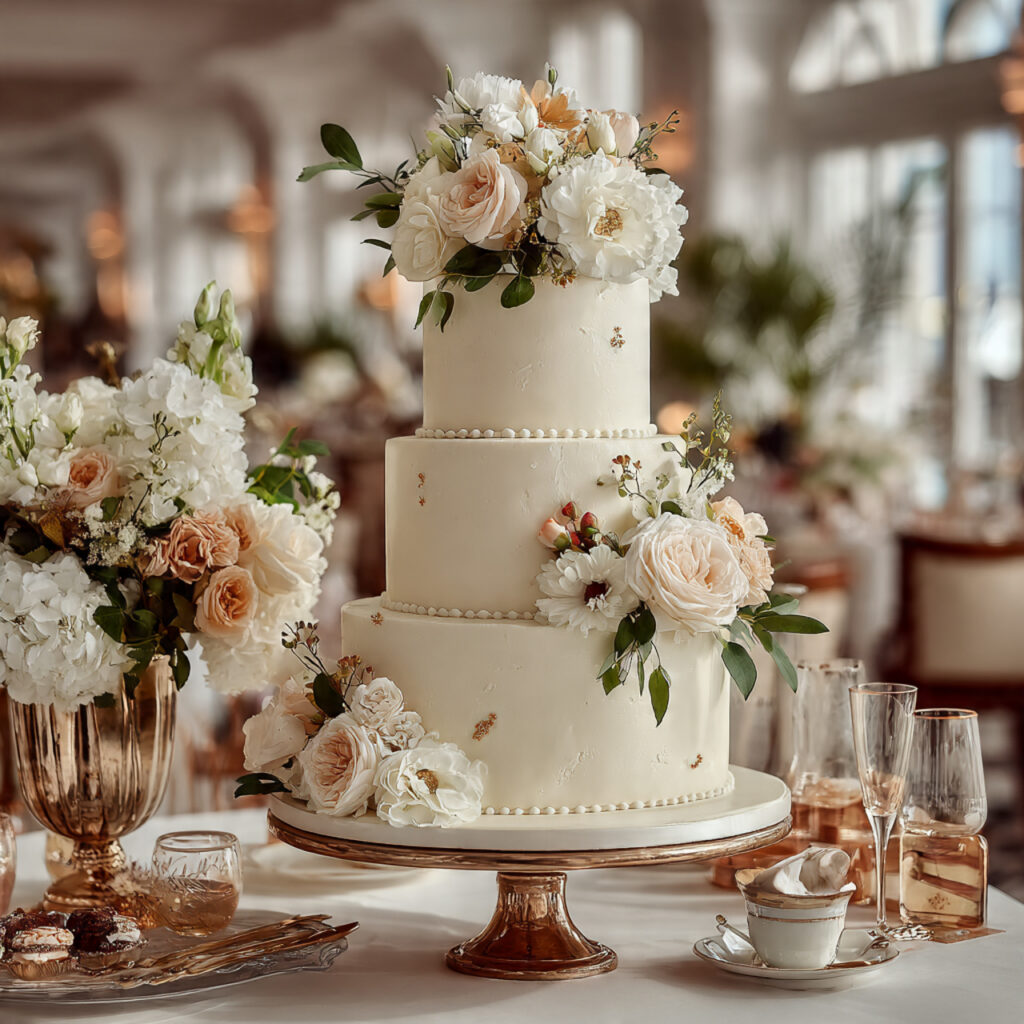
Classic white cakes survive trends because they work. This wedding cake ideas staple fits formal venues, religious ceremonies, and large guest counts without visual noise. Smooth fondant or clean buttercream keeps the cake structured and camera-ready from setup to slicing. White does not mean plain. Texture comes from subtle piping, faint embossing, or sugar pearl placement. The value lies in predictability. Guests recognize it. Bakers execute it well. Venues accommodate it easily. It photographs cleanly in any light. Flavor customization happens inside. Vanilla sponge with fruit preserves remains the safest choice for mixed-age guest lists. This cake allows couples to invest in quality rather than decoration. It is timeless because it avoids risk.
Minimal Buttercream Finish
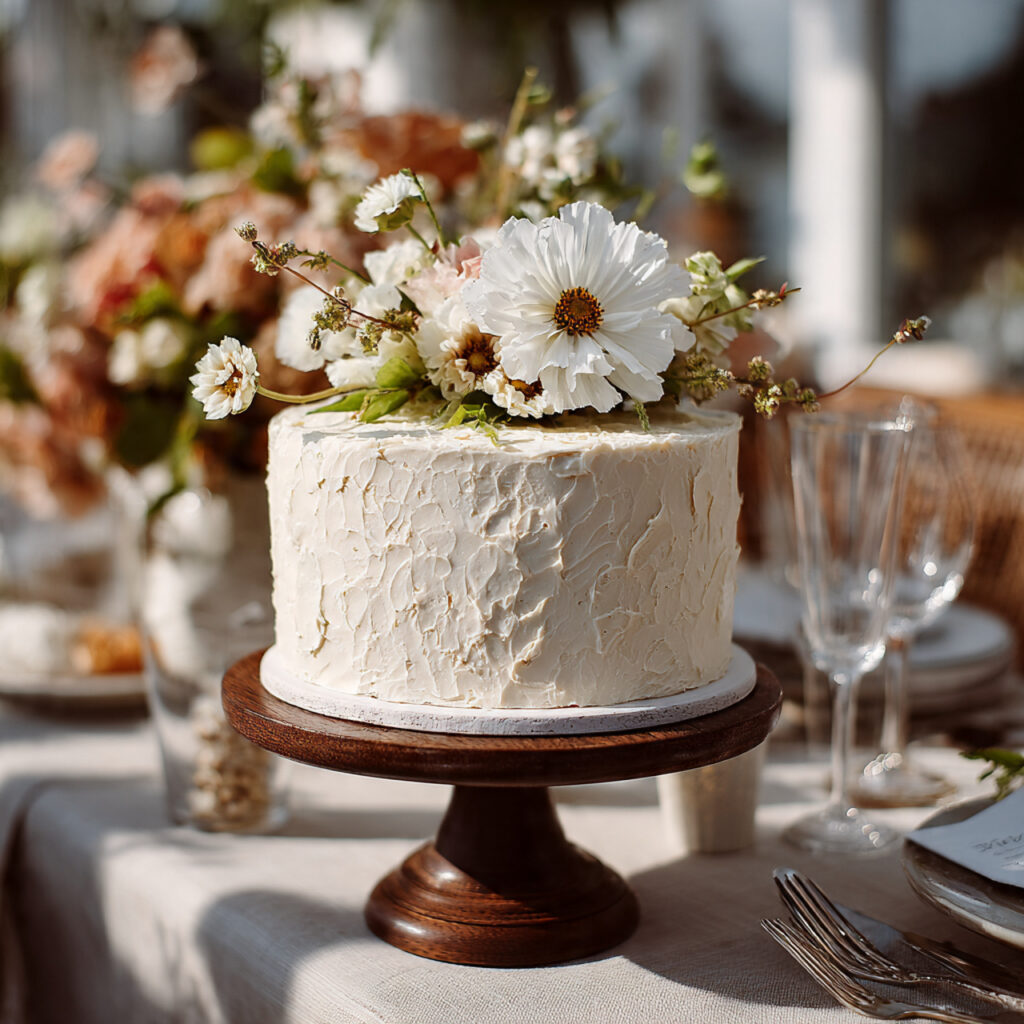
A soft buttercream finish rejects perfection on purpose. These wedding cake ideas lean into texture, showing palette strokes and uneven edges. The appeal is honesty. It looks handmade. It feels approachable. This style suits garden weddings, backyard receptions, and relaxed venues where formality would feel forced.
Buttercream cakes require climate awareness. Warm environments demand stable recipes and controlled exposure. Bakers often recommend Swiss or Italian meringue for durability. Color palettes stay muted—ivory, blush, sage, soft gray. Florals or herbs are often added sparingly. This cake works best when simplicity is consistent across the event. A rustic cake in a luxury ballroom creates visual conflict. Context matters.
Floral Pressed Cake Design
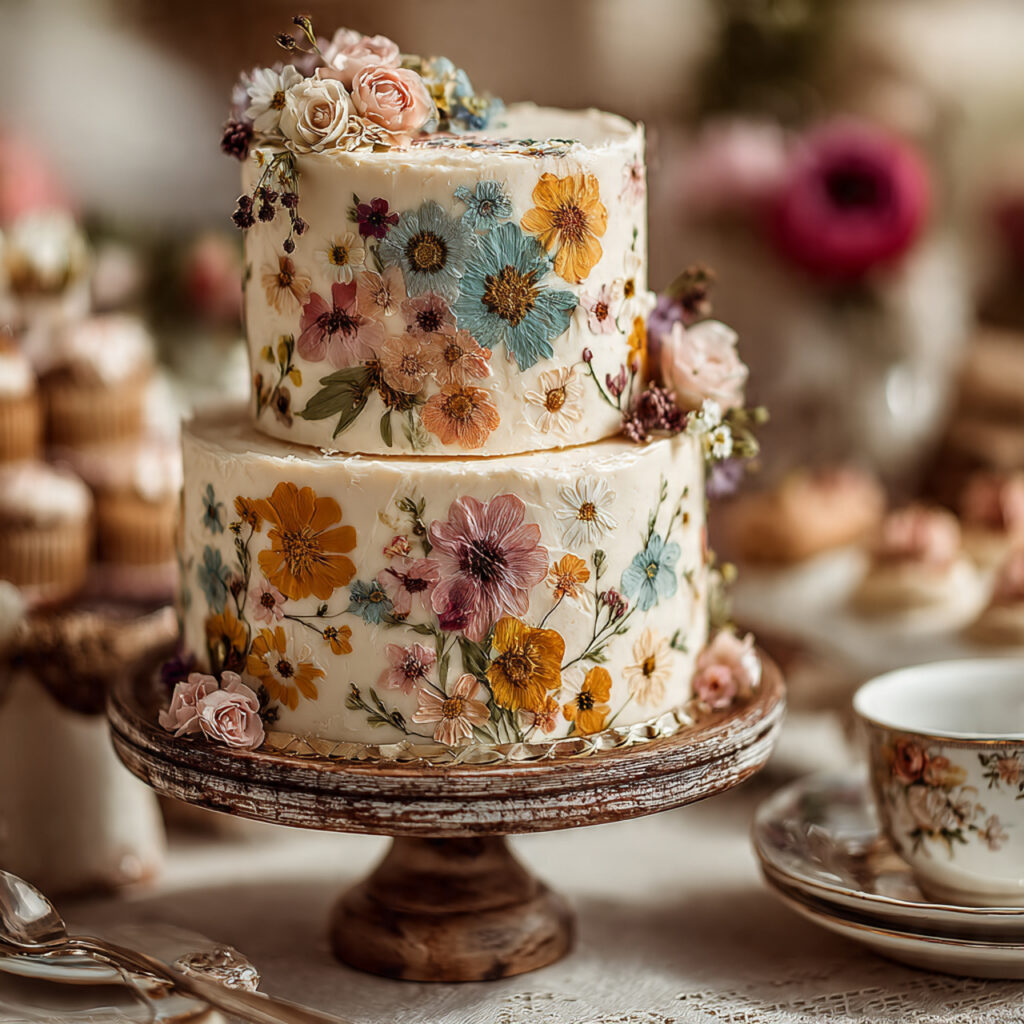
Pressed florals create visual interest without heavy sugar work. Real edible flowers are dried and sealed into buttercream or fondant. These wedding cake ideas connect food with nature in a direct way. They work best for spring and summer weddings when flowers are abundant and affordable. Flower safety matters. Not all blooms are edible. Bakers must source properly and treat them correctly. Couples should expect color variation. That unpredictability is part of the appeal. Pressed floral cakes suit daylight receptions and outdoor venues. They photograph well from multiple angles and do not rely on height for impact.
Semi-Naked Layer Cake
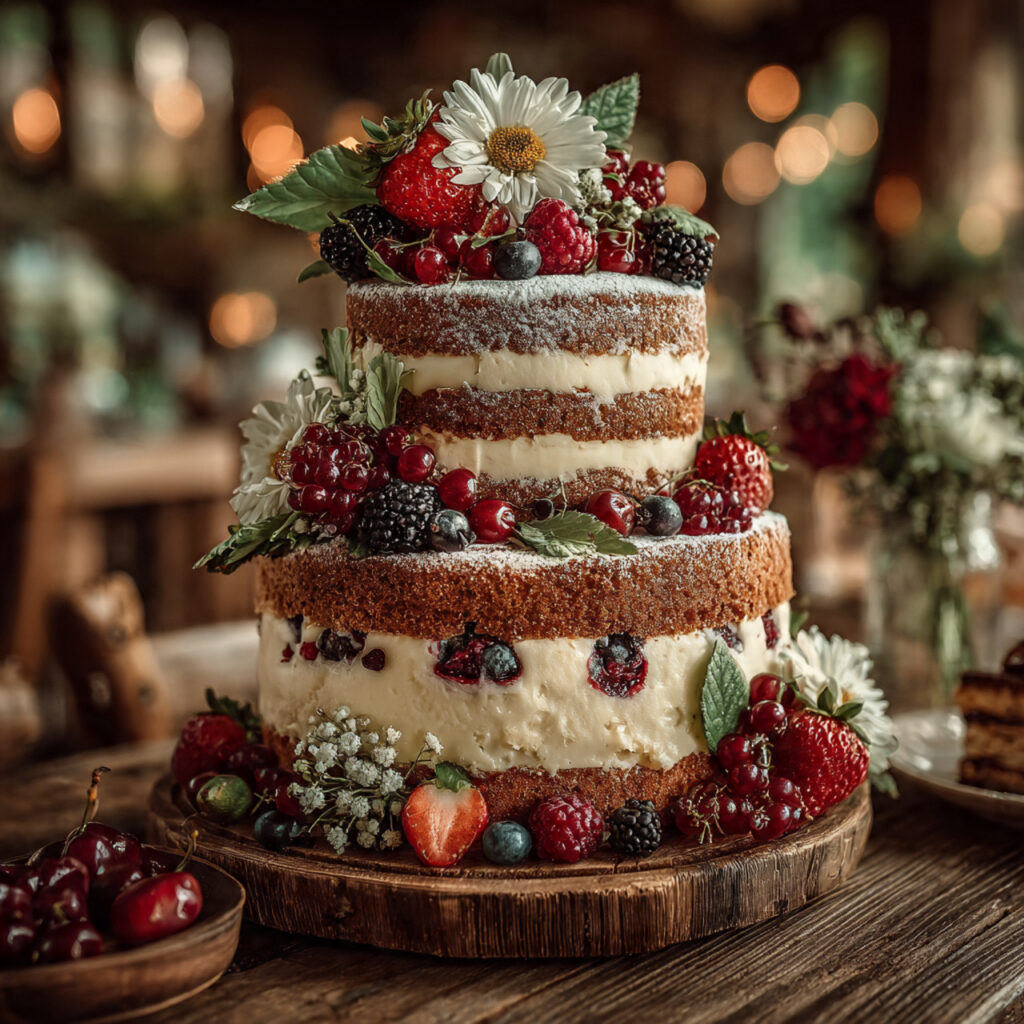
A semi-naked cake exposes layers beneath thin frosting. This wedding cake ideas approach balances rustic and refined. It allows sponge color and filling lines to become part of the design. These cakes are often paired with fresh berries, figs, or greenery. They require careful timing. Exposure leads to drying if set too early. Bakers often assemble close to service time. Venue coordination is key. Semi-naked cakes suit smaller weddings and couples who prefer understated design. They feel modern without being trendy.
Single-Tier Statement Cake
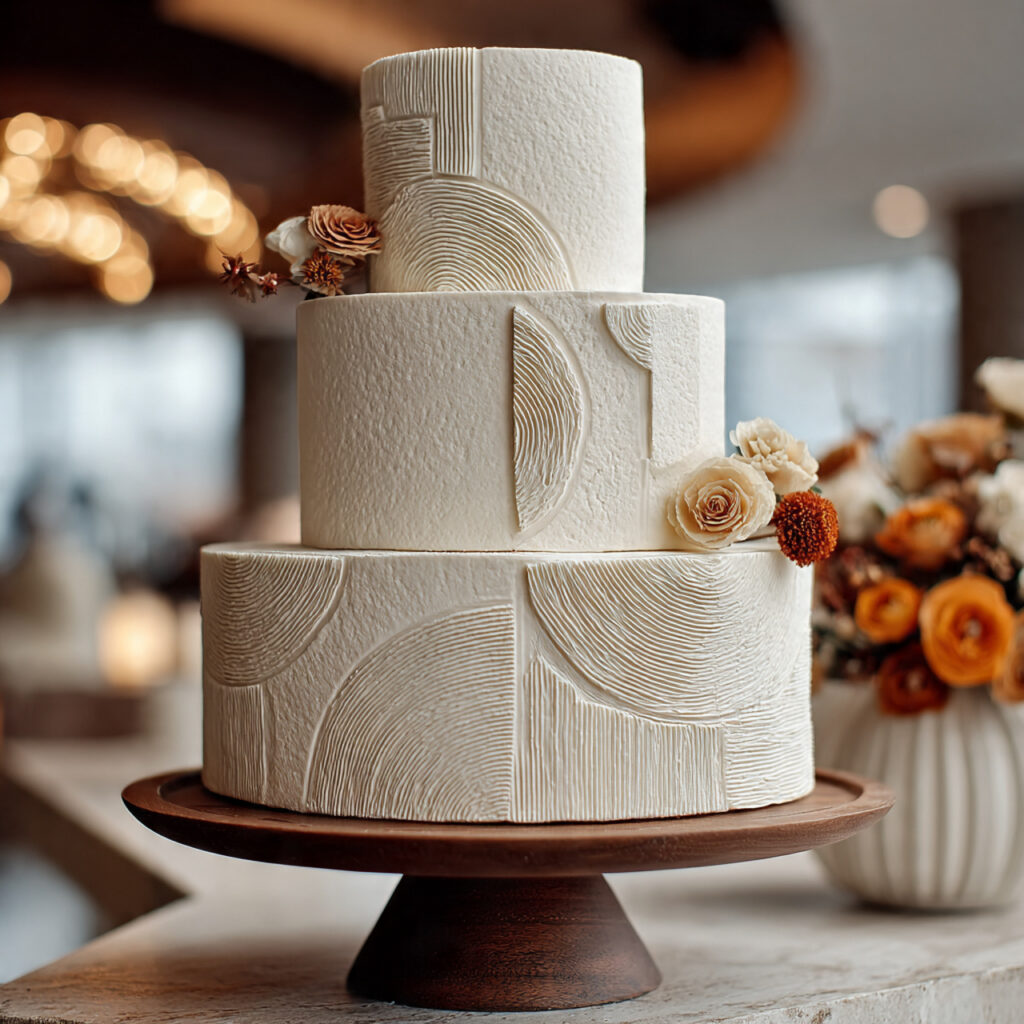
A single-tier cake makes a statement by refusing excess. These wedding cake ideas focus on quality, not size. Often paired with dessert tables or sheet cakes, the main cake exists for symbolism and photos. Design choices are intentional. Bold texture, strong color, or artistic decoration replaces height. This option reduces cost while maintaining ceremony. Single-tier cakes work well for intimate weddings and venues with limited space. They also simplify transport and setup.
Sculptural Modern Cake
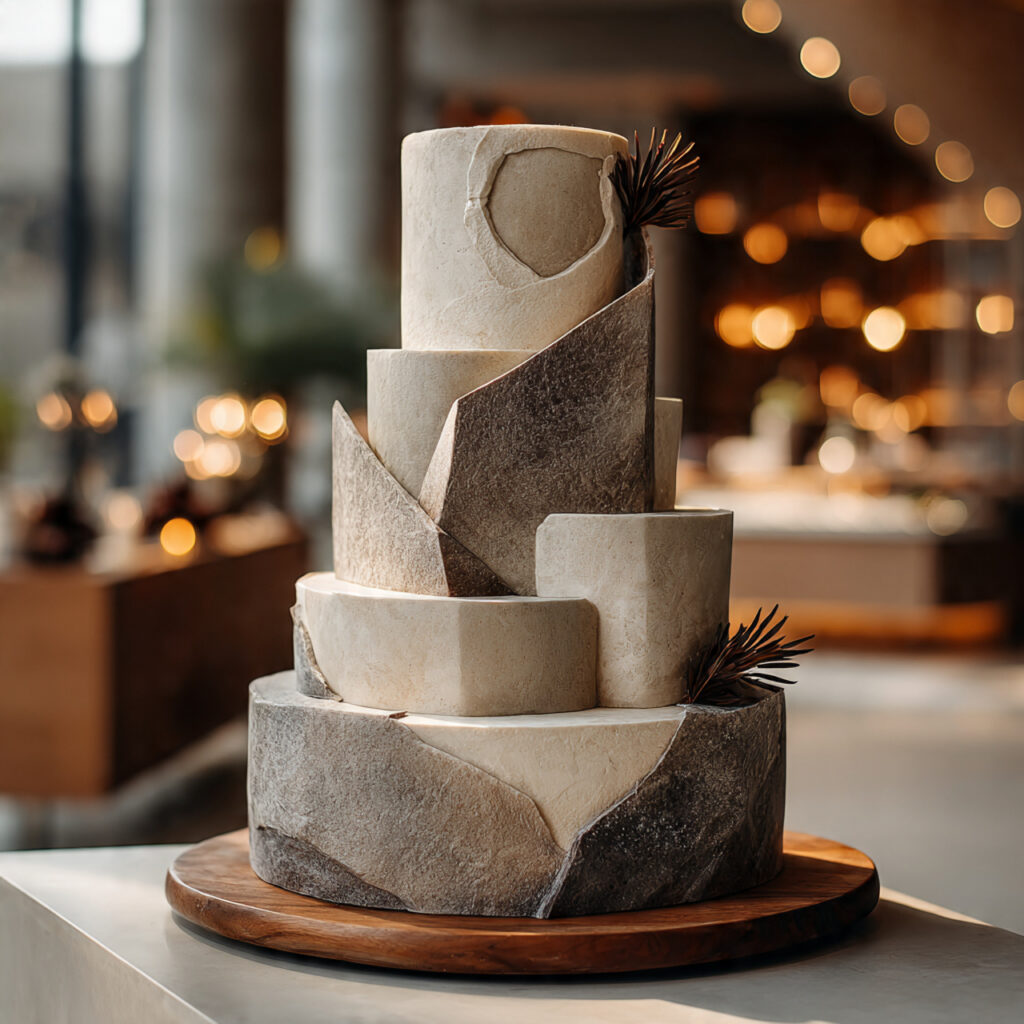
Modern sculptural cakes treat the cake as art. Asymmetrical shapes, sharp edges, and abstract forms define these wedding cake ideas. They suit contemporary venues and design-forward couples. Execution requires skilled bakers and higher budgets. Structural integrity matters. These cakes often use internal supports and firmer finishes. Color palettes are restrained—stone, charcoal, muted pastels. Decoration is minimal because form carries the impact.
Textured Lambeth Revival
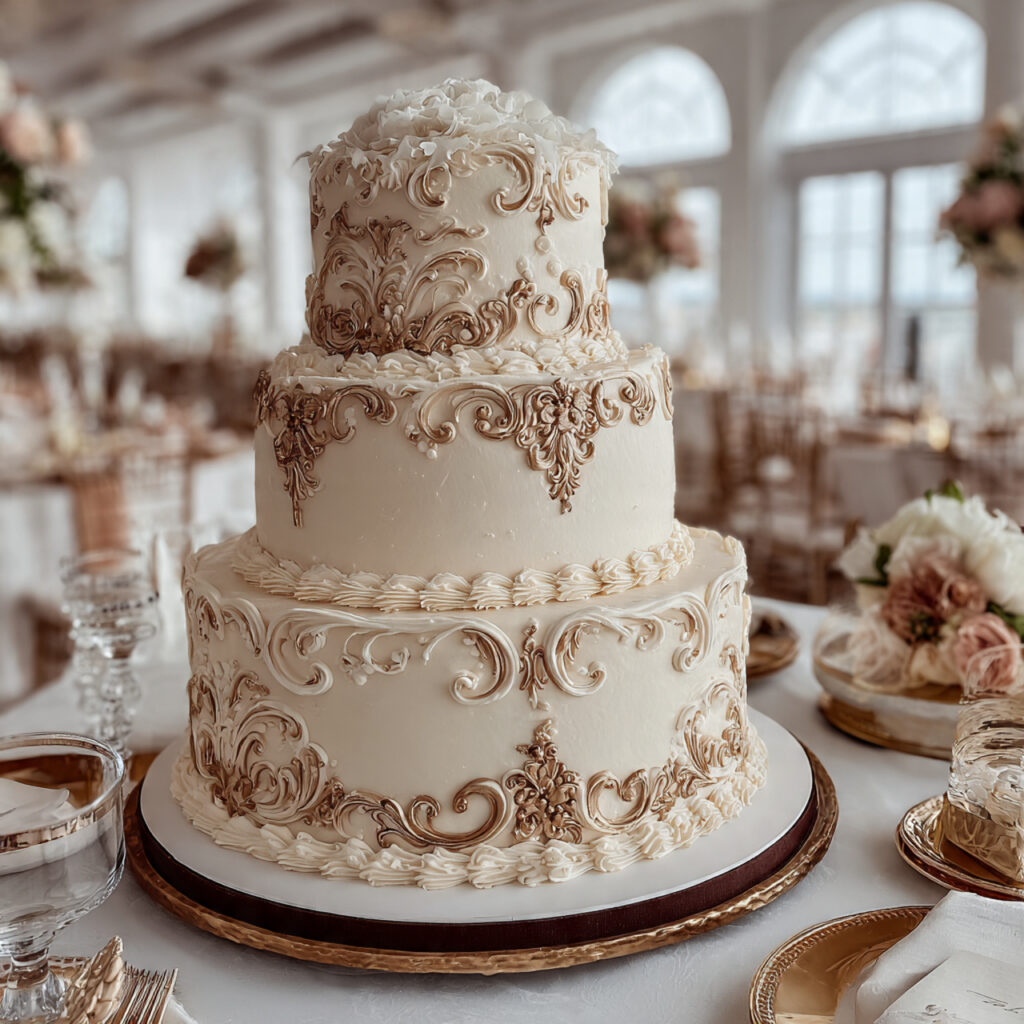
Lambeth piping has returned with restraint. These wedding cake ideas revive ornate piping in a controlled way. Scrolls, shells, and over-piping add depth without overwhelming. Modern Lambeth cakes often use monochrome palettes. Ivory-on-ivory or soft color-on-white keeps the look refined. Bakers must have piping expertise. This style suits vintage-inspired weddings and formal indoor venues. It brings nostalgia without excess.
Metallic Accent Cake
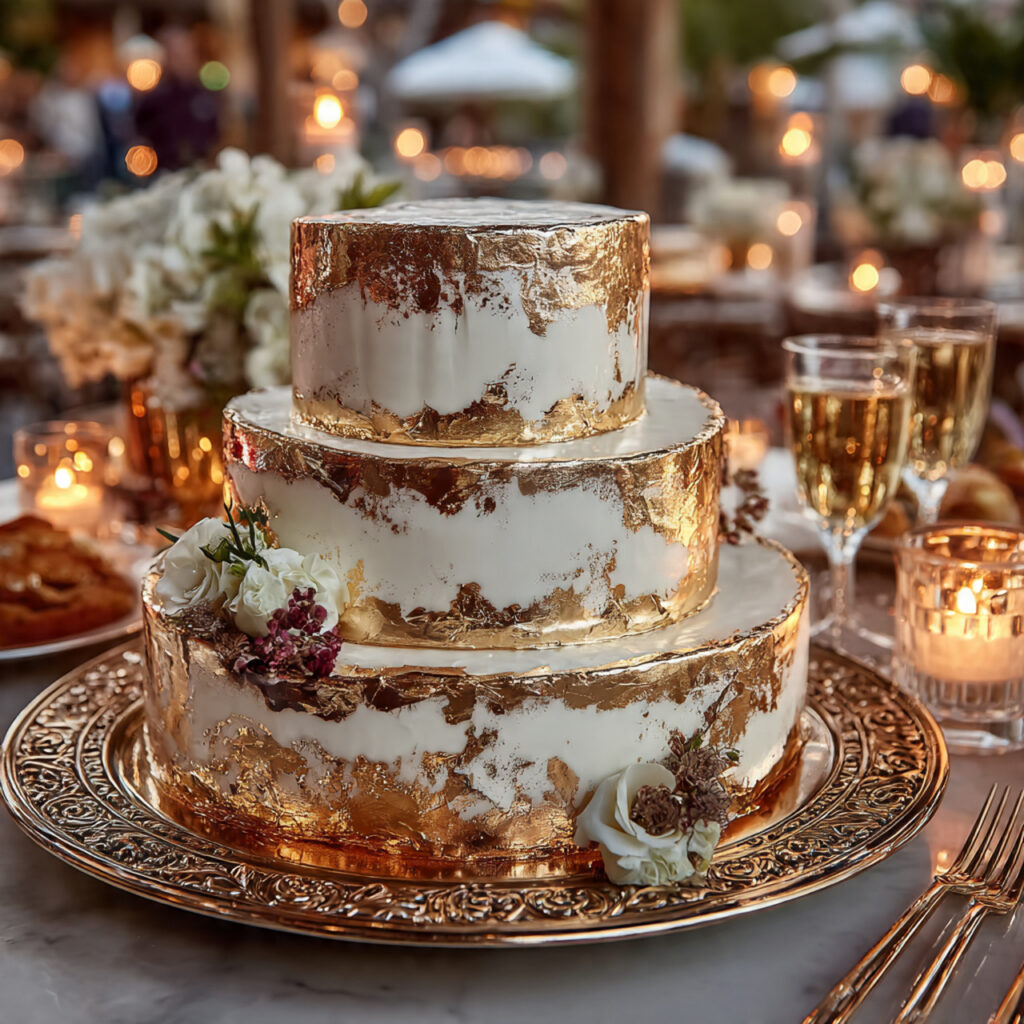
Metallic elements add drama. Gold leaf, brushed bronze, or silver detailing elevate simple forms. These wedding cake ideas rely on contrast between matte frosting and reflective accents. Application must be subtle. Overuse looks artificial. Metallics work best as highlights—edges, seams, or abstract strokes. These cakes suit evening receptions and candlelit venues. Lighting enhances the metallic effect.
Hand-Painted Artistic Cake
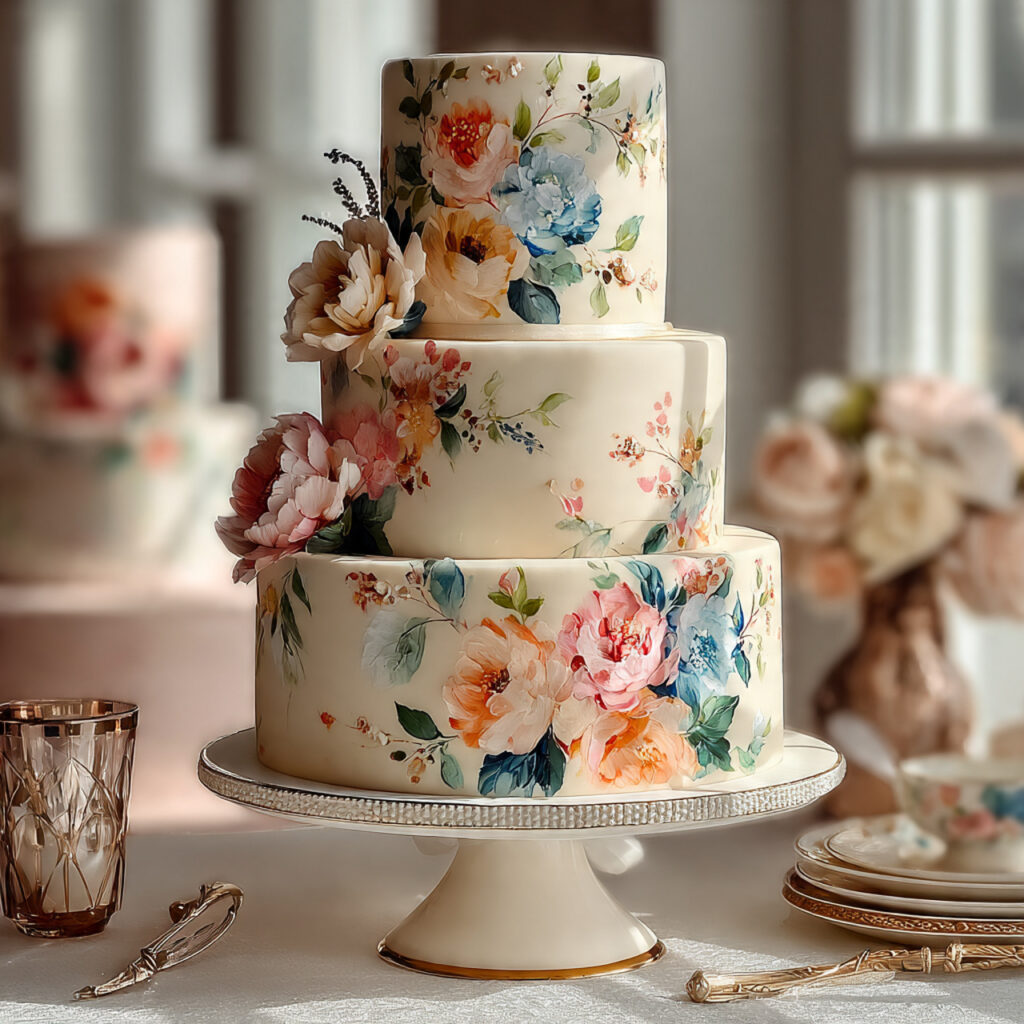
Hand-painted cakes turn frosting into canvas. Floral motifs, landscapes, or abstract art define these wedding cake ideas. Each cake is unique. This option requires trust in the artist. Couples should review portfolios carefully. Paintings are often done with food-safe pigments and brushes. Hand-painted cakes work best when other decor is minimal. The cake becomes the visual focus.
Black and Dark-Toned Cake
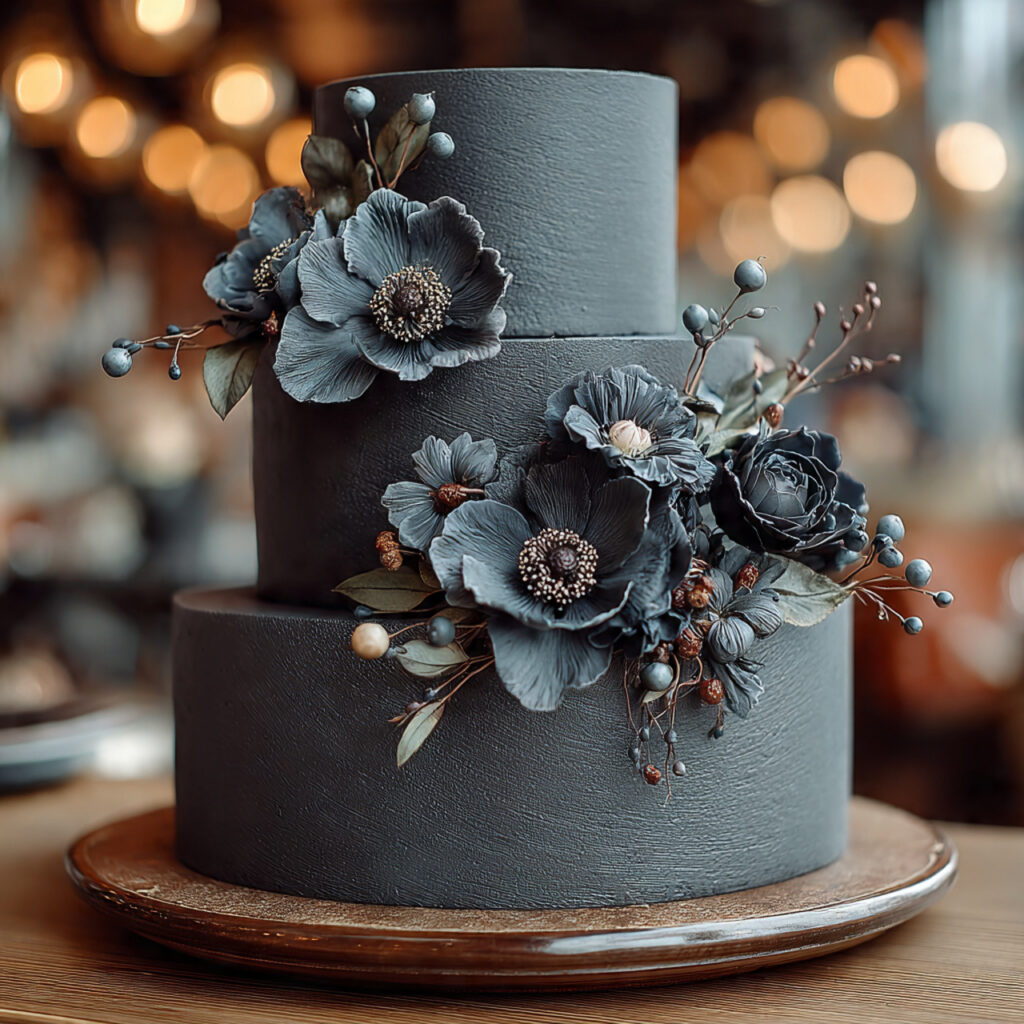
Dark cakes break tradition. Black, charcoal, navy, and deep green create bold contrast. These wedding cake ideas suit modern couples and evening events. Flavor balance matters. Dark color does not mean heavy taste. Vanilla or chocolate sponge keeps it familiar. Dark cakes photograph dramatically but require controlled lighting. Bakers often recommend matte finishes to avoid glare.
Marble Effect Cake
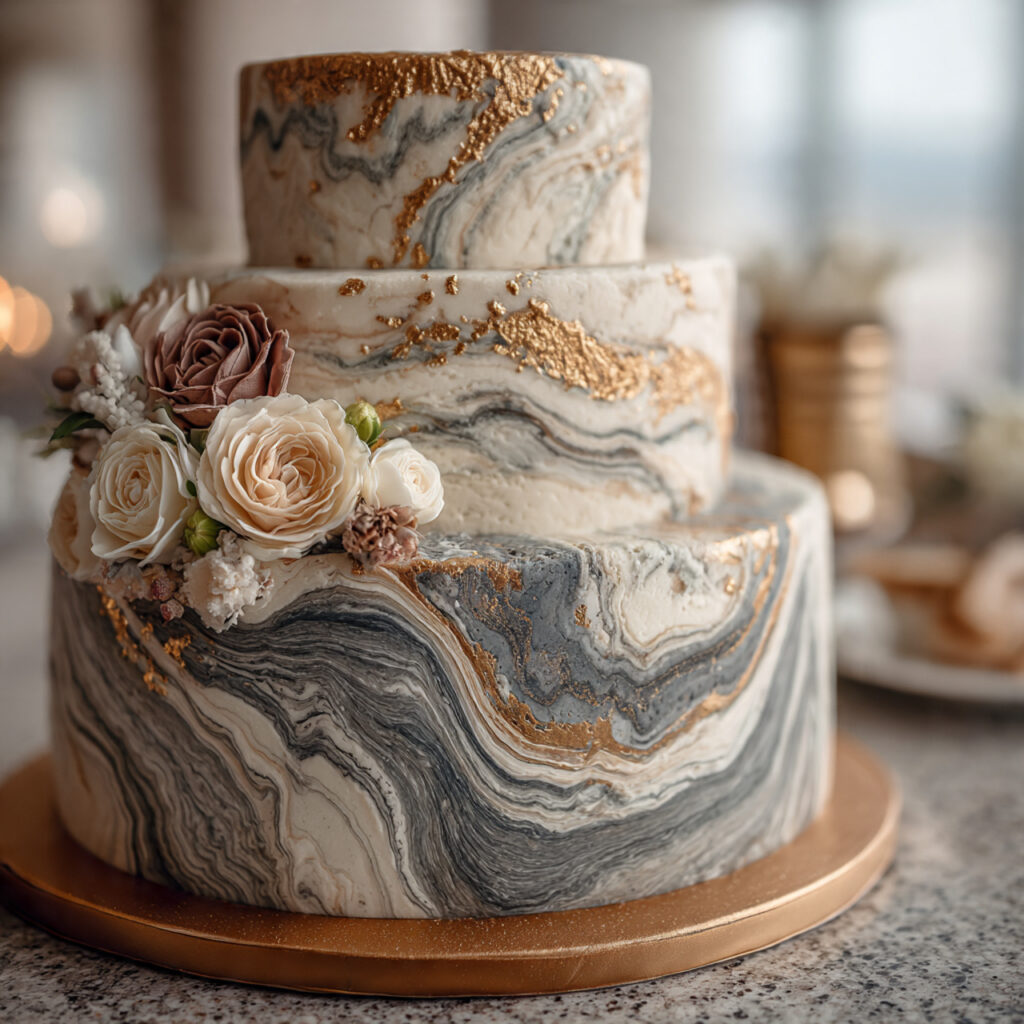
Marble effects blend tones into organic patterns. These wedding cake ideas feel natural yet refined. They often use gray, blush, or beige combinations. Execution varies. Some bakers hand-blend fondant, others paint effects onto buttercream. Each result is unique. Marble cakes pair well with minimalist decor and neutral palettes.
Rustic Buttercream with Fresh Fruit
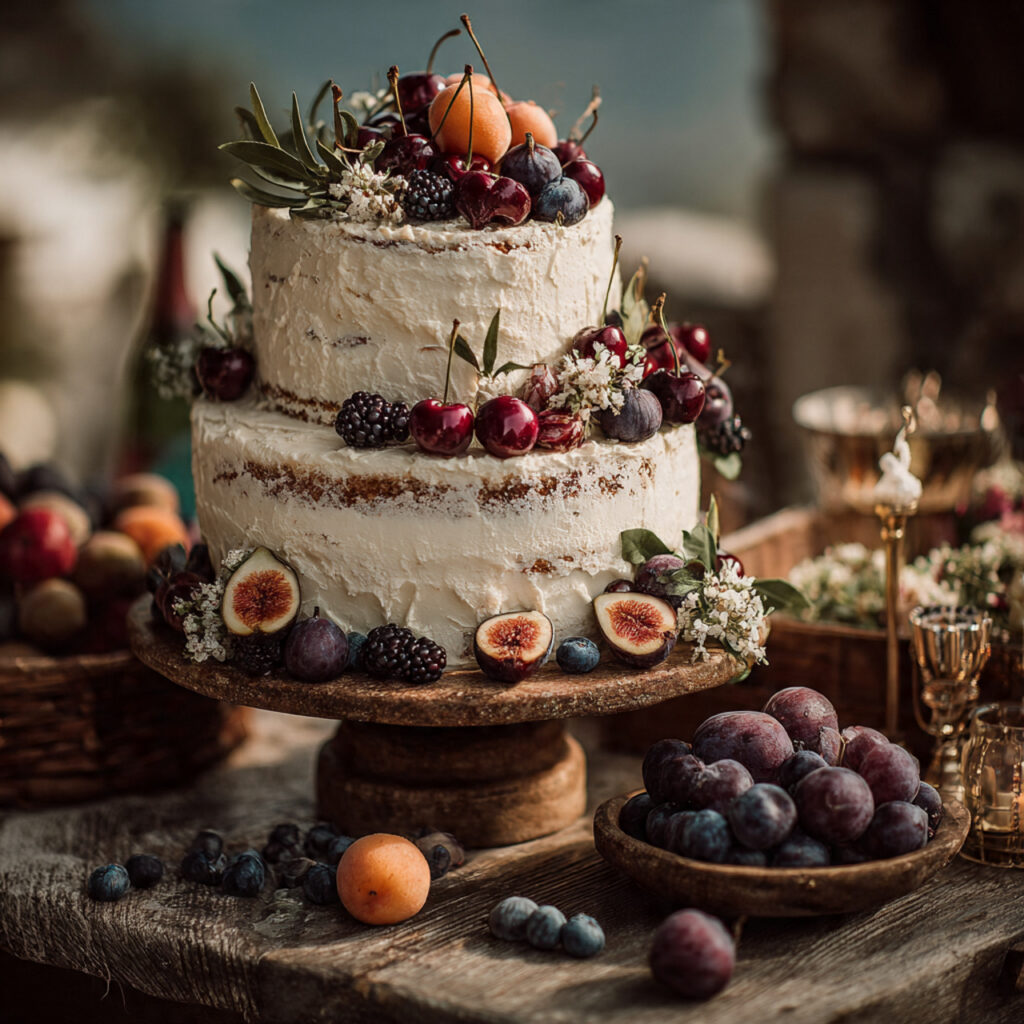
Fresh fruit adds color and honesty. Berries, figs, grapes, and citrus slices define these wedding cake ideas. They feel seasonal and generous. Fruit must be prepared close to service. Oxidation and moisture are concerns. Bakers coordinate timing carefully. This style suits countryside venues and daytime weddings. It communicates abundance without formality.
Geometric Pattern Cake
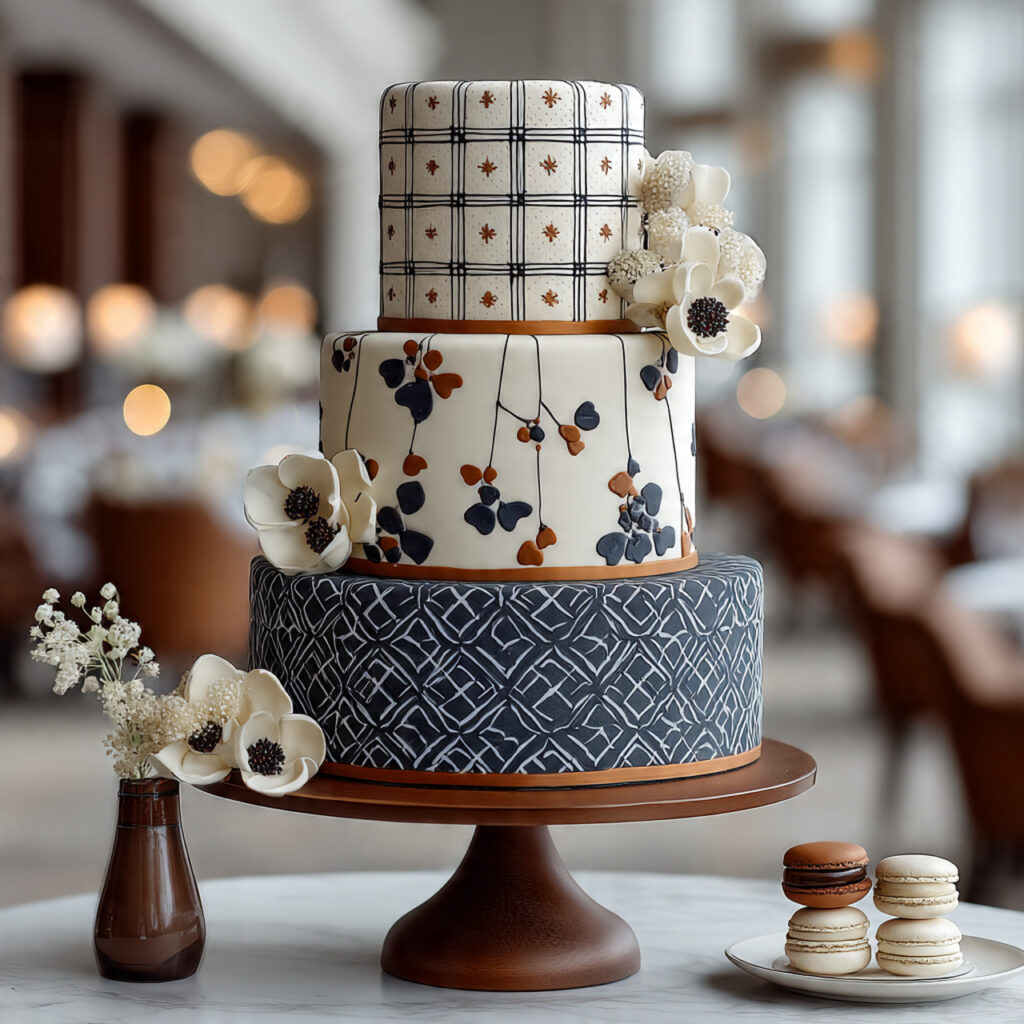
Geometric designs add structure. Lines, facets, and repeated shapes define these wedding cake ideas. Precision matters. These cakes often use fondant for clean edges. Color palettes stay simple to highlight pattern. Geometric cakes suit modern venues and couples drawn to order and symmetry.
Whimsical Illustration Cake
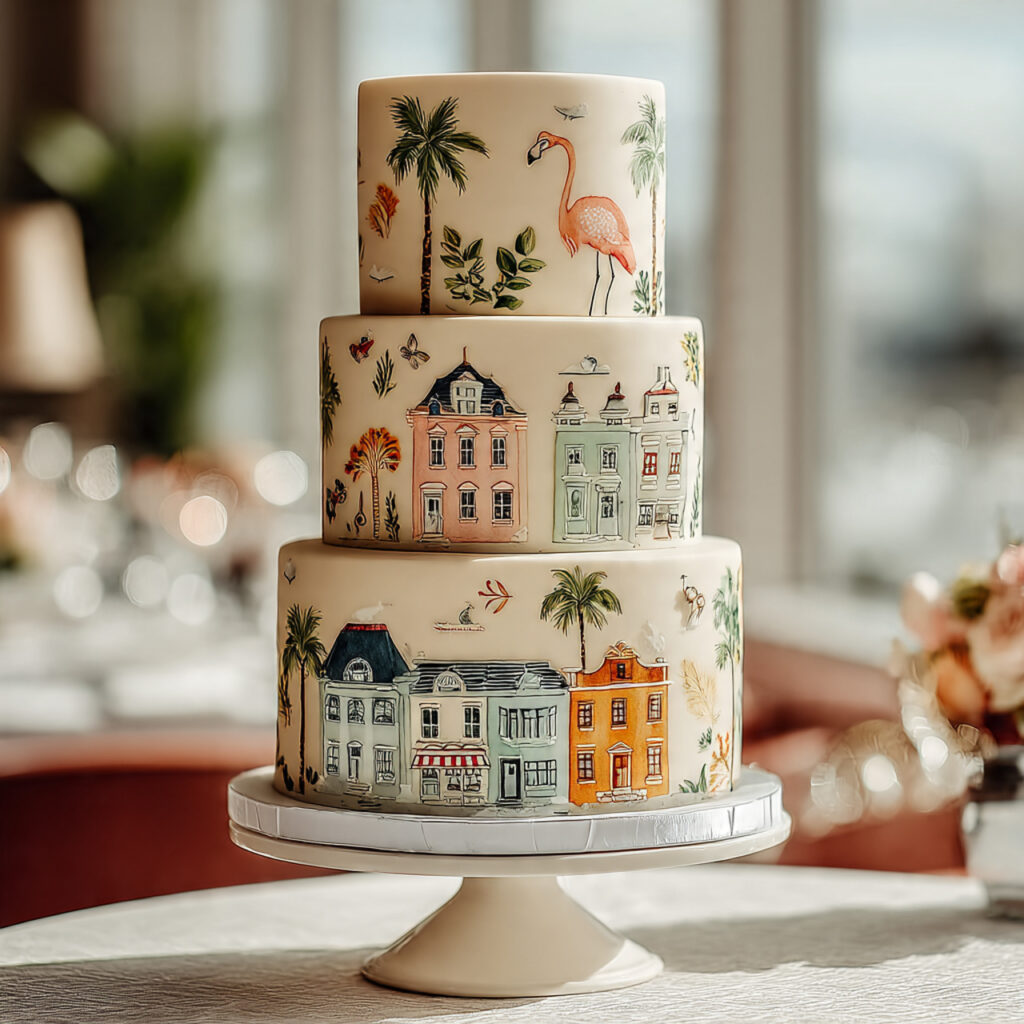
Illustrated cakes tell stories. Motifs may reference shared hobbies, travel, or inside jokes. These wedding cake ideas are personal by design. Execution must remain restrained. Too many elements reduce clarity. A single narrative works best. These cakes suit relaxed weddings where personality outweighs tradition.
Vintage-Inspired Pastel Cake
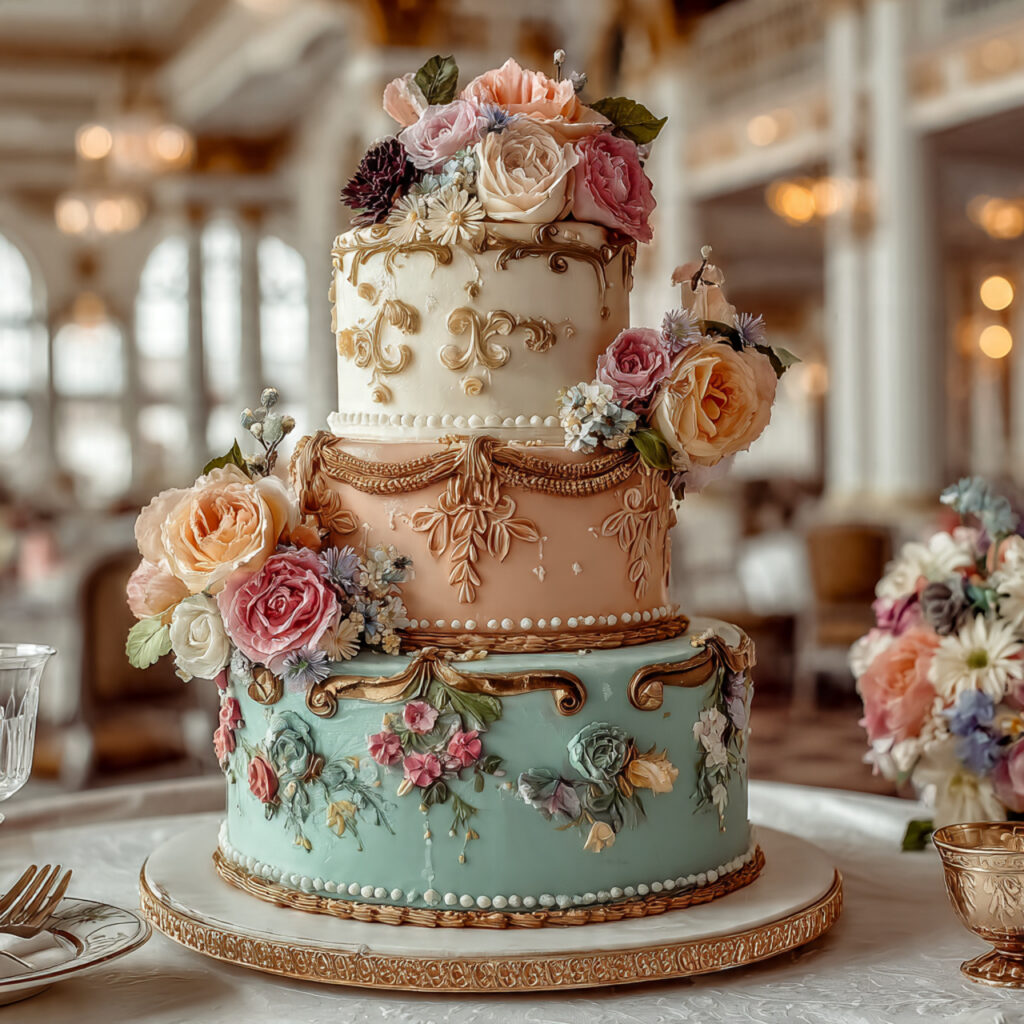
Pastel palettes and soft piping recall earlier eras. These wedding cake ideas feel romantic and gentle. Colors stay muted—lavender, mint, pale blue. Decoration is balanced, not heavy. Vintage cakes work well in historic venues and afternoon receptions.
Nature-Inspired Textural Cake
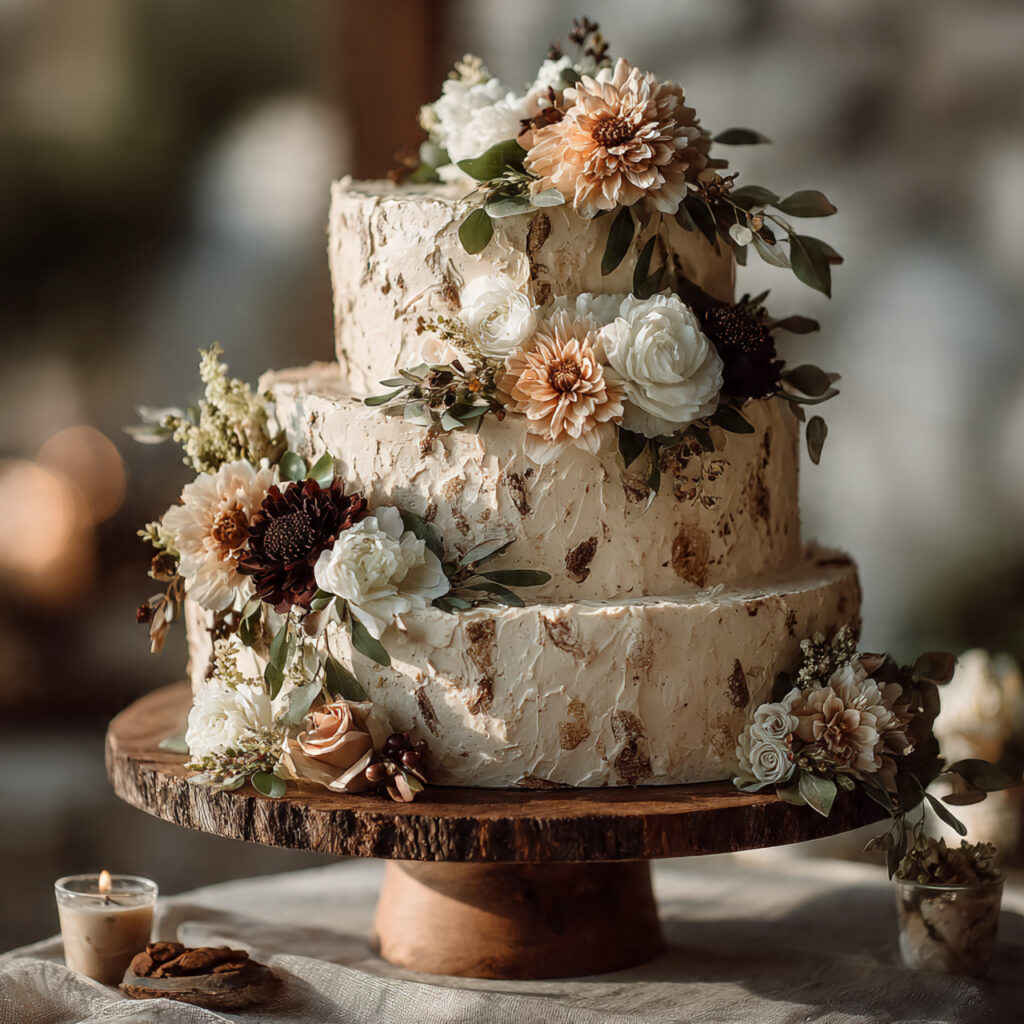
Textures inspired by stone, bark, or fabric bring tactile depth. These wedding cake ideas use palette knives and sculpting tools. They often avoid florals. Texture becomes decoration. This style suits outdoor weddings and couples drawn to organic design.
Monochrome Minimal Cake
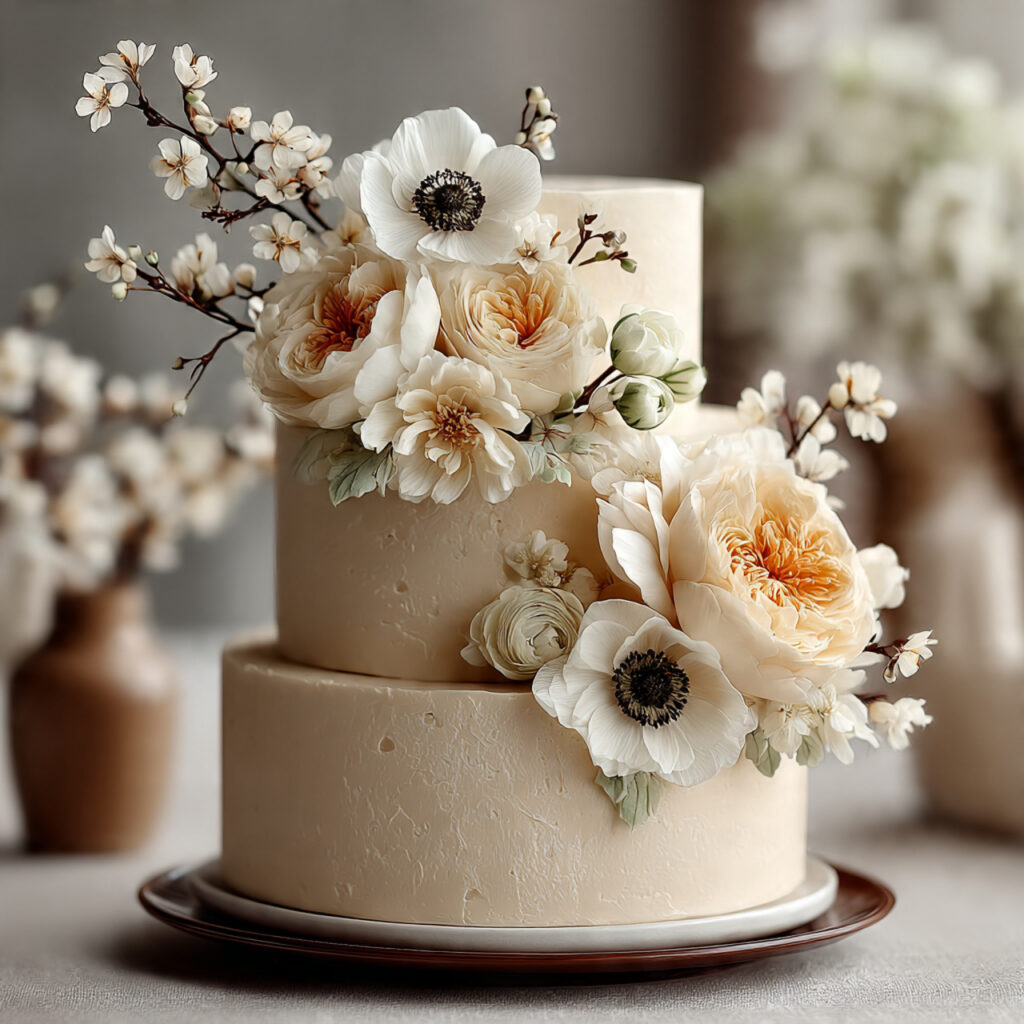
Single-color cakes rely on form and finish. These wedding cake ideas strip away distraction. White, beige, or soft gray dominate. Decoration is limited to texture or subtle lines. Monochrome cakes photograph consistently and suit any venue.
Tiered Cake with Floating Elements
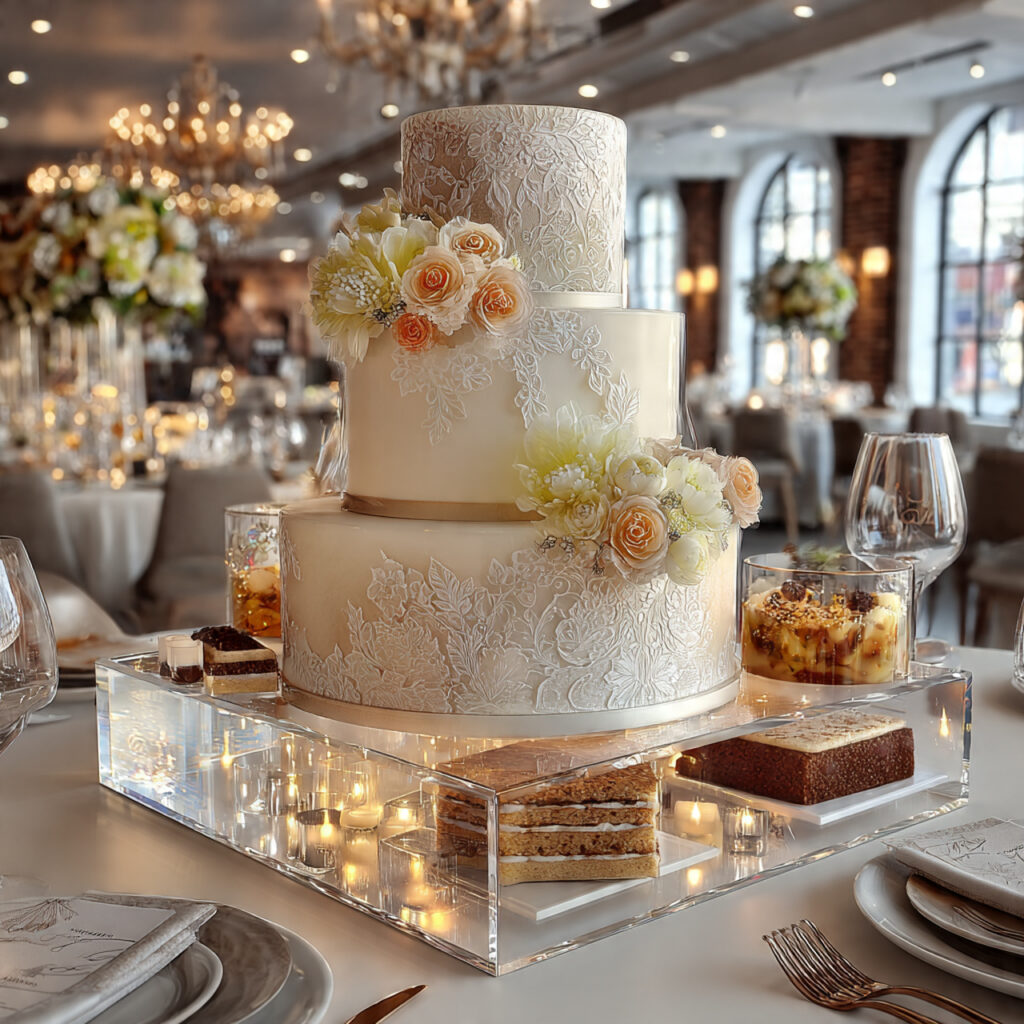
Floating tiers or separators create illusion. These wedding cake ideas require engineering. Clear acrylic supports or hidden dowels are used. Safety is critical. This style creates visual lightness and works best in large spaces.
Sheet Cake Display with Cutting Cake
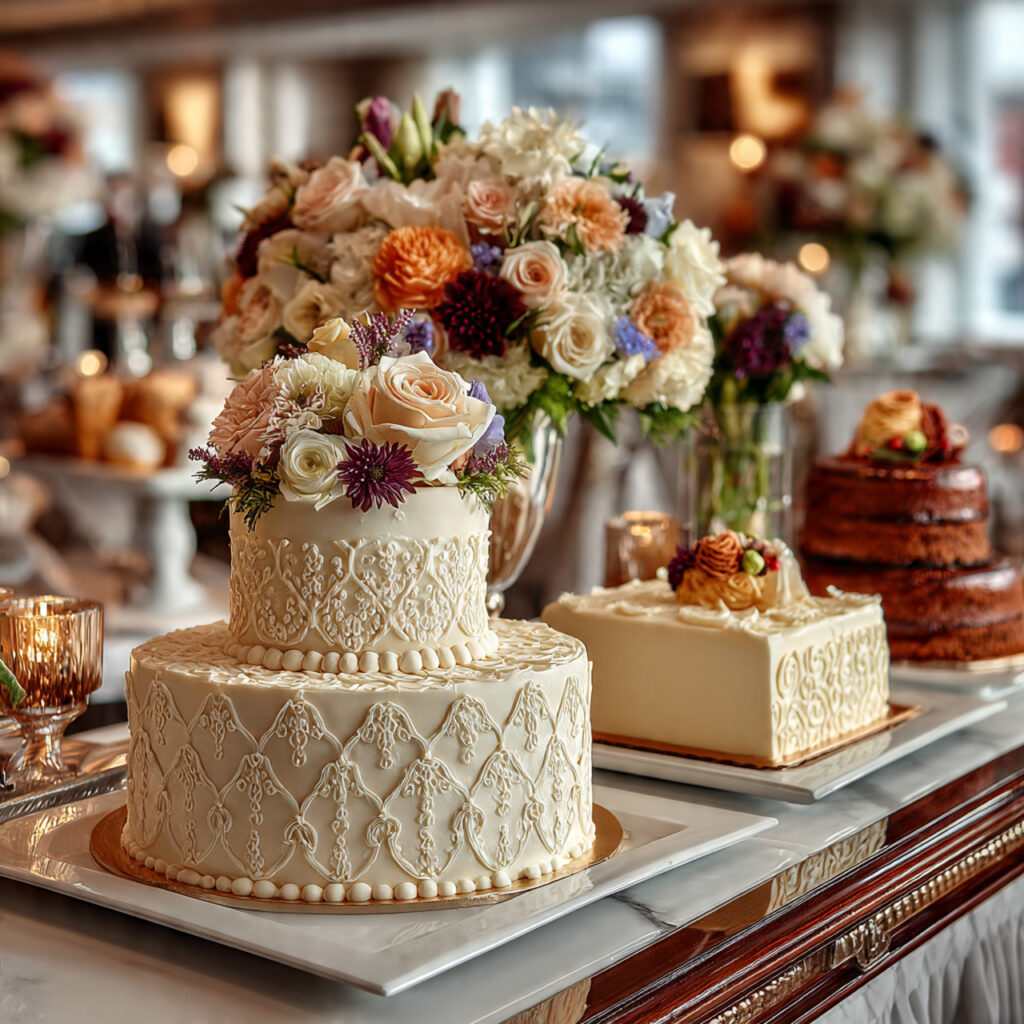
Practical and efficient, this option pairs a small display cake with sheet cakes. These wedding cake ideas reduce cost and service time. Guests still experience cake. The display cake fulfills tradition. This approach suits large guest counts and budget-conscious planning.
Floral Cascade Design
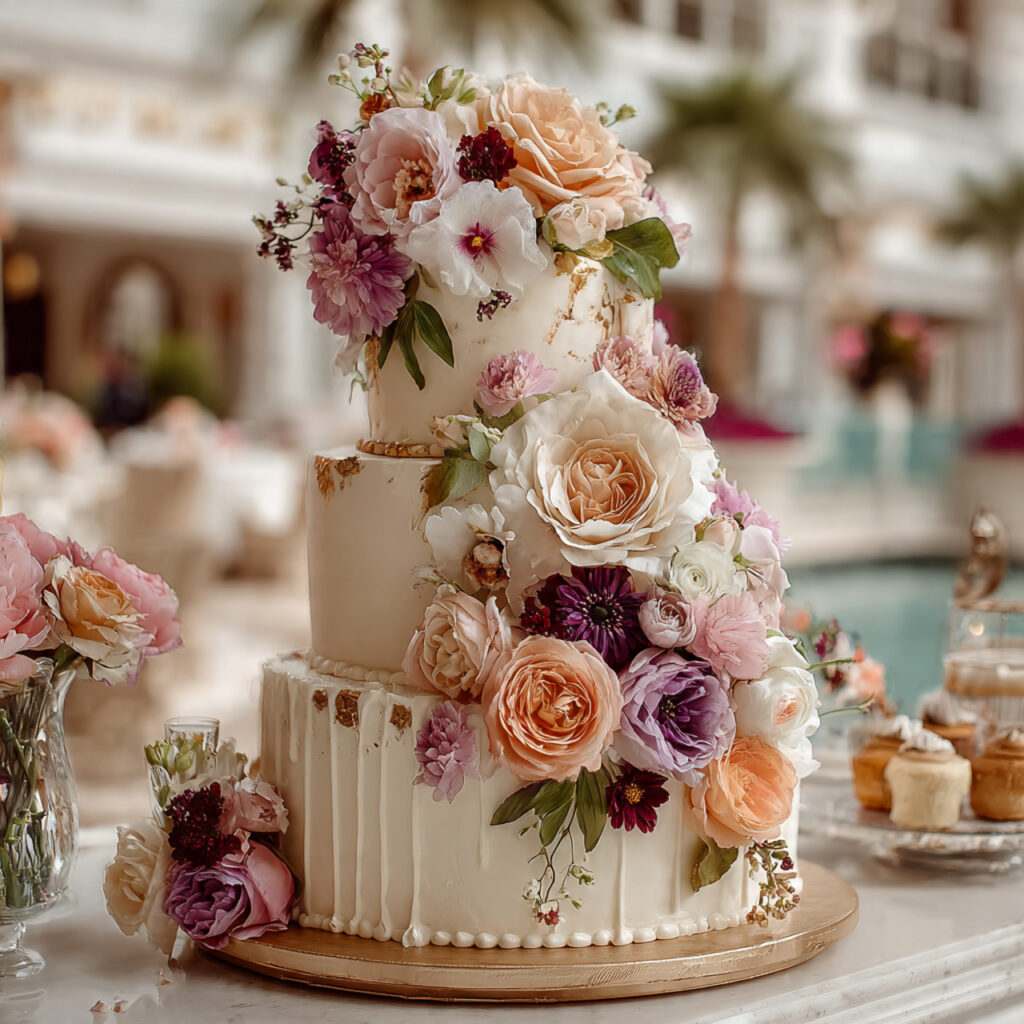
A cascade of flowers creates movement. These wedding cake ideas guide the eye downward. Florals may be fresh or sugar. Weight and placement must be managed. This style suits tall cakes and grand venues.
Cultural Motif Cake
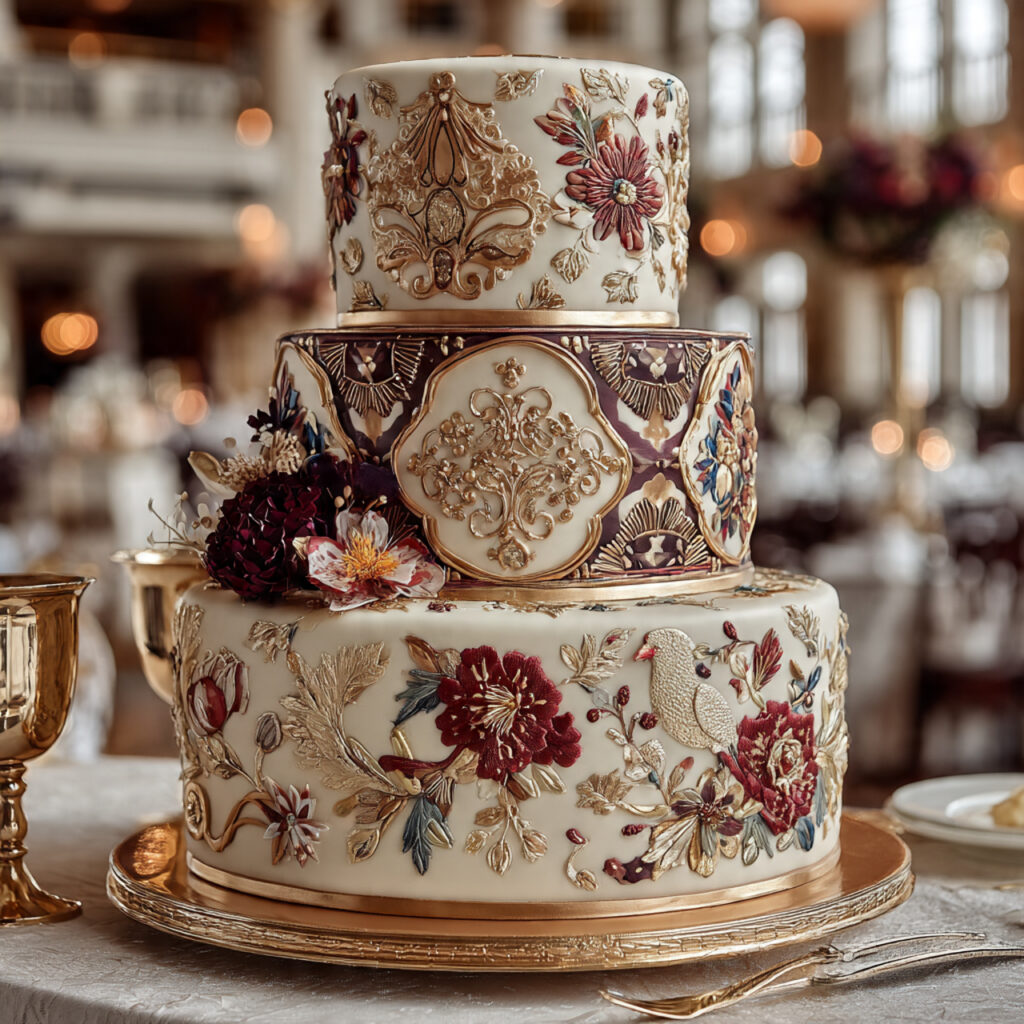
Cakes reflecting heritage add meaning. Patterns, colors, or symbols define these wedding cake ideas. Bakers must understand cultural significance. Authenticity matters. These cakes honor identity and resonate deeply with families.
Seasonal Ingredient Cake
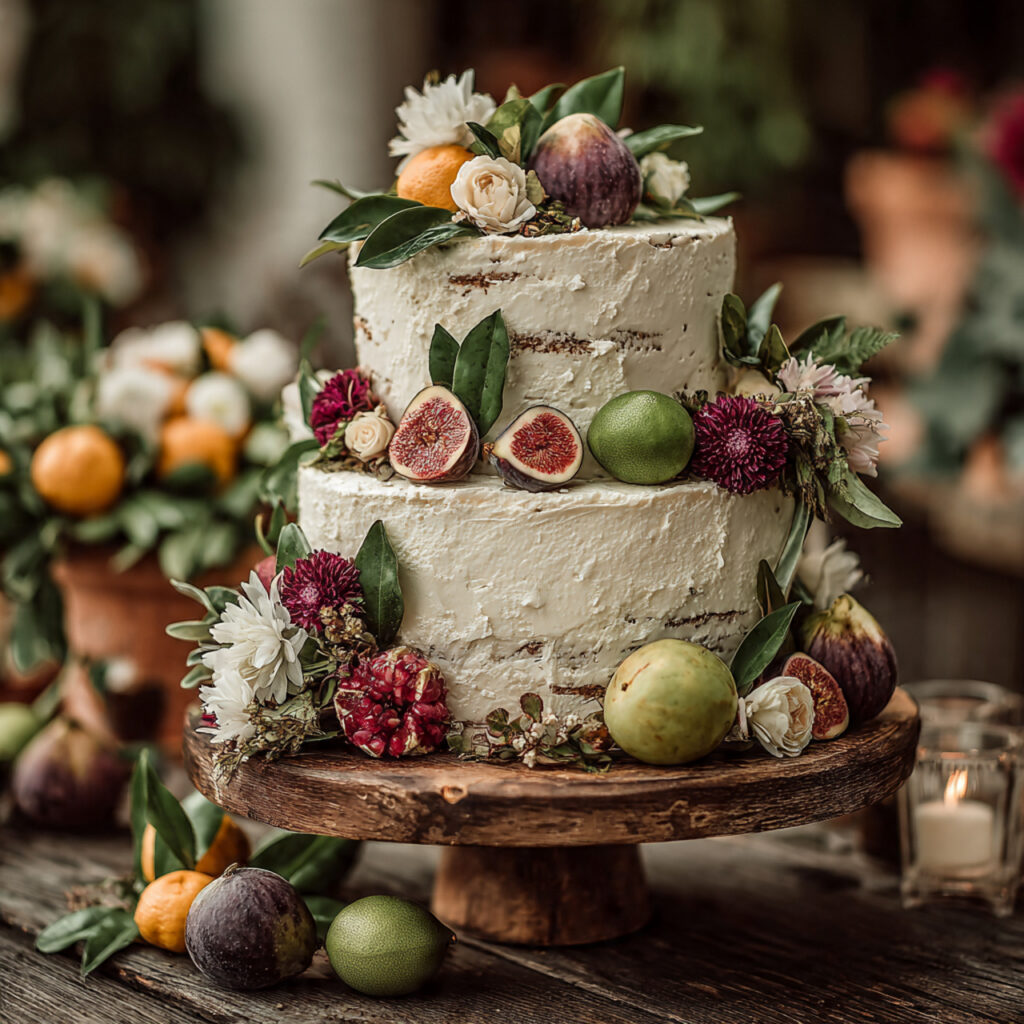
Seasonal ingredients define flavor and decoration. These wedding cake ideas align with time and place. Spring favors citrus and berries. Autumn leans toward spice and apple. Seasonal cakes feel grounded and intentional.
Statement Topper Focus Cake
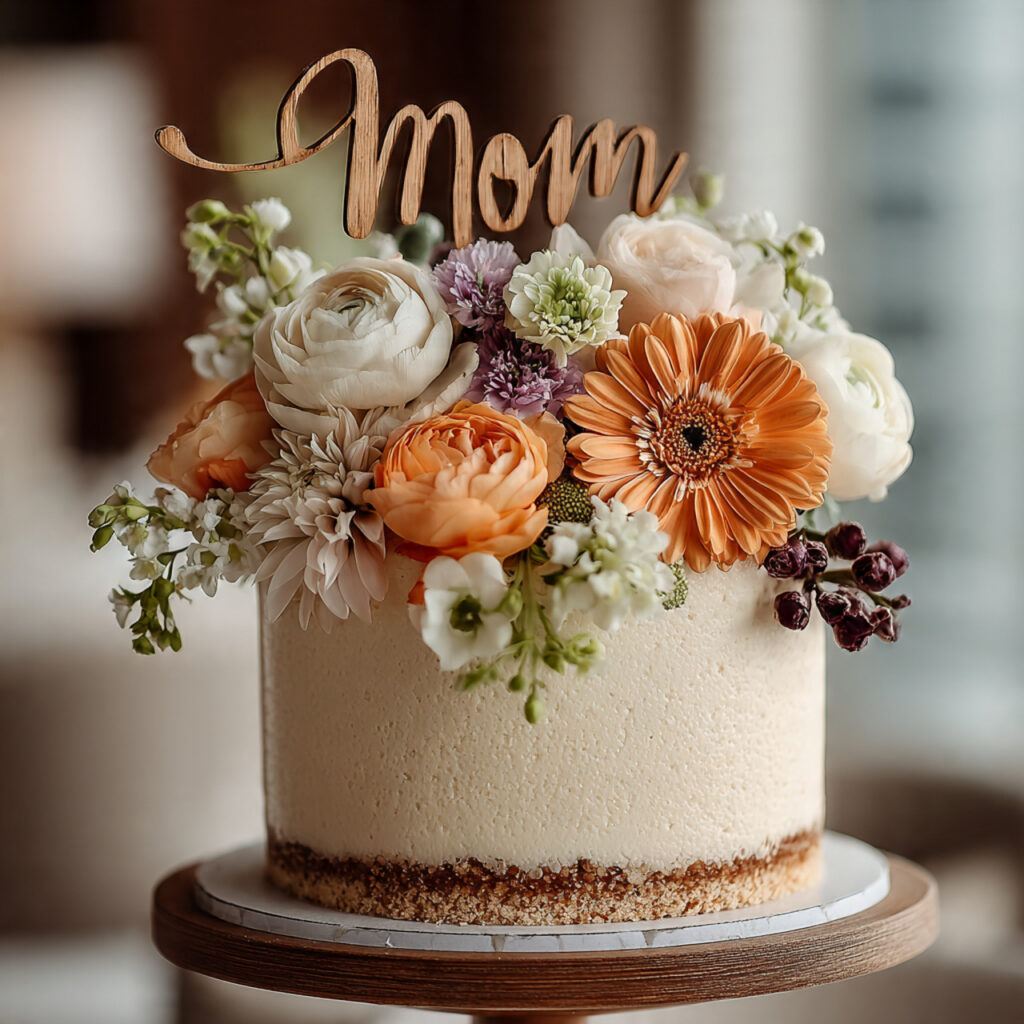
A strong topper carries the design. These wedding cake ideas keep the cake simple beneath. Topper materials vary—wood, acrylic, metal. This option balances personalization with restraint.
Asymmetrical Tier Arrangement
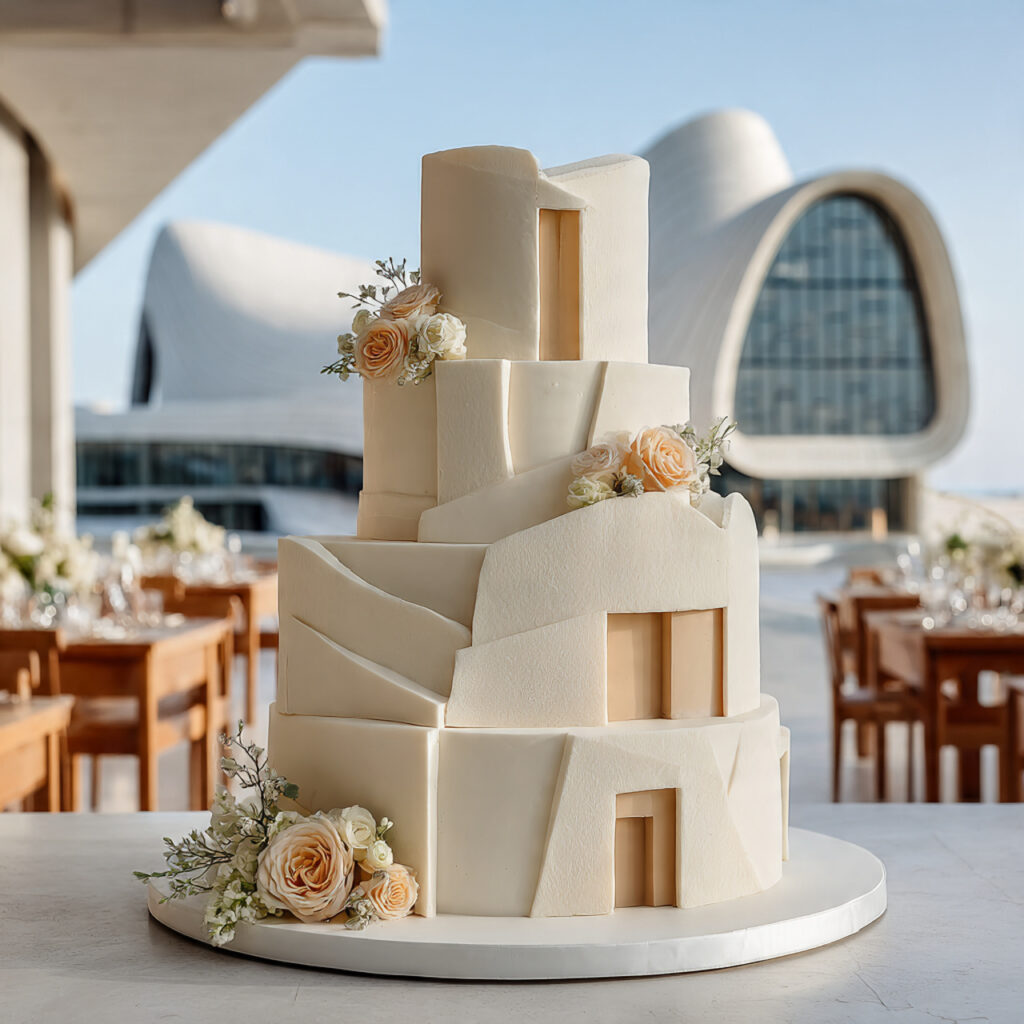
Offset tiers break symmetry. These wedding cake ideas feel dynamic. Structural planning is essential. Weight distribution matters. Asymmetry suits modern aesthetics and creative couples.
Edible Fabric Effect Cake
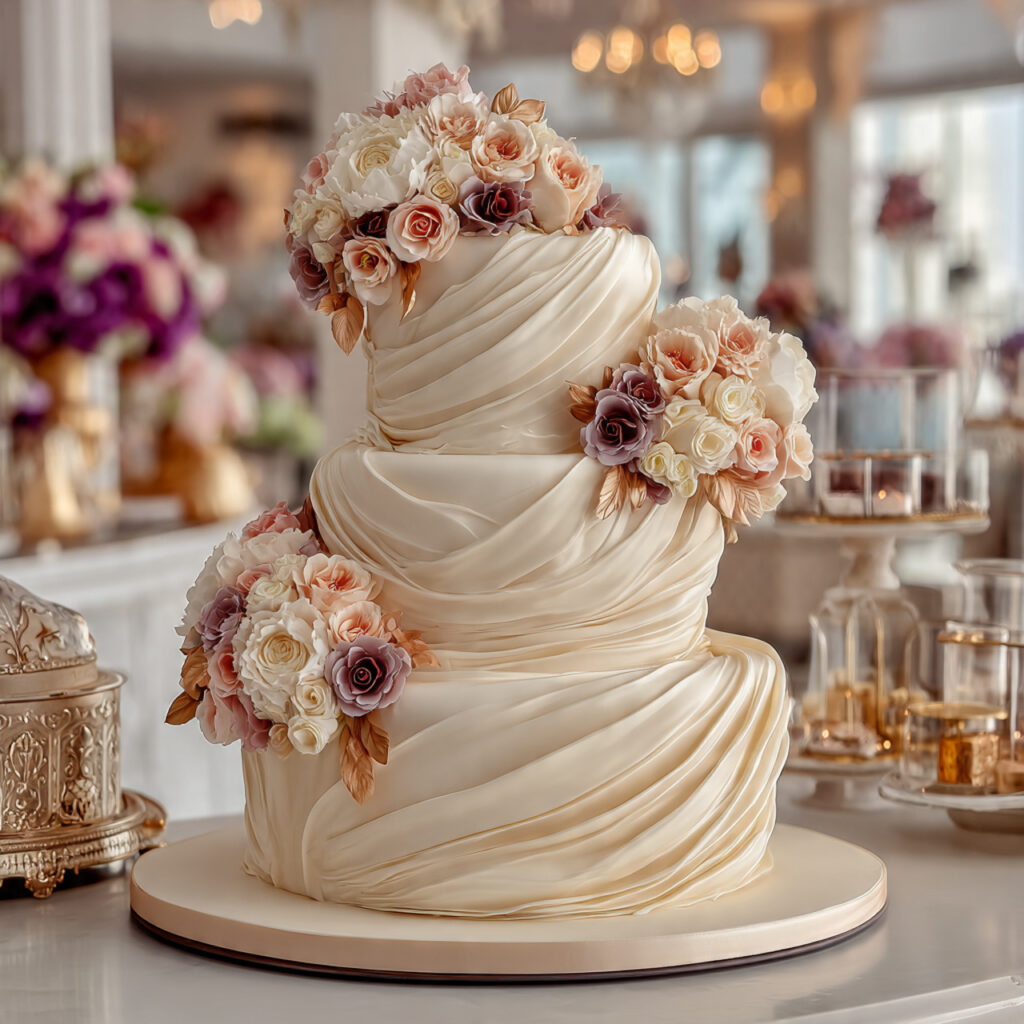
Fondant or buttercream mimics fabric folds. These wedding cake ideas add softness. Execution requires patience and skill. This style pairs well with fashion-inspired weddings.
FAQs
How far in advance should a wedding cake be booked?
Most professional bakers recommend booking six to nine months in advance, especially during peak season. Complex designs require more lead time.
How many servings should be ordered?
Not all guests eat cake. A safe estimate is 70–80 percent of the guest count, adjusted for dessert tables.
Is fondant necessary for design cakes?
Not always. Buttercream can achieve many designs, but fondant provides cleaner lines and stability for complex structures.
Can a cake be displayed outdoors?
Yes, with limitations. Shade, temperature control, and timing are critical. Buttercream is sensitive to heat.
How can costs be reduced without sacrificing look?
Using sheet cakes, limiting tiers, simplifying decoration, and choosing seasonal ingredients all reduce cost effectively.
Conclusion
Wedding cake ideas succeed when they respect reality. The best cake balances vision with execution. It accounts for weather, venue, budget, and guest experience. Trends change, but structure, flavor, and intention remain constant. A wedding cake does not need to impress everyone. It needs to fit the day. When it does, it becomes more than dessert. It becomes part of the memory.