15 Best Wedding Cake Flavors for Elegant and Memorable Weddings
Wedding cake is no longer a simple vanilla sponge with white frosting. Couples now want flavor, texture, aroma, and presentation to match the mood of the wedding. A modern cake should feel personal. It should reflect the season, the venue, and the taste preferences of the couple. Guests also expect more than appearance. They remember flavor long after the photos are gone. Choosing the right wedding cake flavors can change the entire dessert experience. A balanced cake creates conversation at the reception, supports the menu, and gives guests a memorable final bite before the night ends. The wrong flavor combination, however, often leaves full slices on tables.
This guide explores flavor ideas that work in real weddings. Each option includes pairing suggestions, texture advice, frosting combinations, seasonal value, and practical insights from professional baking trends. The goal is simple: help couples choose a cake flavor that tastes as strong as it looks.
Vanilla Bean and Raspberry Wedding Cake Flavors
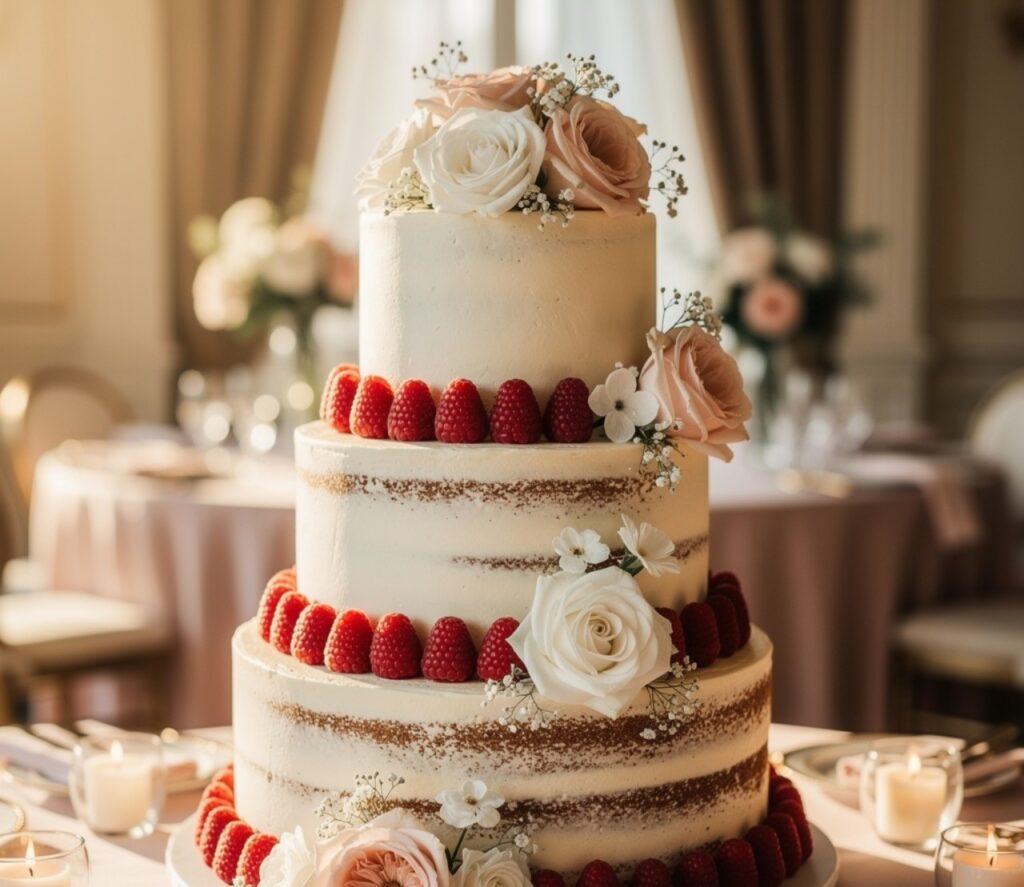
Vanilla remains one of the safest and most requested wedding cake flavors because it appeals to nearly everyone. The difference between average vanilla and premium vanilla cake is ingredient quality. Real vanilla bean creates warmth, aroma, and depth that standard vanilla extract cannot match. Adding raspberry filling changes the entire experience. The berry flavor cuts through sweetness and prevents the cake from tasting flat. This balance matters during weddings because guests often eat cake after a full dinner. Heavy sweetness becomes difficult to enjoy late in the evening. Vanilla bean cake works especially well with:
- Raspberry preserves
- White chocolate ganache
- Chantilly cream
- Vanilla buttercream
- Fresh berries
The texture should remain light but stable. A dry vanilla cake fails quickly because guests compare it against every bakery cake they have ever eaten. Moisture retention matters. Bakers often use sour cream, buttermilk, or oil-based methods to improve softness. This flavor combination fits almost every wedding style:
- Garden weddings
- Luxury ballroom receptions
- Beach ceremonies
- Minimalist weddings
- Spring and summer weddings
Visually, raspberry filling also creates a clean slice presentation. The white cake and bright filling create contrast in photographs.
Chocolate Ganache Wedding Cake Flavors
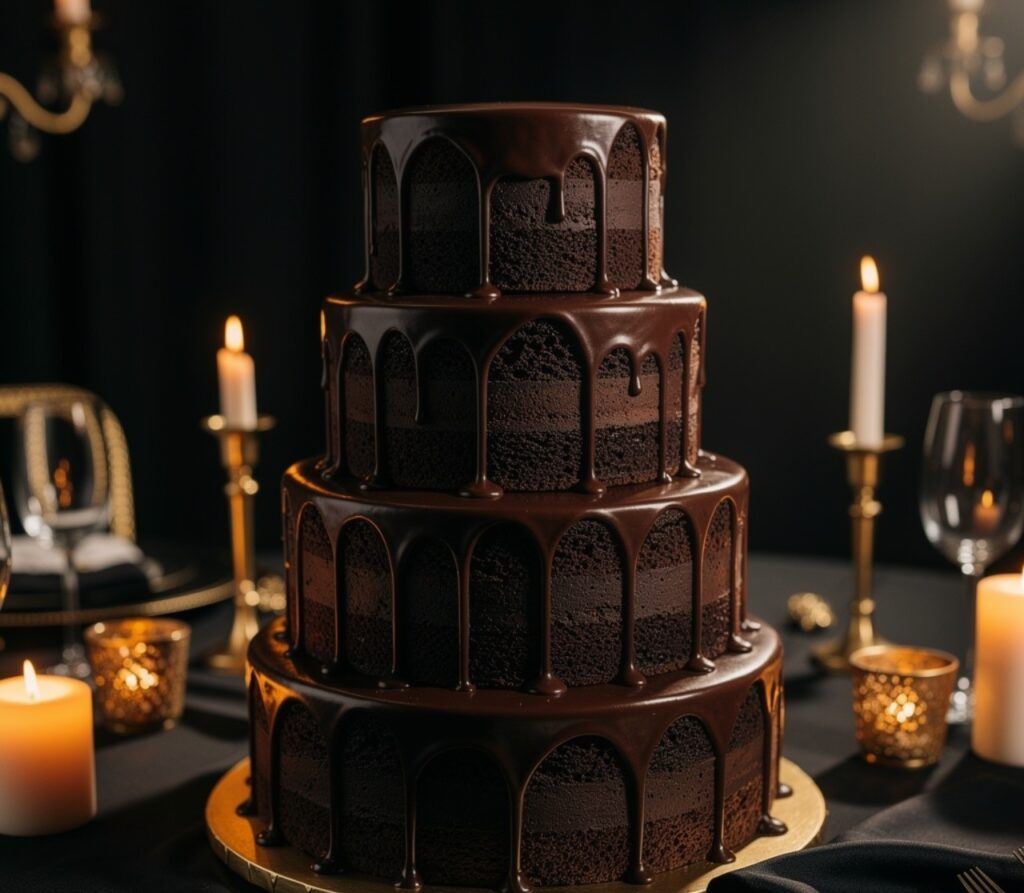
Chocolate wedding cake remains a top seller because guests trust it. Most people will accept chocolate even if they normally skip dessert. The key is avoiding cheap cocoa flavor. A deep chocolate sponge made with dark cocoa powder or melted chocolate creates richness without tasting sugary. Ganache then adds density and smooth texture. This combination feels formal, premium, and satisfying. Chocolate cake performs well during colder seasons because guests naturally prefer heavier desserts in fall and winter. It pairs especially well with:
- Espresso buttercream
- Salted caramel
- Chocolate mousse
- Hazelnut cream
- Dark berry fillings
Texture control matters more with chocolate cakes because they can become dense very quickly. The ideal wedding chocolate cake should feel rich but still soft enough to cut cleanly. Many couples underestimate the importance of salt in chocolate cake. A slight salt balance sharpens cocoa flavor and prevents sweetness overload. This flavor profile fits:
- Black tie weddings
- Winter receptions
- Evening ceremonies
- Industrial venue weddings
- Romantic candlelit settings
Lemon Elderflower Wedding Cake Flavors
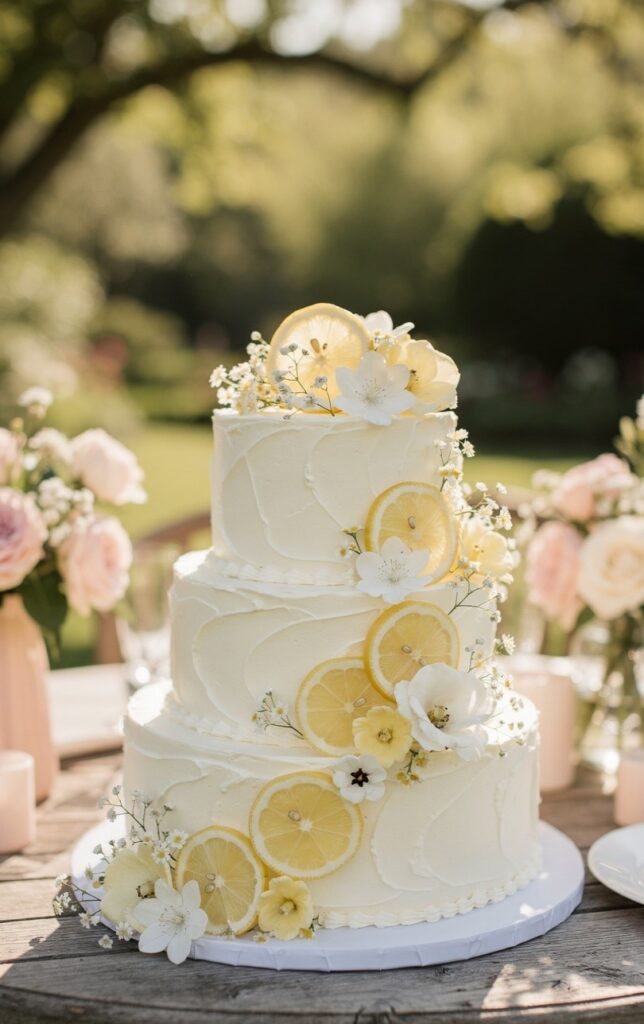
Lemon elderflower became widely recognized after royal wedding trends increased demand for floral citrus cakes. The combination works because lemon delivers brightness while elderflower adds subtle floral notes without becoming overpowering. Lemon cake should never taste artificial. Real lemon zest and juice create natural acidity and aroma. Elderflower syrup or cordial should remain restrained. Too much floral flavor can taste like perfume. Strong pairing options include:
- Swiss meringue buttercream
- Lemon curd
- Fresh blueberries
- Honey frosting
- White chocolate accents
The advantage of citrus cake is freshness. Guests often feel more willing to eat a full slice because the flavor feels lighter than chocolate-heavy options. It works for:
- Garden venues
- English countryside weddings
- Daytime receptions
- Elegant spring weddings
- Destination weddings
Texture should remain soft and airy. Dense lemon cake loses the refreshing effect that makes this combination successful. Among modern wedding cake flavors, lemon elderflower stands out for couples who want elegance without heaviness.
Almond Cream Wedding Cake Flavors
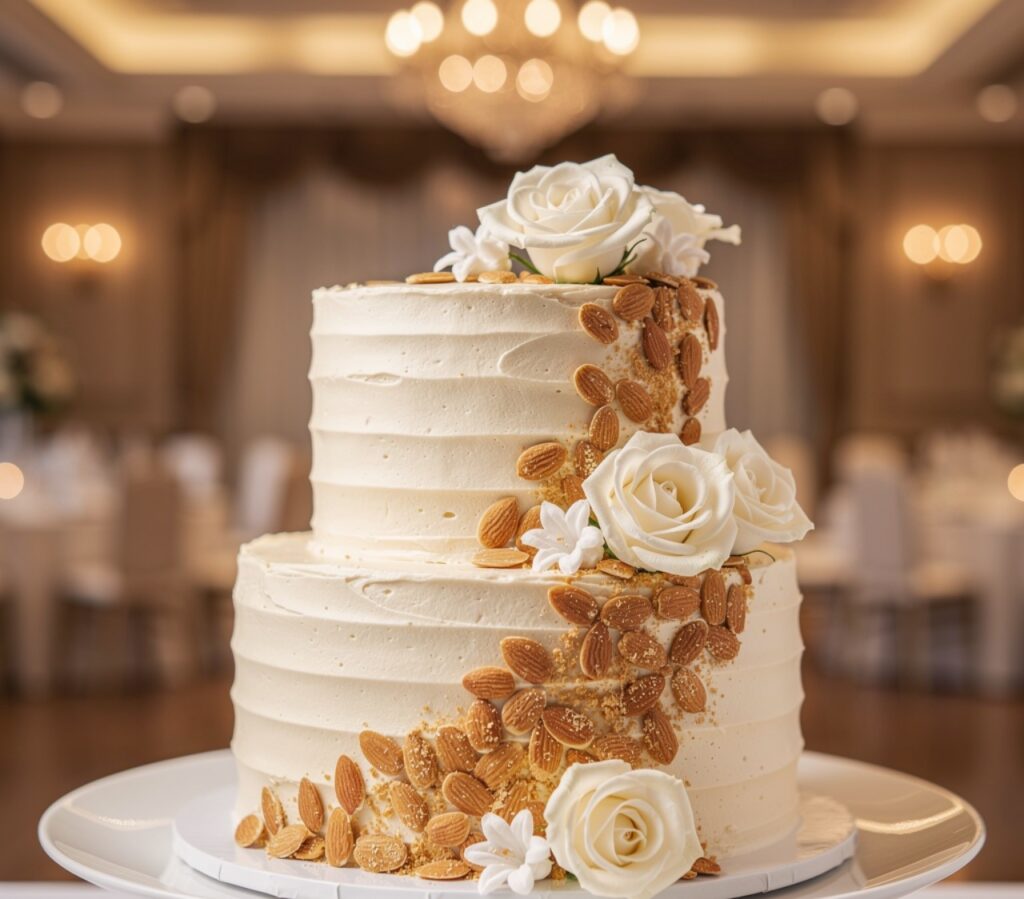
Almond cake delivers a refined flavor that feels more mature than standard vanilla. The nutty aroma creates warmth while remaining subtle enough for large guest groups. Professional bakers often combine almond sponge with vanilla buttercream because the two flavors support each other naturally. The strongest almond wedding cakes include:
- Toasted almond layers
- Almond cream filling
- White chocolate frosting
- Berry compote
- Honey drizzle
Almond flavor should remain balanced. Too much extract creates bitterness and artificial aftertaste. One reason almond cake works well at weddings is versatility. It adapts to rustic weddings, formal weddings, and luxury receptions equally well.
- Fresh flowers
- Gold leaf
- Naked cakes
- Semi-naked cakes
- Classic white fondant
Texture is critical. Almond flour additions improve softness and moisture retention. This cake flavor feels expensive without requiring highly unusual ingredients. That balance makes it popular with couples who want sophistication without risking guest rejection.
Red Velvet Cream Cheese Wedding Cake Flavors
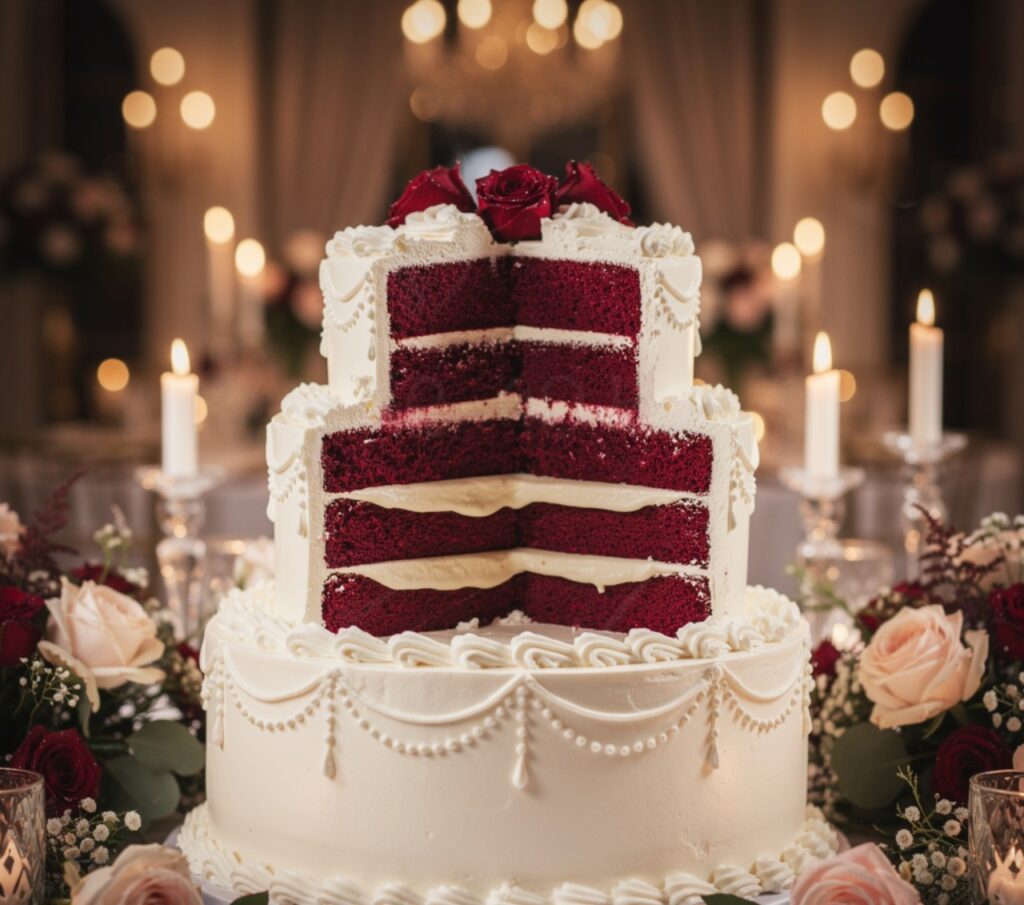
Red velvet continues to succeed because it combines visual impact with familiar flavor. Many guests recognize it instantly, which increases dessert acceptance. A true red velvet cake is not simply red chocolate cake. It should contain mild cocoa flavor, slight tanginess, and smooth cream cheese frosting. The balance between cake and frosting matters heavily here. Overly sweet cream cheese frosting ruins the entire experience. The best red velvet wedding cakes include:
- Light cocoa sponge
- Tangy cream cheese layers
- White chocolate curls
- Fresh berries
- Smooth buttercream exterior
This flavor profile works especially well during:
- Romantic weddings
- Winter weddings
- Valentine’s season ceremonies
- Glamorous evening receptions
Color contrast also creates dramatic photos. Deep red layers against white frosting look strong in wedding photography. Texture should remain velvety and soft. Dry red velvet immediately disappoints guests because expectations are high.
Coconut Lime Wedding Cake Flavors
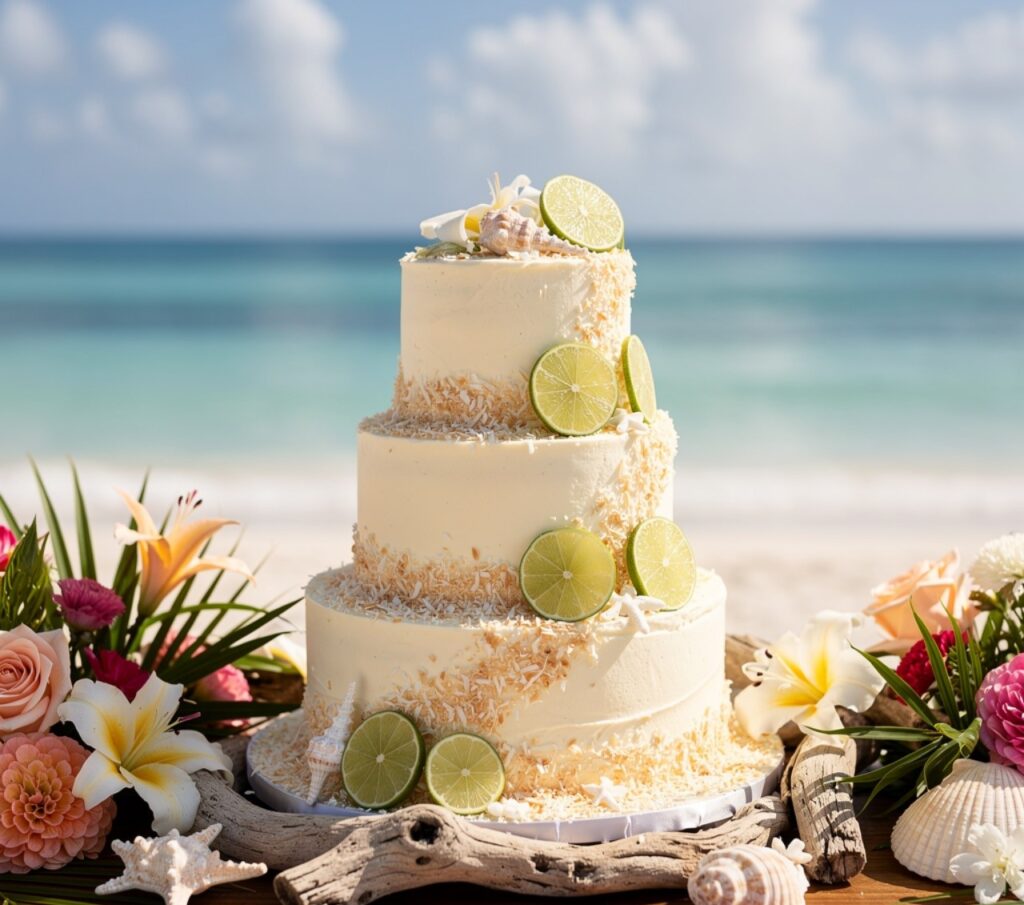
Coconut lime cake delivers tropical freshness without becoming too sweet. Coconut creates softness and aroma while lime adds acidity and brightness. This combination fits destination weddings particularly well. Strong pairings include:
- Coconut buttercream
- Lime curd
- Toasted coconut flakes
- Pineapple filling
- White chocolate ganache
The goal is balance. Too much coconut can create heavy texture. Too much lime creates sharp acidity. A successful coconut lime wedding cake should feel refreshing. This flavor works best for:
- Beach weddings
- Summer weddings
- Tropical themes
- Outdoor receptions
- Coastal venues
Texture matters heavily because shredded coconut can dry the sponge if handled poorly. Professional bakers often use coconut milk and oil for moisture retention.
Salted Caramel Wedding Cake Flavors
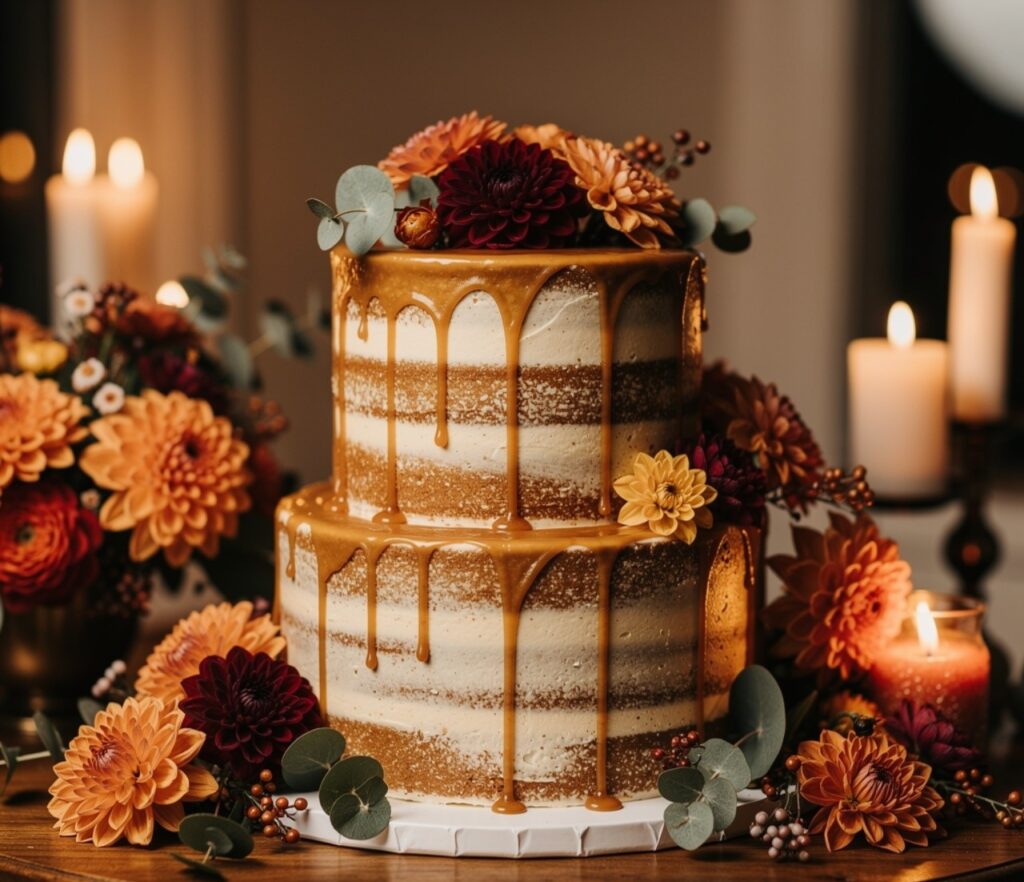
Salted caramel became popular because it solves a major dessert problem: excessive sweetness. Salt sharpens flavor and creates contrast. A strong salted caramel cake combines:
- Vanilla or chocolate sponge
- Salted caramel sauce
- Brown sugar buttercream
- Caramel drizzle
- Crunch texture layers
Salt quality matters. Fine sea salt works better than harsh table salt because it blends smoothly into frosting. This flavor profile fits:
- Rustic weddings
- Barn weddings
- Autumn receptions
- Evening ceremonies
- Cozy indoor venues
Texture variation improves the experience. Soft sponge combined with silky caramel and occasional crunch creates stronger guest satisfaction. One reason couples choose salted caramel wedding cake flavors is universal appeal. Even guests who dislike highly sweet desserts often enjoy caramel balance.
Strawberry Shortcake Wedding Cake Flavors
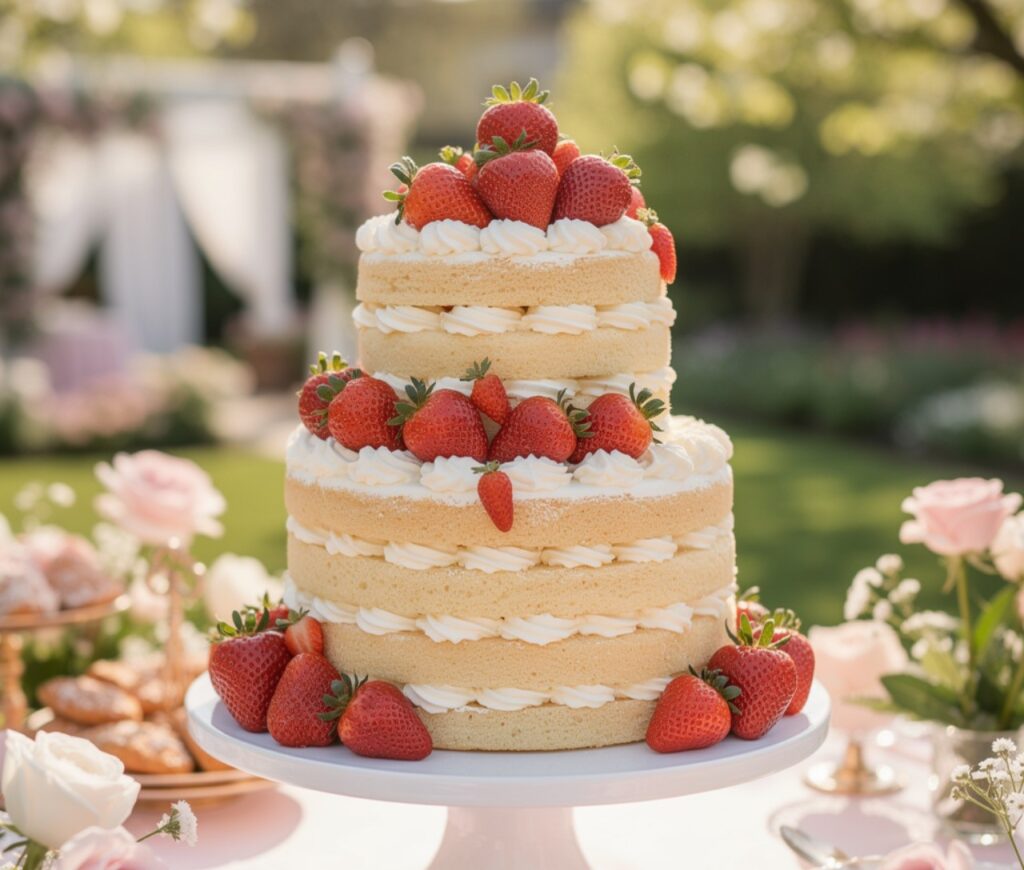
Strawberry shortcake style wedding cakes feel nostalgic and fresh at the same time. The flavor profile is simple, but execution matters. Fresh strawberries provide acidity and texture. Whipped cream adds lightness. Vanilla sponge supports the fruit without competing against it. This combination works best when ingredients are seasonal. Strong additions include:
- Mascarpone cream
- Strawberry compote
- Vanilla bean sponge
- Fresh mint garnish
- Light buttercream exterior
Professional bakers often layer fresh fruit with stabilized cream to maintain structure during long receptions. This flavor profile fits:
- Spring weddings
- Garden ceremonies
- Daytime receptions
- Vintage wedding themes
- Outdoor celebrations
Guests appreciate the lighter texture because it feels less heavy after dinner. The visual appeal also matters. Fresh strawberry slices create clean, attractive layers. Among fruit-forward wedding cake flavors, strawberry shortcake remains one of the most crowd-friendly options.
Espresso Mocha Wedding Cake Flavors
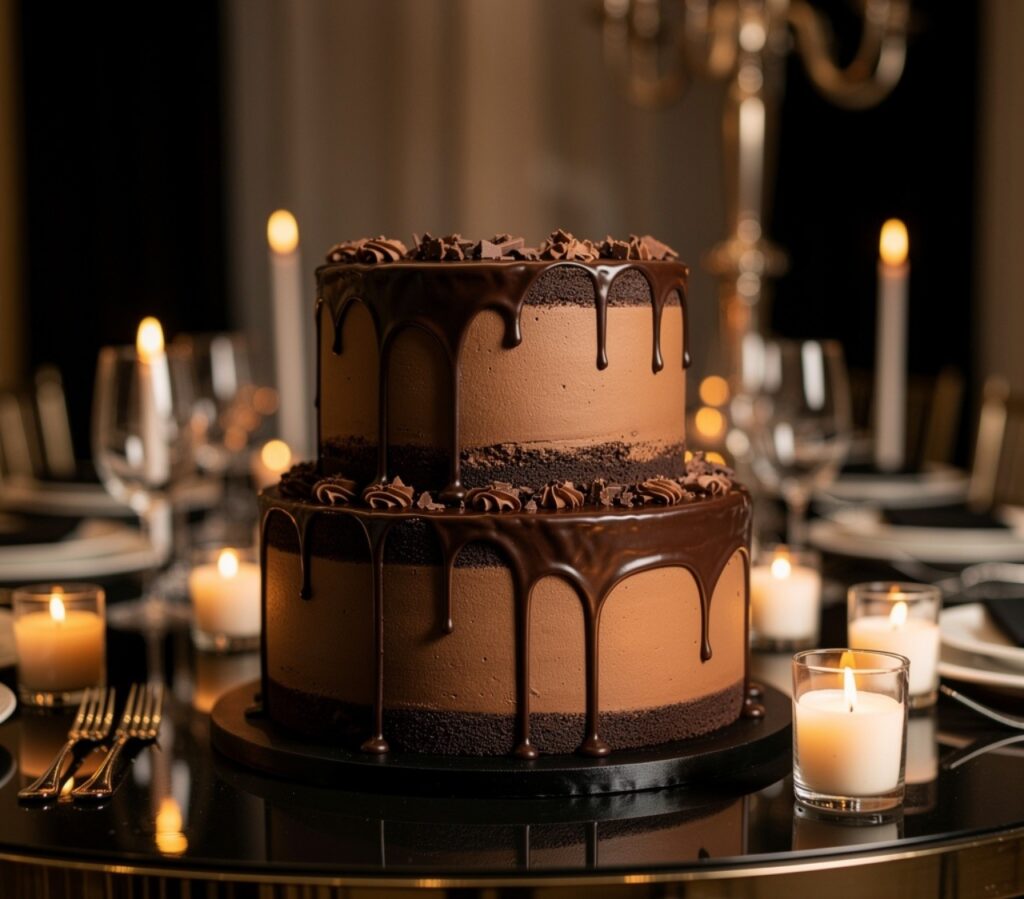
Coffee-based cakes create strong flavor depth and feel more mature than traditional sweet cakes. Espresso enhances chocolate naturally. Even guests who do not drink coffee often enjoy mocha cake because caffeine bitterness balances sweetness. The best mocha wedding cakes include:
- Dark chocolate sponge
- Espresso buttercream
- Chocolate ganache
- Coffee syrup soak
- Chocolate shavings
This flavor profile works especially well for evening weddings. Coffee aroma also improves guest perception because scent strongly affects dessert experience. Texture should remain smooth and moist. Dry coffee cake becomes bitter quickly. This combination fits:
- Luxury weddings
- Industrial venues
- Black tie receptions
- Winter weddings
- Modern city weddings
Professional bakers usually avoid excessive instant coffee flavor because it creates harsh aftertaste. Instead, espresso reductions and balanced cocoa ratios create cleaner flavor.
Funfetti Buttercream Wedding Cake Flavors
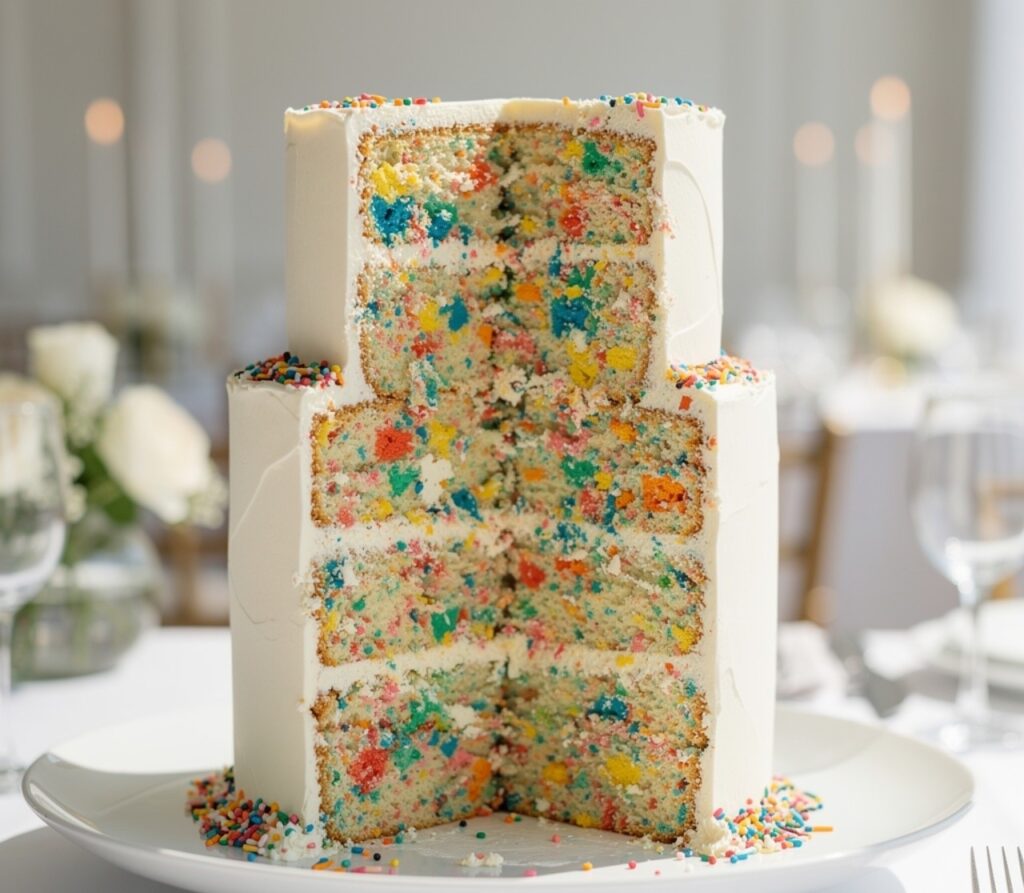
Funfetti wedding cakes prove that playful desserts can still feel elegant. This style works because it creates emotional connection. Many guests associate colorful sprinkle cakes with birthdays and celebrations. A modern wedding version uses high-quality vanilla sponge with refined buttercream instead of artificial grocery-store flavor. Strong combinations include:
- Vanilla bean frosting
- White chocolate filling
- Rainbow sprinkles
- Marshmallow buttercream
- Soft confetti sponge
Modern funfetti wedding cakes use neutral exteriors with colorful interior layers. This flavor style fits:
- Casual weddings
- Modern receptions
- Younger couples
- Creative venues
- Celebration-focused weddings
Texture should remain airy and soft. Guests often respond positively because the cake feels approachable and joyful. Among contemporary wedding cake flavors, funfetti succeeds because it combines nostalgia with polished presentation.
Pistachio Rose Wedding Cake Flavors
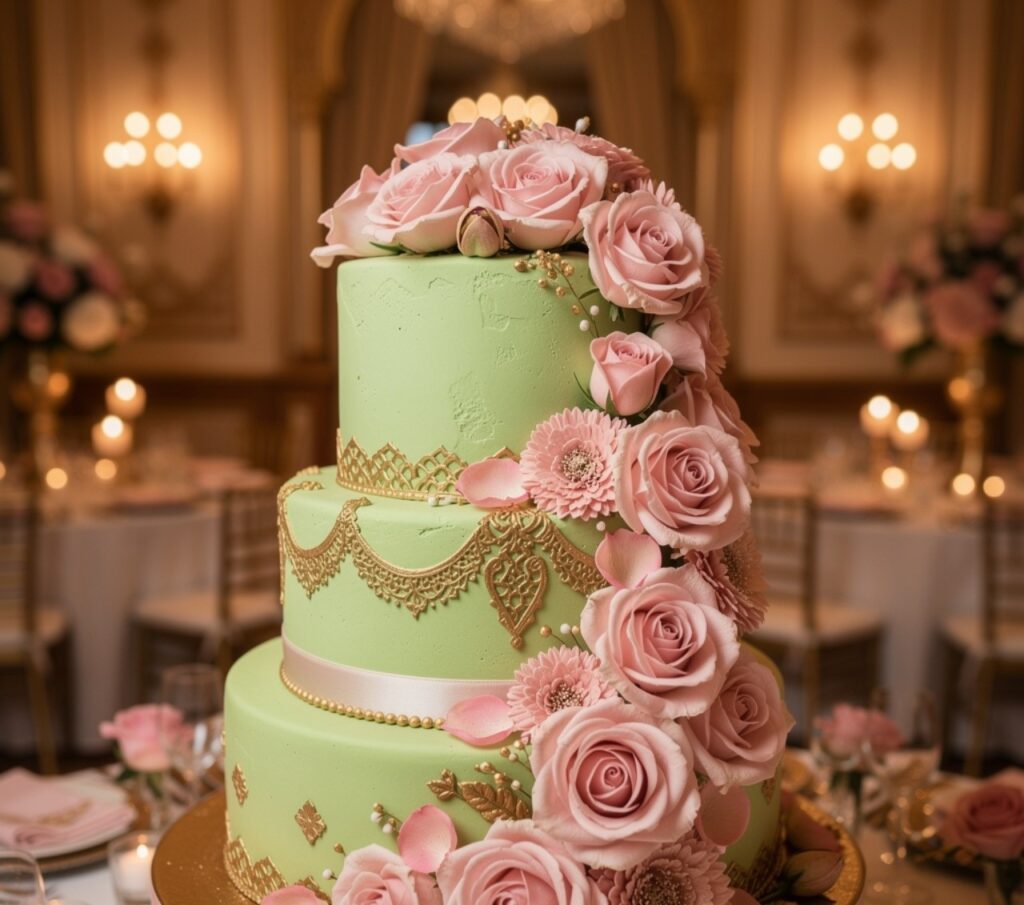
Pistachio rose cake offers a luxury flavor profile inspired by Middle Eastern and Mediterranean desserts. Pistachio creates earthy richness while rose adds delicate floral aroma. This combination requires precision. Too much rosewater ruins balance immediately. The strongest pistachio rose wedding cakes include:
- Pistachio sponge
- Rose cream filling
- Honey glaze
- Crushed pistachios
- White chocolate accents
This flavor works best for couples wanting unique but refined wedding cake flavors. It fits:
- Luxury weddings
- Cultural fusion weddings
- Elegant ballroom receptions
- Spring weddings
- High-end dessert tables
Texture should remain moist and soft because nut-based cakes can become dry. Professional bakers often combine pistachio paste with almond flour for smoother structure. Visual presentation also matters heavily. Soft green layers and floral decoration create strong photography results.
Cookies and Cream Wedding Cake Flavors
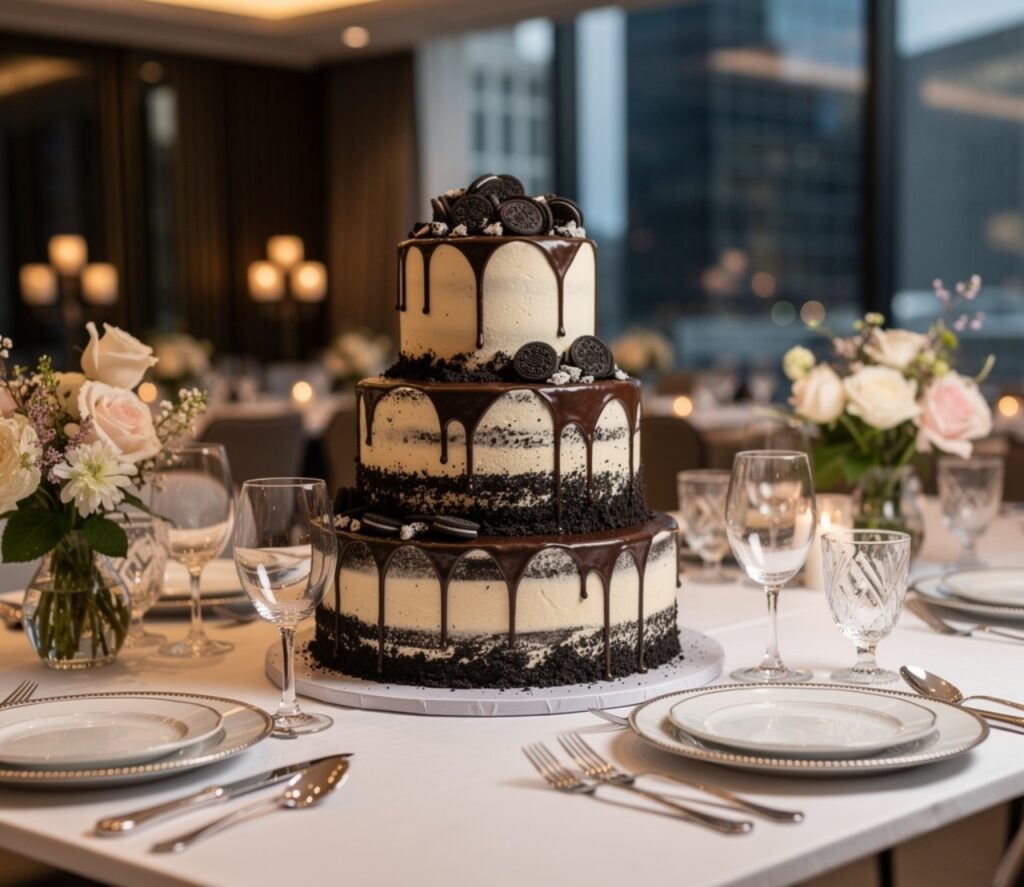
Cookies and cream wedding cakes combine familiar flavor with textured contrast. The combination succeeds because it balances creaminess, crunch, and chocolate flavor. A strong version includes:
- Vanilla or chocolate sponge
- Cookie crumble filling
- Cookies and cream buttercream
- Dark chocolate drip
- Crunch topping
Texture variation is the main advantage here. Soft cake layers paired with cookie pieces create a more engaging dessert experience. This flavor profile fits:
- Casual weddings
- Modern receptions
- Late-night party weddings
- Urban venues
- Youth-focused celebrations
Professional bakers must manage moisture carefully because cookie pieces soften over time. Using stabilized crunch layers helps maintain texture during long receptions. Guests usually react positively because the flavor feels familiar and comforting.
Champagne Berry Wedding Cake Flavors
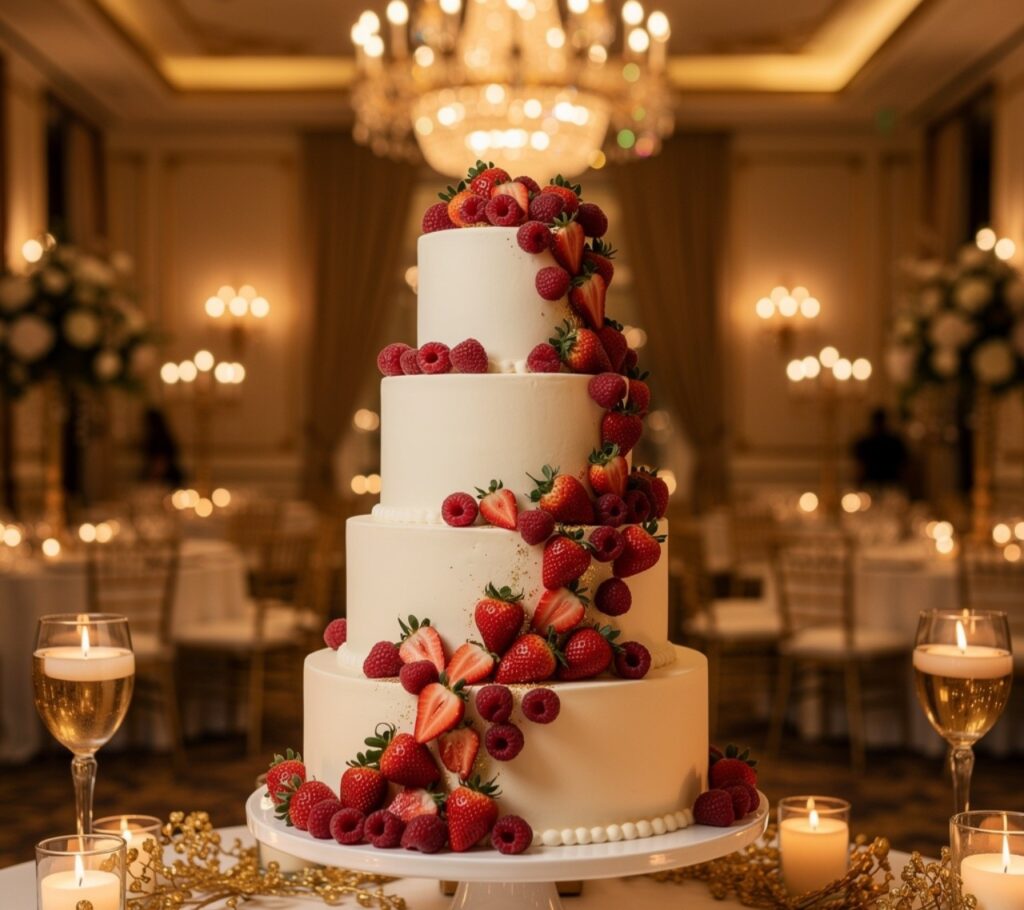
Champagne cake delivers elegance without excessive richness. The flavor itself is subtle. Most champagne cakes rely on sparkling wine reduction combined with vanilla and berry accents. Strong pairings include:
- Strawberry filling
- Raspberry compote
- Champagne buttercream
- White chocolate ganache
- Gold decoration accents
This cake style fits:
- Luxury weddings
- Formal ballroom receptions
- New Year’s weddings
- Evening ceremonies
- Glamorous wedding themes
Champagne flavor should never taste alcoholic. Instead, it should create subtle complexity. Professional bakers often reduce champagne into syrup form to intensify aroma without adding excess liquid. Visually, this flavor also supports elegant styling extremely well. Among upscale wedding cake flavors, champagne berry remains one of the most refined choices.
Apple Cinnamon Wedding Cake Flavors
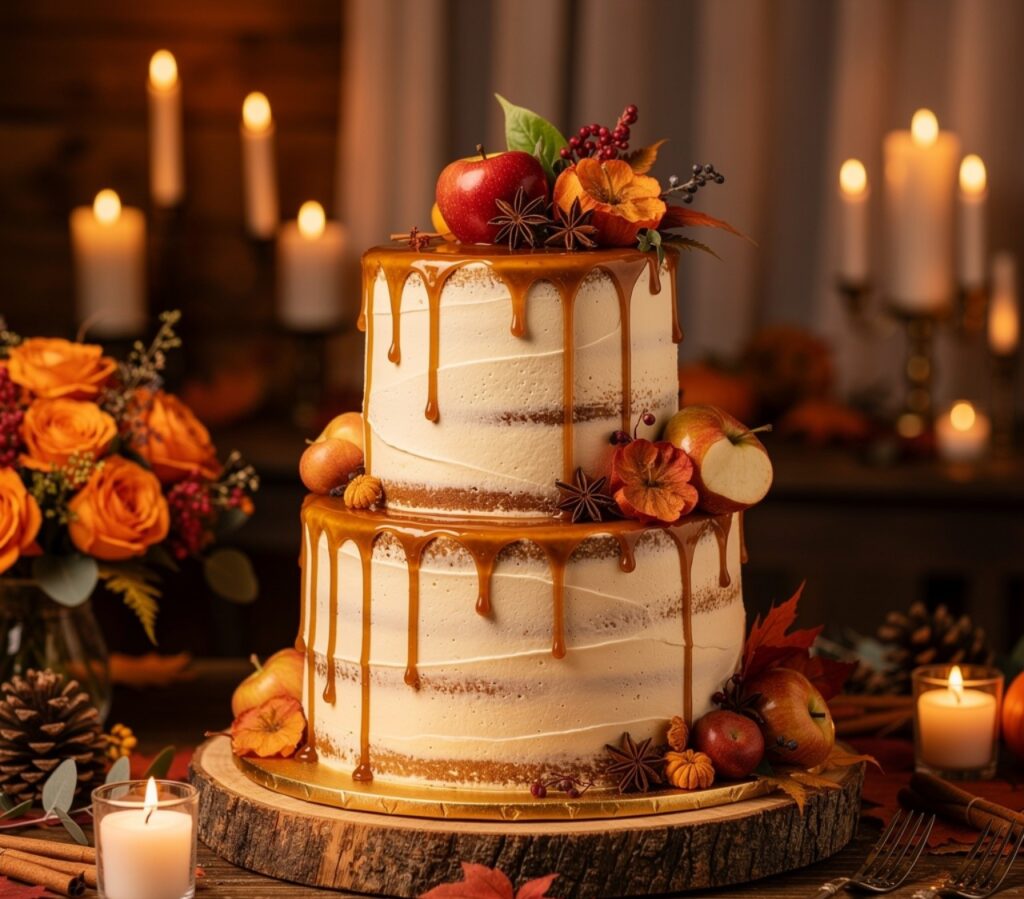
Apple cinnamon cake delivers warmth and familiarity. This flavor combination works because guests immediately recognize it. Familiar desserts reduce risk at large weddings. The strongest apple cinnamon cakes include:
- Apple compote filling
- Cinnamon sponge
- Brown sugar frosting
- Caramel drizzle
- Toasted pecans
This cake profile works best during:
- Autumn weddings
- Rustic receptions
- Barn venues
- Cozy indoor ceremonies
- Outdoor fall celebrations
Cinnamon creates warmth while apple prevents the cake from becoming too dense. Professional bakers often use tart apples because sweet apples can disappear under frosting. Texture should remain soft with small fruit pieces distributed evenly. Among seasonal wedding cake flavors, apple cinnamon consistently performs well during colder months.
Matcha White Chocolate Wedding Cake Flavors
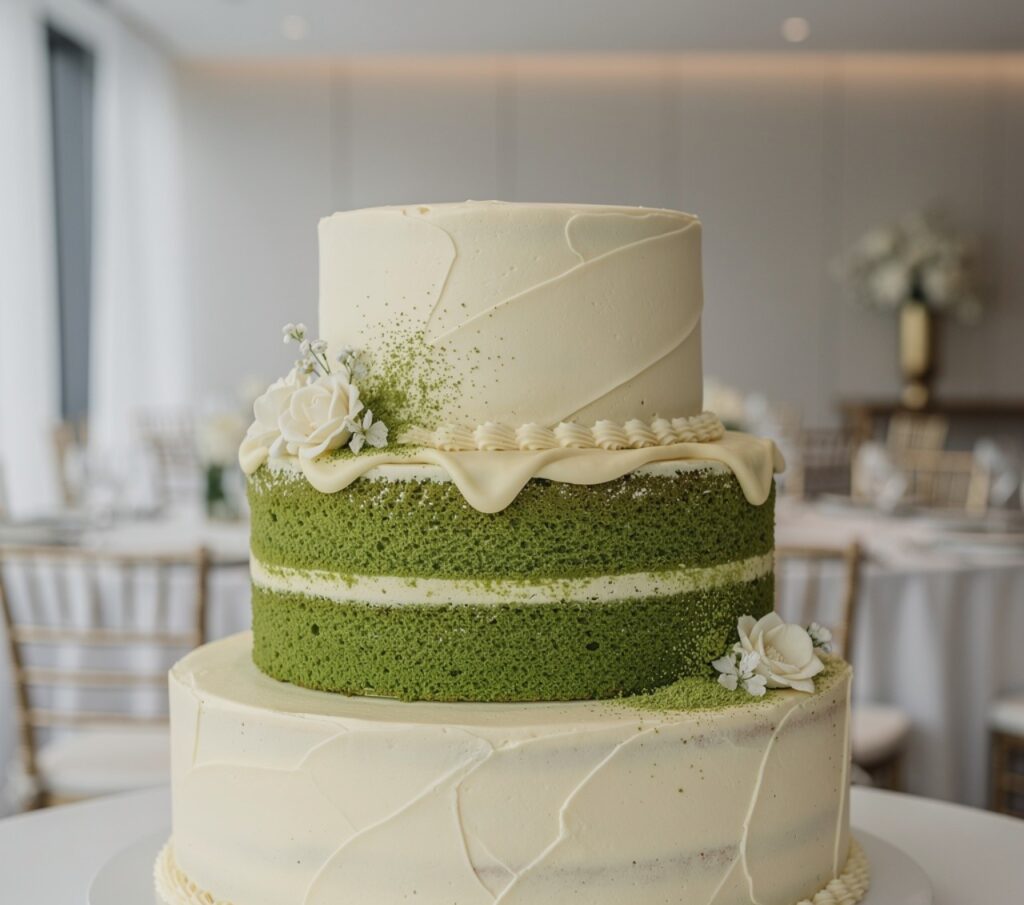
Matcha cake has grown rapidly in popularity because couples want desserts that feel modern and visually different. Good matcha cake should taste earthy, smooth, and balanced. Poor matcha cake tastes bitter and grassy. White chocolate helps soften matcha intensity while adding creaminess.
Strong combinations include:
- Matcha sponge
- White chocolate ganache
- Vanilla cream filling
- Strawberry accents
- Green tea buttercream
This flavor profile fits:
- Minimalist weddings
- Modern receptions
- Asian fusion weddings
- Creative luxury weddings
- Contemporary city venues
Professional bakers often combine oil-based cake methods with high-grade ceremonial or culinary matcha. Guests who enjoy tea flavors often remember this cake long after the wedding. Among trend-forward wedding cake flavors, matcha white chocolate delivers modern appeal with premium presentation.
How to Choose Wedding Cake Flavors That Match Your Guests
Many couples focus only on personal preference when selecting wedding cake flavors. That approach can work for small weddings, but larger receptions require broader thinking.
A wedding cake serves multiple purposes:
- Dessert experience
- Visual centerpiece
- Guest memory
- Reception tradition
- Photography detail
The best cake flavor balances personal taste with guest accessibility. The strongest strategy is combining familiarity with uniqueness. Examples include:
- Vanilla with berry filling
- Chocolate with espresso
- Lemon with elderflower
- Almond with honey
- Caramel with sea salt
Spring Wedding Flavor Direction
Spring weddings benefit from:
- Citrus
- Berry
- Floral flavors
- Light sponge textures
- Fresh cream fillings
Summer Wedding Flavor Direction
Summer weddings work well with:
- Coconut
- Tropical fruit
- Strawberry
- Lemon
- Champagne flavors
Autumn Wedding Flavor Direction
Fall weddings pair naturally with:
- Cinnamon
- Caramel
- Apple
- Chocolate
- Nut-based cakes
Winter Wedding Flavor Direction
Winter weddings often favor:
- Mocha
- Red velvet
- Dark chocolate
- Salted caramel
- Rich buttercream textures
The venue should also influence cake decisions. A beach wedding usually benefits from lighter cake flavors. A luxury ballroom reception can support heavier and richer desserts.
Common Mistakes Couples
Many wedding cakes fail because couples focus only on trends. The most common mistake is choosing appearance over flavor. A visually stunning cake means very little if guests leave slices unfinished. Another major mistake is excessive sweetness. Wedding meals already include:
- Cocktails
- Champagne
- Sweet desserts
- Sugary mixers
Heavy frosting combined with sweet sponge creates fatigue. Balanced acidity and salt improve dessert quality significantly. Other mistakes include:
Ignoring Texture
Dry cake ruins guest experience immediately. Professional bakers focus on moisture retention through:
- Oil-based sponge methods
- Sour cream
- Buttermilk
- Syrup soaks
- Stable fillings
Choosing Fragile Fillings
Fresh fruit fillings can leak or collapse during long receptions. Stability matters as much as flavor.
Overcomplicating Flavor Profiles
Too many ingredients create confusion. Strong cakes usually rely on two or three core flavors instead of six competing elements.
Forgetting Climate Conditions
Outdoor weddings in hot weather require stable frosting and fillings. Butter-heavy cakes can melt quickly under sunlight.
Following Social Media Trends Blindly
Internet trends often prioritize visuals instead of taste. A good wedding cake should survive beyond photographs. Flavor always matters more than decoration.
Wedding Cake Flavor Pairings That Work Best
Pairing flavor correctly improves balance and guest satisfaction. Strong wedding cake flavors often rely on contrast.
Examples include:
| Cake Flavor | Best Pairing |
|---|---|
| Vanilla | Raspberry |
| Chocolate | Espresso |
| Lemon | Blueberry |
| Almond | Honey |
| Coconut | Lime |
| Pistachio | Rose |
| Apple | Caramel |
| Matcha | White Chocolate |
The goal is balance between:
- Sweetness
- Acidity
- Richness
- Texture
- Aroma
Salt also improves flavor complexity. Salted caramel and chocolate combinations work because small salt levels sharpen flavor definition. Texture pairing matters equally. Soft sponge alone can feel boring.
Adding:
- Crunch layers
- Fruit compote
- Ganache
- Nuts
- Cookie crumble
Wedding Cake Flavors for Different Wedding Styles
The strongest wedding cake choices align with the visual tone of the event.
Luxury Ballroom Weddings
Best flavor directions:
- Champagne berry
- Pistachio rose
- Espresso mocha
- Almond cream
- These cakes feel refined and photograph well.
Rustic Weddings
Best flavor directions:
- Salted caramel
- Apple cinnamon
- Vanilla berry
- Coconut lime
- These flavors create warmth and familiarity.
Beach Weddings
Best flavor directions:
- Coconut lime
- Lemon elderflower
- Strawberry shortcake
- Champagne cake
- Lighter textures perform better in warm weather.
Minimalist Weddings
Best flavor directions:
- Matcha white chocolate
- Almond vanilla
- Lemon cream
- Vanilla bean
- These cakes match clean visual aesthetics.
Vintage Weddings
Best flavor directions:
- Strawberry shortcake
- Red velvet
- Almond cream
- Vanilla raspberry
Classic flavor profiles support nostalgic design. The best wedding cake flavors strengthen the atmosphere instead of competing against it.
How Professional Bakers Improve Wedding Cake Flavors
Professional bakers focus heavily on structure, moisture, and balance. Most bakery-quality cakes differ from homemade cakes because of ingredient ratios and technique.
Ingredient Quality
Real butter, high-quality cocoa, fresh citrus, and authentic vanilla matter. Artificial flavoring creates flat taste.
Moisture Retention
Wedding cakes often sit for hours before serving. Professional bakers maintain softness using:
- Oil blends
- Sour cream
- Sugar syrup
- Stable fillings
- Controlled baking temperatures
Flavor Layering
Strong cakes build flavor through multiple components. Example:
- Vanilla sponge
- Raspberry filling
- Vanilla bean buttercream
- White chocolate ganache
Salt and Acidity Balance
Professional desserts rarely rely only on sweetness. Salt sharpens flavor. Acidity creates freshness. This balance keeps guests eating.
Texture Variation
Modern cakes include multiple textures because monotony reduces satisfaction. Crunch, creaminess, softness, and fruit layers create stronger experiences. The best wedding cake flavors are engineered carefully rather than assembled randomly.
Why Wedding Cake Flavors Matter More Than Decoration
Social media has shifted wedding cake trends toward visual presentation. Tall cakes, dramatic flowers, metallic accents, and sculptural frosting dominate online platforms. But guest memory works differently. Most guests remember:
- Flavor
- Texture
- Moisture
- Aroma
- Freshness
A simple cake with excellent flavor creates stronger emotional impact than an elaborate cake with dry sponge. Taste also affects guest conversation. People discuss desserts that surprise them positively. This matters because weddings are experience-driven events. The dessert course is one of the final memories guests take home. Guests engage more with cakes they genuinely want to eat. Couples should prioritize:
- Moisture
- Balance
- Ingredient quality
- Texture
- Flavor pairing
FAQs
What wedding cake flavors do most guests actually prefer?
Vanilla bean, chocolate ganache, red velvet, and berry-based cakes usually receive the highest guest approval because they balance familiarity with flavor depth. Extremely experimental cakes often divide opinions at large weddings.
Are naked cakes good for outdoor weddings?
They can work, but outdoor heat creates stability problems. Naked cakes dry faster and can soften quickly in direct sunlight. Bakers often recommend semi-naked designs with stabilized frosting for better structure.
How many wedding cake flavors should couples choose?
Most professional bakers recommend one to three flavors maximum. Too many flavor combinations complicate serving logistics and reduce consistency.
Do guests care more about cake appearance or flavor?
Guests notice appearance first, but flavor determines long-term memory. Dry cake or overly sweet frosting usually becomes the strongest guest complaint after weddings.
Is fondant bad for wedding cake flavors?
Not always. High-quality fondant can work well when used thinly. Problems happen when fondant becomes thick, dry, or overly sweet. Many couples now choose buttercream because guests tend to eat more of it.
Conclusion
The best wedding cake flavors balance guest appeal, texture, season, and presentation. A successful cake should feel intentional instead of trendy. Vanilla berry cakes remain reliable because they satisfy large guest groups. Chocolate and mocha cakes create richness for formal evening receptions. Citrus and floral combinations work well for spring and summer weddings. Caramel, apple, and spice profiles dominate colder seasons because they create warmth and comfort.
Texture, acidity, moisture, and aroma matter just as much as decoration. Couples should choose wedding cake flavors that reflect both personal taste and guest experience. A memorable cake does more than look good in photos. It becomes part of the atmosphere, conversation, and emotional memory of the celebration. When flavor and structure work together, guests remember the cake long after the wedding ends.