22 Forest Wedding Colors Palette ideas for Elegant Outdoor Ceremonies
A forest wedding carries weight. Trees are older than trends. Light filters instead of floods. Color matters more here because it must belong. A forest wedding colors palette should feel earned, not applied. This guide breaks down twenty-two grounded, usable palettes that work with real forests, real weather, and real budgets. No fantasy tones. No fragile ideas. Just color choices that hold up outdoors.
Evergreen and Moss

For Forest Wedding Colors Palette, This forest wedding colors palette is built directly from the forest floor. Evergreen carries depth and permanence. Moss green softens it without losing structure. Together, they mirror pine needles, damp ground, and shaded leaves. Use evergreen as the anchor. It works for suits, table runners, and ceremony backdrops. Moss belongs in florals, napkins, and stationery accents. White flowers pop without fighting. Wood tones feel intentional instead of rustic by default. This palette works year-round. In summer, it feels cool. In fall, it deepens naturally. It also hides wear, dirt, and weather marks, which matters outdoors.
Sage and Bark
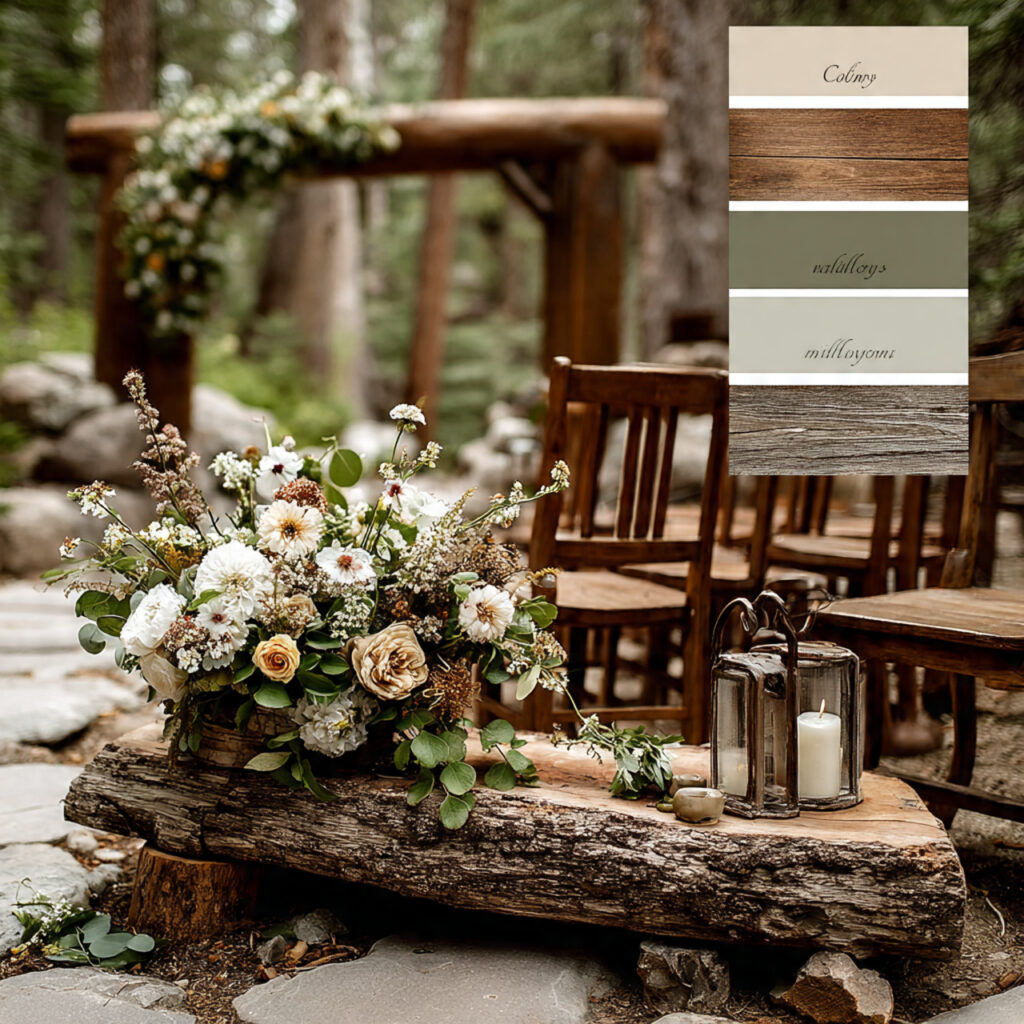
For Forest Wedding Colors Palette, A sage and bark forest wedding colors palette is calm and adaptable. Sage is muted, herbal, and forgiving. Bark brown grounds it without darkening the space too much. This palette works well for couples who want softness without pastel. Sage bridesmaid dresses photograph well under tree cover. Bark tones fit furniture, signage, and ceremony arches. Florals should stay simple. White, cream, and soft green foliage are enough. Metals should stay matte. Polished finishes clash with this palette.
Fern Green and Cream
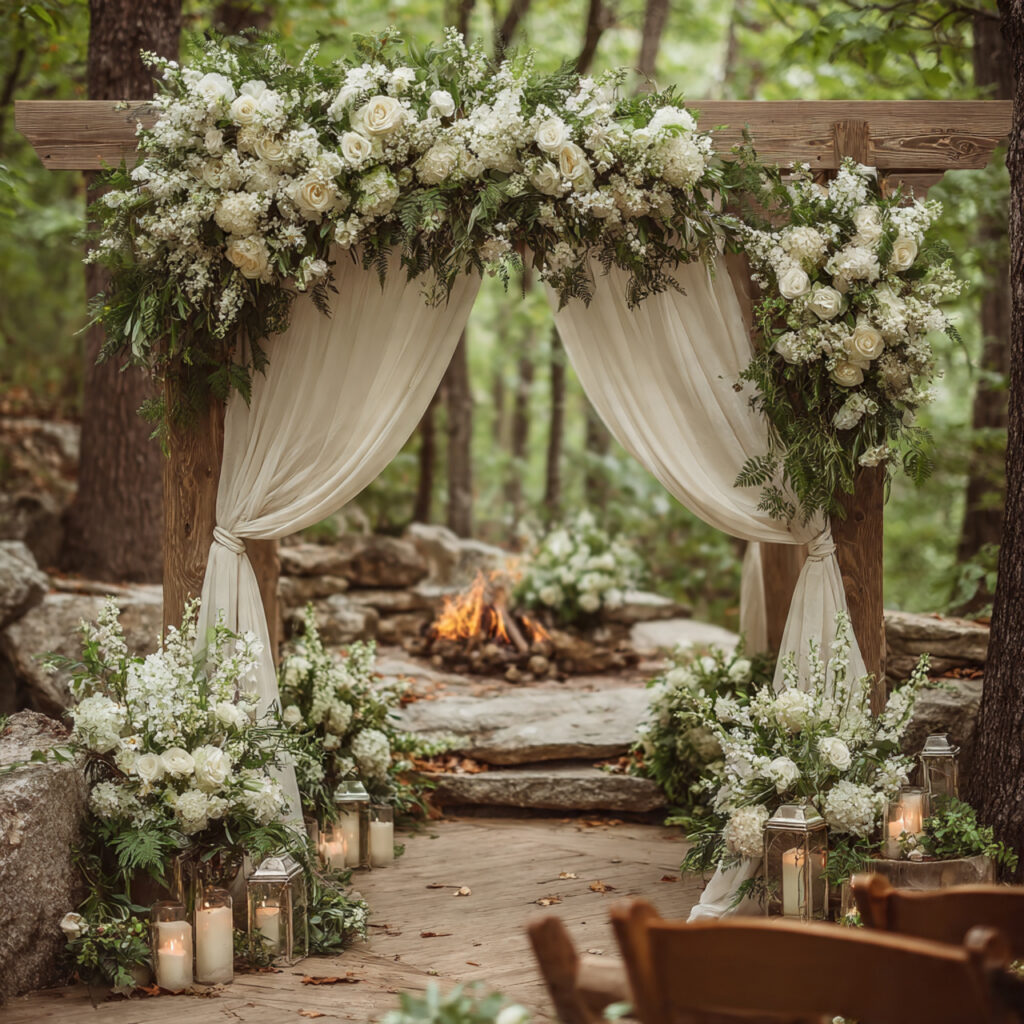
For Forest Wedding Colors Palette, This forest wedding colors palette leans lighter without leaving nature behind. Fern green has brightness but no shine. Cream replaces stark white, making everything warmer. Use fern green in fabric and foliage. Cream belongs in linens, paper goods, and florals. This combination is ideal for daylight ceremonies under partial canopy. It works best in spring and early summer forests where light is filtered, not blocked. Avoid adding strong accent colors. Let texture do the work.
Pine and Fog

For Forest Wedding Colors Palette, Pine and fog form a restrained forest wedding colors palette that suits cooler climates and shaded venues. Pine is deep and structured. Fog gray softens contrast and controls brightness. This palette works well for modern couples who still want a natural setting. Gray stone, concrete, and weathered wood fit easily here. Florals should stay minimal. Lighting matters. Use warm bulbs to prevent the palette from feeling cold. Candles and soft uplighting balance the darker tones.
Olive and Linen
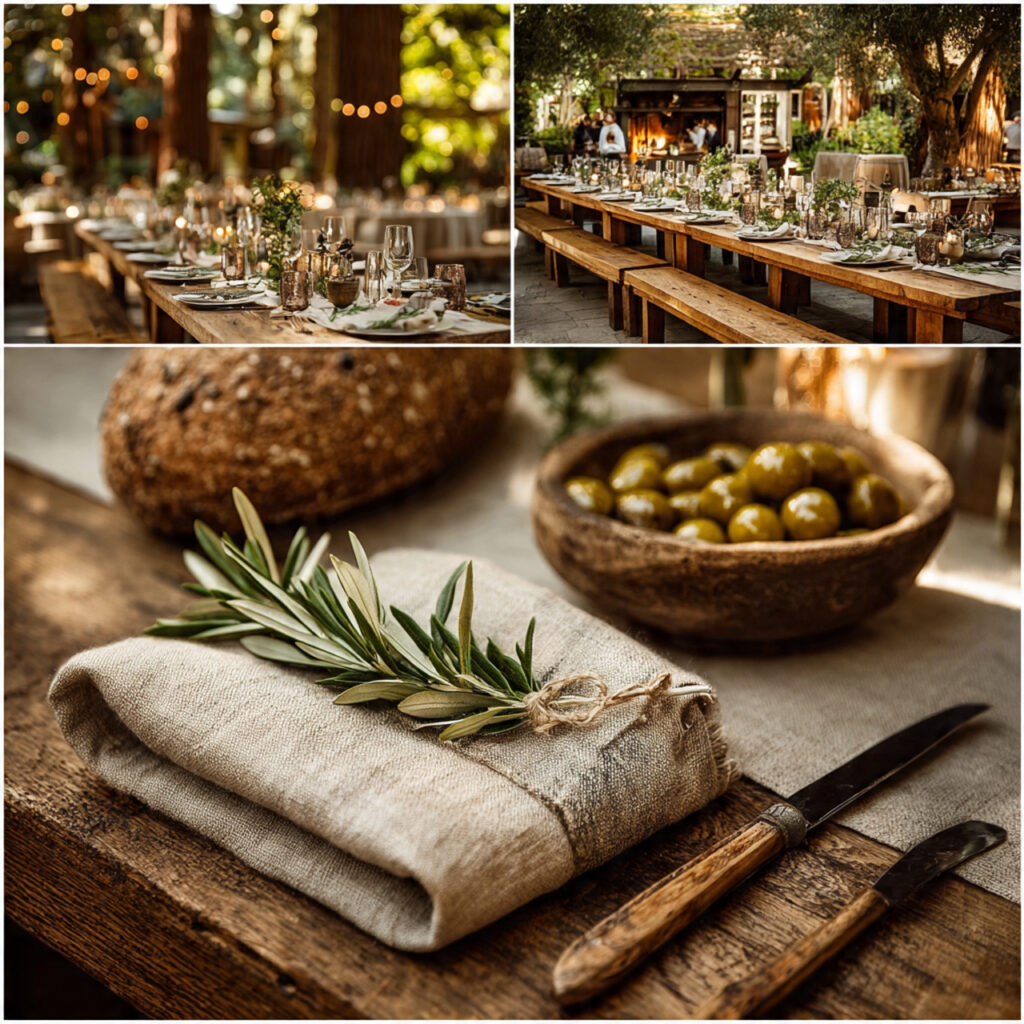
An olive and linen forest wedding colors palette is practical and understated. Olive reads as natural without leaning military. Linen adds warmth and neutrality. This palette suits casual outdoor weddings, especially in late summer. Linen tablecloths hide wrinkles. Olive dresses blend with surroundings without disappearing. Florals should include texture rather than color. Dried elements work well. Wood furniture looks intentional instead of borrowed.
Cedar and Stone

Cedar and stone create a forest wedding colors palette that feels solid and honest. Cedar brings warmth. Stone gray provides balance. This palette is ideal for mountain forests or rocky terrain. It pairs well with slate paths, stone altars, and wooden benches. Use cedar in signage, chairs, and ceremony structures. Stone tones belong in linens and suits. Avoid glossy finishes. Keep surfaces matte and worn.
Hunter Green and Antique Gold
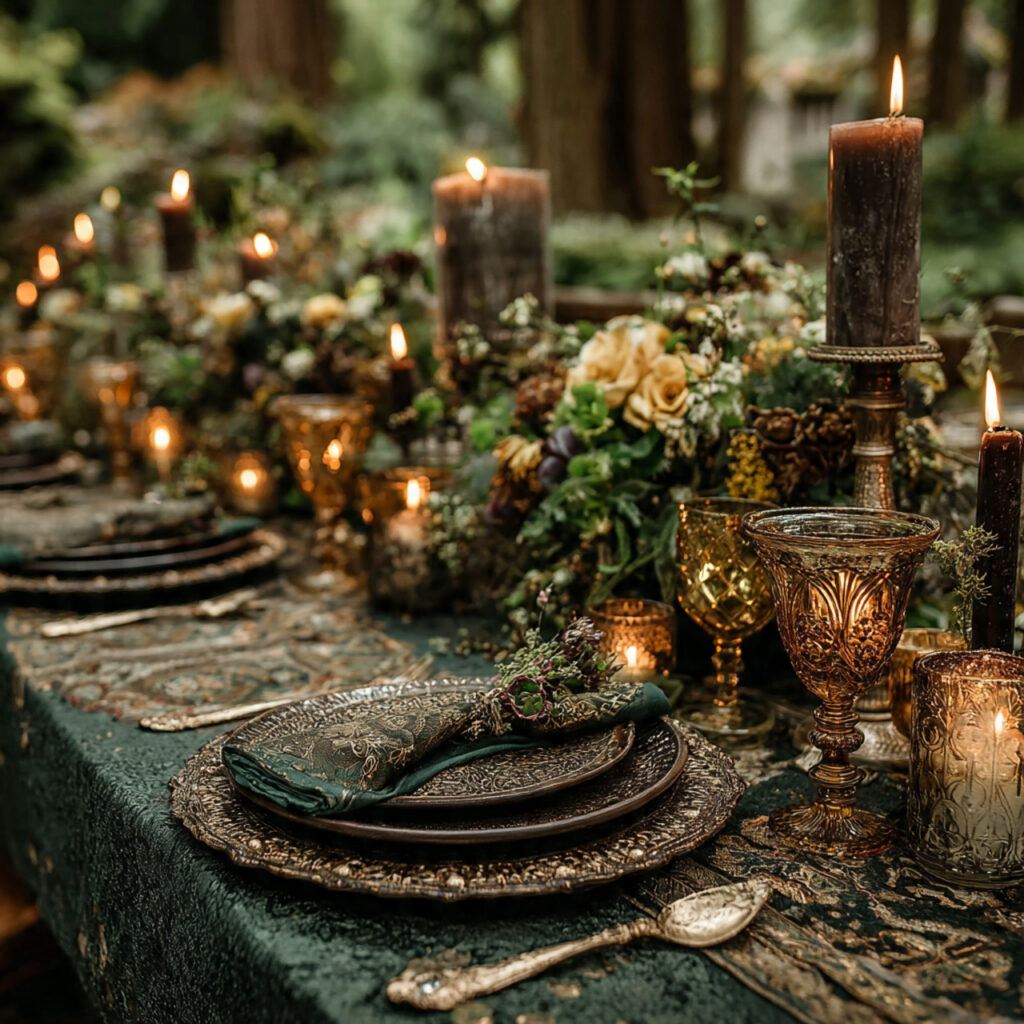
This forest wedding colors palette adds restraint luxury. Hunter green is rich and heavy. Antique gold adds warmth without shine. Use gold sparingly. Flatware, frames, and small details only. Hunter green carries the weight through fabrics and foliage. This palette works best in fall forests with dense tree cover. Candles amplify the gold without overpowering the setting.
Eucalyptus and Driftwood
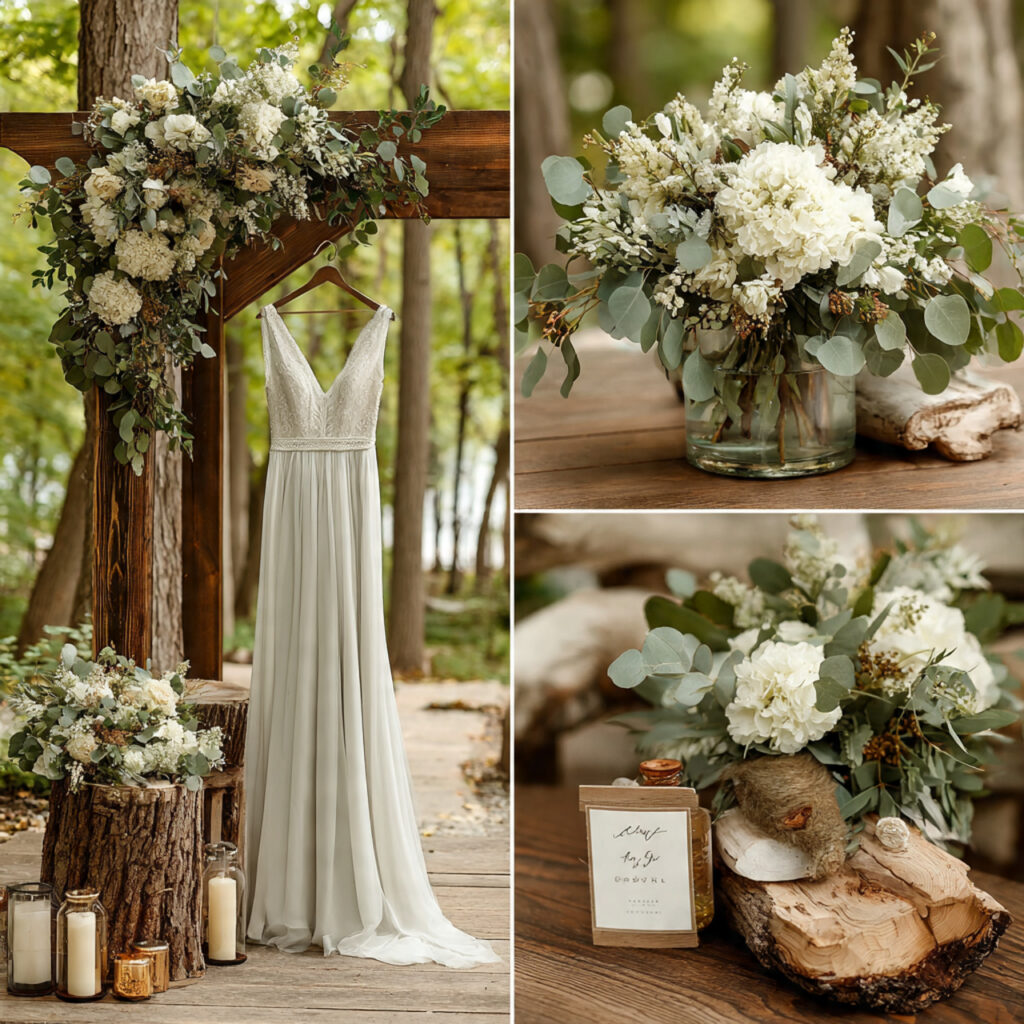
Eucalyptus and driftwood form a soft forest wedding colors palette with coastal influence. Eucalyptus is pale and muted. Driftwood gray keeps it grounded. This palette works well in open forests or woodland clearings. It suits relaxed timelines and informal seating. Florals should stay airy. Avoid saturated colors. This palette relies on space, light, and simplicity.
Forest Green and Clay
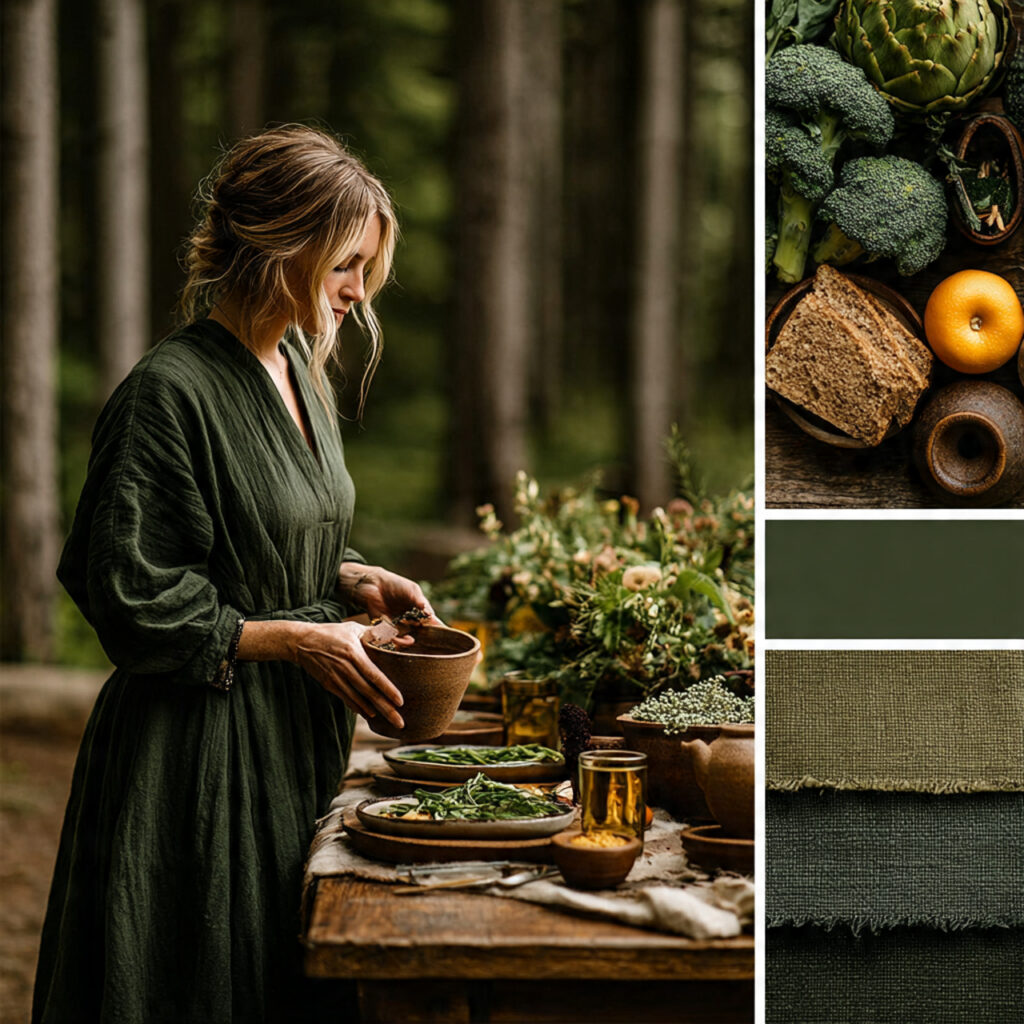
Forest green and clay create an earthy forest wedding colors palette with warmth. Clay brings red undertones that balance green’s coolness. Use clay in pottery, napkins, and florals. Forest green anchors suits and table elements. This palette works well in dry forests or regions with red soil. It feels grounded and honest, not decorative.
Moss and Mushroom
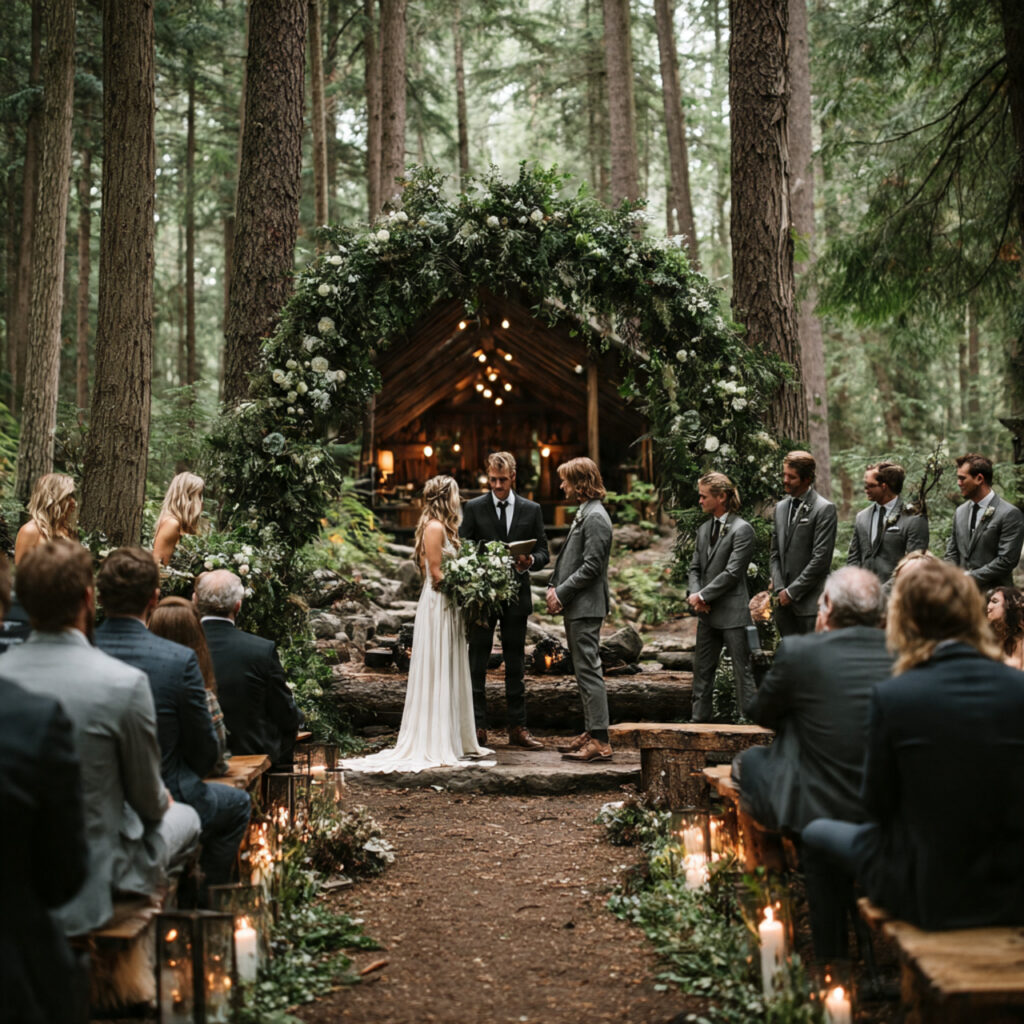
A moss and mushroom forest wedding colors palette stays neutral without going dull. Moss green adds life. Mushroom beige adds softness. This is a strong choice for couples who want minimal color but still want depth. It works in shaded forests where light is limited. Texture matters here. Linen, raw silk, and handmade paper elevate the palette without adding color.
Juniper and Smoke
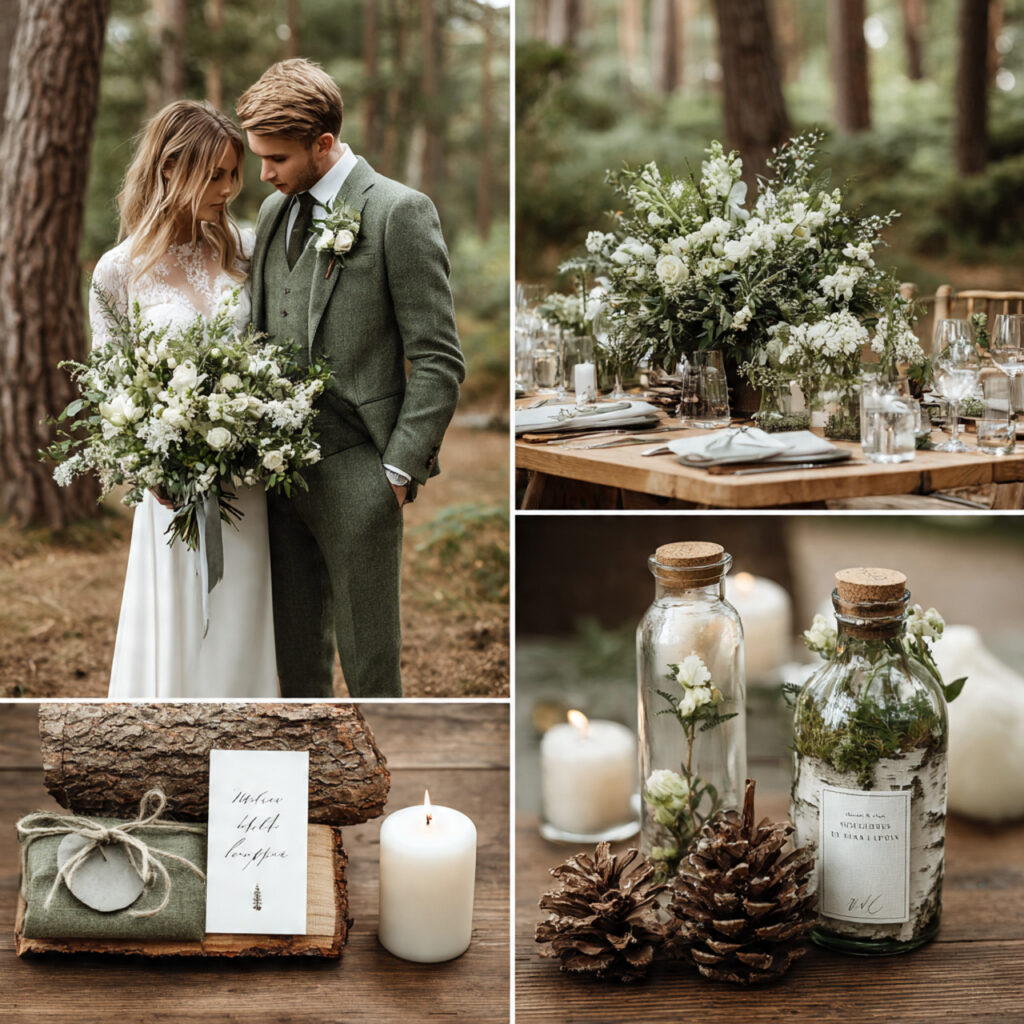
Juniper and smoke create a cool forest wedding colors palette with modern restraint. Juniper is darker than sage but softer than pine. Smoke gray adds depth. This palette works well for evening ceremonies. It pairs well with metal chairs and clean lines. Lighting must be warm. Otherwise, the palette can feel distant. Use candles and amber bulbs.
Laurel and Sand
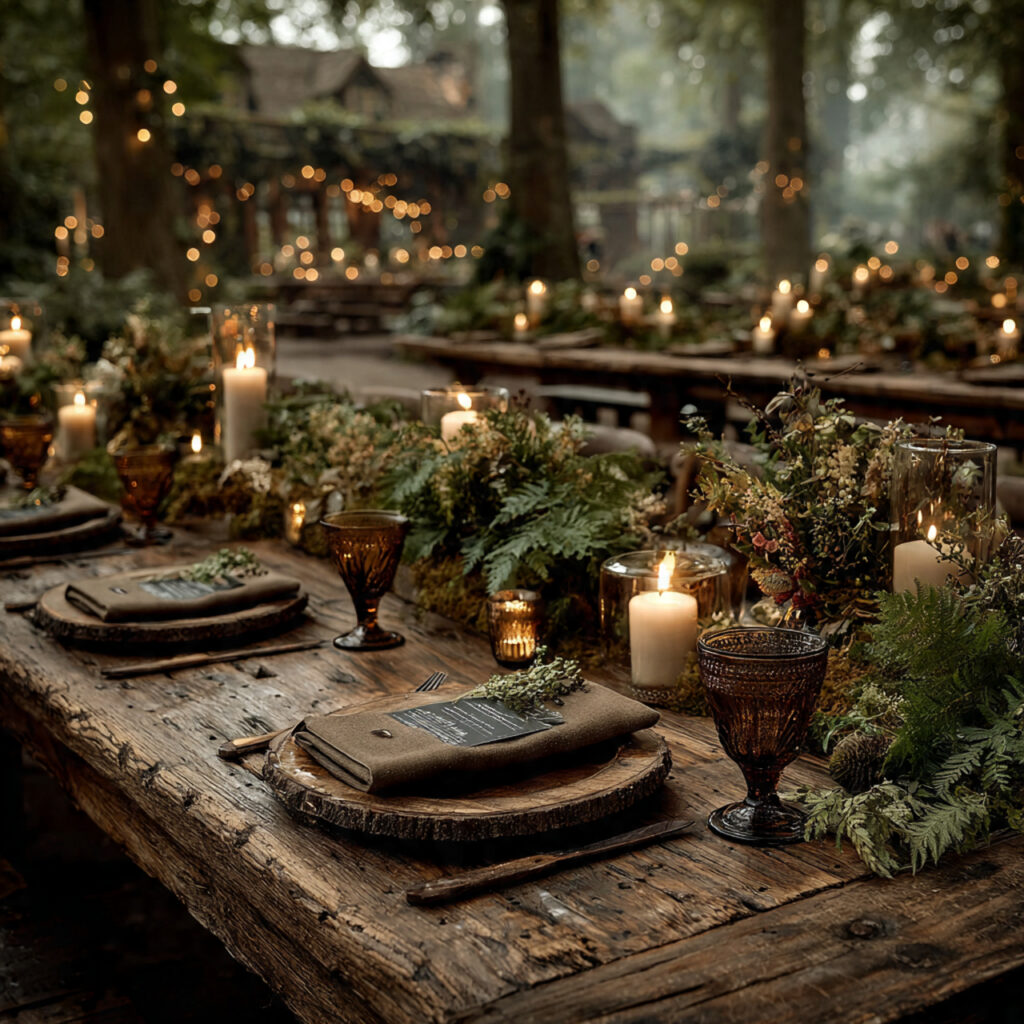
This forest wedding colors palette is light, warm, and natural. Laurel green feels fresh. Sand neutralizes without washing out. It works best in sunny forests with open canopies. Sand linens brighten shaded areas. Florals should stay simple. Greenery and white blooms are enough. Avoid strong contrasts.
Spruce and Charcoal

Spruce and charcoal form a serious forest wedding colors palette. Spruce green is dark and blue-leaning. Charcoal adds structure. This palette suits formal woodland weddings. It works well with tailored suits and structured gowns. Use light elements carefully. White should be minimal to avoid harsh contrast.
Lichen and Birch
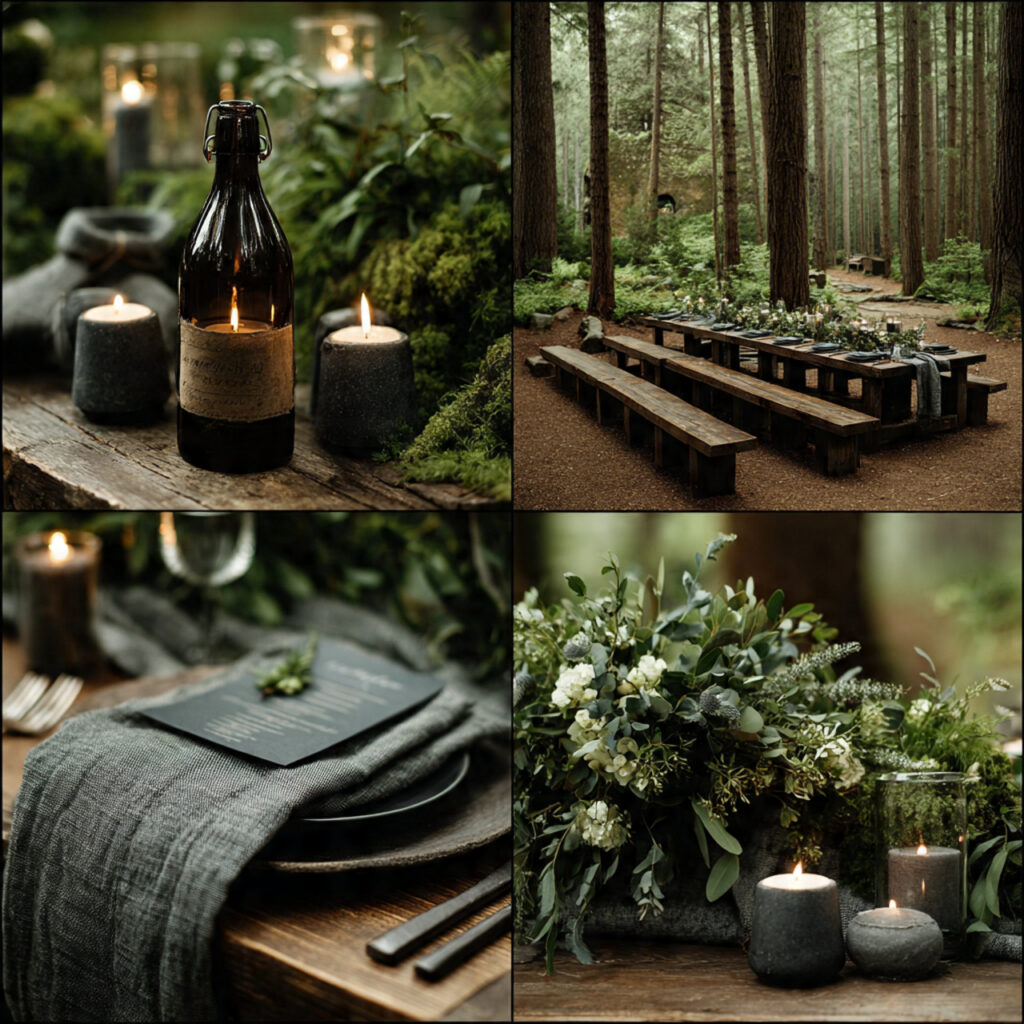
Lichen and birch create a pale forest wedding colors palette that still feels organic. Lichen green is subtle. Birch white is warm, not stark. This palette works in northern forests or minimalist woodland venues. It suits daytime ceremonies. Wood grain should remain visible. Avoid painted surfaces that remove texture.
Fir and Copper
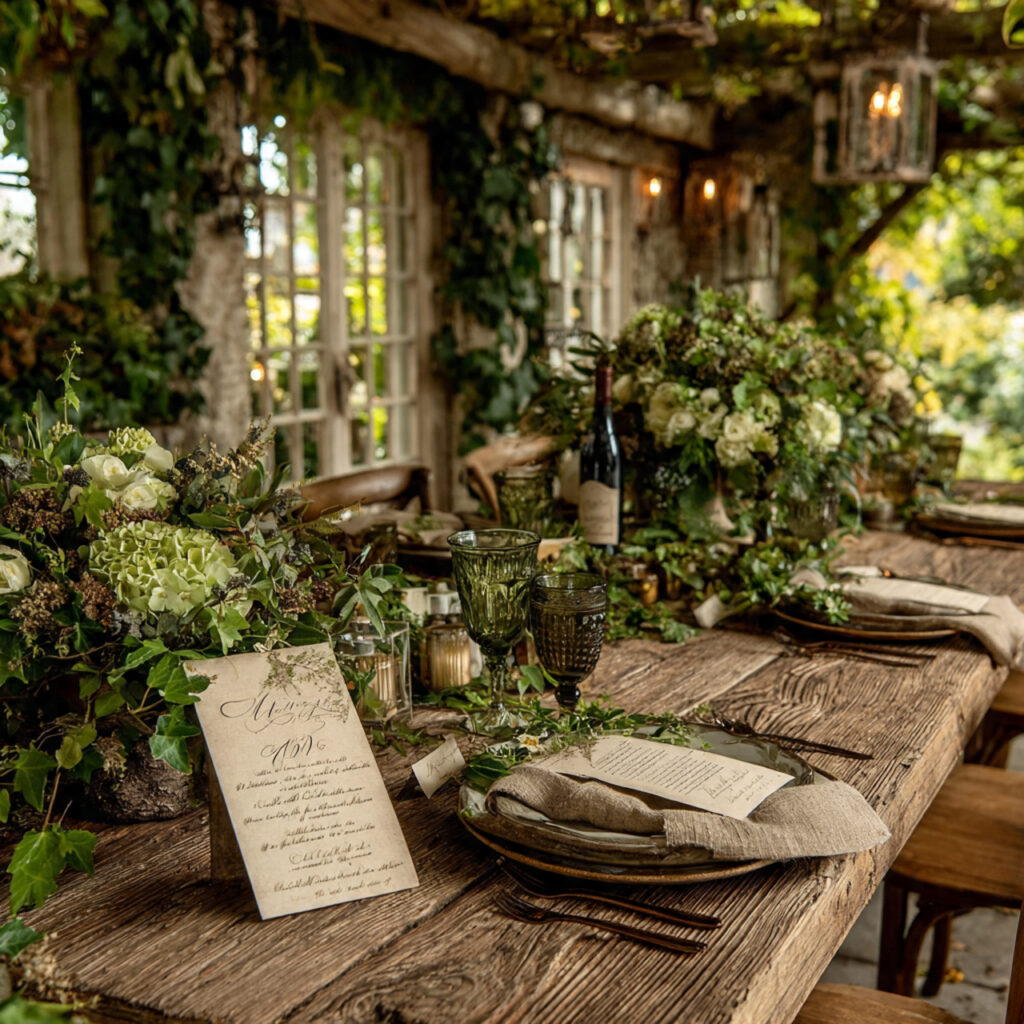
Fir and copper make a forest wedding colors palette with controlled warmth. Fir is deep and cool. Copper adds warmth without shine. Use copper in small details only. Too much becomes decorative. Fir carries the palette through fabric and foliage. This palette works well in fall forests. It pairs naturally with candlelight.
Bay Leaf and Oat
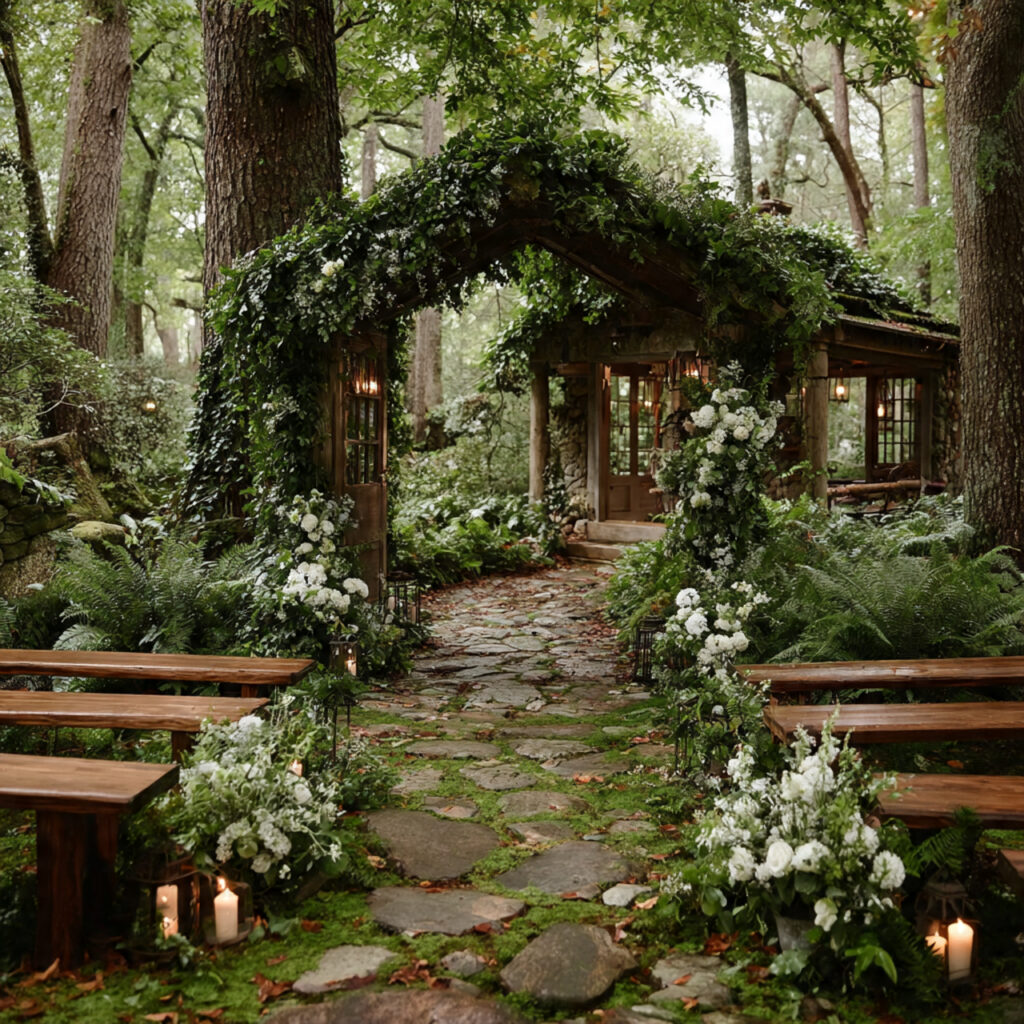
This forest wedding colors palette is soft and usable. Bay leaf green is muted. Oat beige adds warmth. It suits casual forest weddings and outdoor receptions. It works well with rented furniture and mixed materials. Florals should be loose and natural. Avoid structured arrangements.
Hemlock and Ash
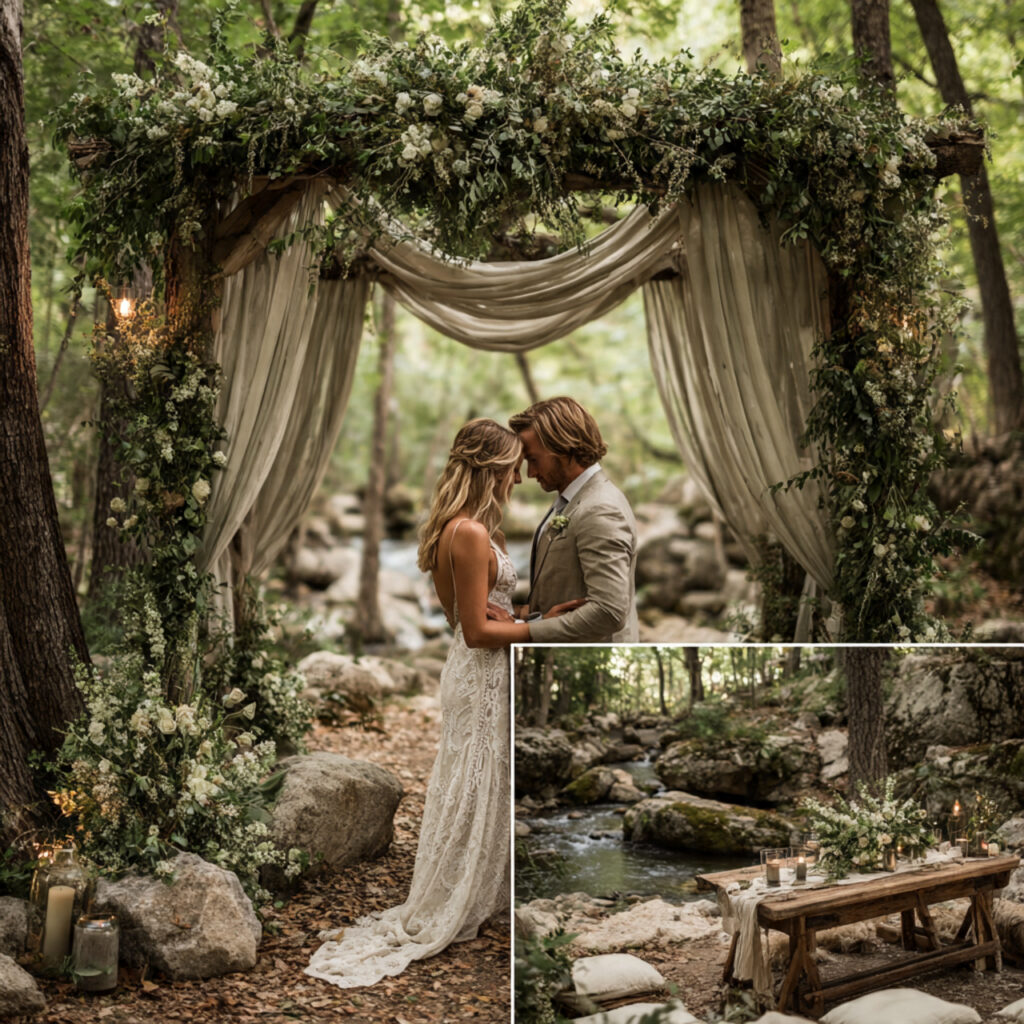
Hemlock and ash form a quiet forest wedding colors palette. Hemlock green is cool and deep. Ash gray keeps it restrained. This palette works well in dense forests with limited light. It suits couples who want simplicity. Use texture to avoid flatness. Wool, linen, and raw wood help.
Ivy and Parchment
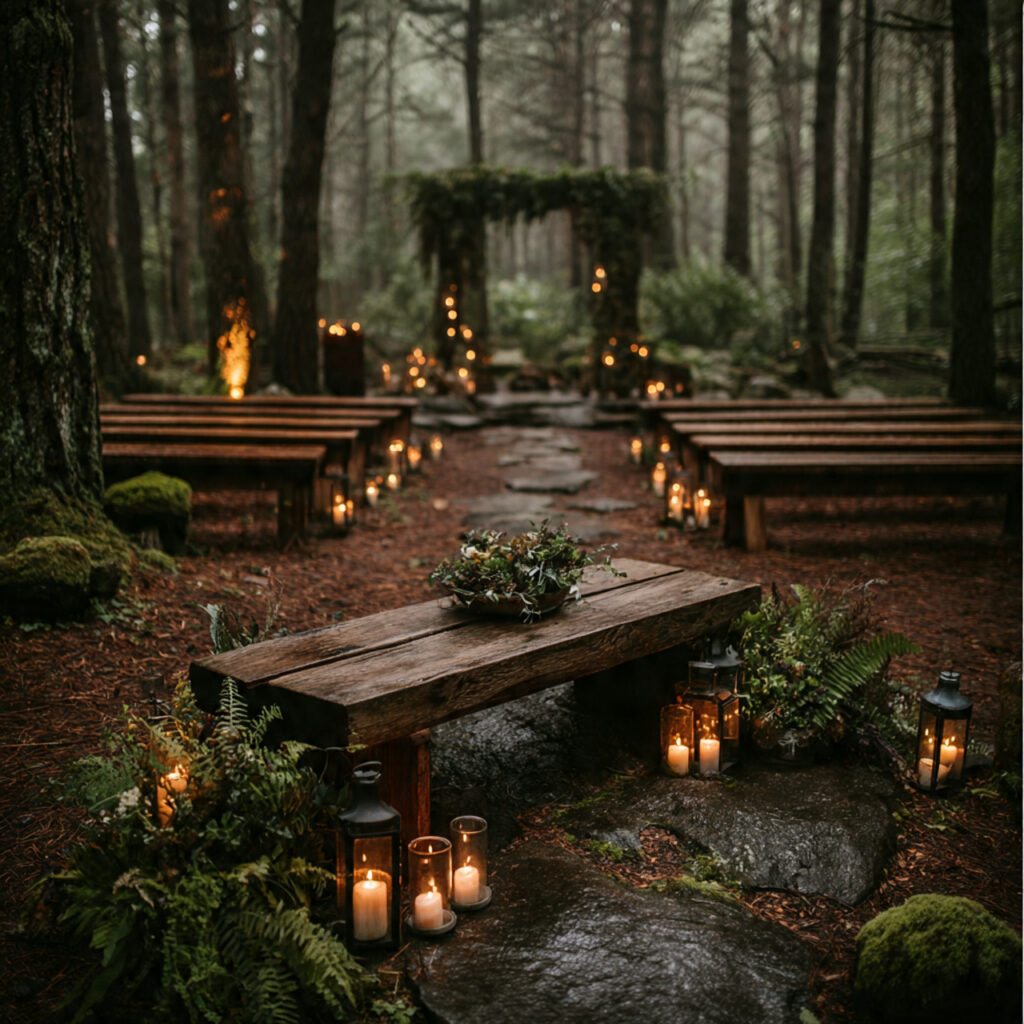
Ivy and parchment create a classic forest wedding colors palette. Ivy green is familiar. Parchment softens contrast. This palette works across seasons. It photographs well in shade and sun. Paper goods shine here. Hand-torn edges and simple fonts fit naturally.
Pine Needle and Snow
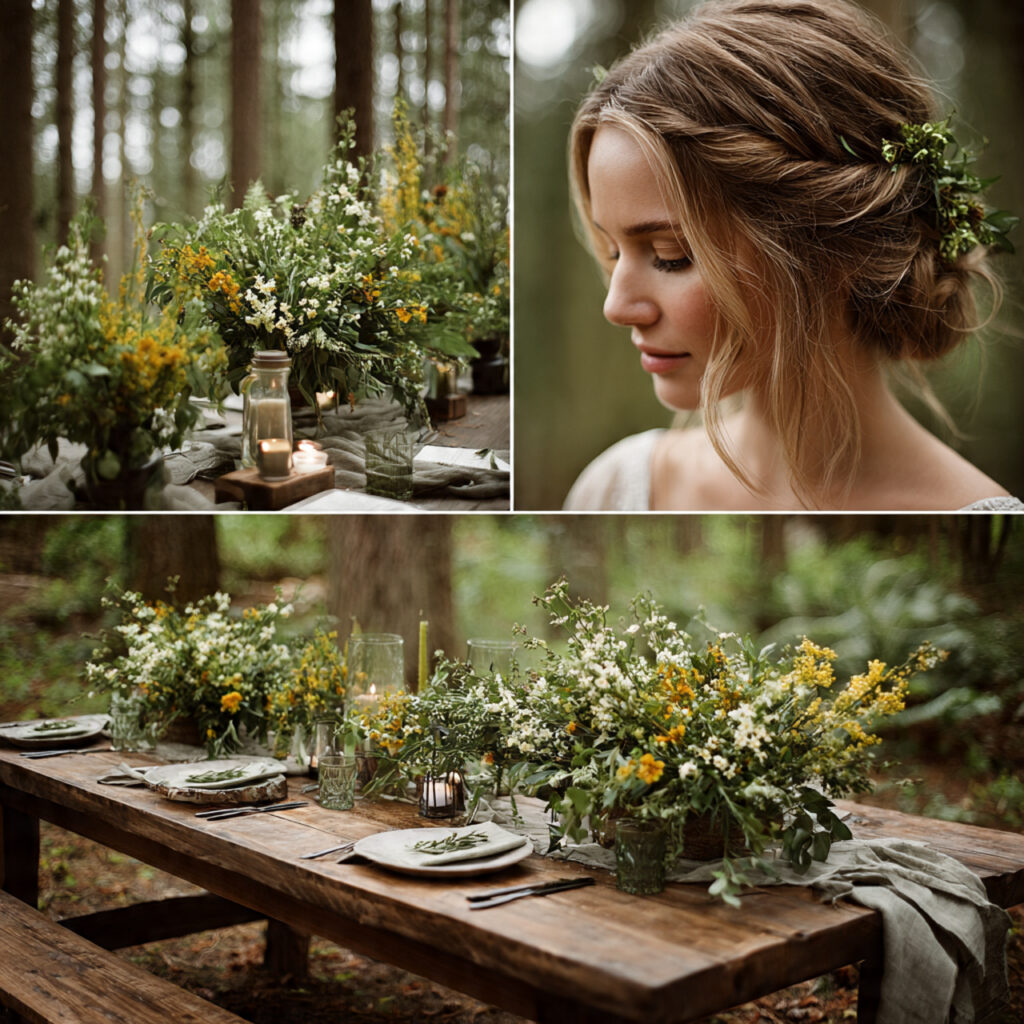
This forest wedding colors palette is crisp and seasonal. Pine needle green is sharp. Snow white adds clarity. It works best in winter forests or early spring. Keep white warm, not bright. Lighting is critical. Cold light will flatten the palette.
Willow and Pebble
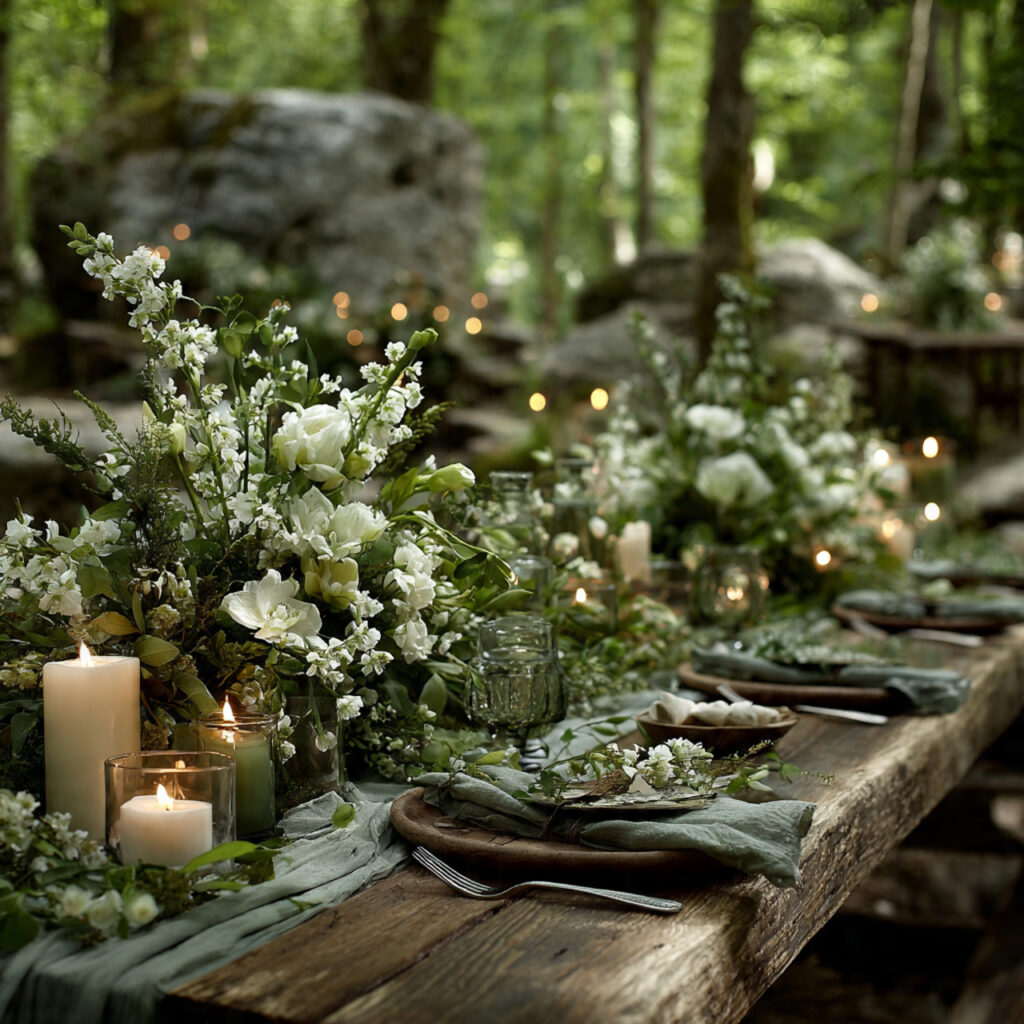
Willow and pebble form a gentle forest wedding colors palette. Willow green is soft and flexible. Pebble gray grounds it. This palette works for small, intimate weddings. It suits uneven terrain and natural seating. Avoid strong accent colors. Let the setting carry visual interest.
FAQs
Is a forest wedding colors palette different from rustic wedding colors?
Yes. Rustic focuses on materials. A forest wedding colors palette focuses on tones that already exist in the environment.
Can bright colors work in a forest setting?
They can, but they often overpower the space. Muted tones integrate better with natural light and shade.
How many colors should a forest wedding palette include?
Two to three core colors are enough. More than that becomes decorative instead of grounded.
Do forest palettes work for formal weddings?
Yes. Depth, texture, and restraint create formality without shine or excess.
What is the biggest mistake couples make with forest color palettes?
Choosing colors that fight the setting instead of supporting it.
Conclusion
A forest wedding colors palette should not compete with trees, soil, or light. It should settle into them. The strongest palettes borrow directly from the environment and adjust only enough to support people, clothing, and celebration. When color belongs, everything else feels easier.