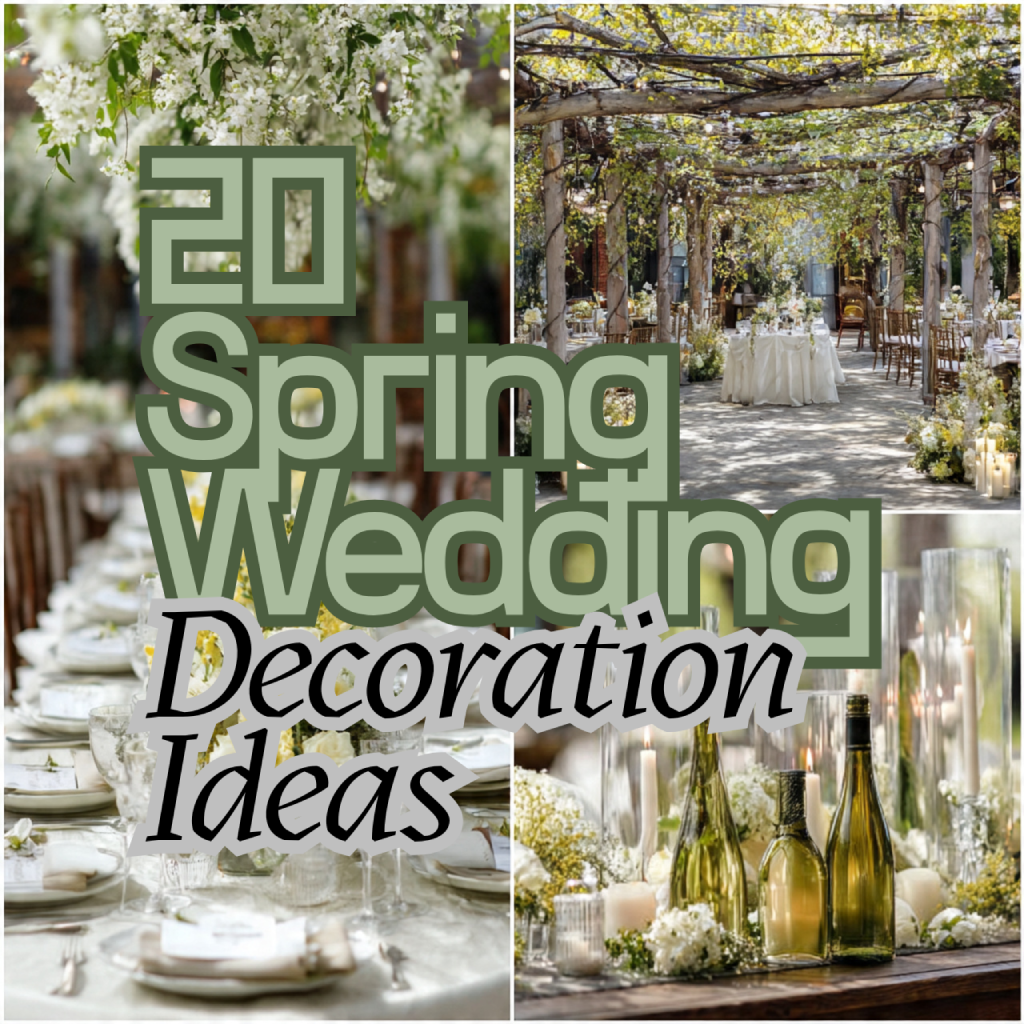
24 ways for Wedding Flower Guide for Bouquets, Decor & Budgets
Flowers shape how a wedding feels long before a single word is spoken. They signal mood, season, formality, and intention. This wedding flower guide breaks down floral decisions into practical, usable ideas. Each section focuses on one clear concept, avoiding trends without purpose and décor without function. The goal is clarity, not excess.
Seasonal flower selection for Wedding Flower Guide

A strong wedding flower guide starts with seasonality. Flowers grown in season cost less, look healthier, and last longer throughout the day. Spring favors tulips, ranunculus, sweet peas, and garden roses. Summer leans toward dahlias, zinnias, sunflowers, and cosmos. Autumn offers chrysanthemums, marigolds, and amaranthus. Winter relies on anemones, hellebores, camellias, and evergreens. Seasonal choices reduce reliance on imports, which lowers cost and environmental strain
They also align naturally with color palettes already present in nature. This creates cohesion without forcing a theme. Couples who prioritize seasonality often find their floral designs feel grounded and intentional rather than staged.
Color palette foundations
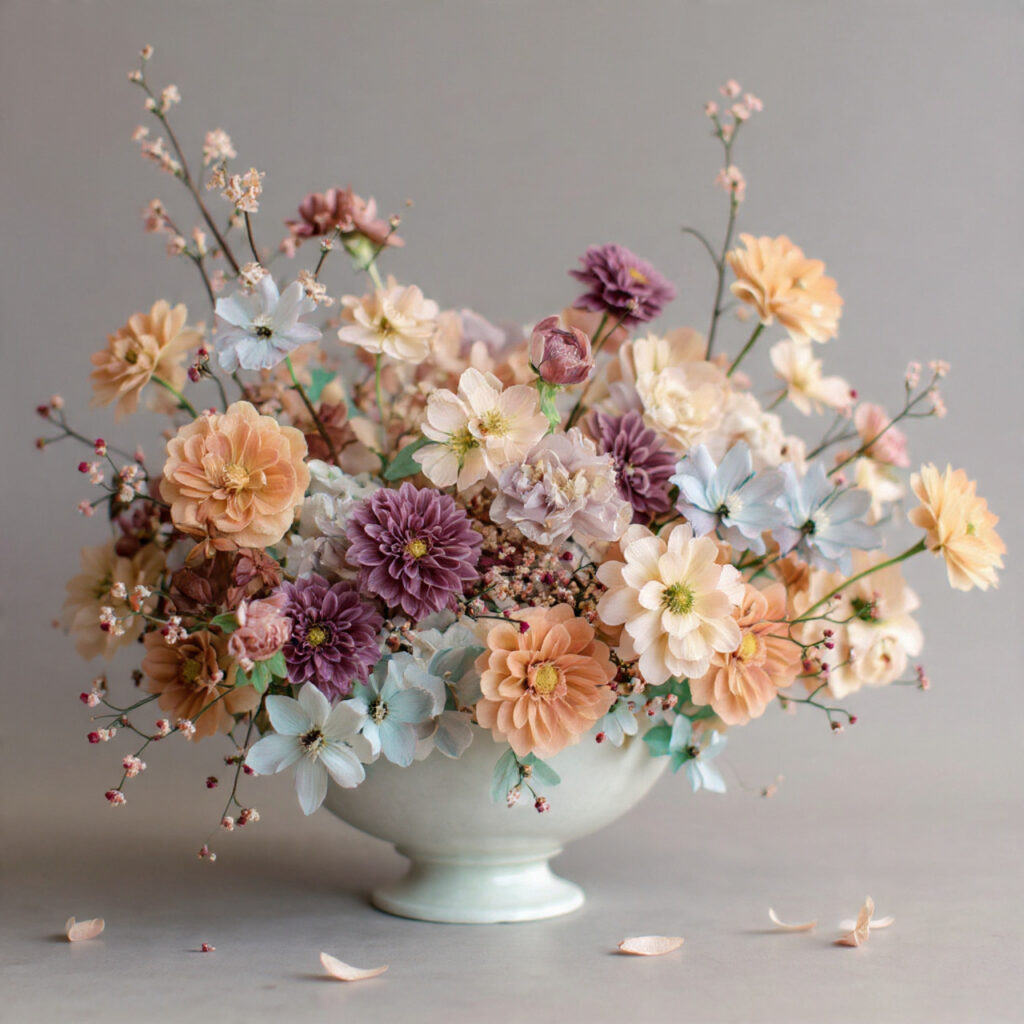
Color defines emotional tone. This wedding flower guide treats color as structure, not decoration. Neutral bases like white, ivory, and green offer flexibility. Adding one or two accent tones creates focus without chaos. Blush adds softness. Burgundy adds weight. Yellow introduces energy. Blue cools visual temperature. Floral color should echo other elements such as attire, table linens, and stationery. Overuse of competing shades weakens impact. A restrained palette reads refined and photographs cleanly. When in doubt, limit the palette and vary texture instead of hue.
Bridal bouquet purpose

The bridal bouquet is functional before it is symbolic. This wedding flower guide emphasizes scale, weight, and grip. Bouquets should complement body frame and dress silhouette. Large cascading arrangements suit structured gowns. Compact hand-tied bouquets pair well with minimal dresses. Flower choice affects durability. Roses, orchids, and ranunculus hold shape under heat and handling. Fragile blooms bruise easily and require careful planning. Bouquets should remain intact from ceremony through reception without constant repair.
Bridesmaid bouquet coordination

Bridesmaid bouquets should support, not compete. This wedding flower guide recommends simplified versions of the bridal bouquet. Shared color palette, fewer flower varieties, and consistent shape maintain unity. Uniform bouquets create visual order. Mixed styles introduce distraction unless intentionally designed. Smaller scale bouquets reduce cost and keep focus on the couple. Cohesion matters more than complexity.
Ceremony arch florals
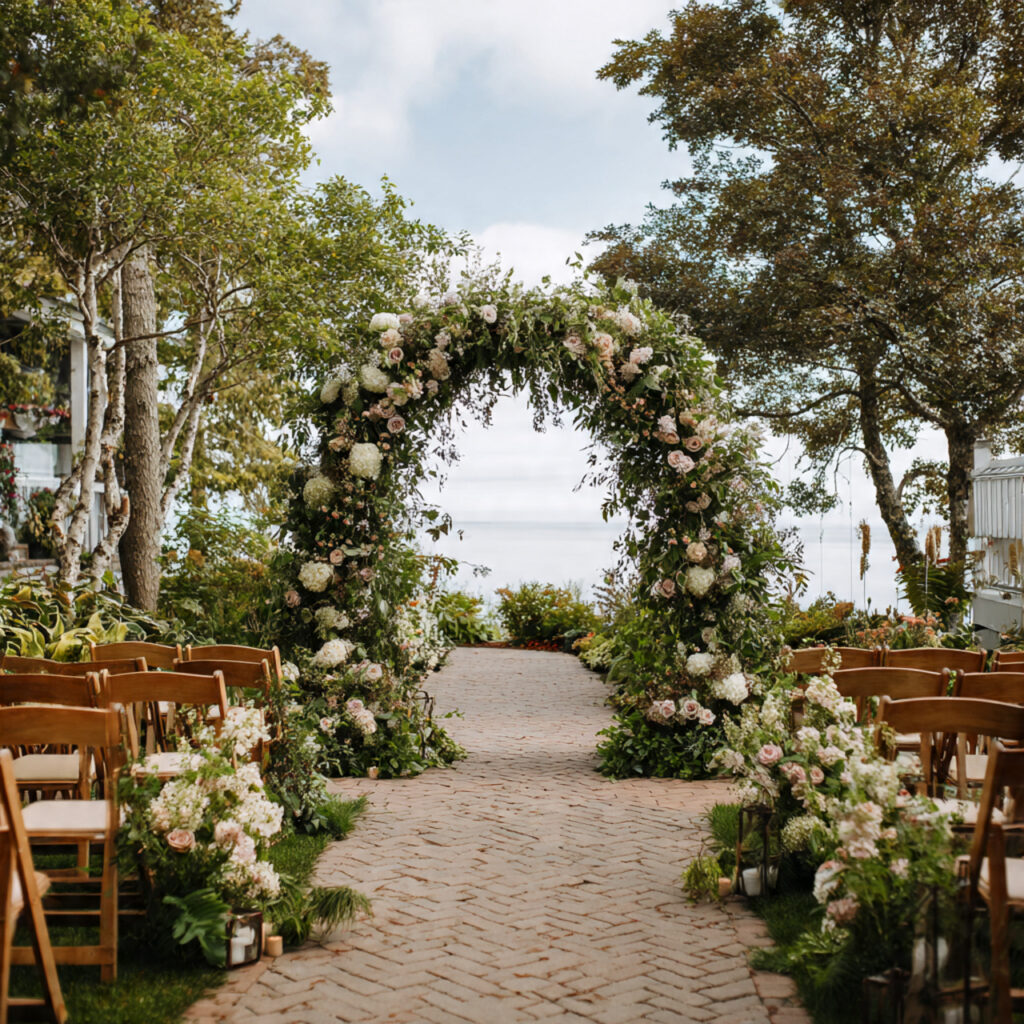
Ceremony arches frame the moment of vows. According to this wedding flower guide, arches should reflect venue scale. Large outdoor spaces require fuller installations. Intimate venues benefit from asymmetrical or partial designs. Greenery-heavy arches lower cost and hold up well outdoors. Floral density should focus at eye level, where it will appear in photos. Avoid overcrowding the top where detail is lost at distance.
Aisle floral accents
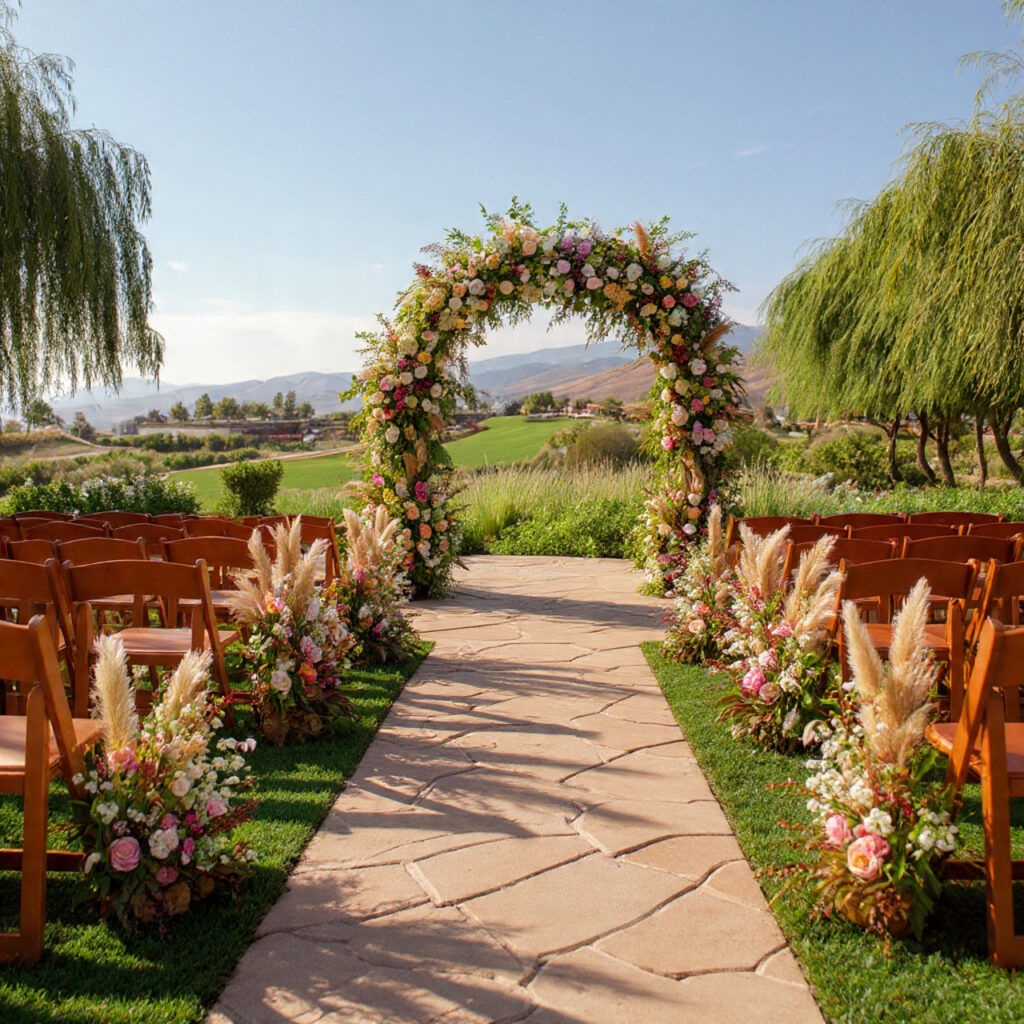
Aisle flowers guide movement and attention. This wedding flower guide treats aisle décor as directional design. Low arrangements maintain sightlines. Grounded installations prevent instability in outdoor settings. Repurposing aisle flowers for the reception increases efficiency. Pew markers, chairs, or floor arrangements can later decorate cocktail areas or sweetheart tables. Planning reuse reduces waste and cost without compromising style.
Altar arrangement strategy
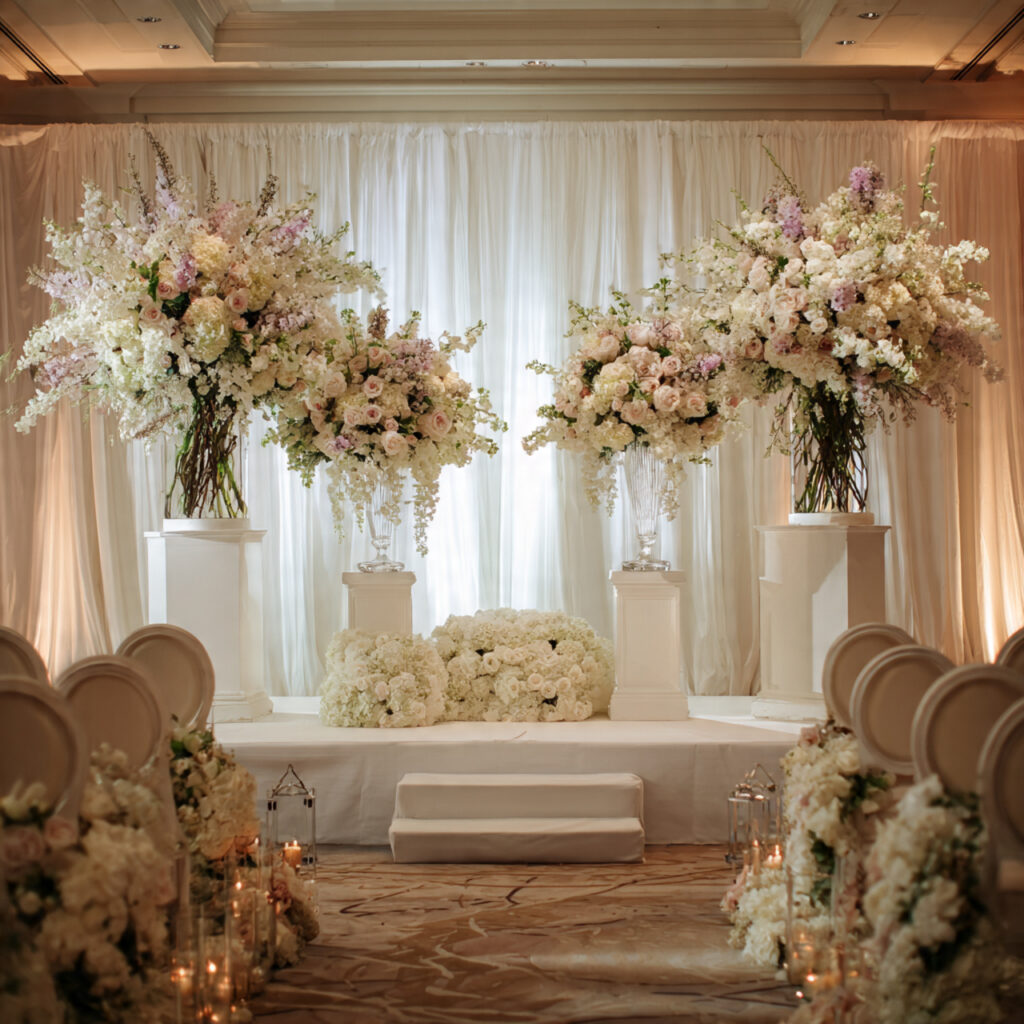
The altar is a focal point. This wedding flower guide suggests symmetry for formal ceremonies and asymmetry for relaxed settings. Height matters. Tall arrangements project authority. Low arrangements create intimacy. Altar flowers should align with ceremony backdrop. Busy florals clash with detailed architecture. Simple compositions allow vows to remain central. Flowers should frame, not dominate.
Reception centerpiece balance
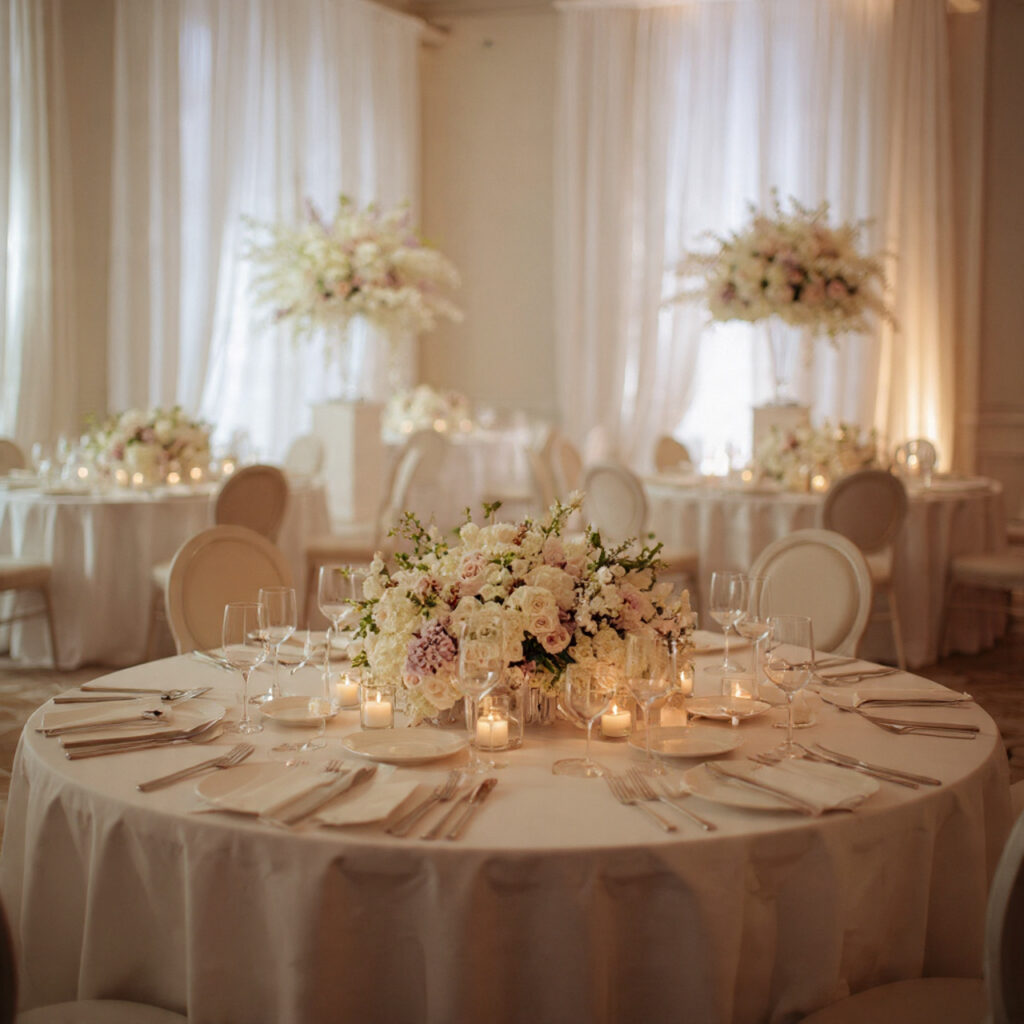
Centerpieces anchor table design. This wedding flower guide prioritizes guest comfort. Tall arrangements must clear eye level. Low arrangements must leave space for tableware and conversation. Mixing high and low centerpieces adds variation without clutter. Repeating flower varieties across all tables creates cohesion. Avoid overly fragrant blooms that interfere with dining.
Head table floral design

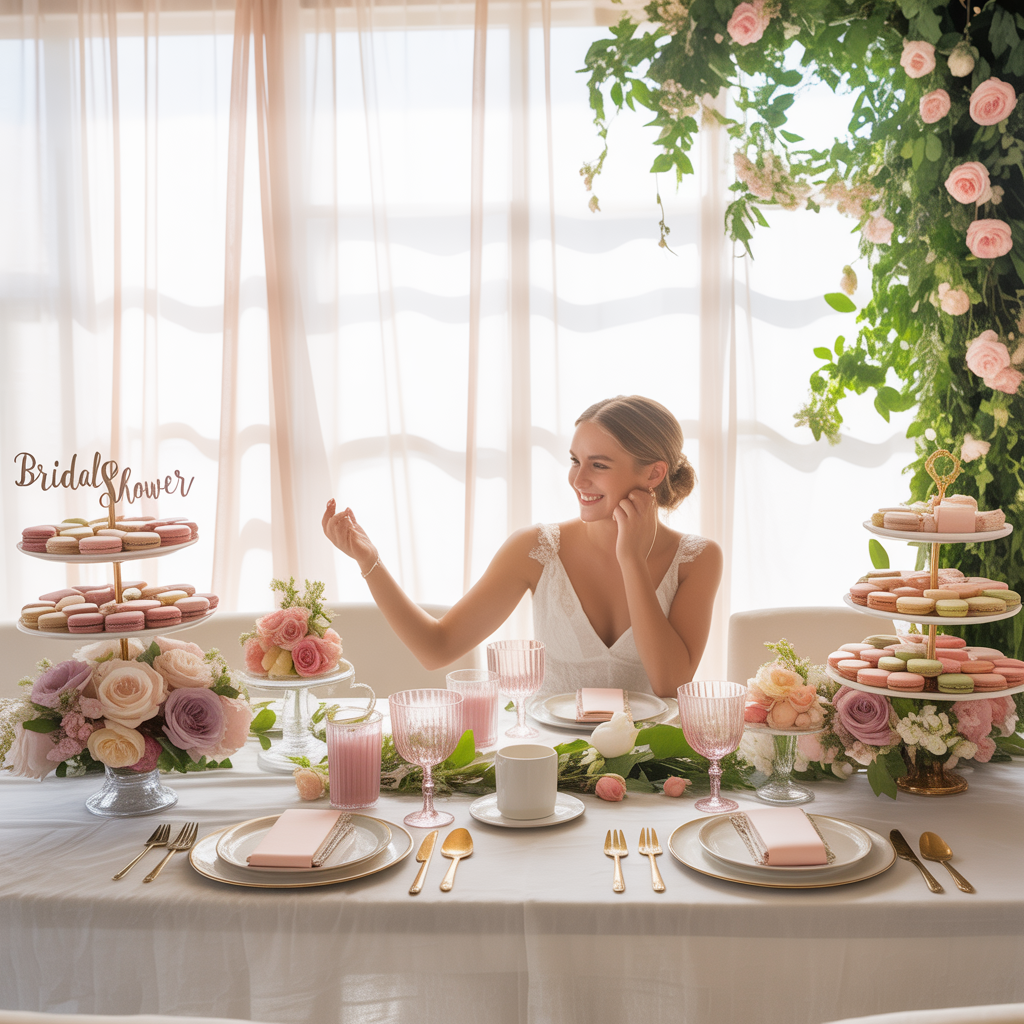
The head table signals hierarchy. This wedding flower guide favors continuous garlands or clustered arrangements over individual centerpieces. This creates a unified visual line. Greenery runners work well for long tables. Compact arrangements suit round or sweetheart tables. Scale should reflect seating arrangement, not overpower it.
Floral installations for impact

Installations deliver visual impact efficiently. This wedding flower guide supports targeted use rather than overuse. Entryways, bars, and dance floors benefit most. Installations photograph well and define zones. Using one or two installations rather than many small arrangements creates stronger visual memory. Focus placement where guests naturally gather.
Greenery-focused styling
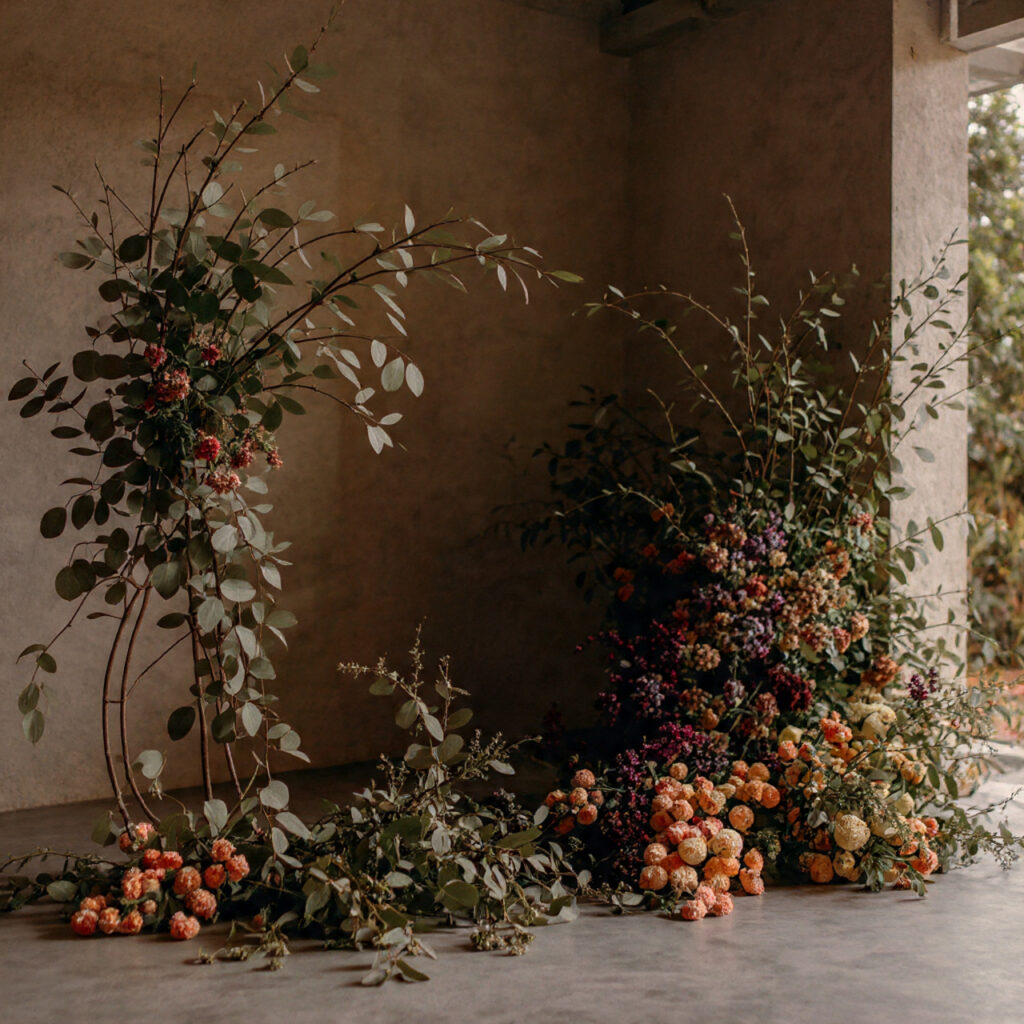
Greenery offers texture, volume, and longevity. This wedding flower guide highlights eucalyptus, ruscus, olive, and ferns as versatile options. Greenery suits modern, rustic, and minimalist weddings. It holds up in heat and pairs well with candles and neutral linens. Using greenery-heavy designs allows for strategic placement of blooms without excess.
Statement flower choices
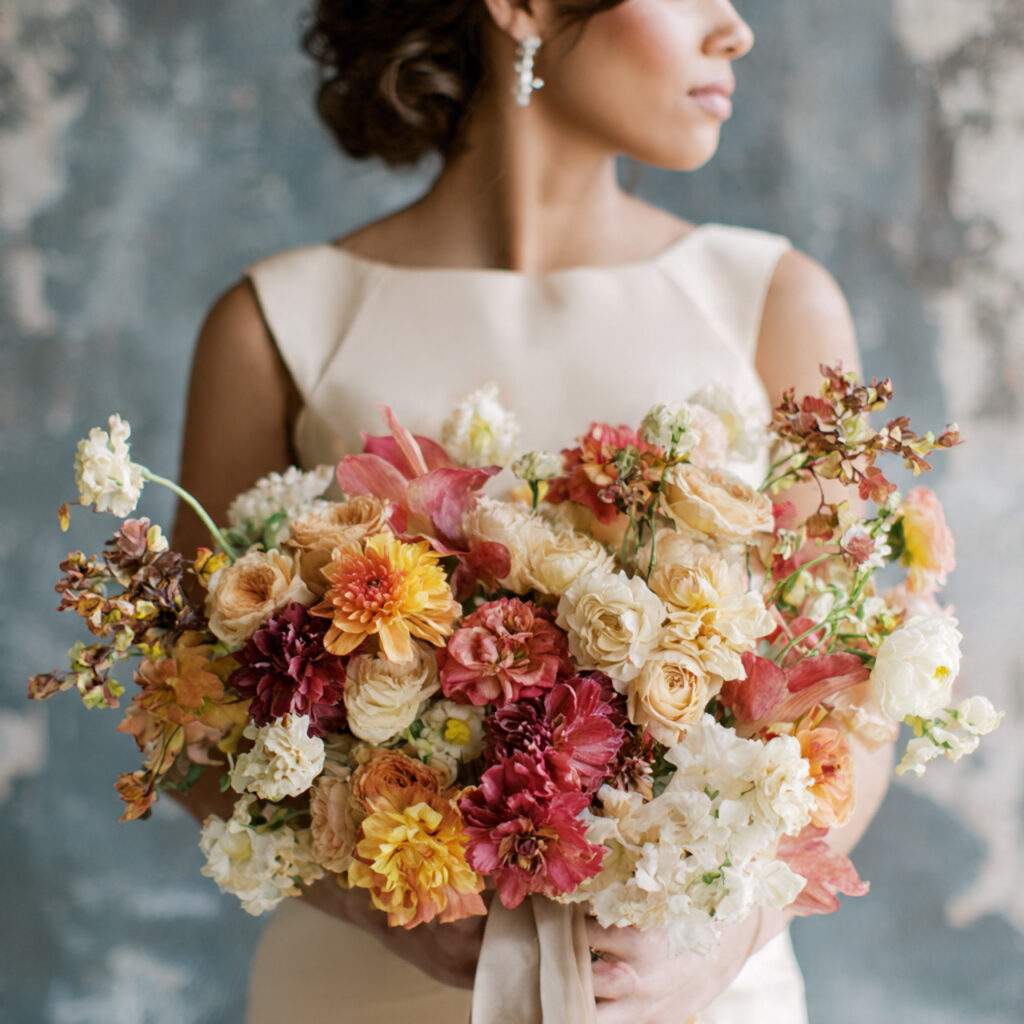
Statement flowers anchor design. This wedding flower guide suggests choosing one standout bloom such as peonies, protea, orchids, or anthuriums. Using statement flowers sparingly increases impact and controls cost. They work best in bridal bouquets, altar designs, or installations. Surround them with simpler supporting elements.
Budget-driven flower planning

Budget defines scope. This wedding flower guide encourages early prioritization. Decide where flowers matter most. Ceremony focal points and bridal bouquet usually rank highest. Reducing flower variety lowers cost. Reusing arrangements extends value. Transparent communication with florists prevents overdesign. Practical budgets still produce refined results when strategy replaces excess.
Minimalist floral approach
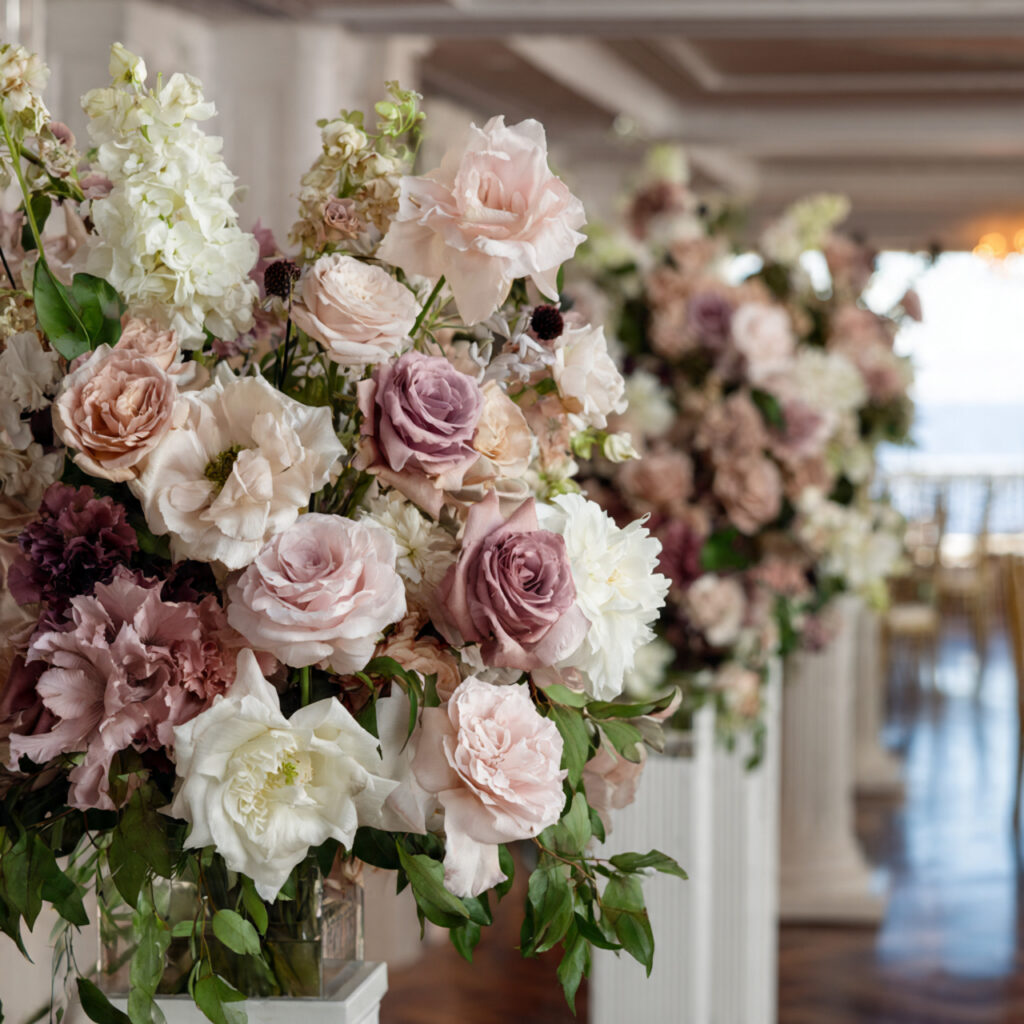
Minimalism relies on restraint. This wedding flower guide supports fewer flowers with clear placement. Space becomes part of design. Single-stem arrangements, limited palettes, and clean lines define this style. Minimalism requires confidence. Every element must earn its place.
Luxury floral execution
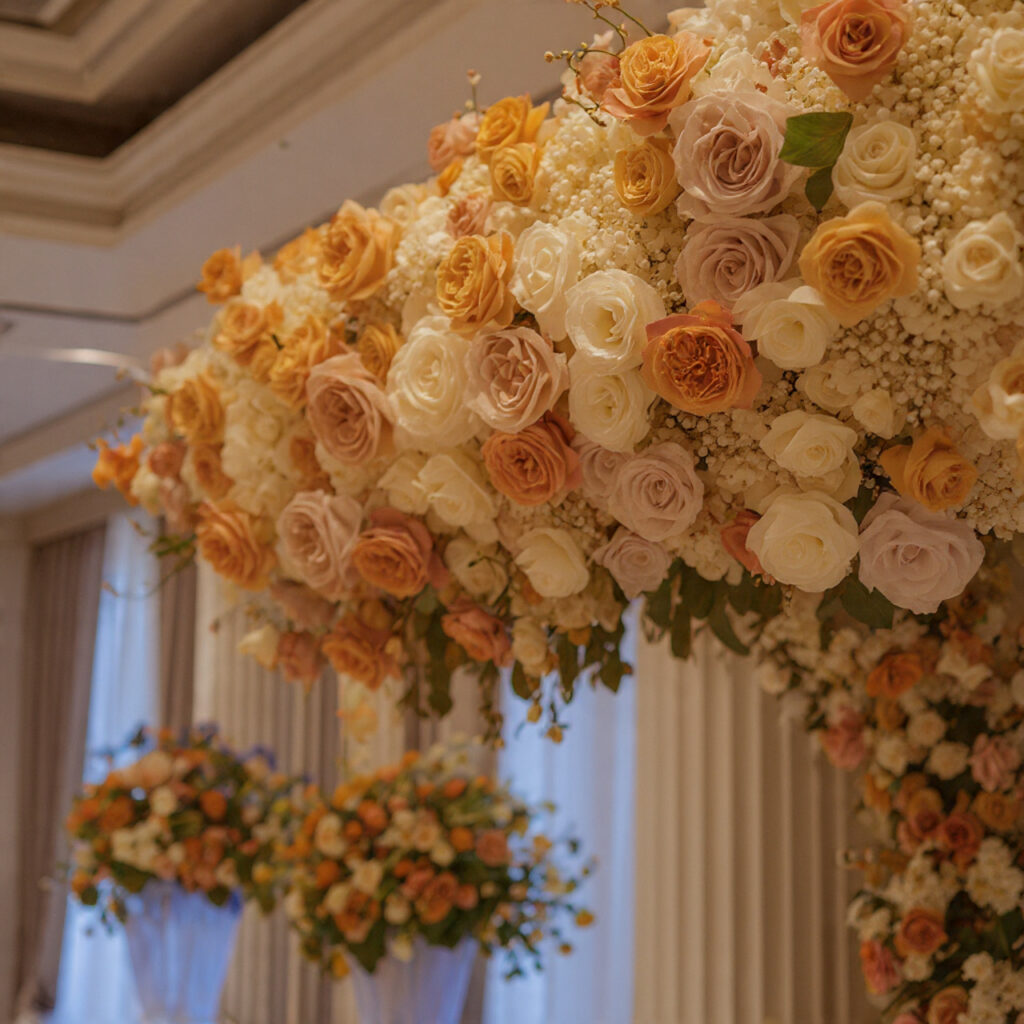
Luxury is precision, not abundance. This wedding flower guide defines luxury as quality blooms, tight palettes, and flawless execution. High-end florals emphasize texture and proportion. Foam-free mechanics, fresh hydration, and expert placement distinguish luxury work. The result feels intentional and composed.
Cultural floral traditions
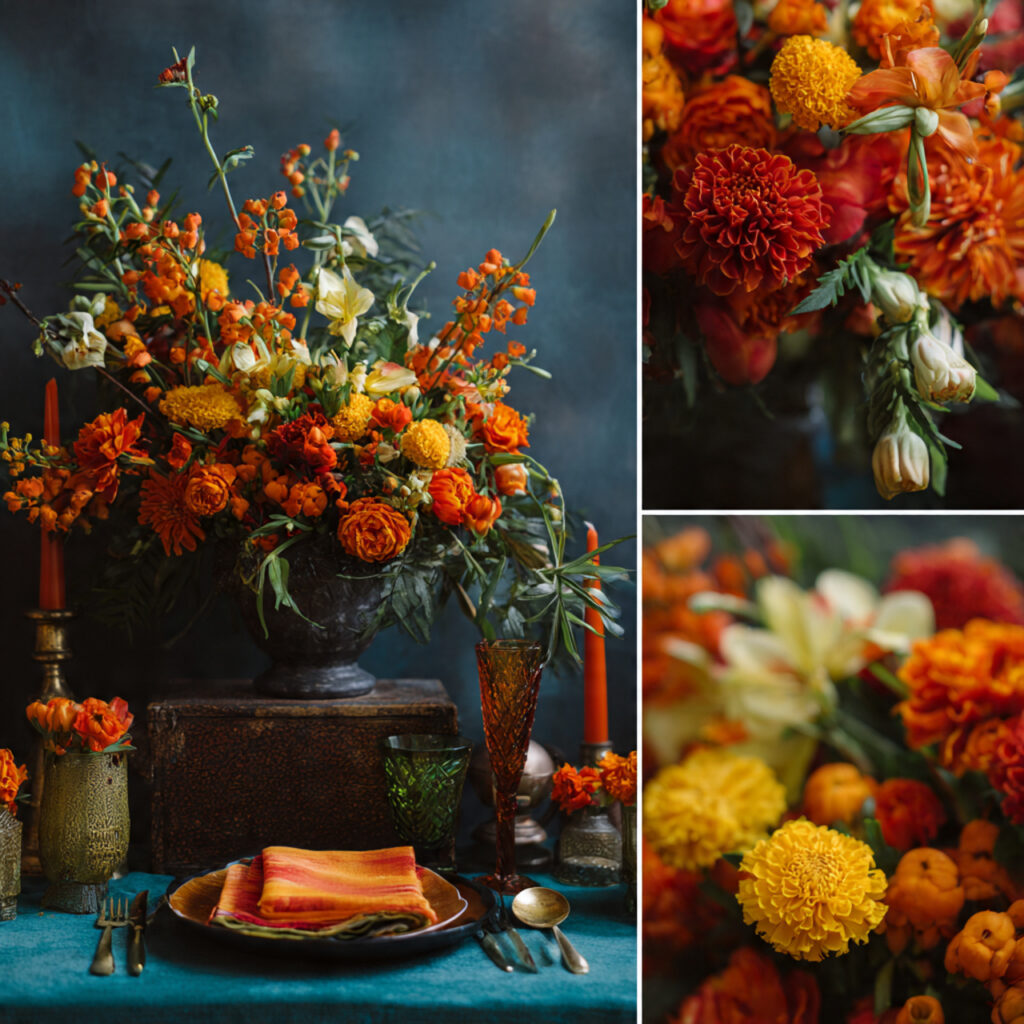
Flowers carry cultural meaning. This wedding flower guide advises understanding symbolism before selection. Marigolds, jasmine, roses, and lotus hold specific significance in many traditions. Incorporating cultural flowers adds depth and authenticity. It also honors family heritage. Respecting symbolism prevents unintended messages.
Outdoor wedding flower planning
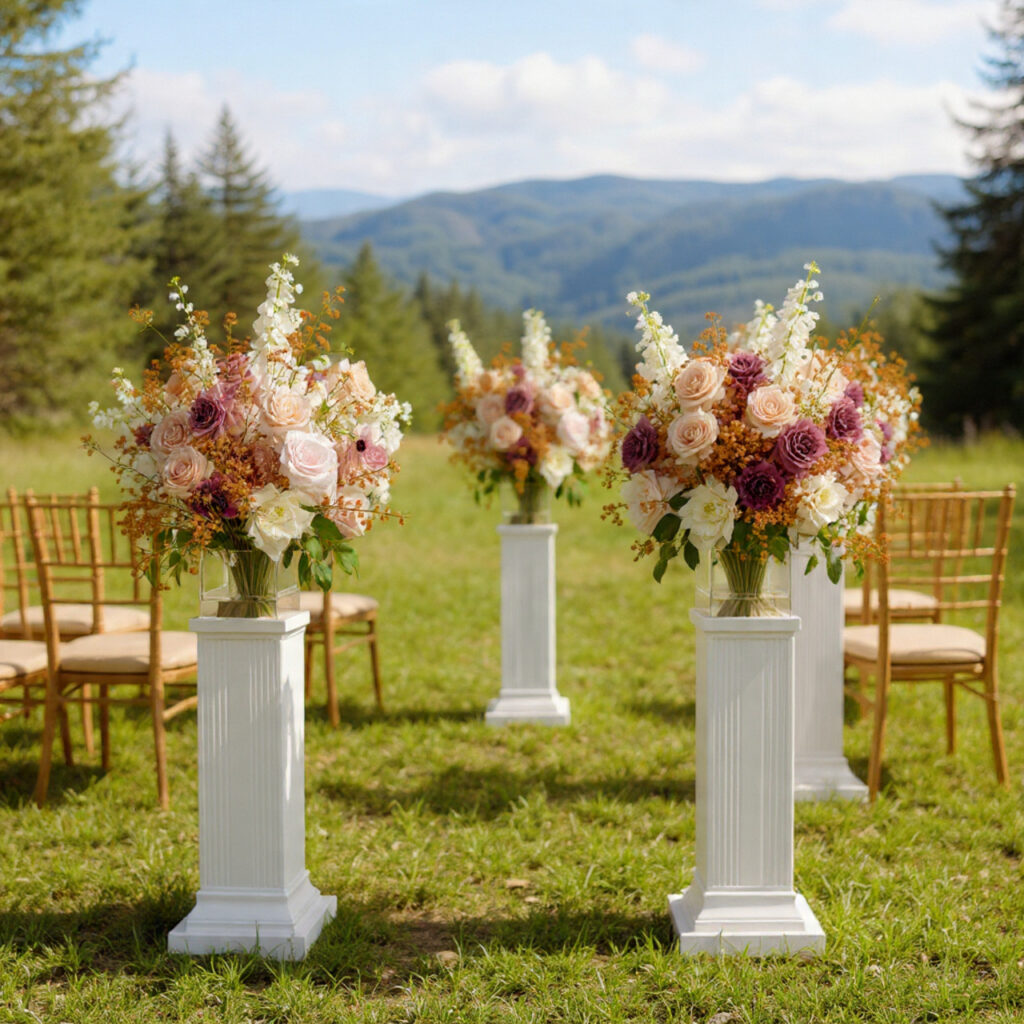
Outdoor settings introduce variables. This wedding flower guide stresses durability. Heat, wind, and sunlight affect flower choice. Sturdy blooms and secured mechanics prevent failure. Color fades under direct sun, so stronger hues photograph better outdoors. Timing setup closer to ceremony preserves freshness.
Indoor venue floral adaptation
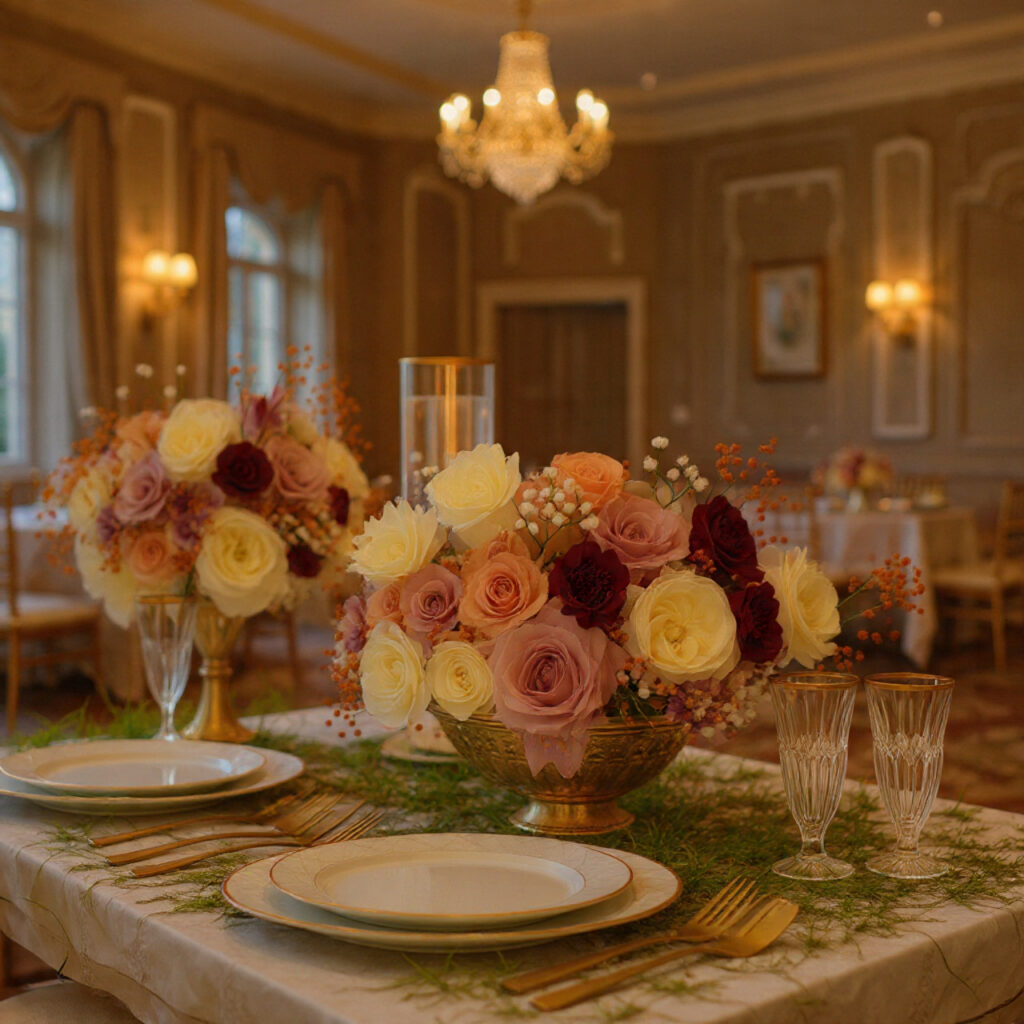
Indoor venues offer control. This wedding flower guide recommends focusing on scale and lighting. Flowers interact with chandeliers, walls, and ceilings. Uplighting enhances color. Reflective surfaces amplify impact. Indoor florals can be more delicate due to stable conditions.
Sustainable flower practices
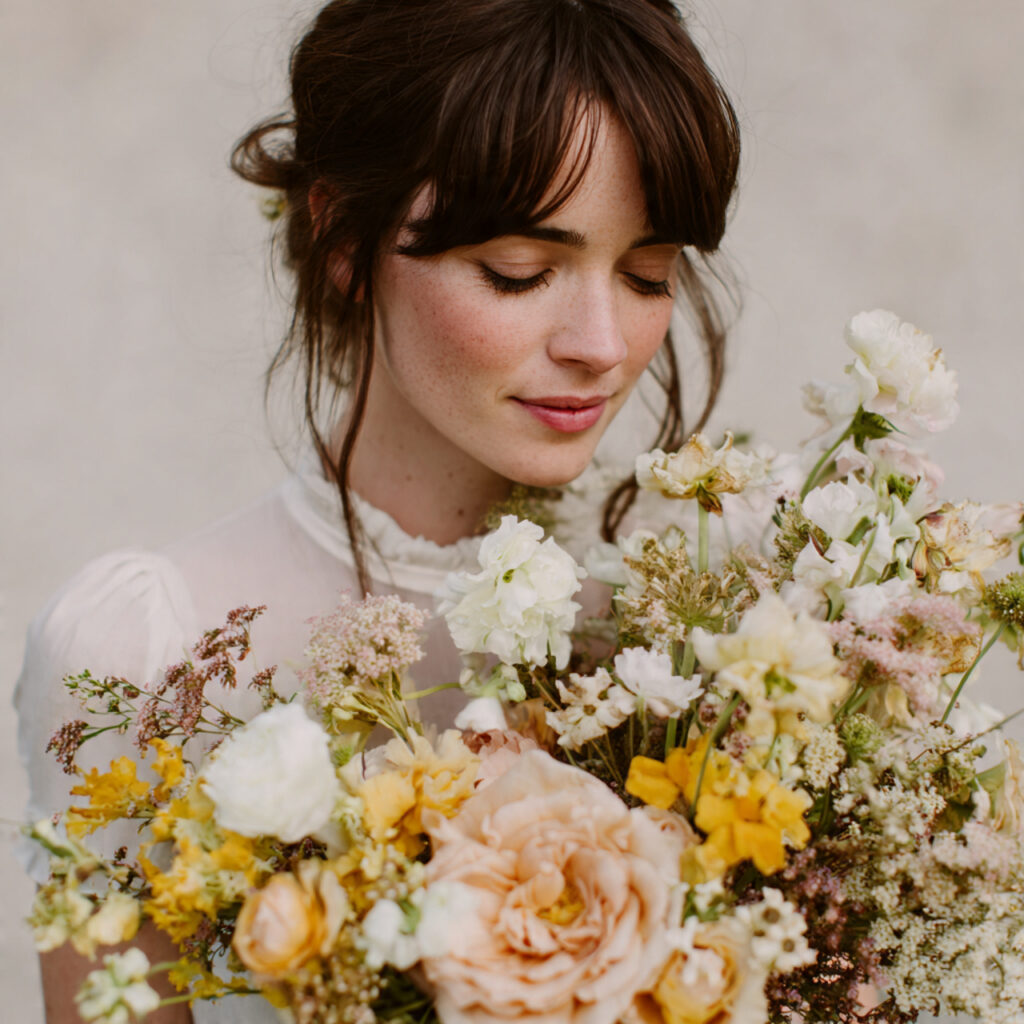
Sustainability matters. This wedding flower guide promotes local sourcing, foam-free mechanics, and donation or composting plans. Seasonal flowers reduce carbon footprint. Reusable vessels cut waste. Sustainability does not limit design; it sharpens intention.
Floral preservation options
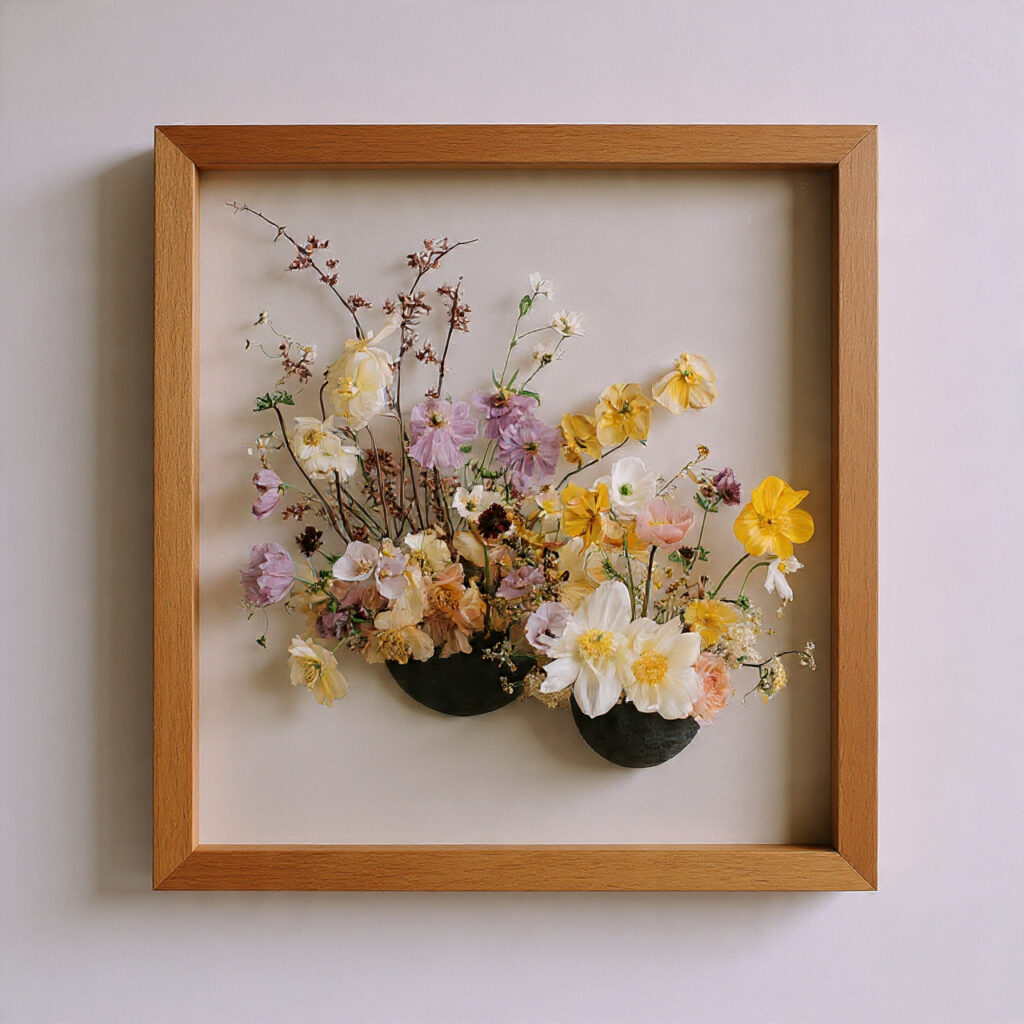
Preserving flowers extends memory. This wedding flower guide outlines pressing, drying, and resin preservation. Not all flowers preserve well. Roses, hydrangeas, and greenery dry successfully. Planning preservation early ensures better results.
Working with a professional florist
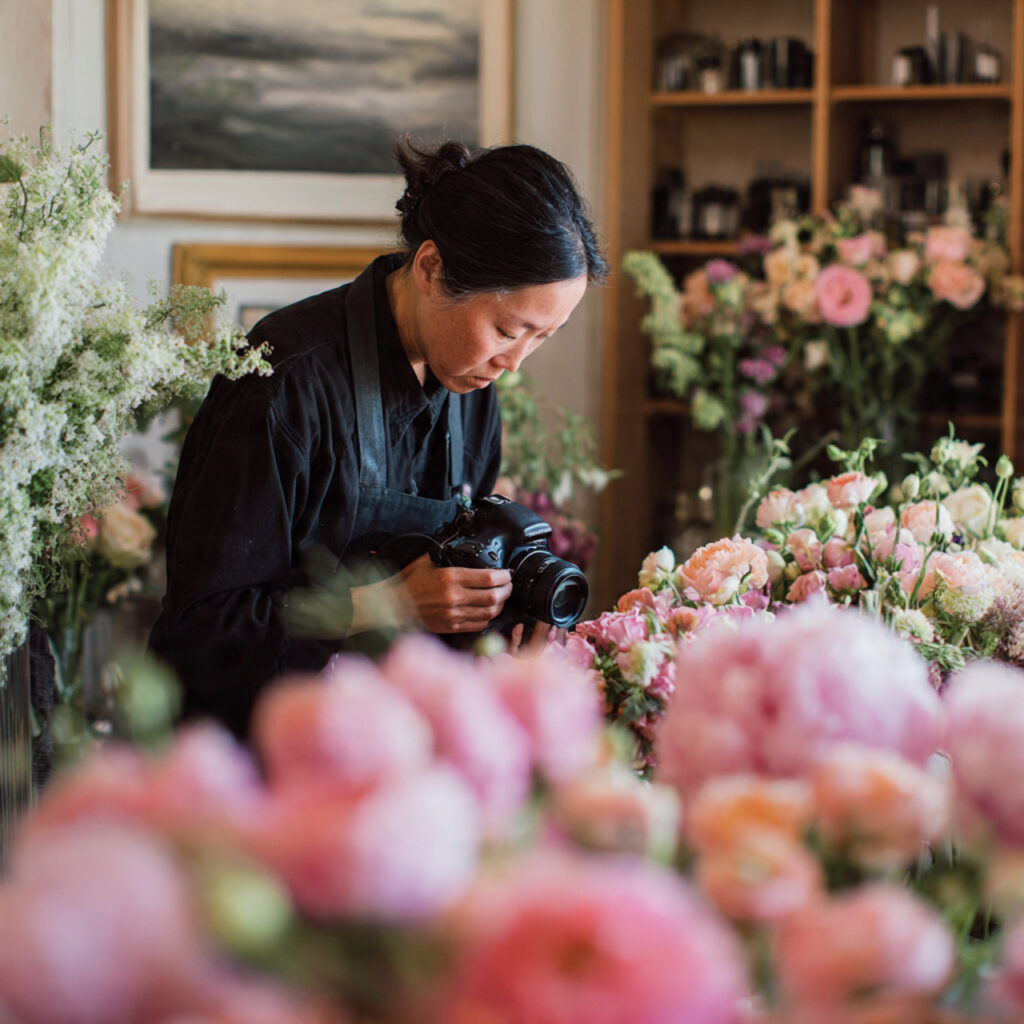
Florists translate vision into reality. This wedding flower guide emphasizes communication and trust. Share inspiration, budget, and priorities clearly. Avoid micromanagement. Professionals understand mechanics, timing, and sourcing. A strong partnership produces smoother execution.
DIY wedding flowers reality check
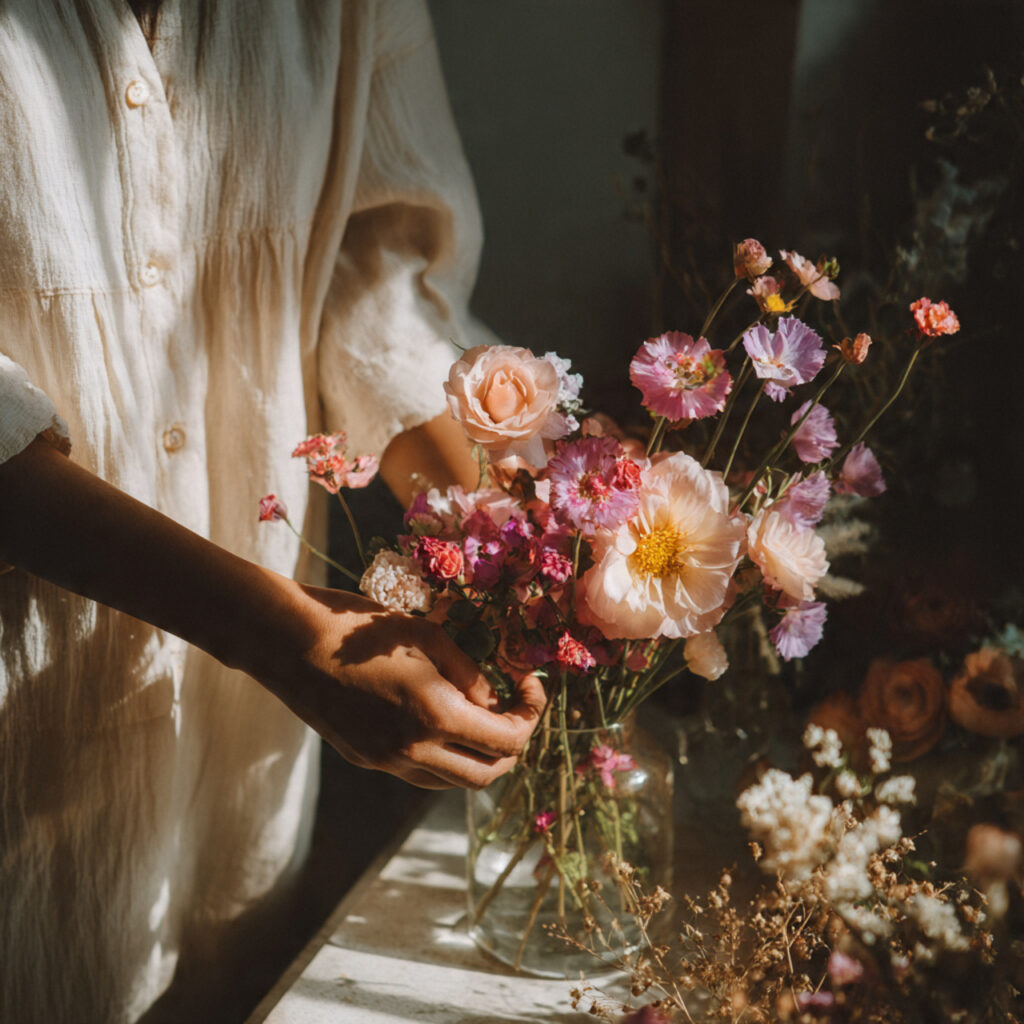
DIY saves money but costs time. This wedding flower guide warns against underestimating labor. Simple arrangements work best for DIY. Bridal bouquets and installations are high-risk. Consider hybrid approaches where professionals handle critical elements.
Timeline for floral decisions
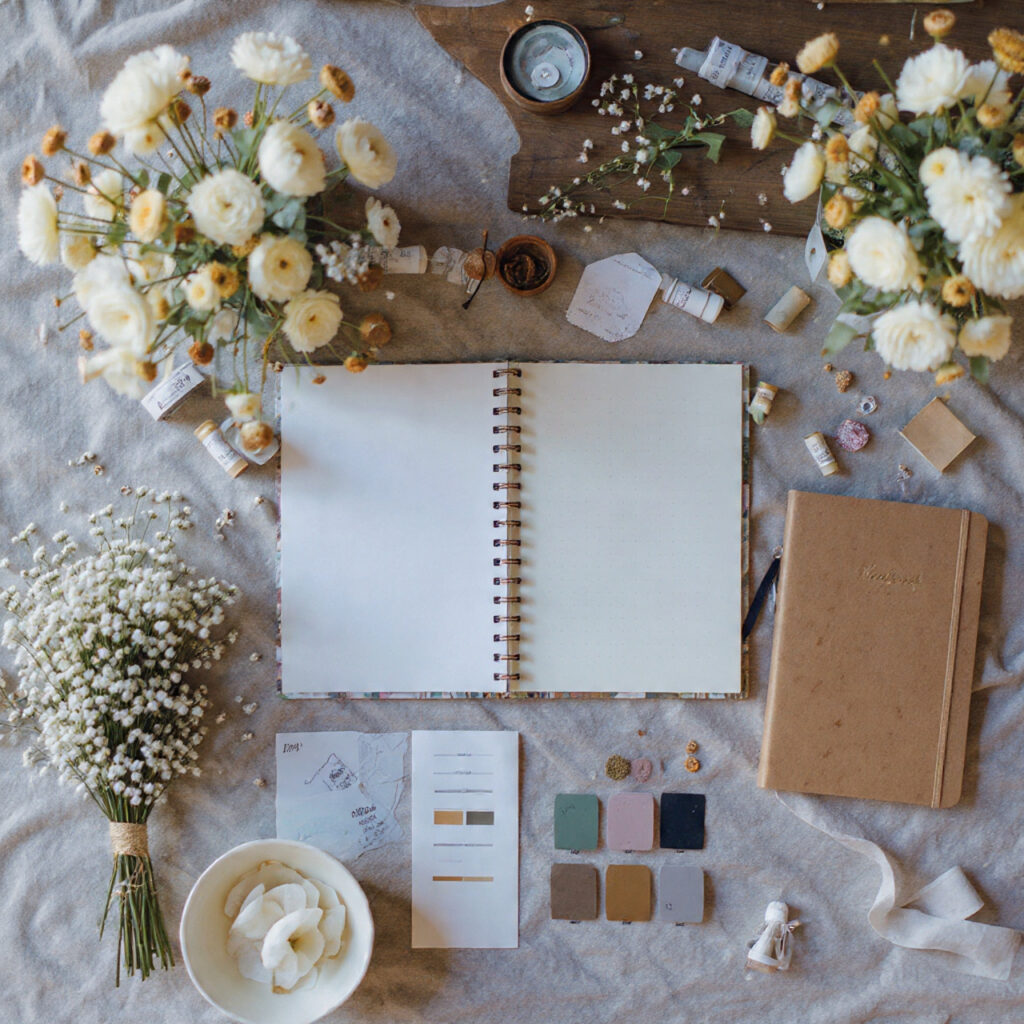
Timing prevents stress. This wedding flower guide suggests booking florists early, especially during peak seasons. Final flower counts adjust closer to the date. Flexibility helps accommodate availability. Early planning secures preferred blooms and pricing.
Final styling cohesion
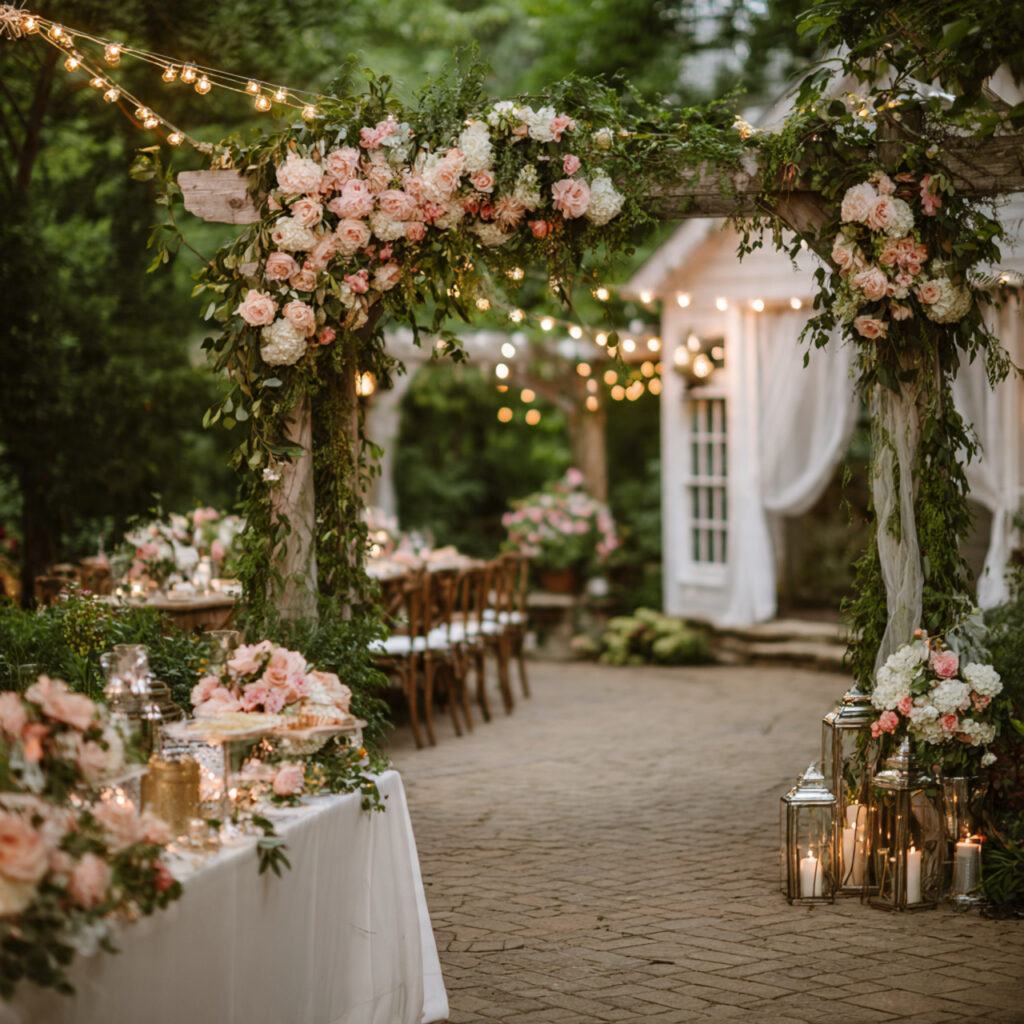
Cohesion defines success. This wedding flower guide reinforces alignment between florals and overall design. Flowers should echo venue, attire, and mood. Consistency reads intentional. When every element supports the same story, the result feels complete.
Frequently Asked Questions
How much of the wedding budget should go to flowers?
Most couples spend 8–15% of the total wedding budget on flowers. Venue size, guest count, and installation needs affect this range.
Can ceremony flowers be reused at the reception?
Yes. Many arrangements can be repurposed with planning. Aisle flowers, altar pieces, and entry arrangements often transition easily.
Are artificial flowers a good alternative?
Artificial flowers reduce stress and last indefinitely, but high-quality options can be costly. They work best for décor rather than bouquets.
How early should flowers be delivered on the wedding day?
Delivery timing depends on setup complexity. Most florists arrive several hours before the ceremony to ensure freshness and placement.
What flowers last longest throughout the day?
Roses, orchids, carnations, and chrysanthemums hold up well in varying conditions and long timelines.
Conclusion
This wedding flower guide strips floral planning down to essentials. Flowers are not filler. They are structure, mood, and movement. When chosen with purpose, they elevate a wedding without excess. Clarity, restraint, and intention create floral designs that last beyond the day itself.