22 Wedding Food Setup Ideas That Look Beautiful and Work Seamlessly
A wedding meal is not just nourishment. It is rhythm, flow, and memory. Guests may forget the flowers or the exact shade of the linens, but they will remember how the food was served, how easy it was to access, and how it made them feel. A thoughtful wedding food setup balances aesthetics, guest comfort, logistics, and cultural expectations. The following ideas focus on setups that work in real venues, with real budgets, and real guest behavior. Each idea is designed to help couples plan food presentation that looks intentional, photographs well, and functions smoothly throughout the event.
Family-Style Table Service for Wedding Food Setup
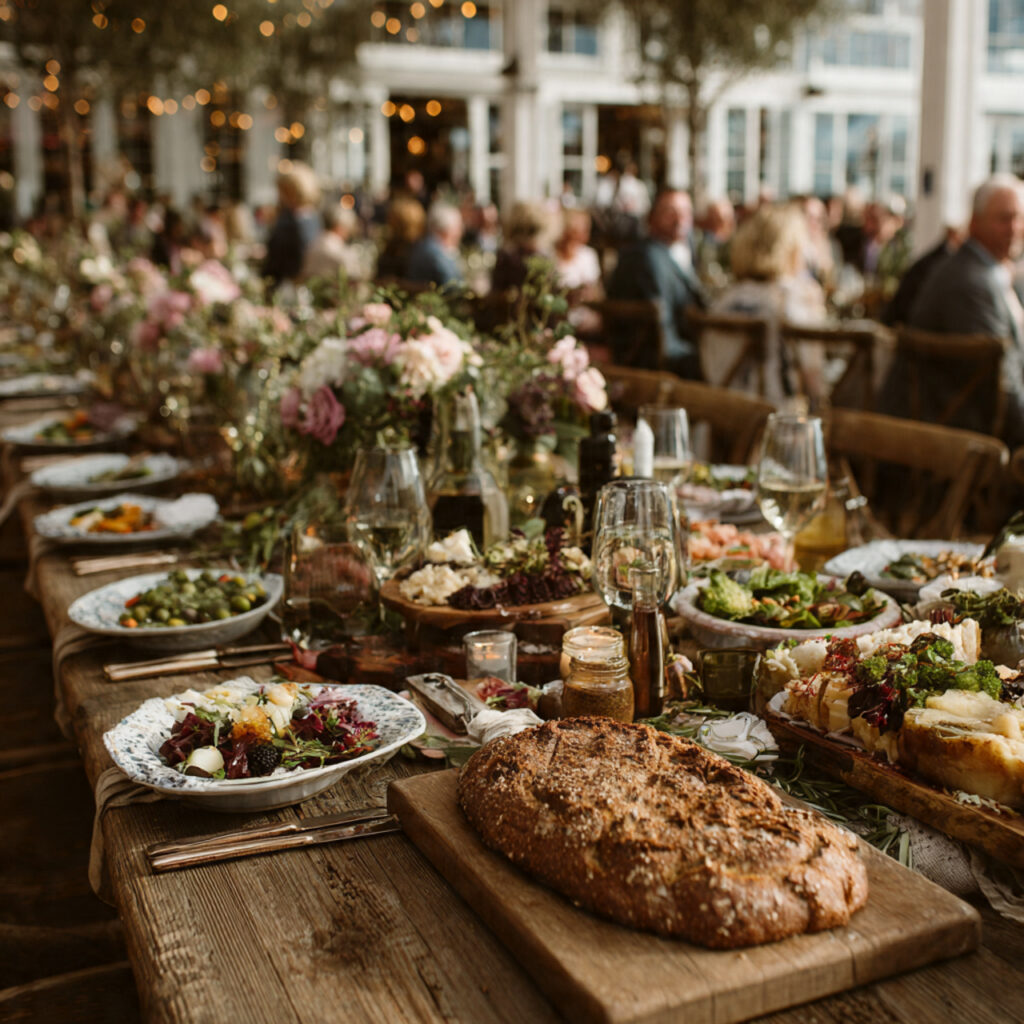
Family-style dining encourages connection. Large platters placed at each table invite guests to pass food, talk, and interact. This approach works best for medium-sized weddings where tables are not overly crowded and guests can comfortably reach shared dishes.
A family-style wedding food setup reduces the formality of plated service while maintaining structure. It requires fewer service staff than traditional courses but still feels curated. The key is portion control and table spacing. Platters should be generous but not excessive, and tables must allow room for movement without spills. This setup suits rustic, garden, or home-inspired celebrations. It also photographs well because food appears abundant and alive on the table.
Elegant Plated Dining Experience
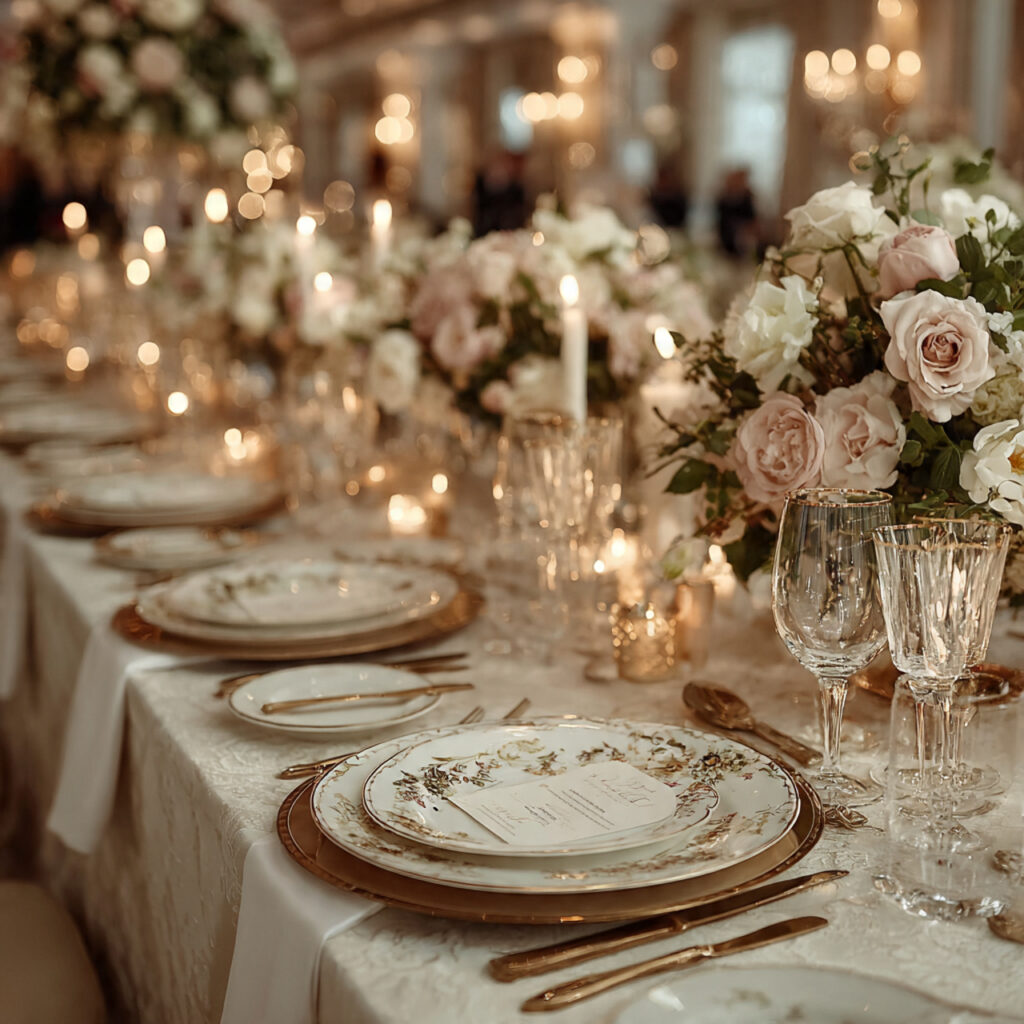
Plated service remains the standard for formal weddings. Each guest receives a composed dish, served in sequence. This format allows the kitchen to control timing, temperature, and presentation with precision. A plated wedding food setup works best when the guest count is clear and the menu is streamlined. Too many courses can slow service and fatigue guests. Two to three courses executed well often leave a stronger impression than an extended menu. This setup is ideal for ballroom venues, hotel receptions, and black-tie events. It requires experienced staff and a kitchen capable of serving all plates at once.
Buffet With Structured Flow
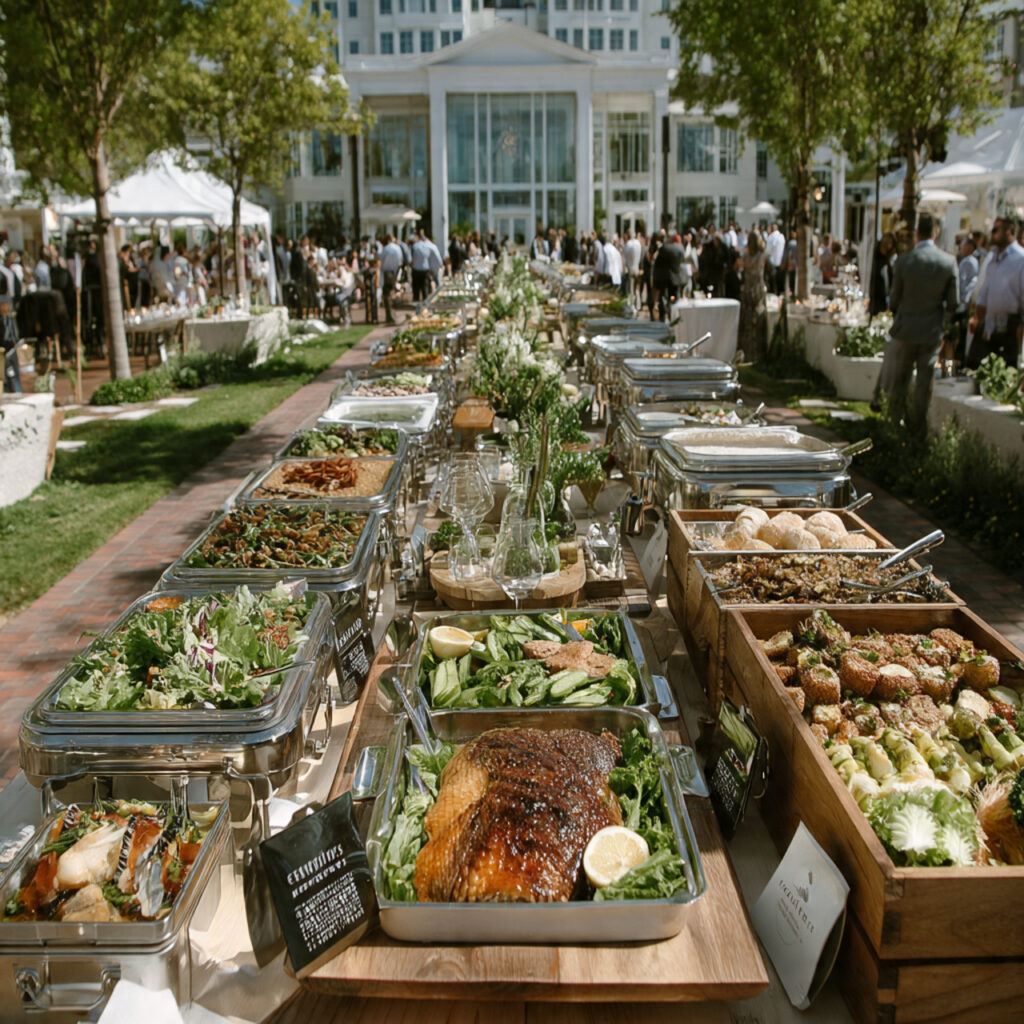
Buffets are often criticized for long lines and chaos. In reality, a well-designed buffet can move quickly and feel polished. The key is structure. A buffet-style wedding food setup should use multiple identical stations or mirrored layouts to divide traffic. Plates at both ends, clear signage, and staff guiding guests all reduce congestion. Food should be arranged in logical order, starting with plates and salads, then mains, and finishing with sides. This approach offers variety and accommodates dietary needs without drawing attention. It works well for large guest counts and outdoor venues.
Chef-Attended Live Stations
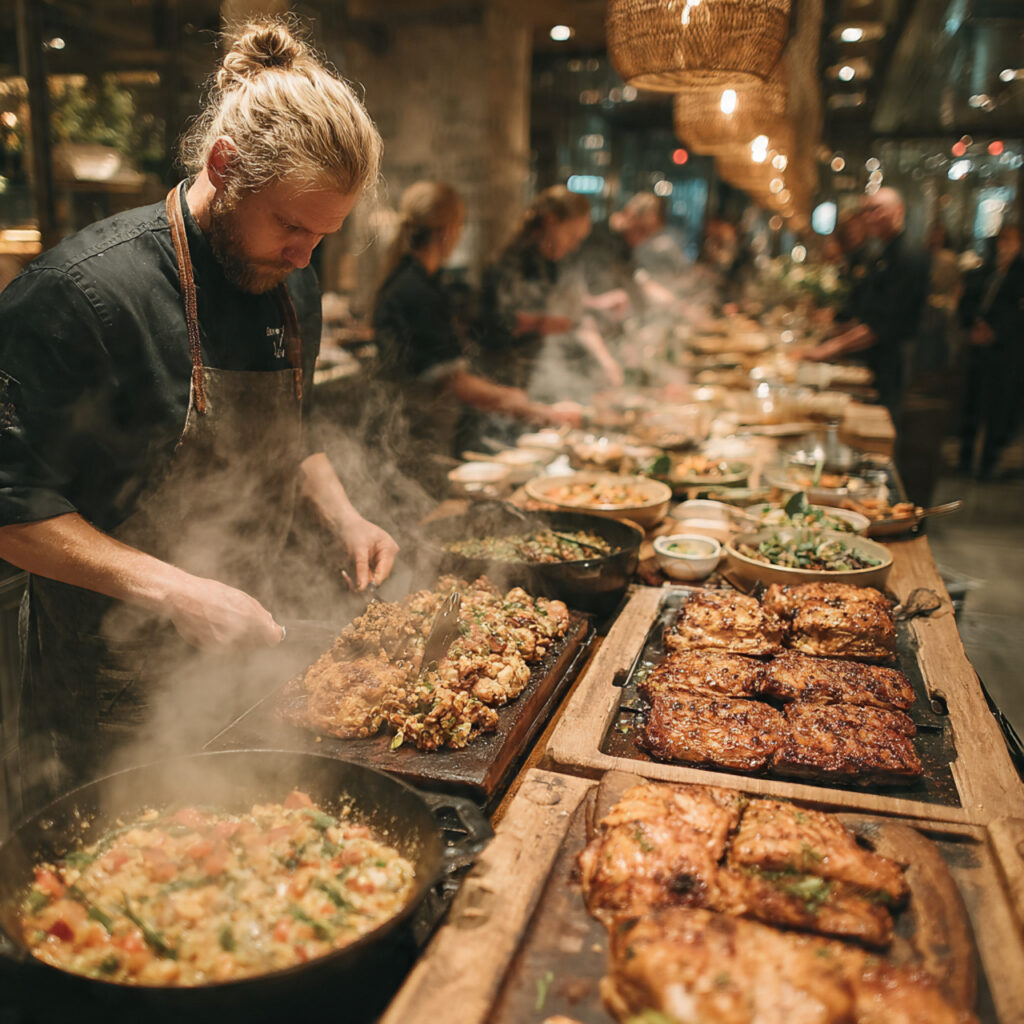
Live stations bring energy into the reception. Guests enjoy watching food prepared in real time, whether it is pasta tossed to order, tacos assembled fresh, or stir-fry cooked on demand. A live-station wedding food setup feels interactive and modern. It reduces food waste because dishes are made to order and allows customization for guests. However, it requires space, power access, and trained chefs who can work efficiently under pressure. This setup suits contemporary weddings and venues with open layouts. It also works well when paired with cocktail-style seating.
Cocktail-Style Passed Bites
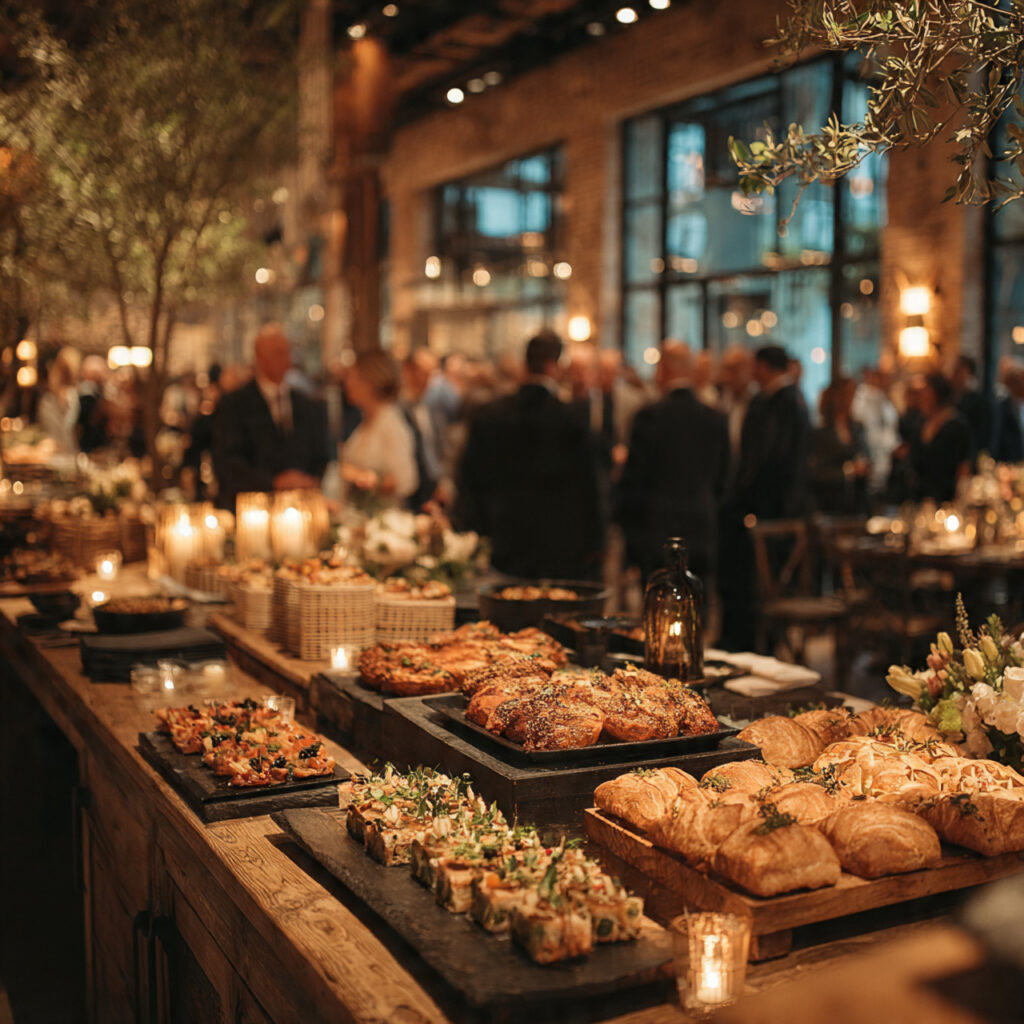
Not every wedding needs a full sit-down meal. For shorter receptions or evening events, passed hors d’oeuvres can be enough when done thoughtfully. A cocktail-style wedding food setup relies on timing and volume. Servers must circulate constantly, and bites should be filling, not decorative. Protein-forward options help guests feel satisfied. High cocktail tables, lounge seating, and clear trash points are essential. Without them, guests struggle to eat comfortably. This setup fits urban venues and modern celebrations with dancing as the main focus.
Long Banquet Tables With Shared Dishes
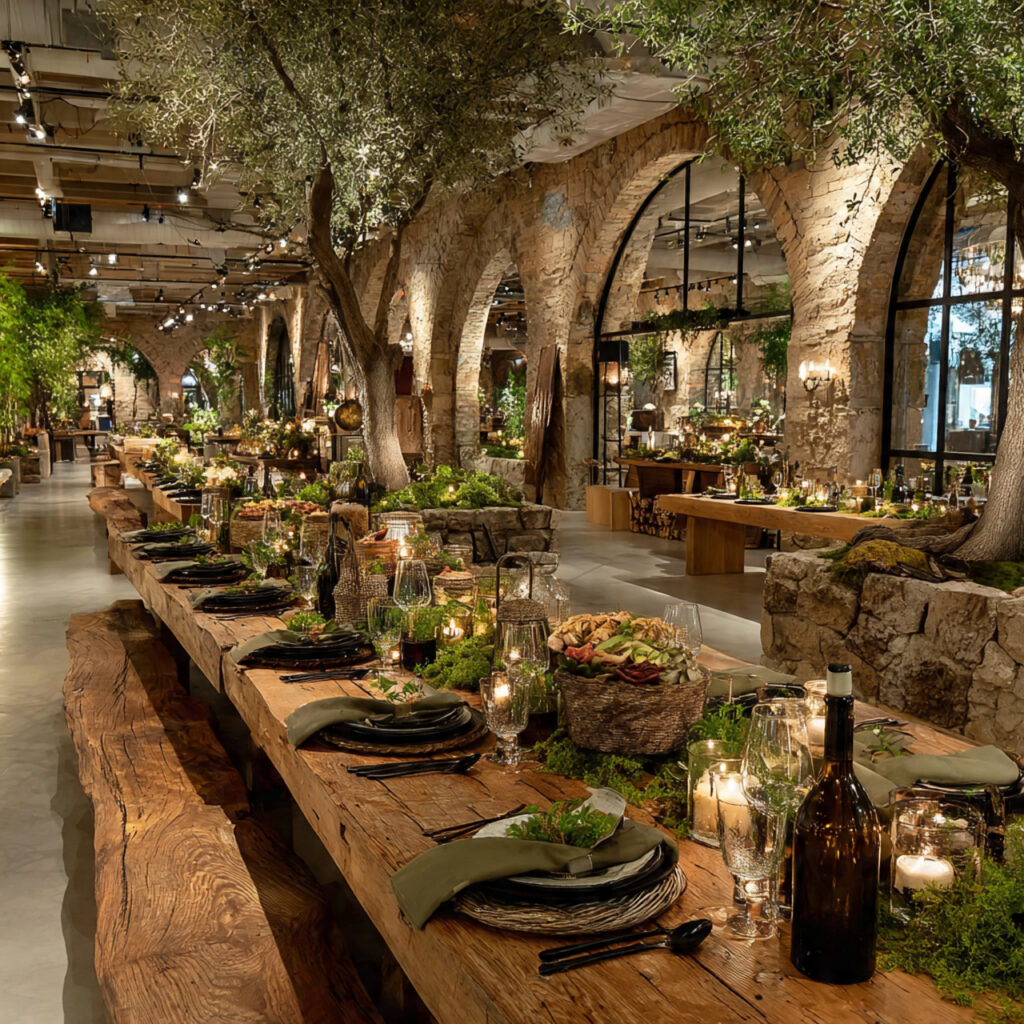
Long tables create visual impact. They also simplify service. Instead of navigating around multiple small tables, servers move along one continuous surface. A banquet-table wedding food setup emphasizes abundance and symmetry. Shared dishes run down the center, with bread, salads, and mains placed at intervals. This approach encourages conversation across the table and creates strong photographic lines. It works best in wide venues where tables do not feel cramped. Lighting must be planned carefully to avoid shadows across the food.
Outdoor Open-Air Food Pavilion
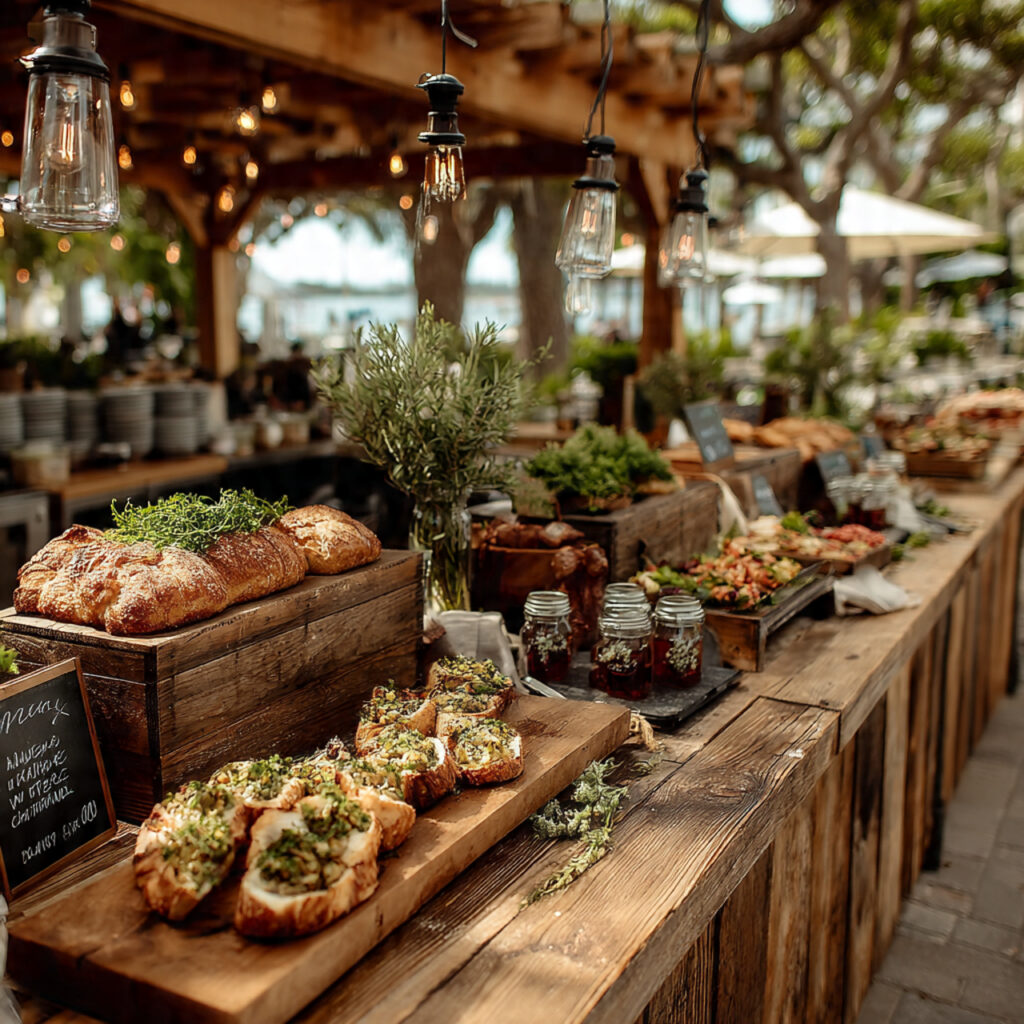
Outdoor weddings benefit from food setups that feel integrated into the environment. A dedicated food pavilion keeps cooking heat and noise away from dining areas while remaining accessible. An open-air wedding food setup uses tents, wooden counters, or pergolas to house stations. Natural materials and neutral linens help the structure blend into the setting. Fans or cooling units are essential in warm climates. This setup is practical for garden, vineyard, and beach weddings where permanent kitchens are not available.
Cultural Feast-Inspired Layout
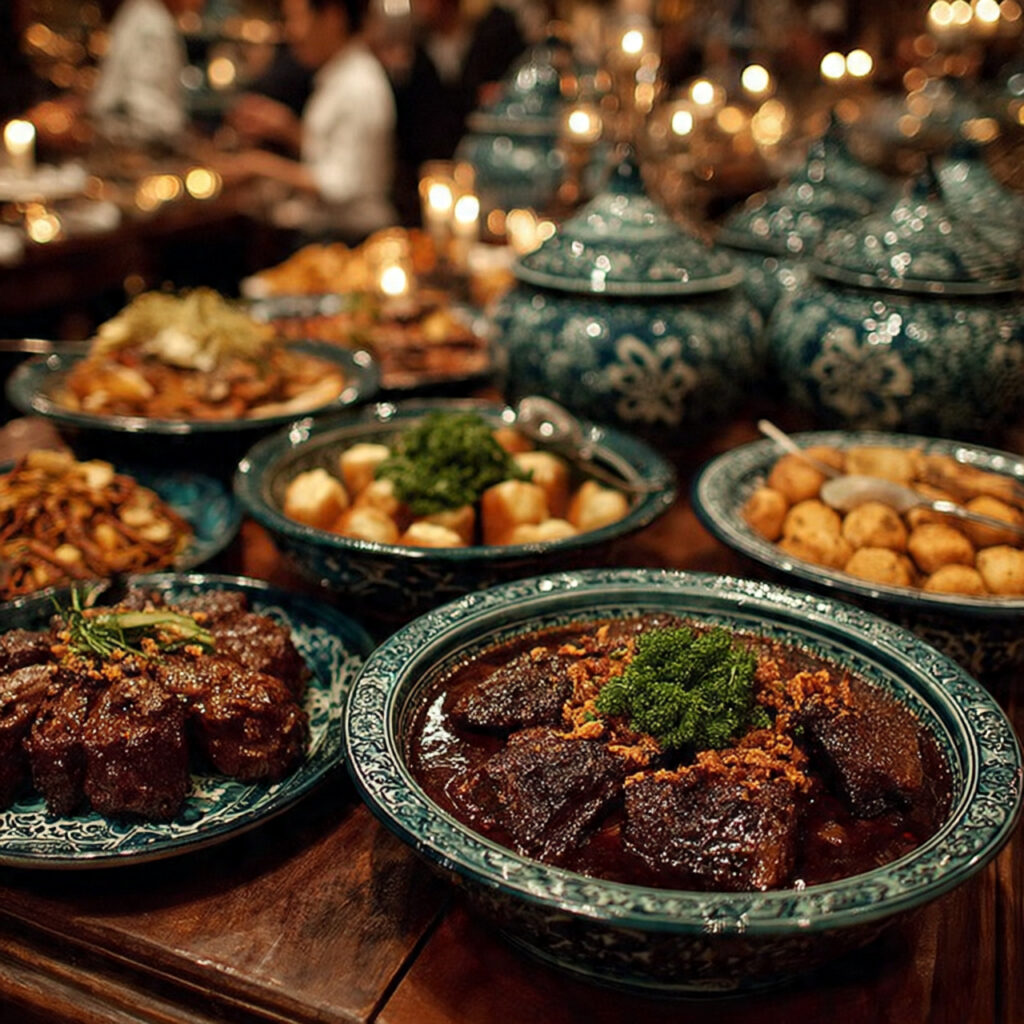
Many weddings draw from cultural traditions that emphasize abundance and shared meals. These setups often involve multiple dishes served simultaneously rather than in courses. A culturally inspired wedding food setup respects tradition while adapting to modern service needs. Labeling dishes, accommodating unfamiliar guests, and balancing authenticity with accessibility are key considerations. This approach works best when explained briefly through signage or menus so guests understand how to engage with the meal.
Minimalist Modern Food Display
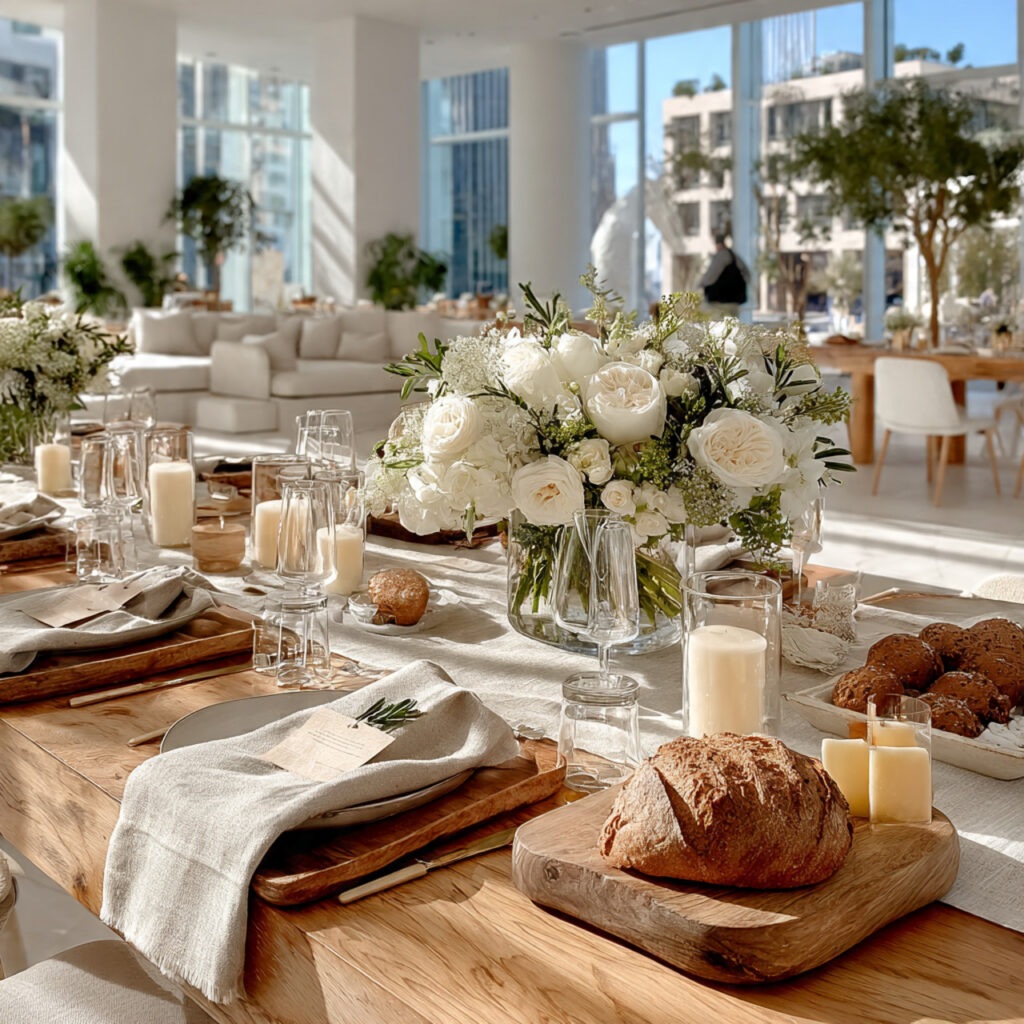
Minimalism in food presentation focuses on clarity and restraint. Clean lines, limited color palettes, and simple plating define this style. A minimalist wedding food setup avoids overcrowded tables. Each element has space. Menus are short, and ingredients are highlighted rather than disguised. This setup pairs well with modern architecture and neutral décor. Execution matters. Minimalism exposes flaws. Food must be fresh, well-seasoned, and precisely presented.
Farm-to-Table Ingredient Showcase
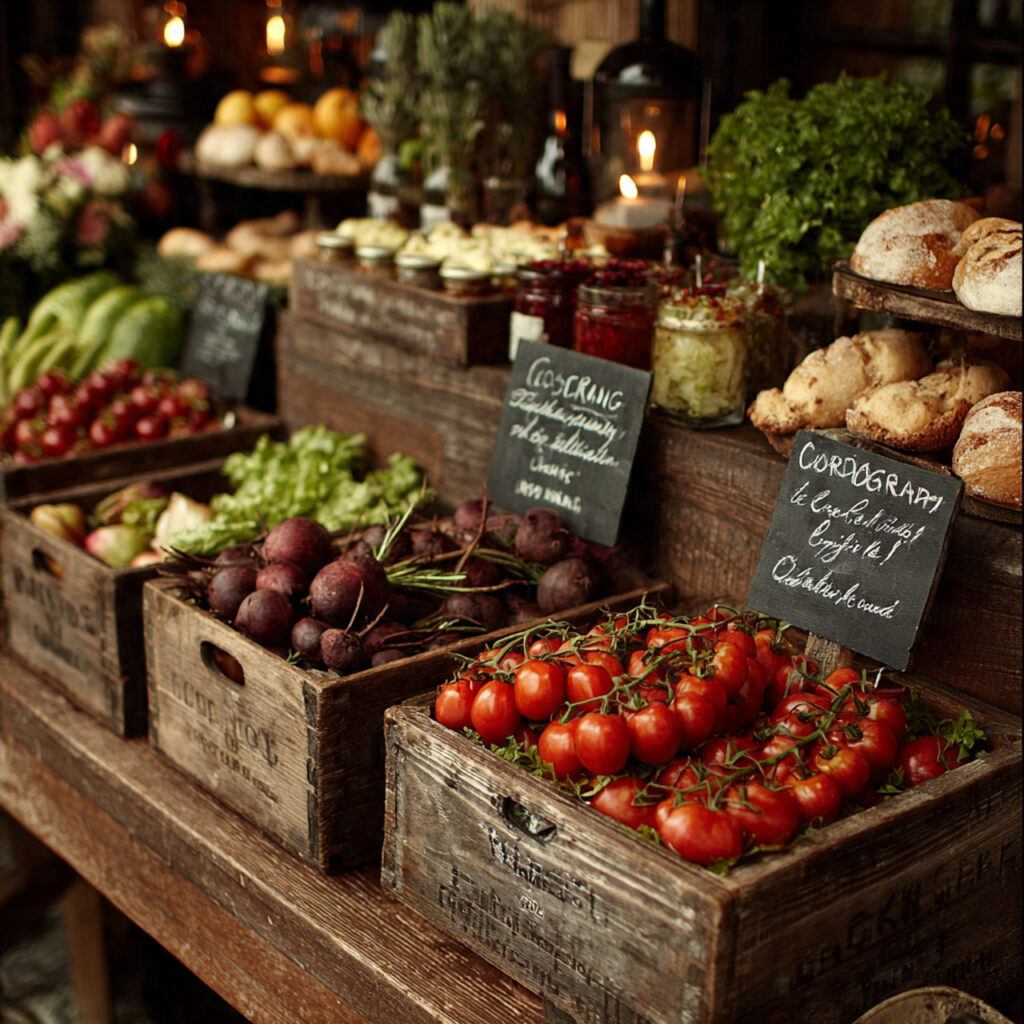
Guests increasingly care about where food comes from. Highlighting local ingredients builds trust and adds meaning to the meal. A farm-to-table wedding food setup may include chalkboard signs naming farms, seasonal menus, or visible displays of fresh produce. The food itself should reflect the season rather than force out-of-season items. This setup suits rural venues, barns, and outdoor weddings. It also aligns well with sustainability-focused celebrations.
Dessert-Forward Reception Layout
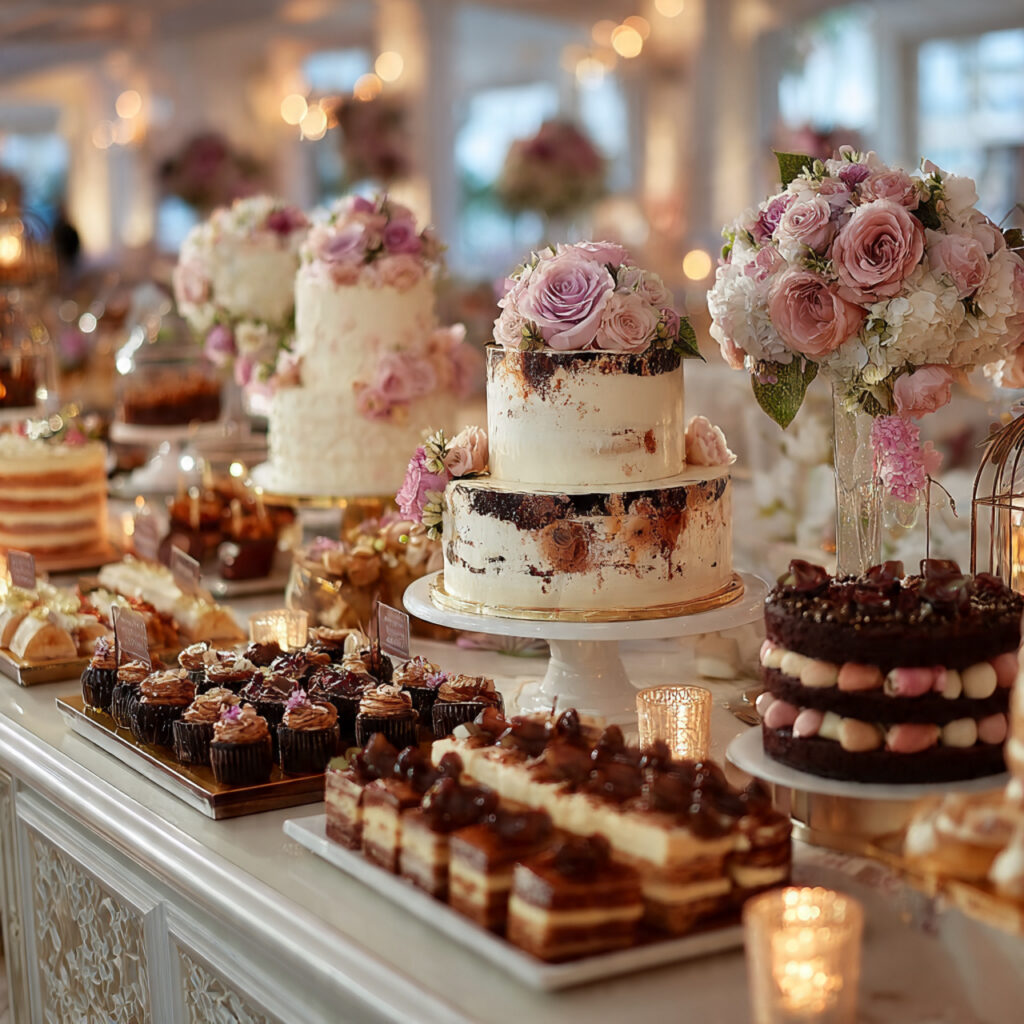
Some couples prioritize dessert over dinner. In these cases, the food setup revolves around sweets, with lighter savory options earlier in the event. A dessert-centric wedding food setup requires variety and pacing. Cakes, pastries, and confections should be released gradually to avoid sugar overload. Coffee and tea stations become essential anchors. This format works best for evening receptions or weddings following a separate dinner.
Street-Food Inspired Counters
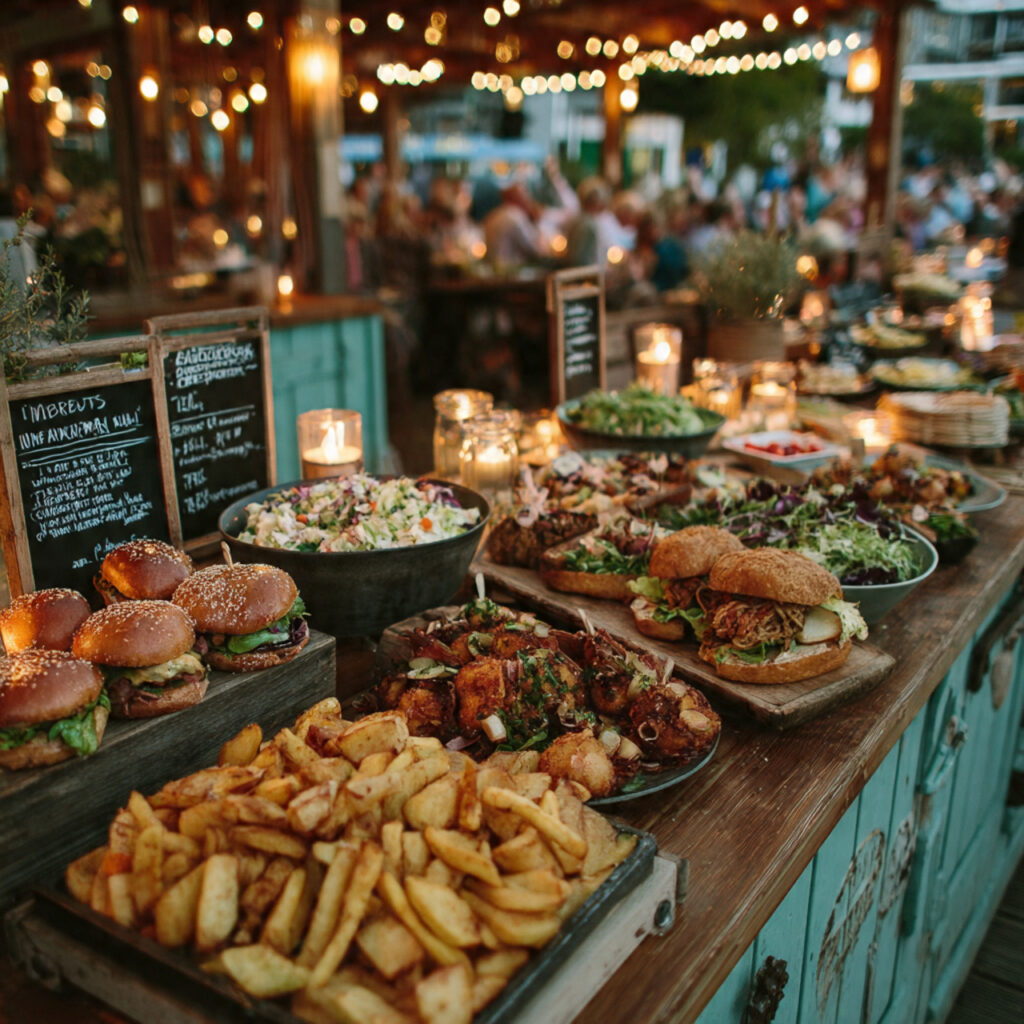
Street food feels casual and comforting. Translating it into a wedding environment requires polish without losing authenticity. A street-food wedding food setup uses branded counters, simple menus, and quick service. Items should be easy to eat standing up. Paper liners, trays, or compostable packaging help with cleanup. This approach suits relaxed weddings and guests who value flavor over formality.
Late-Night Food Reset Station
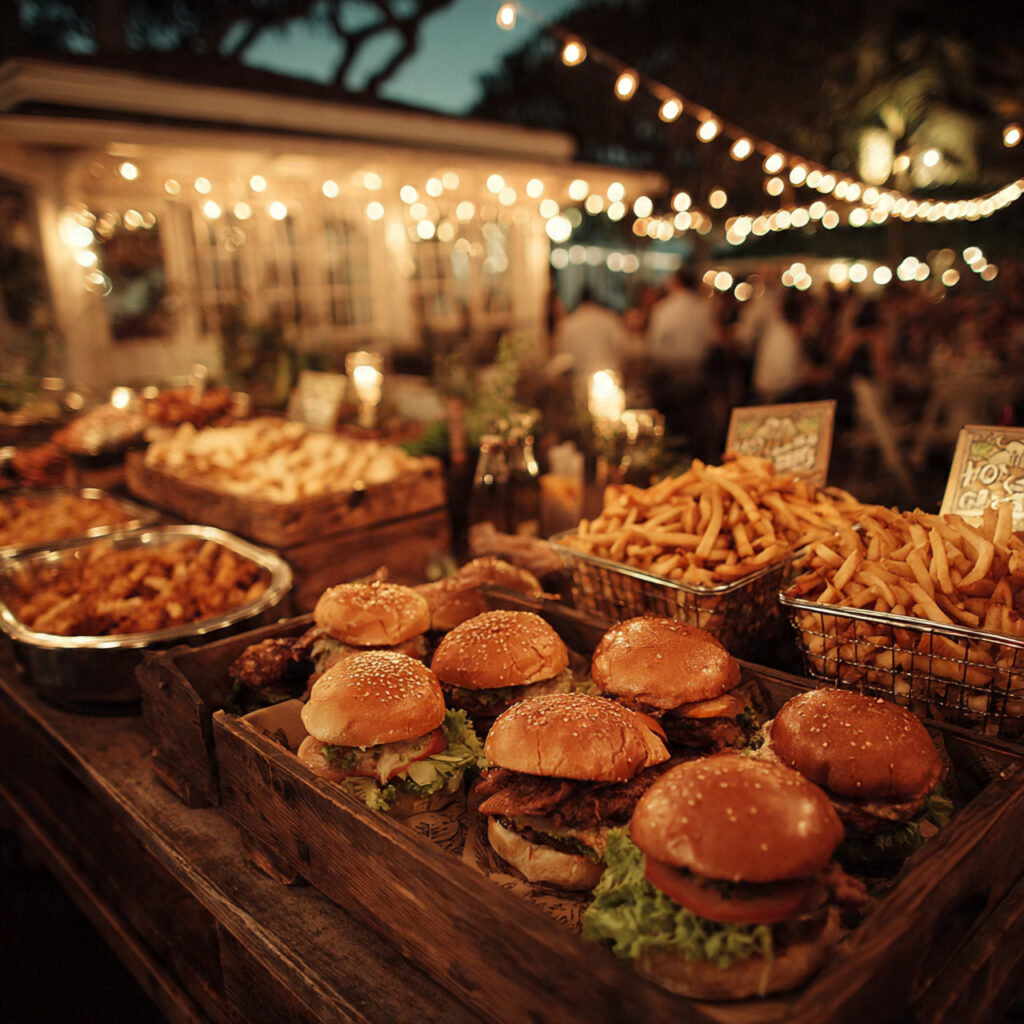
As the night progresses, guests’ needs change. A late-night station acknowledges that energy dips and hunger returns. A late-night wedding food setup introduces comforting foods like sliders, fries, or soup after dancing begins. It should be clearly announced or unveiled to create excitement. This setup reduces early departures and keeps the dance floor active longer.
Interactive Build-Your-Own Bars
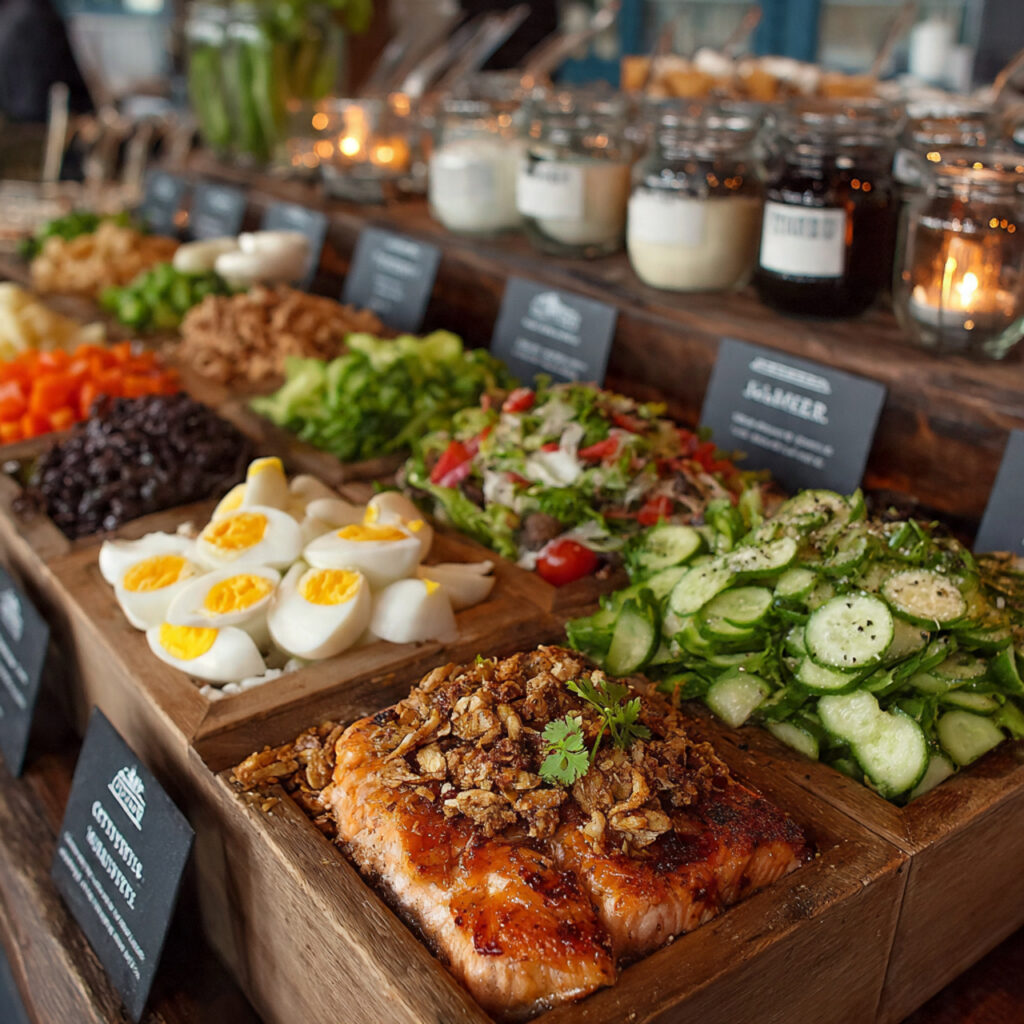
Build-your-own stations give guests control. Whether it is tacos, bowls, or desserts, customization increases satisfaction. An interactive wedding food setup must be organized. Ingredients should flow logically, and staff should assist to keep lines moving. Clear labeling prevents confusion. This format accommodates dietary restrictions naturally and works well for mixed guest groups.
Regional Cuisine Highlight
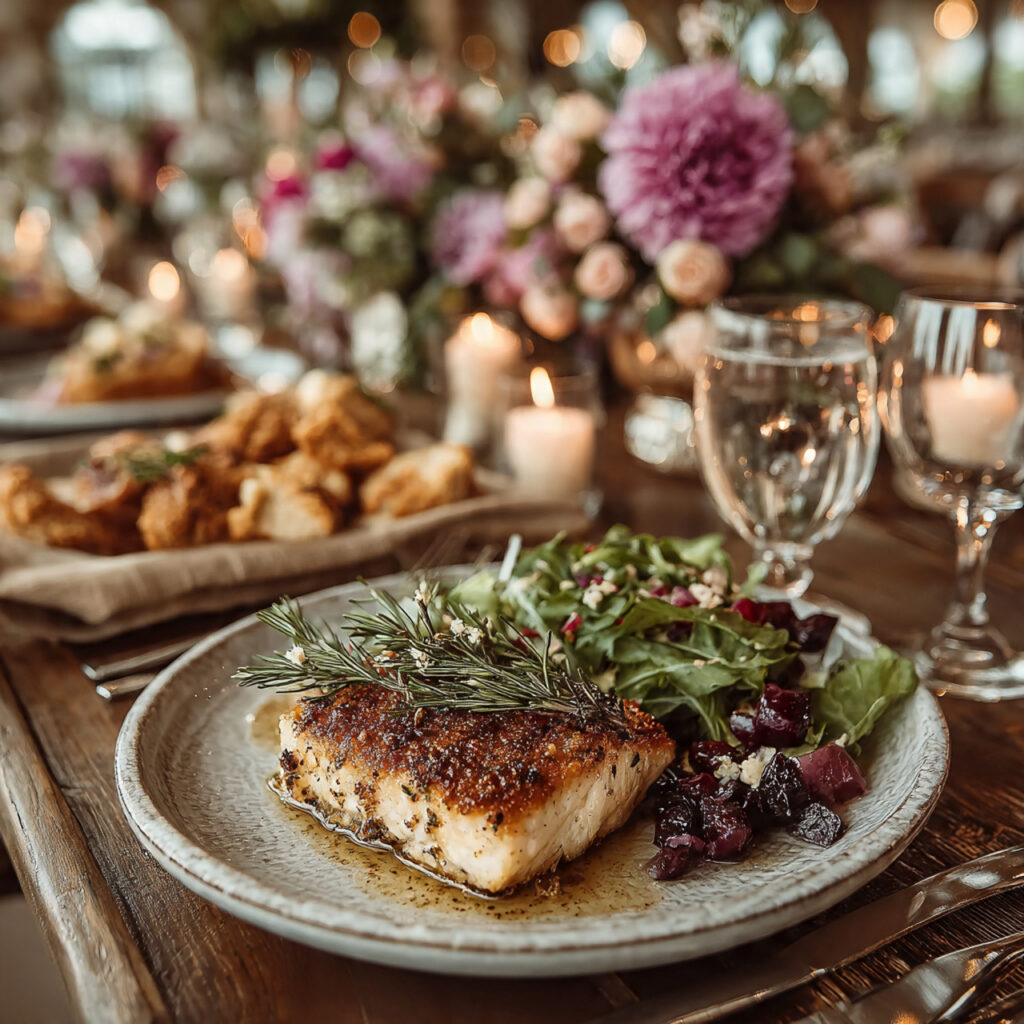
Highlighting a specific region adds storytelling to the meal. This could reflect the couple’s hometown, where they met, or a shared love of a place. A regional wedding food setup uses authentic flavors while adjusting spice levels and presentation for a broad audience. Decor elements can subtly reinforce the theme without becoming costume-like. This setup creates a cohesive narrative when paired with thoughtful menu descriptions.
Seasonal Harvest Table
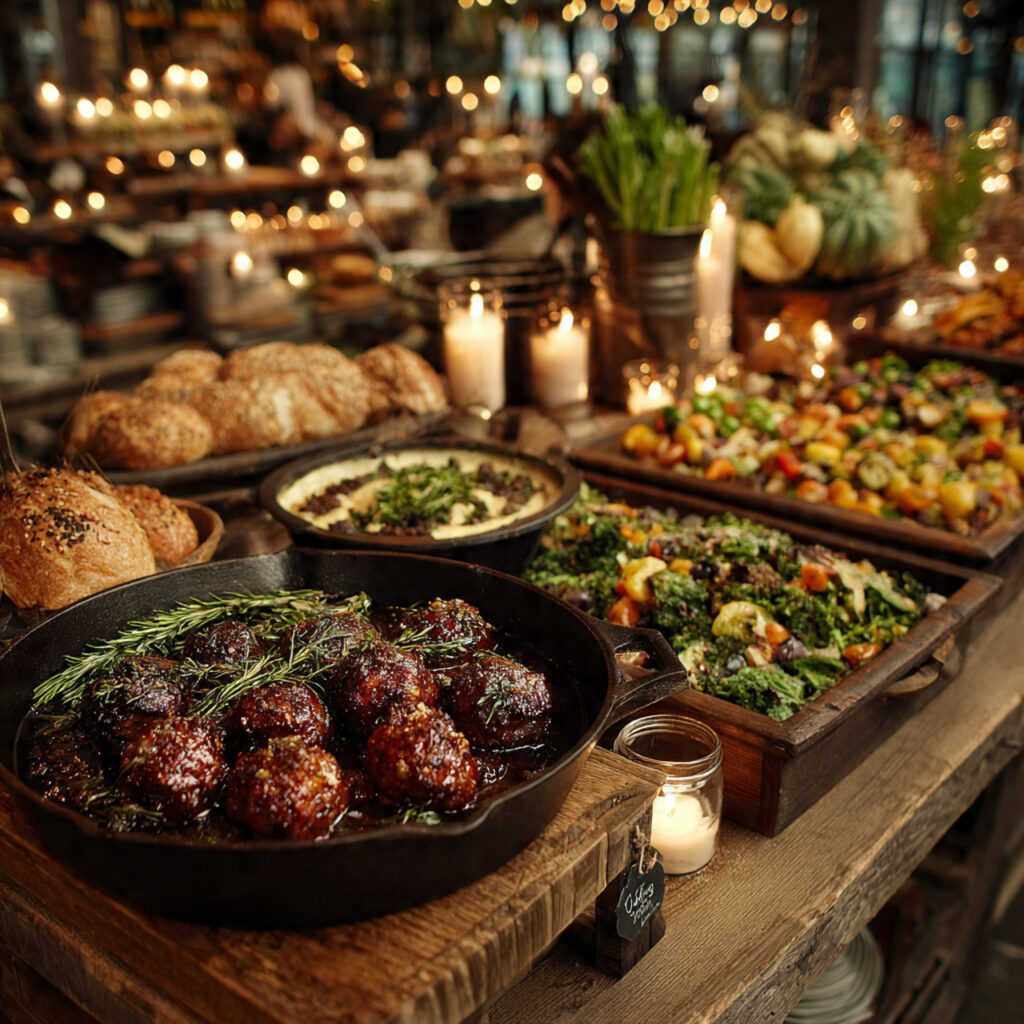
Harvest tables emphasize abundance through seasonal produce and hearty dishes. They often replace traditional buffets with long, visually rich displays. A harvest-style wedding food setup requires careful food safety planning. Items must be replenished frequently, and temperature control is critical. This approach suits fall weddings and venues with rustic or natural aesthetics.
Children-Friendly Food Corner
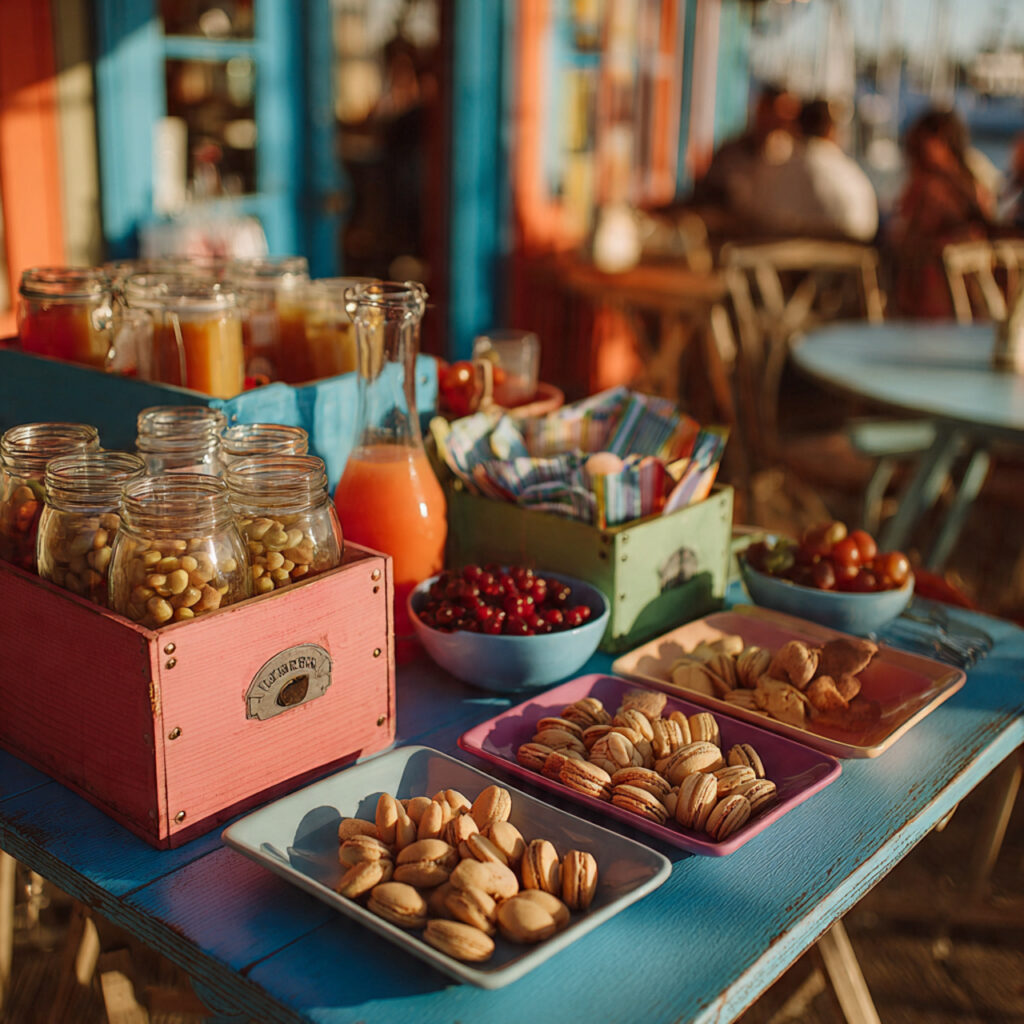
When many guests bring children, dedicated food areas reduce stress for parents and staff. A child-focused wedding food setup includes familiar items, smaller portions, and simple presentation. Placing it slightly away from the main dining area keeps traffic flowing. This setup improves overall guest experience by addressing a specific need directly.
Formal Multi-Course Tasting Menu
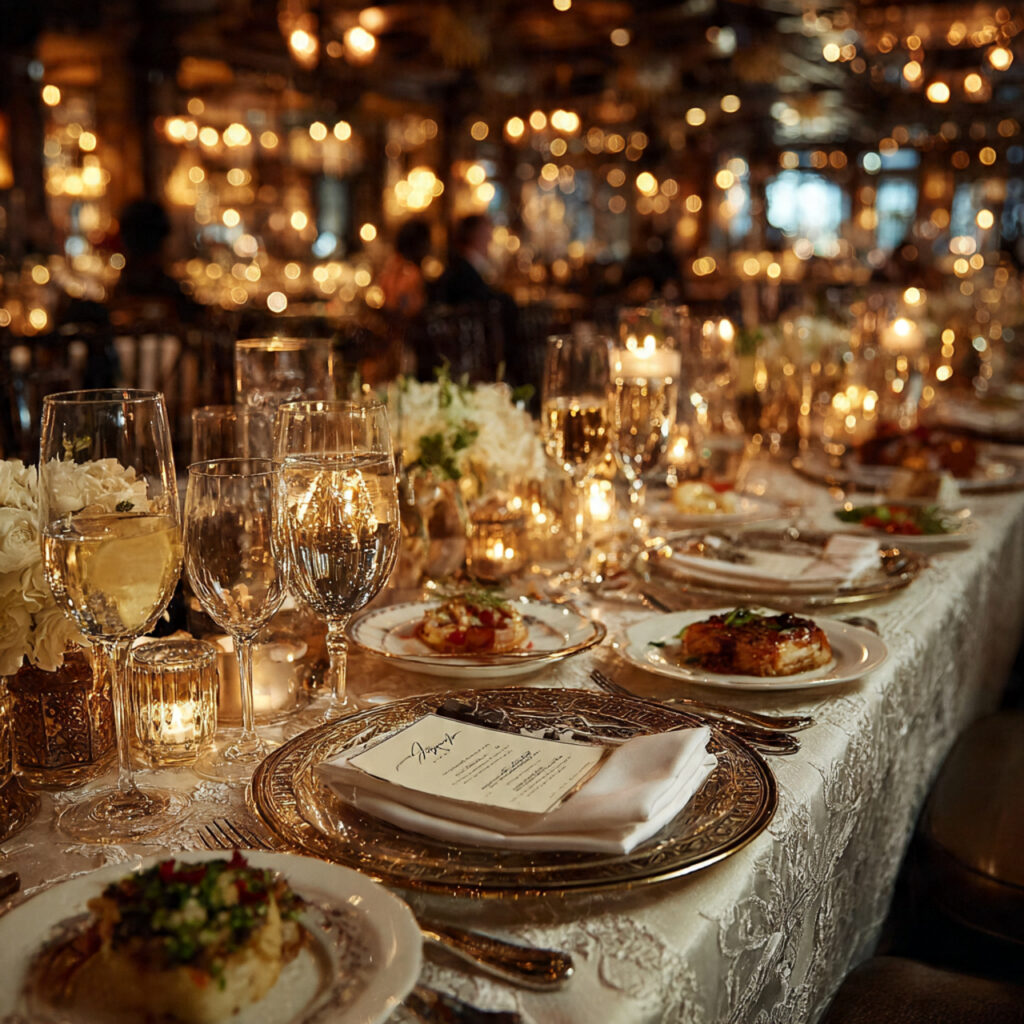
For food-focused couples, a tasting menu turns dinner into an event. Each course tells part of a story. A tasting-menu wedding food setup requires precise timing and clear communication with guests. Portions should be small enough to prevent fatigue. Wine or beverage pairings enhance the experience. This setup works best for smaller weddings with guests who appreciate culinary detail.
Sustainable Zero-Waste Approach
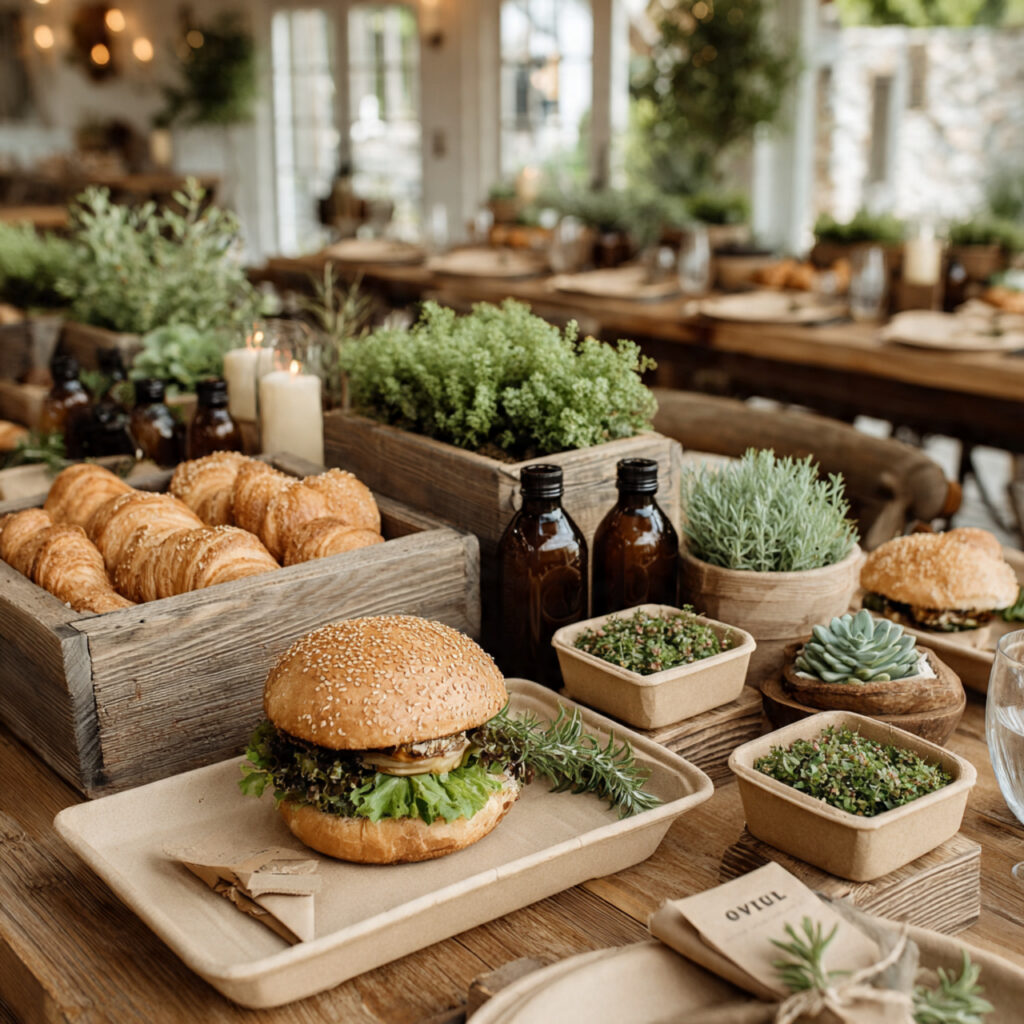
Sustainability is no longer niche. Many couples want food setups that minimize waste without sacrificing quality. A zero-waste wedding food setup involves careful planning, compostable materials, and portion control. Buffets are structured to reduce leftovers, and excess food is donated when possible. This approach requires coordination with vendors but leaves a positive impact beyond the event.
Lounge-Integrated Food Stations
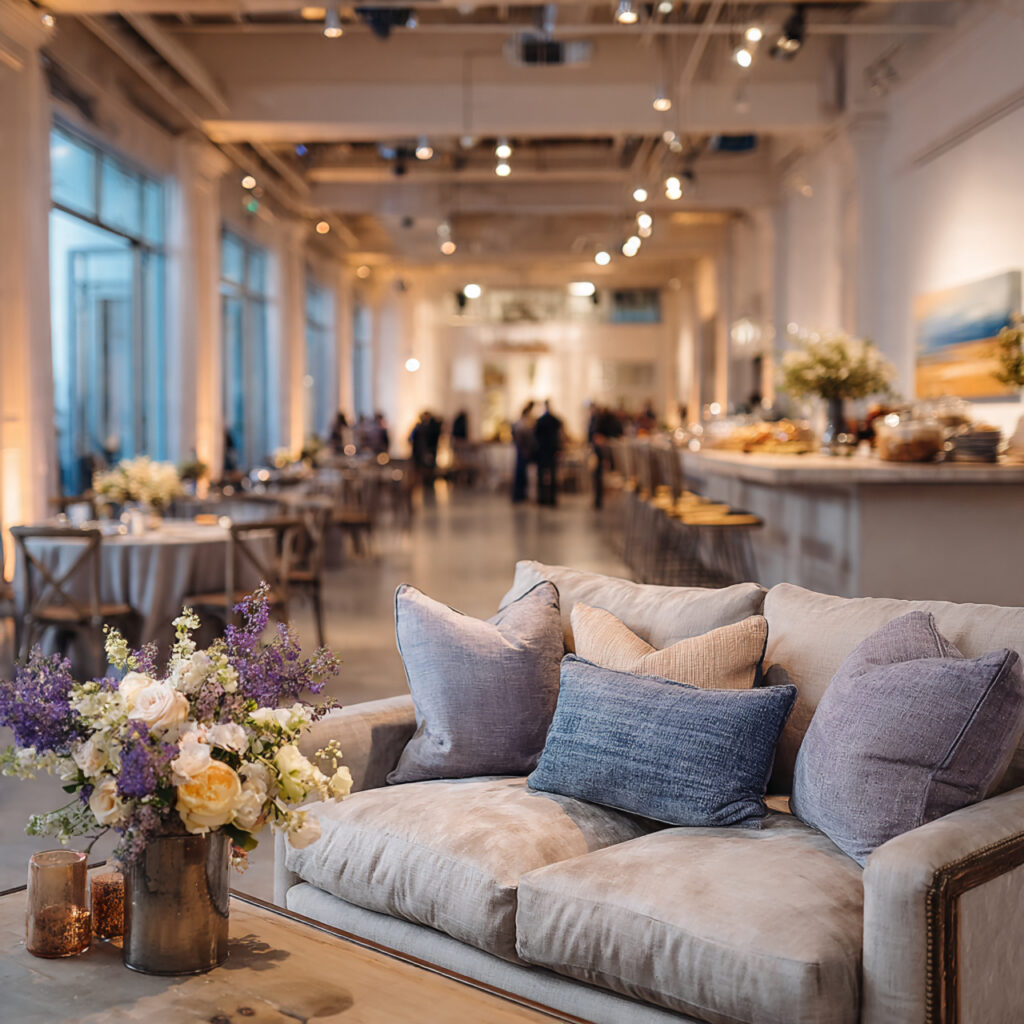
Blending food with lounge seating encourages relaxed movement throughout the reception. A lounge-integrated wedding food setup places small stations near seating clusters. Guests eat while conversing, rather than standing in lines. This setup suits cocktail-style receptions and modern venue layouts.
Traditional Ceremony-Linked Food Display
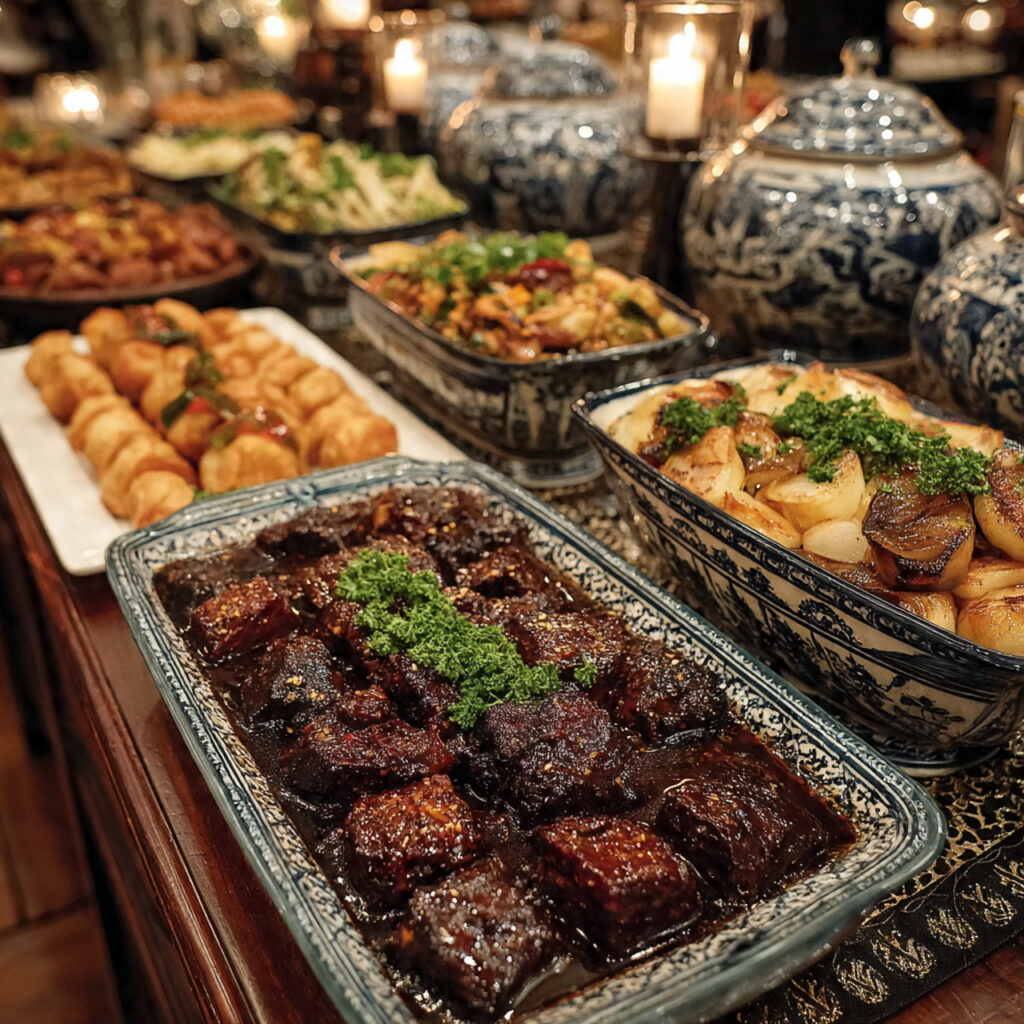
Some cultures link specific foods to ceremonial moments. Displaying these items thoughtfully honors tradition. A ceremony-linked wedding food setup positions symbolic foods prominently, often with brief explanations. Timing matters so guests understand when and how to engage. This approach adds depth without requiring a full themed menu.
Grand Finale Food Reveal
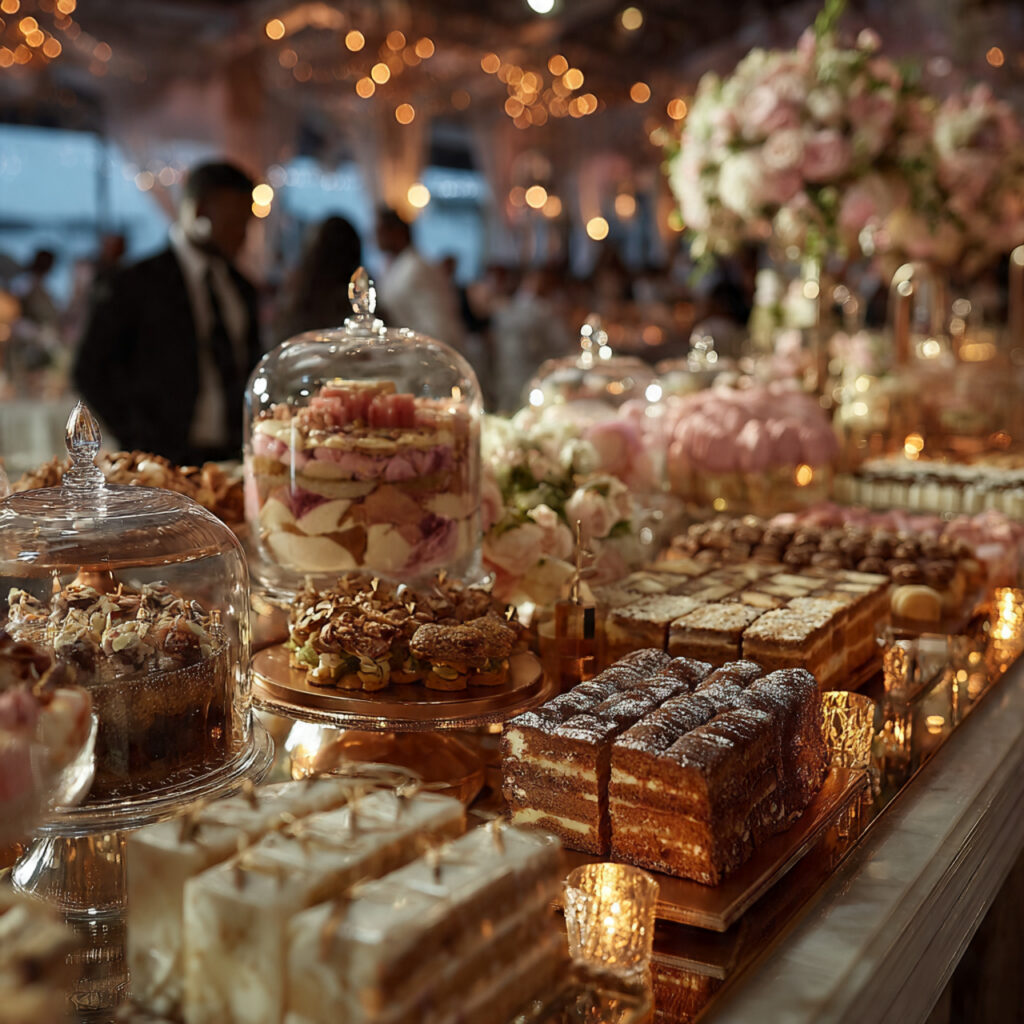
Ending the night with a visual food moment creates a lasting impression. A finale-style wedding food setup might involve a dramatic dessert display, synchronized unveiling, or coordinated service moment. Lighting and music enhance the reveal. This setup requires rehearsal and clear cues but delivers strong emotional impact.
Frequently Asked Questions
How early should the food setup be finalized?
Most caterers require final layout decisions four to six weeks before the wedding. This allows time to plan staffing, rentals, and kitchen flow realistically.
Can multiple food setups be combined?
Yes. Many weddings use a mix, such as plated dinner followed by late-night stations. The key is pacing and clear transitions.
How do food setups affect guest flow?
Poorly planned layouts cause congestion and frustration. Good setups consider entry points, line length, and seating proximity.
Is buffet always cheaper than plated service?
Not always. Staffing, rentals, and food volume can make buffets comparable or even more expensive in some cases.
How do dietary restrictions fit into different setups?
Stations and buffets often accommodate restrictions more discreetly, while plated service requires accurate advance counts and labeling.
Conclusion
A successful wedding food setup is not defined by trends. It is defined by clarity, comfort, and execution. The best setups respect the venue, the guest count, and the couple’s priorities. They move smoothly, look intentional, and leave guests feeling cared for rather than overwhelmed. When food is planned as part of the overall experience rather than an afterthought, it becomes a quiet anchor of the celebration. Thoughtful choices here shape how the entire wedding is remembered.