Forest Wedding Ceremony: 16 Stunning Ideas for a Natural Celebration
A forest wedding ceremony offers something most venues cannot: depth. Texture. Silence that feels alive. It strips away excess and replaces it with atmosphere—filtered light, grounded scents, and a setting that doesn’t need decoration to feel meaningful.
This guide delivers practical, grounded ideas designed to elevate a forest wedding ceremony without turning it into a staged production. Each concept focuses on experience, logistics, and emotional impact—so your guests stay engaged and your setting does the heavy lifting.
Woodland Aisle Framed by Nature
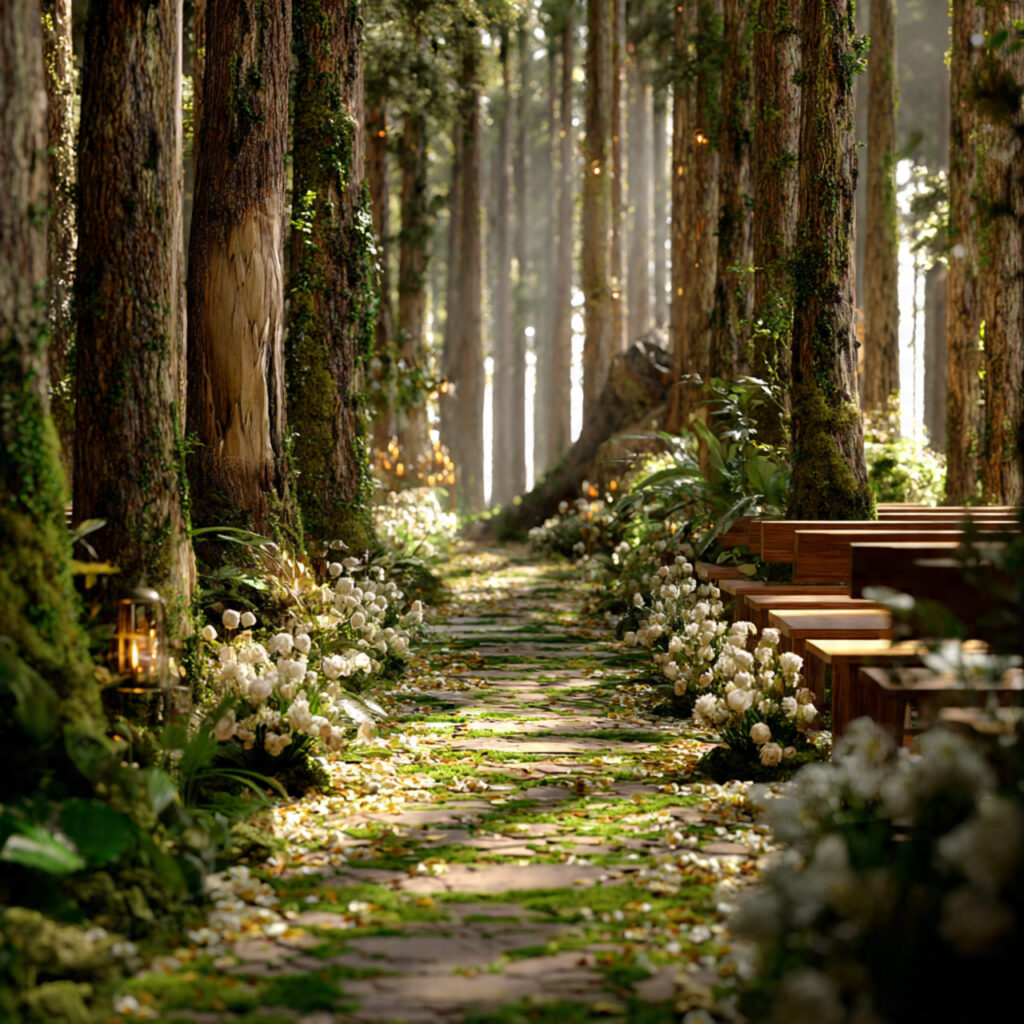
A forest wedding ceremony begins with the walk. The aisle should feel discovered, not built.Use existing paths or lightly clear a natural corridor between trees. Avoid over-decoration. Instead, guide the eye subtly:
- Fallen logs repurposed as boundary markers
- Soft fabric draped loosely between trunks
- Native flowers placed sparingly at entry points
- Ground-level details matter more than overhead installations. Moss, leaves, and soil textures create a quiet richness.
- Minimal cost, maximum authenticity. Guests feel immersed immediately.
Tree-Altar as the Focal Point
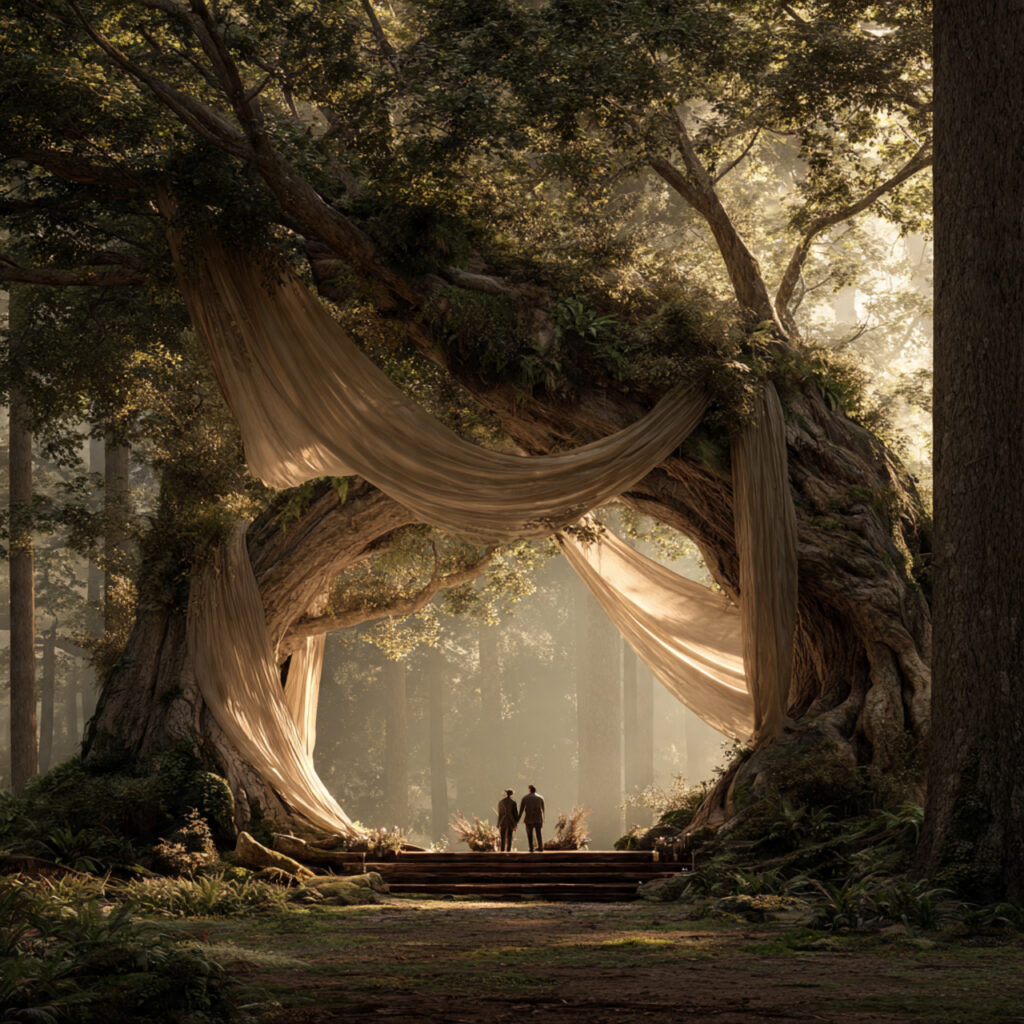
Skip artificial arches. A mature tree can anchor the entire forest wedding ceremony.
Look for:
- Strong trunk structure
- Open canopy above
- Balanced symmetry around the base
Enhance, don’t compete:
- Wrap the trunk with loose greenery
- Hang a single textile panel
- Add subtle lanterns for later hours
- The tree becomes symbolic—rooted, enduring, organic.
- Built-in symbolism without added expense.
Light Filtering Strategy
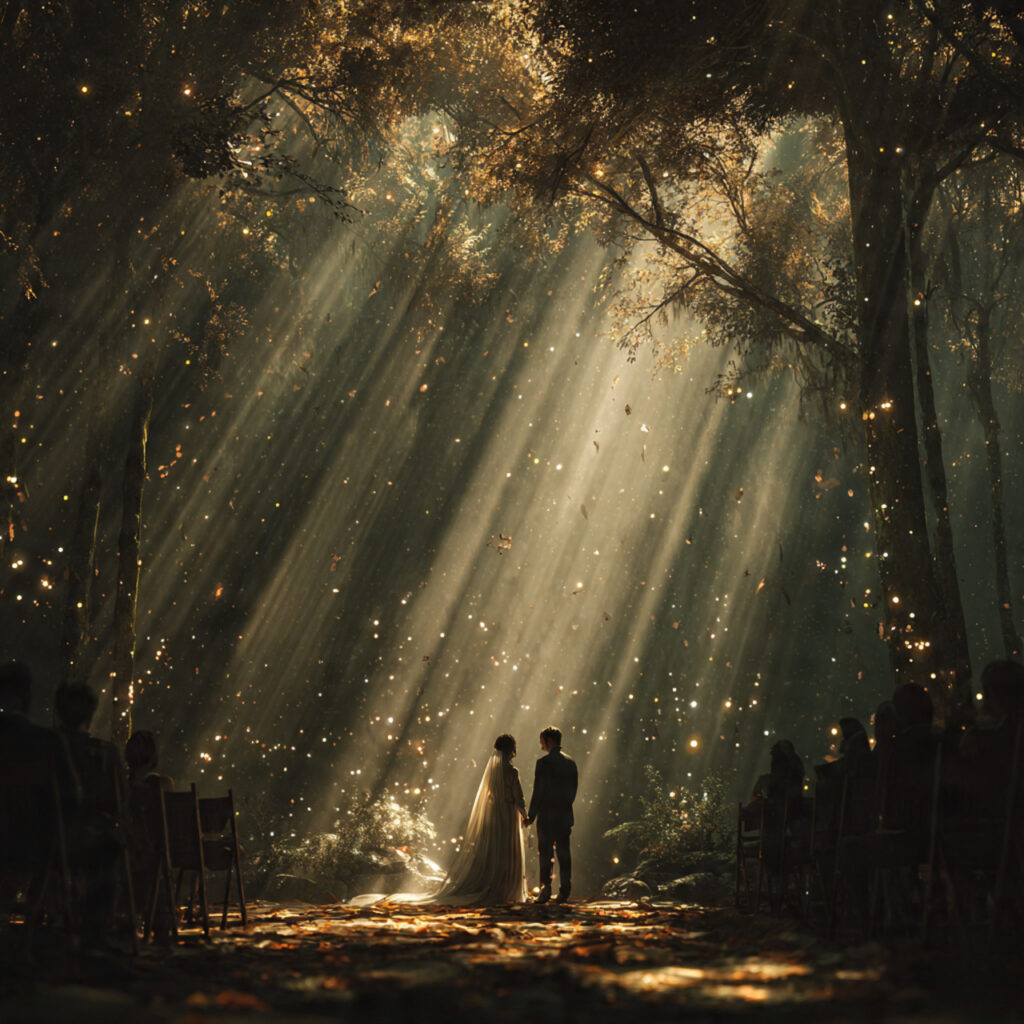
Lighting in a forest is unpredictable. That’s its strength if used correctly.Schedule your forest wedding ceremony when light filters through the canopy—late afternoon works best. Avoid midday harshness.
Layer lighting:
- Natural sunlight (primary)
- Candle clusters (secondary)
- Warm string lights (supporting, minimal use)
- Do not over-light. Shadows are part of the atmosphere.
- Creates mood without heavy equipment.
Ground Seating for Intimacy
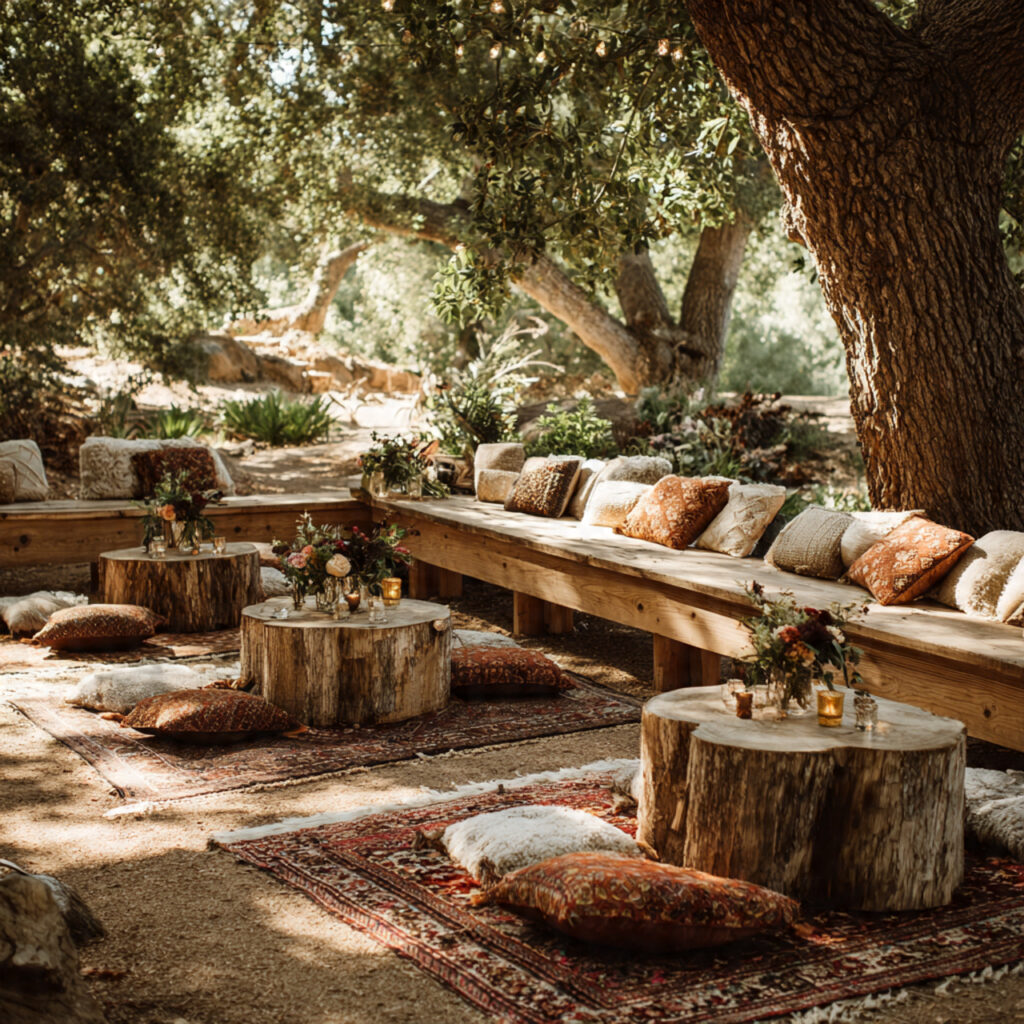
Traditional chairs can feel out of place. Consider grounded seating.
Options:
- Low wooden benches
- Cushions layered on rugs
- Tree stumps arranged in semicircles
Keep sightlines clear. Ensure comfort without clutter.This arrangement pulls guests closer to the ceremony, reducing distance—physical and emotional. Enhances intimacy and lowers rental costs.
Natural Soundscape Integration
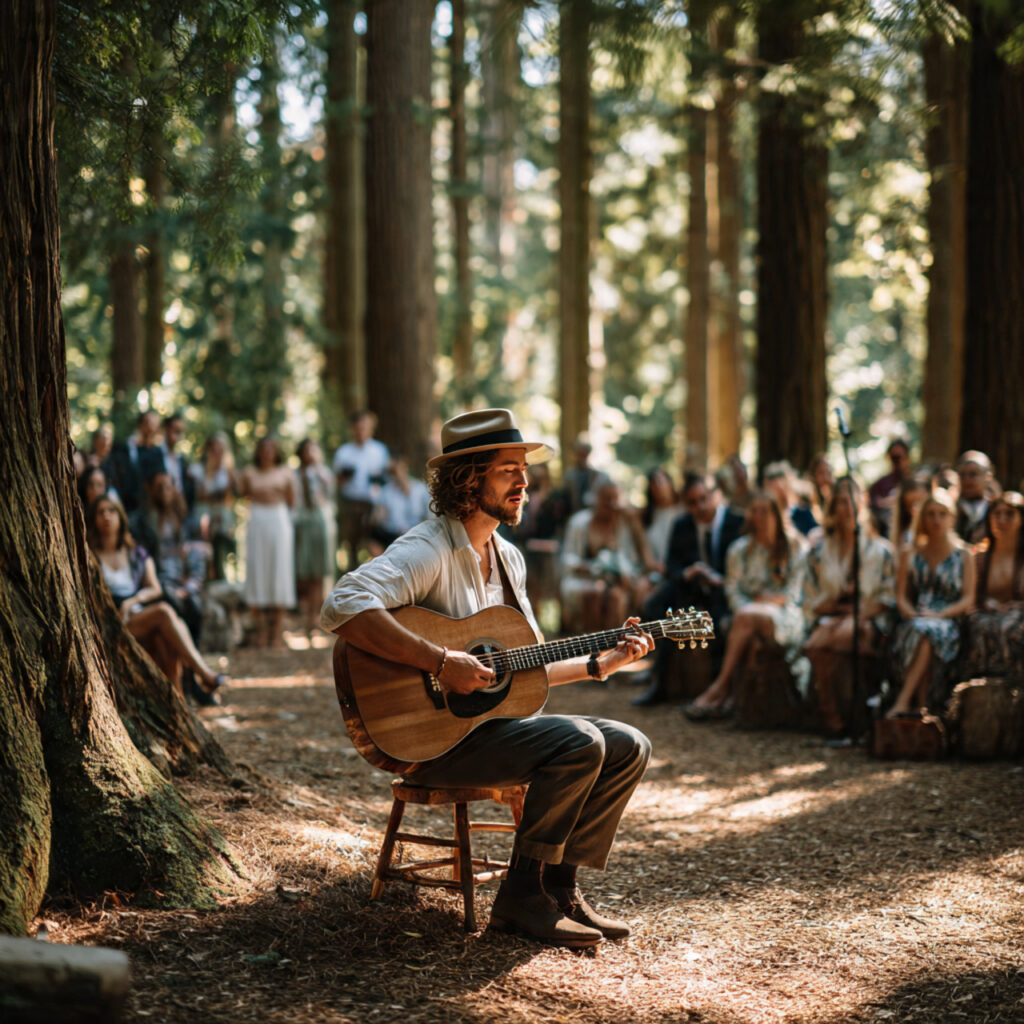
A forest wedding ceremony has built-in audio: wind, birds, leaves.
Use:
- Acoustic instruments only
- Soft live music (guitar, violin)
- Minimal amplification
- Pause intentionally during vows. Let the forest fill the silence
- Authentic atmosphere with less technical complexity.
Seasonal Alignment
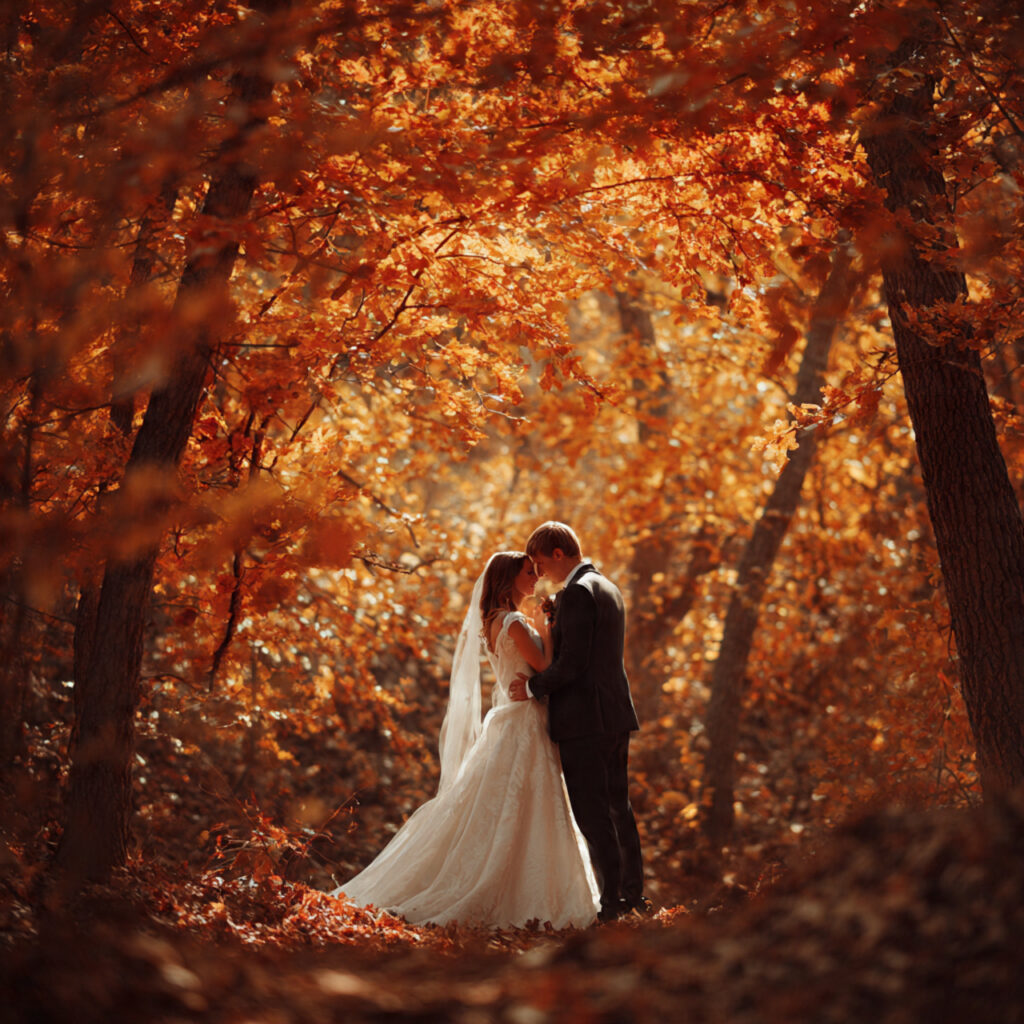
The forest changes dramatically across seasons. Choose deliberately.
- Spring: fresh greens, wildflowers
- Summer: dense canopy, deep shade
- Autumn: color-rich, textured ground
- Winter: stark, quiet, minimal
- Align attire, décor, and timing with the season rather than fighting it.
- Visual cohesion without forced design.
Entrance Experience Design
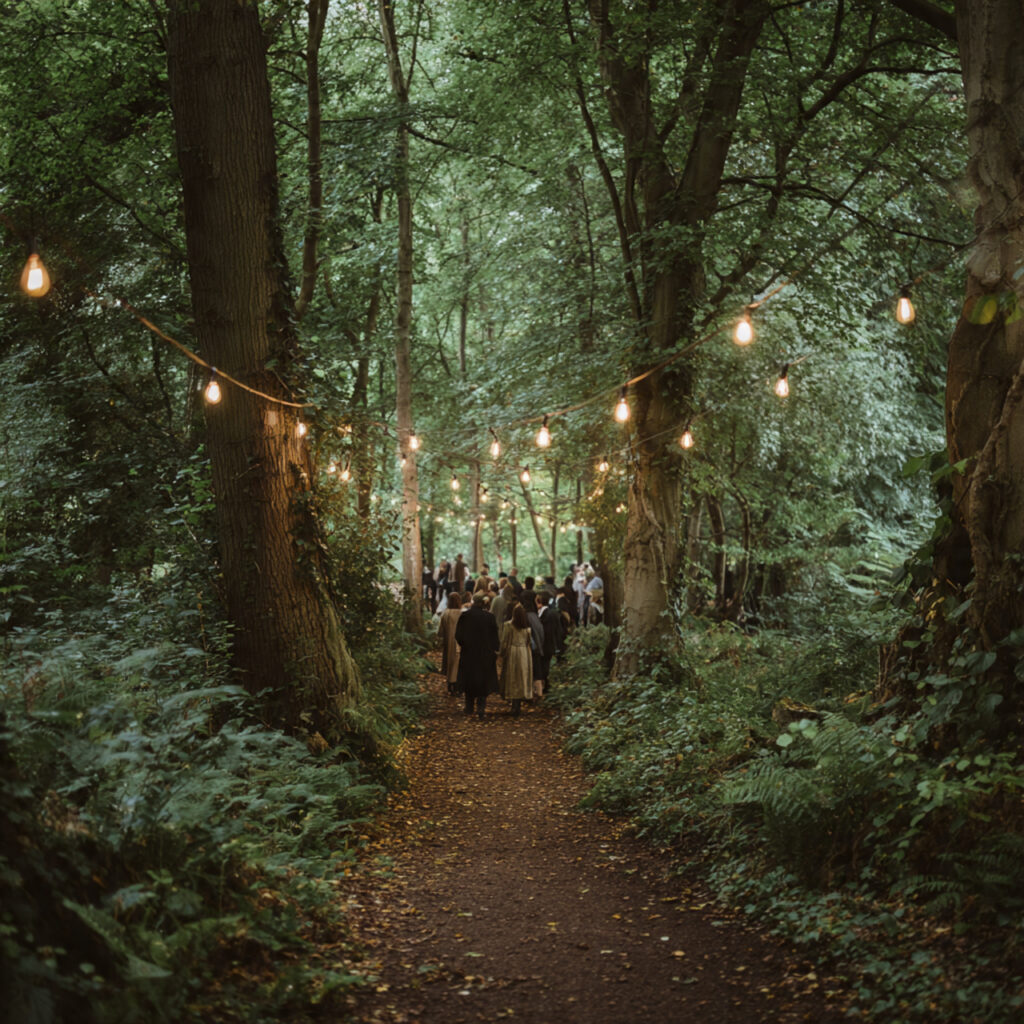
The entry sets expectations. Avoid direct exposure to the ceremony space.
Create a transition:
- Narrow walking trail
- Light canopy tunnel
- Sound shift (from open space to forest quiet)
- This gradual reveal builds anticipation and emotional engagement.
- Elevates perceived quality without cost.
Weather Contingency Without Disruption
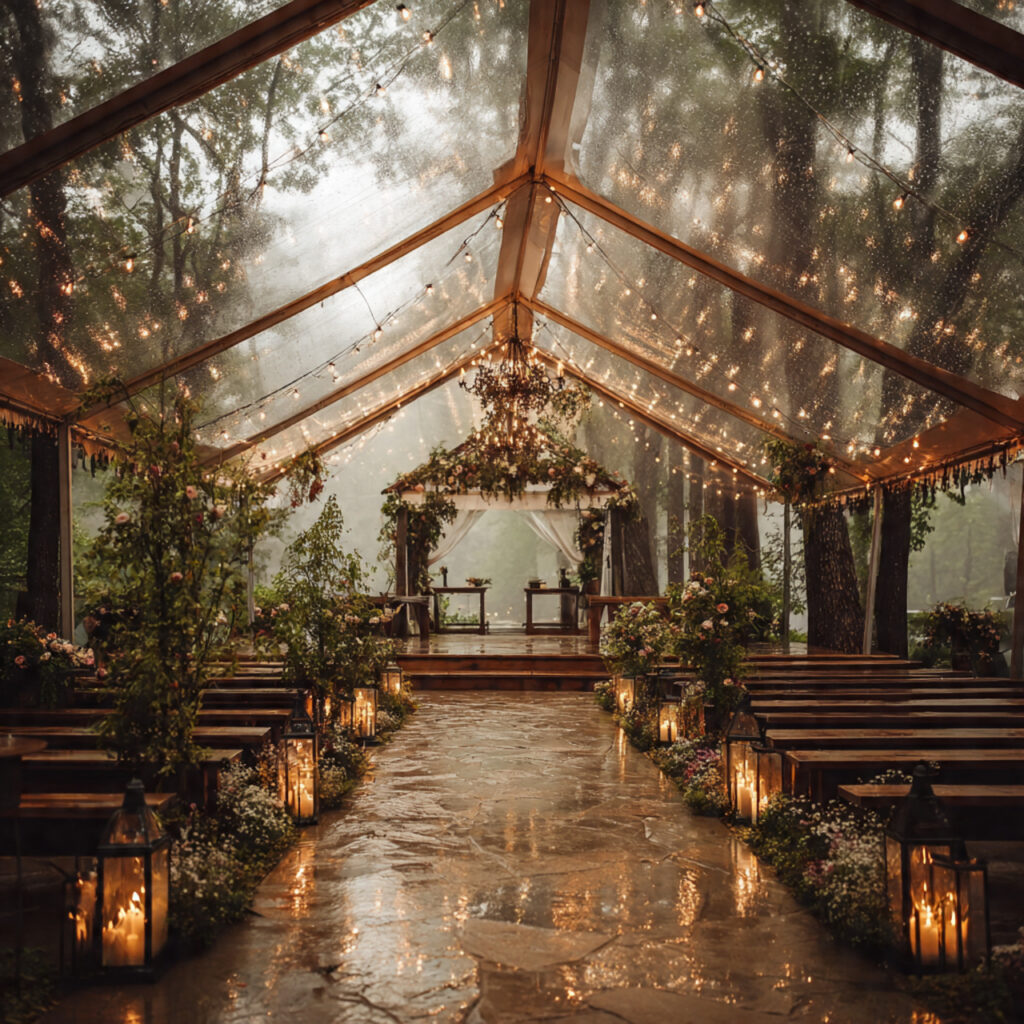
For forest wedding ceremony, Forests are unpredictable. Plan without compromising aesthetics.
Prepare:
- Clear canopy tents that blend visually
- Neutral-toned umbrellas
- Raised wooden walkways if ground is soft
- Have a backup plan within the same environment—not a relocation.
- Stability without breaking immersion.
Minimalist Floral Strategy
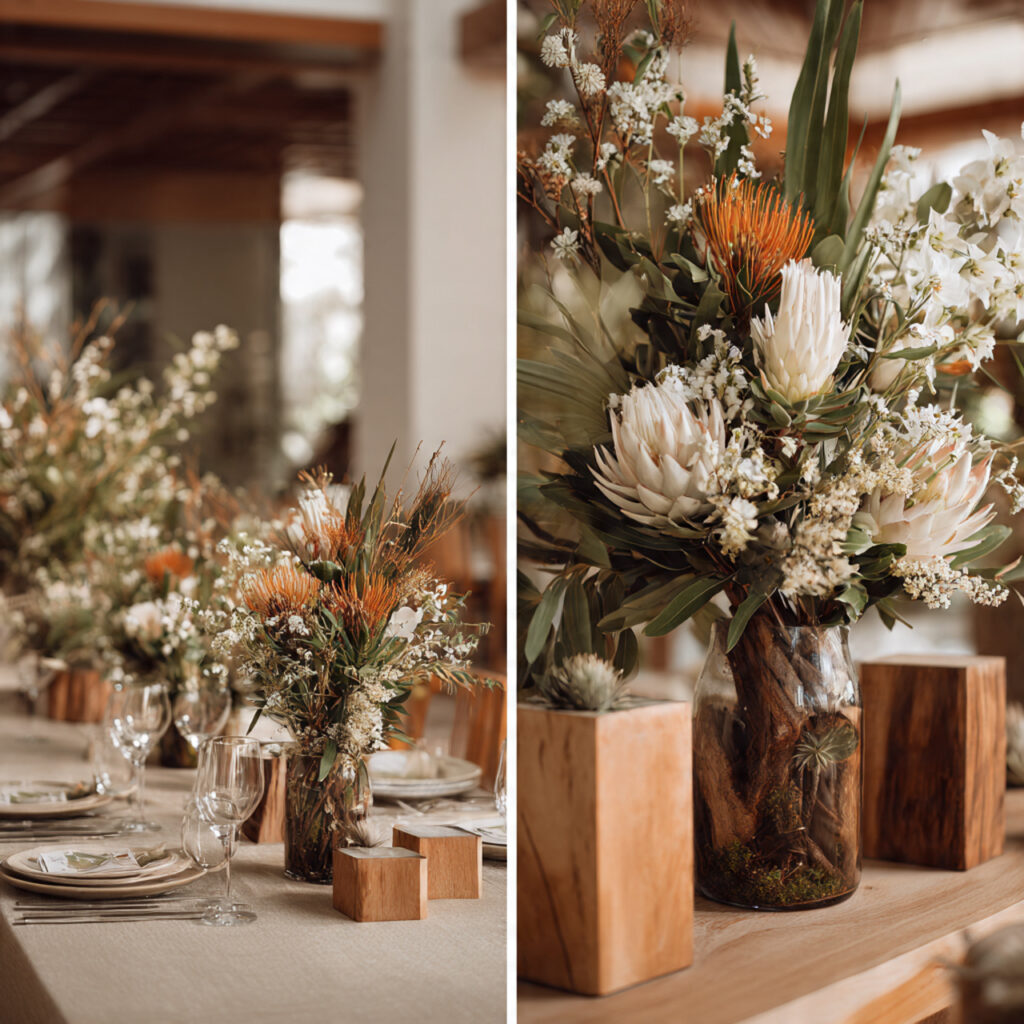
For forest wedding ceremony, Flowers should complement, not compete.
Focus on:
- Native species
- Loose arrangements
- Earth-toned palettes
- Avoid structured bouquets or heavy installations. Let the forest remain dominant.
- Cost control and visual harmony.
Attire That Matches Environment
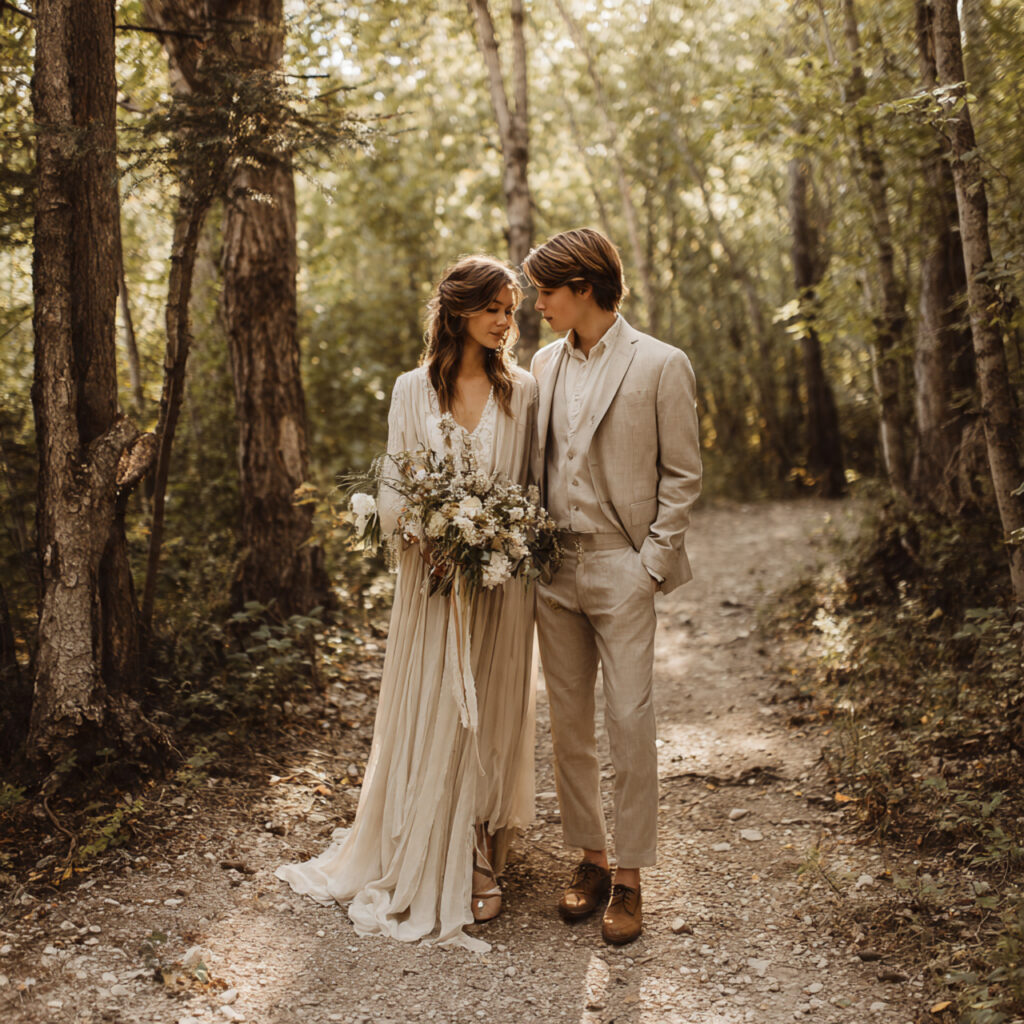
For forest wedding ceremony, Clothing must fit the setting.
For couples:
- Breathable fabrics
- Earth tones or soft neutrals
- Comfortable footwear
For guests:
- Provide guidance on terrain
- Suggest practical options
- Avoid overly formal attire that clashes with the environment.
- Comfort leads to better experience and photos.
Sustainable Practices
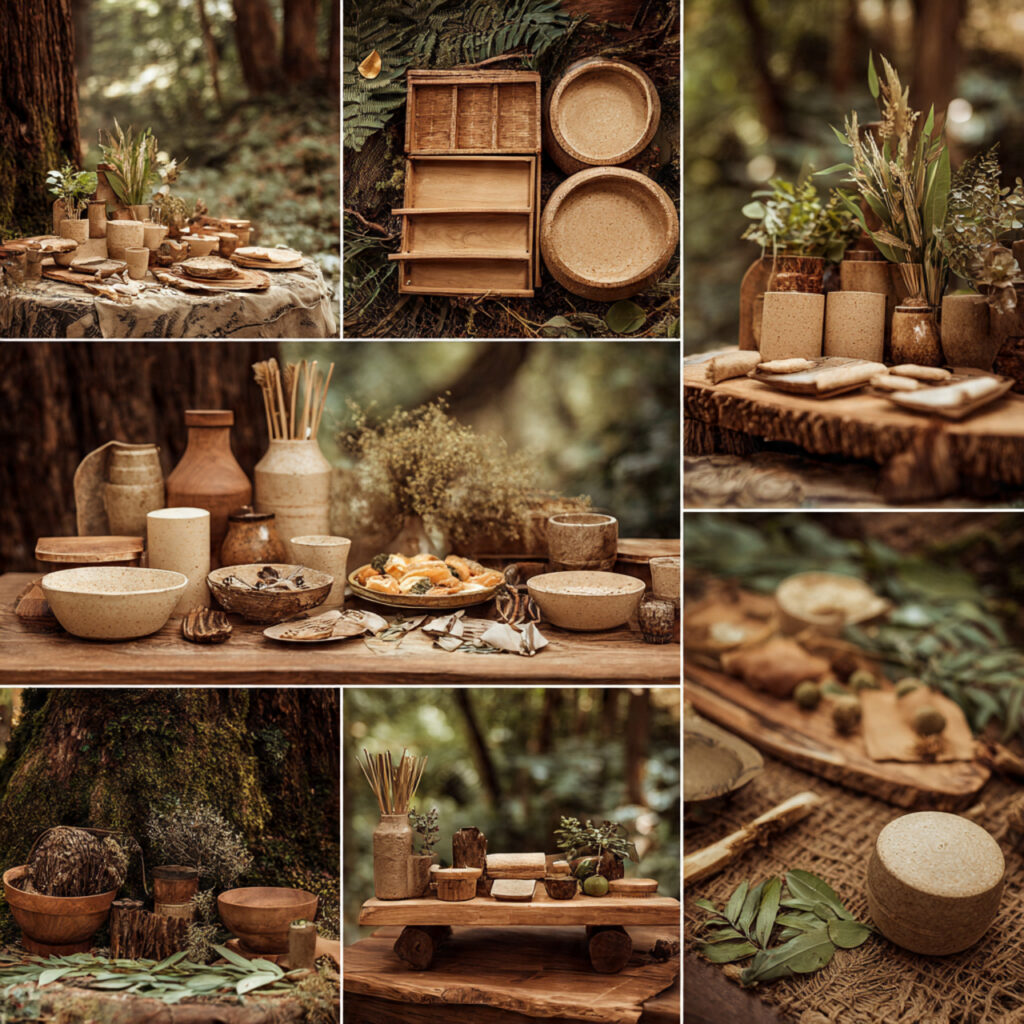
For forest wedding ceremony, A forest wedding ceremony should respect its environment.
Implement:
- Zero-waste décor
- Biodegradable materials
- Local sourcing
- Leave no trace after the event. This is not optional—it’s foundational.
- Ethical alignment and long-term impact.
Intimate Guest Count
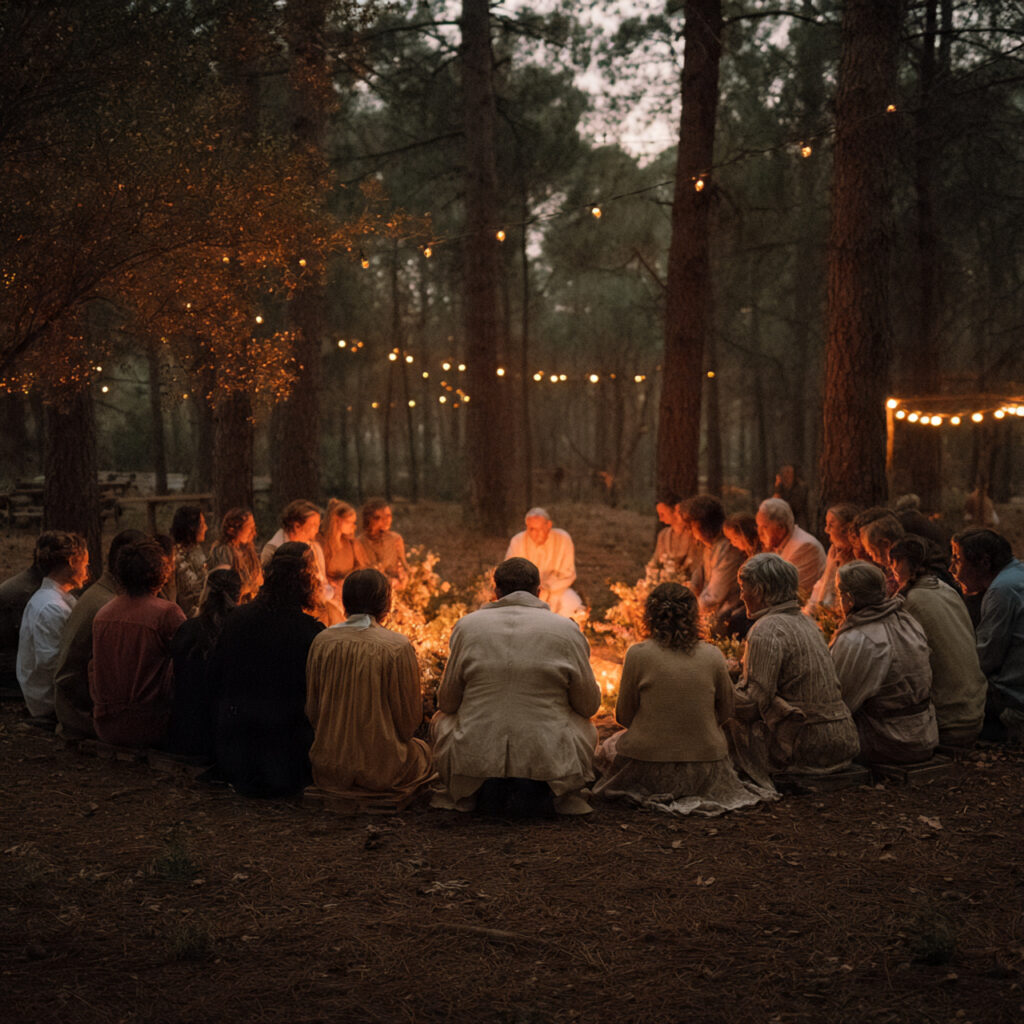
For forest wedding ceremony, Forests reward smaller gatherings.
Limit numbers to:
- Maintain space integrity
- Reduce environmental impact
- Improve guest experience
- A crowded forest loses its effect. Keep it controlled.
- Higher quality experience per guest.
Guided Movement Flow
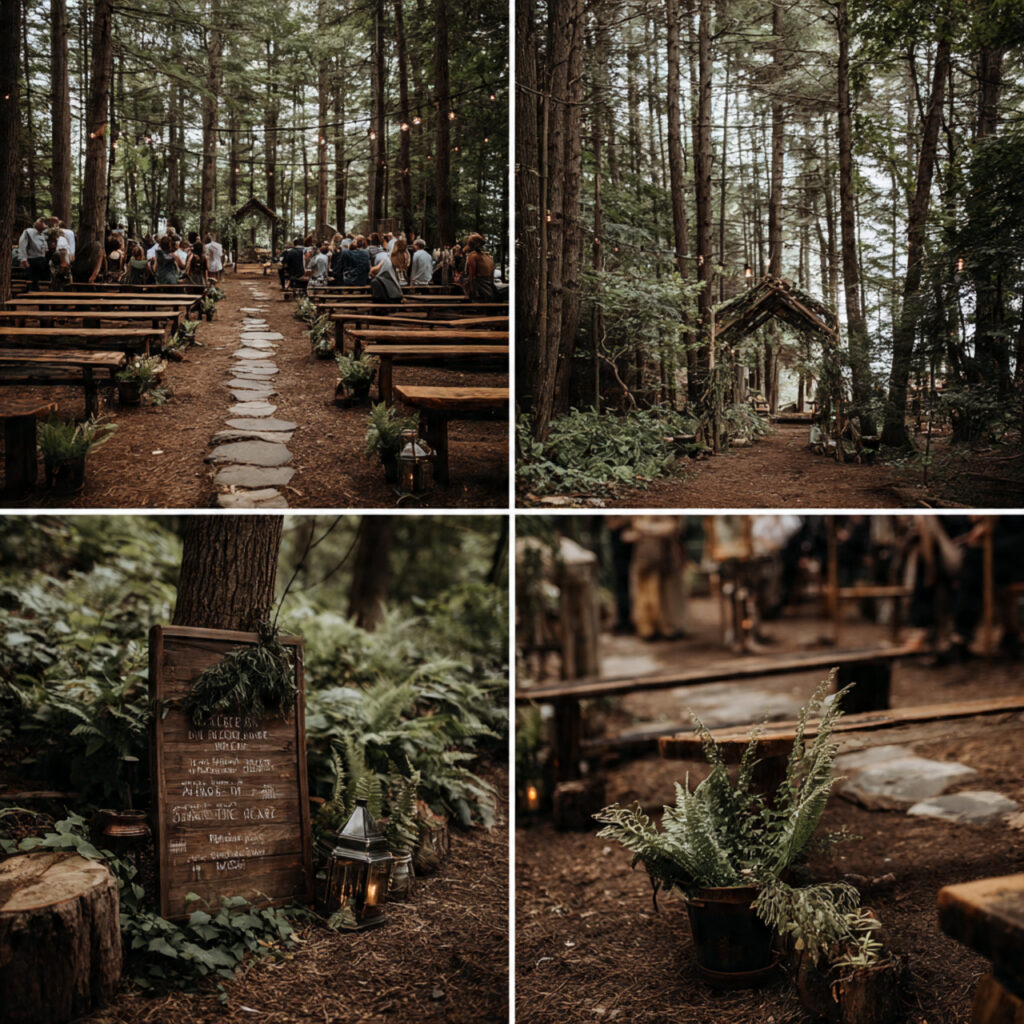
For forest wedding ceremony, Guests should never feel lost.
Design movement:
- Clear signage (minimal, natural materials)
- Ushers guiding transitions
- Defined gathering points
- The forest can disorient. Structure prevents confusion.
Ceremony Timing Precision
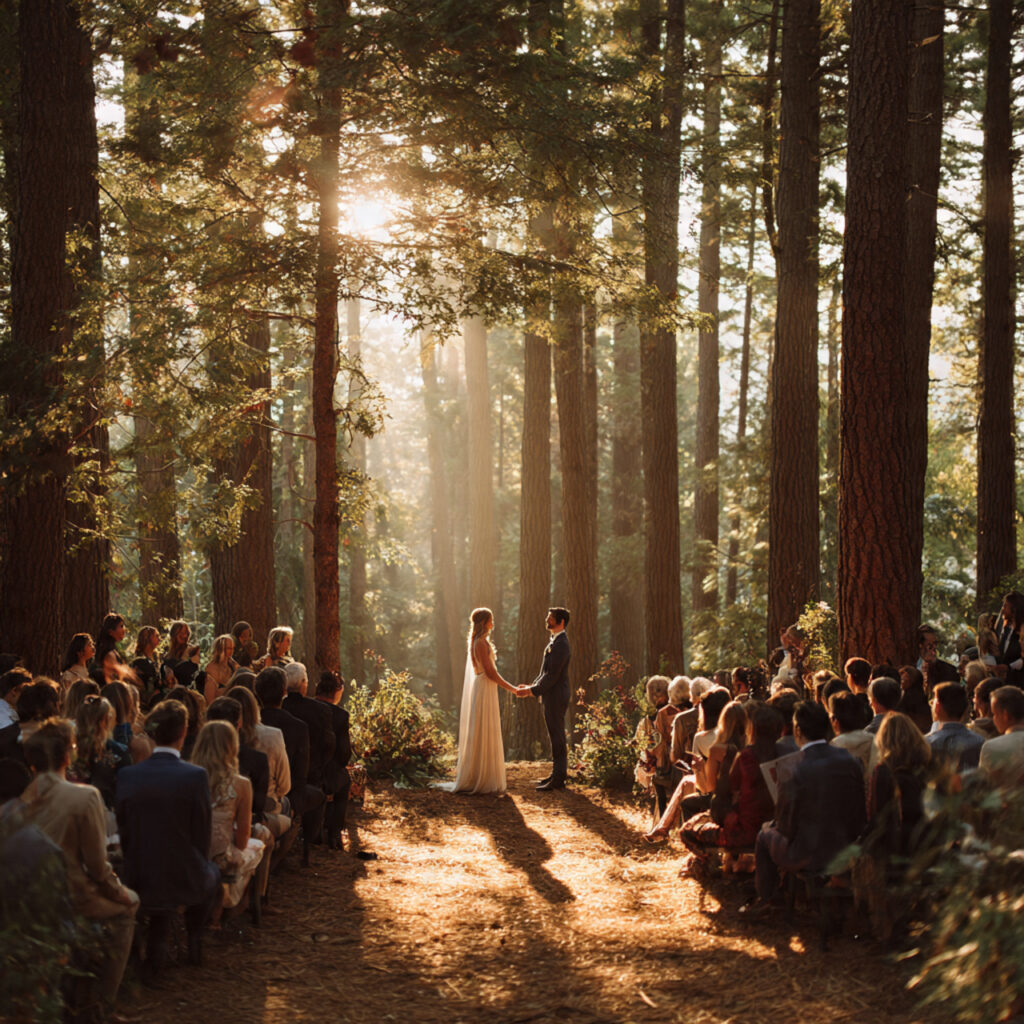
For forest wedding ceremony, Timing matters more in a forest setting.
Account for:
- Light changes
- Temperature drops
- Sound shifts
- Keep the ceremony concise. Forest environments amplify fatigue if events drag.
Post-Ceremony Transition
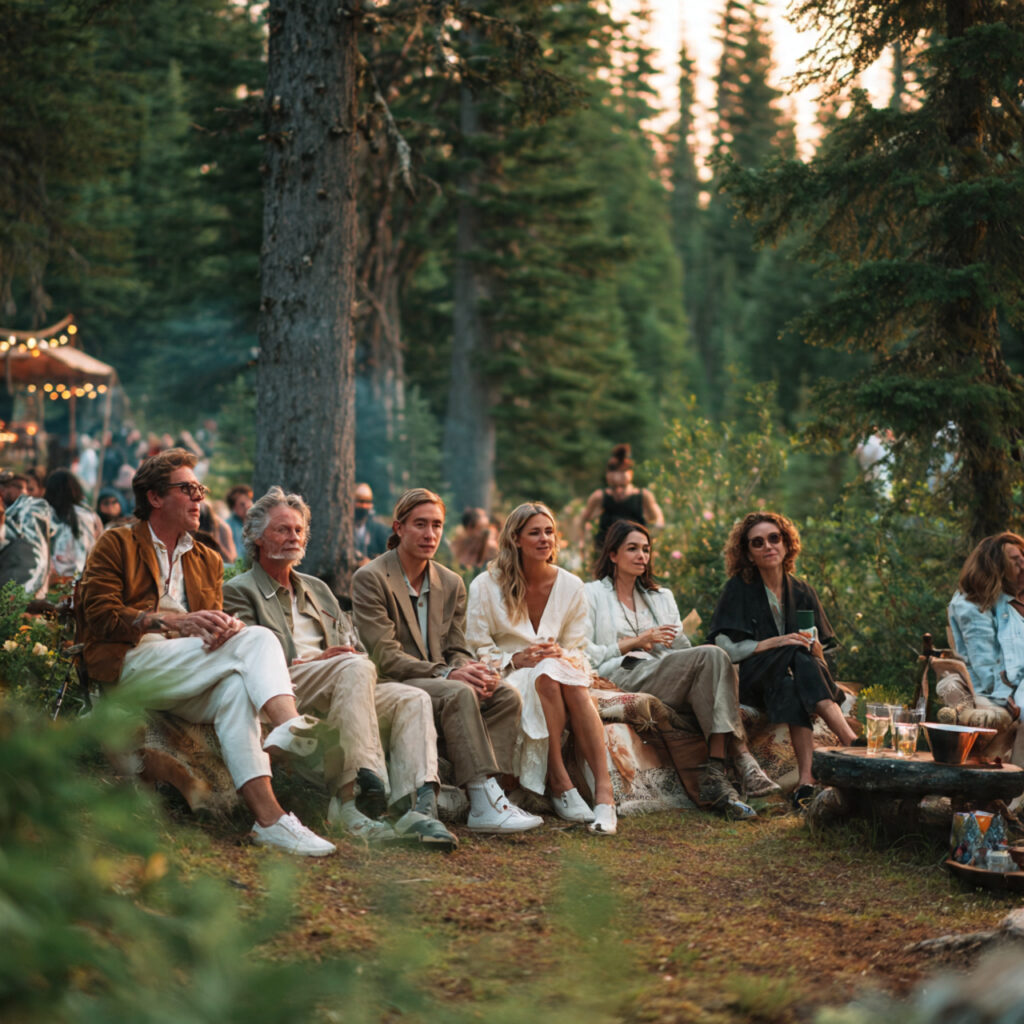
For forest wedding ceremony, Avoid abrupt shifts.
After the forest wedding ceremony:
- Offer a pause space (drinks, seating)
- Allow guests to absorb the setting
- Gradually move toward reception
- This maintains emotional continuity.
Photography That Uses the Environment
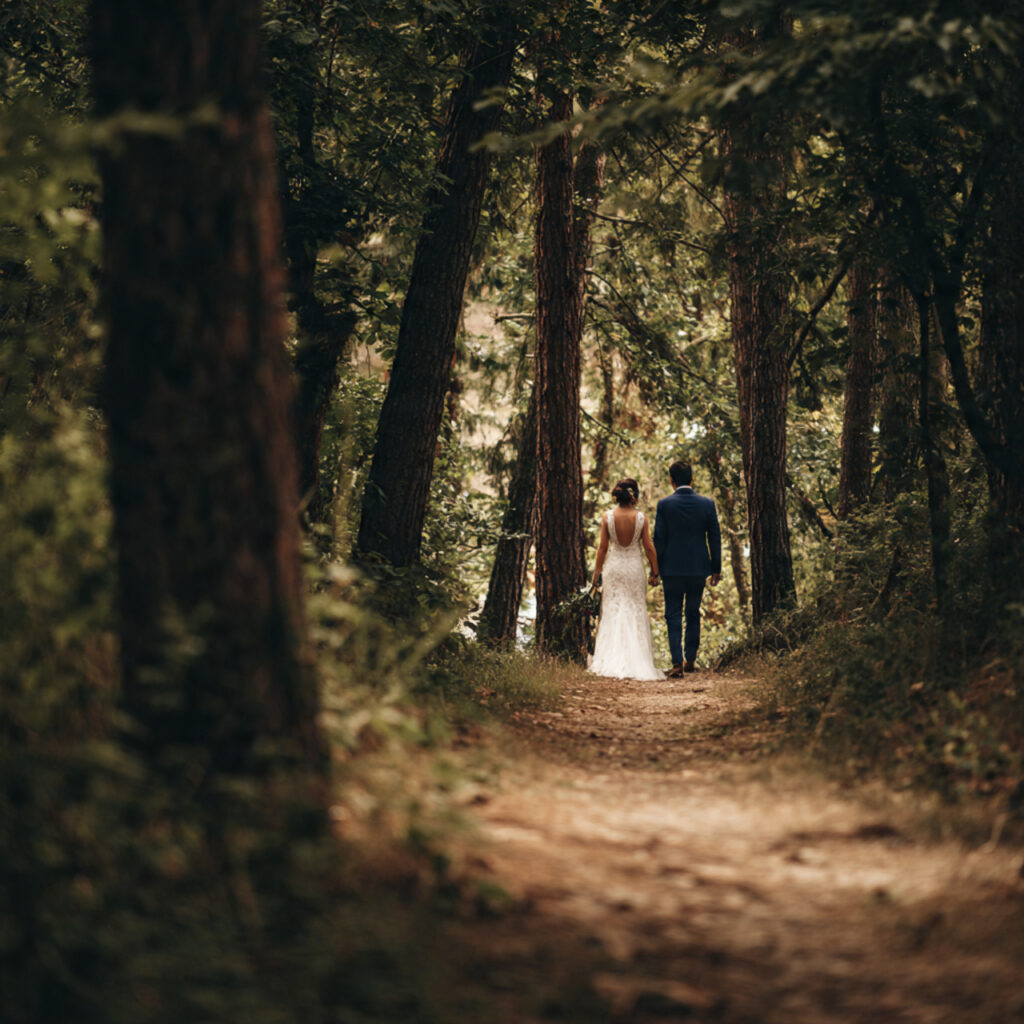
For forest wedding ceremony, The forest is not a backdrop—it’s part of the composition.
Direct photographers to:
- Use depth and layering
- Capture movement (leaves, light shifts)
- Avoid over-posing
- Natural interactions outperform staged shots.
FAQs
How do you manage insects during a forest wedding ceremony?
Use natural repellents, provide guests with discreet options, and avoid heavily scented products that attract bugs. Timing also matters—avoid peak insect activity hours.
What if it rains during the ceremony?
Prepare a transparent canopy or sheltered area within the forest. Avoid relocating to a completely different venue. Rain can enhance the atmosphere if managed correctly.
Is it safe for elderly guests?
Yes, but only with planning. Ensure stable pathways, provide seating with support, and minimize walking distances.
How do you handle power and sound?
Keep it minimal. Use battery-powered equipment and avoid heavy setups. A forest wedding ceremony works best with low-tech solutions.
Can you legally marry in a forest?
It depends on local regulations. Secure permits if required and confirm rules for protected areas well in advance.
Conclusion
A forest wedding ceremony is not about decoration—it’s about restraint. The environment already provides depth, texture, and meaning. Your role is to refine, not replace.
The strongest outcomes come from:
- Minimal intervention
- Thoughtful planning
- Respect for the setting
When executed correctly, the result is not just a ceremony—it’s an experience that feels grounded, intentional, and difficult to replicate elsewhere. Focus on clarity over excess. The forest will do the rest.